
 Compono
1 min read
Professional growth plan: how to build one that actually works
 Compono
A professional growth plan is a structured roadmap that aligns your unique strengths, values, and career aspirations with actionable steps to achieve...

Setting career goals that actually stick starts with understanding your natural work personality rather than forcing yourself into a rigid professional mould.
Most of us approach a fresh start by listing things we think we should want, a higher salary, a fancier title, or more responsibilities, without pausing to ask if those things actually match how our brains are wired. When your goals clash with your underlying nature, you don't just lose motivation; you end up burnt out and wondering why you can't just get it together like everyone else.
Key takeaways
- Authentic career growth requires aligning your objectives with your specific work personality type.
- Focusing on self-awareness rather than generic productivity hacks leads to more sustainable professional success.
- Recognising your natural blind spots allows you to set realistic boundaries and achievable milestones.
- Meaningful career progression is about finding work that energises you rather than just ticking boxes on a resume.
We have all been there, sitting at a desk on a quiet afternoon, feeling that familiar itch that something needs to change. You decide that this time will be different, so you write down a list of ambitious career goals. You promise to be more organised, to lead more meetings, or to finally master that complex data software. But by the time February rolls around, the list is buried under a mountain of 'urgent' emails and the same old habits have moved back in. It is a frustrating cycle that makes you feel like you are failing at the basic task of professional development.
The problem isn't your willpower or your work ethic. The problem is that most career advice is one-size-fits-all, designed for a hypothetical 'perfect' employee who doesn't actually exist. If you have spent your life being told you are 'too quiet' or 'too impulsive', you have probably tried to set goals that 'fix' those traits. At Compono, our research into high-performing teams shows that trying to fight your nature is a losing battle. Real growth comes from doubling down on who you already are and finding the environment where that person thrives.
Consider the difference between a 'Doer' and a 'Pioneer'. A Doer finds deep satisfaction in ticking off a structured list of practical tasks. If they set a goal to 'be more innovative and abstract', they will likely feel lost and unproductive. Conversely, a Pioneer who sets a goal to 'strictly follow a 12-month rigid process' will feel like they are suffocating. Understanding these distinctions is why Hey Compono focuses on personality-adaptive insights rather than generic advice. When you stop trying to be someone else, you finally have the energy to become the best version of yourself.
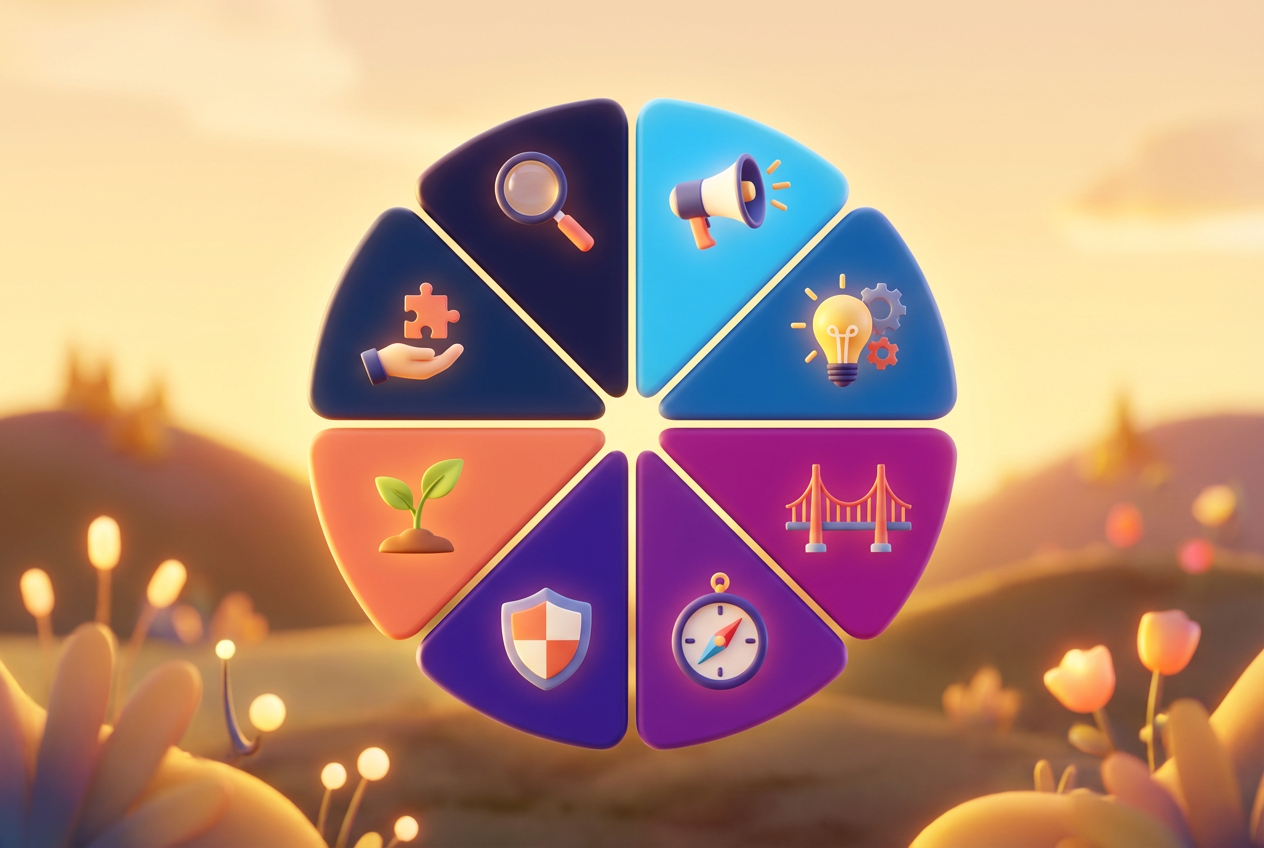
To set goals that actually move the needle, you need to look at your natural preferences. Are you someone who thrives on the energy of a crowd, or do you do your best work in a quiet corner with a spreadsheet? There are eight distinct work personalities that define how we interact with our tasks and our colleagues. If you are a 'Campaigner', your goals should probably involve networking, influencing, and big-picture thinking. If you are an 'Auditor', your path to success likely involves precision, methodical analysis, and quality control.
Many professionals feel misunderstood at work because their roles don't match their dominant traits. You might be a 'Helper' stuck in a high-conflict sales environment, wondering why you feel drained every evening. Or perhaps you are an 'Evaluator' who isn't given the data needed to make the logical decisions you crave. Setting a career goal to 'get promoted' in a role that fundamentally clashes with your personality is just signing up for more of the same stress. Instead, look for goals that allow you to lean into your strengths. If you're curious what personality type you default to under stress, Hey Compono can show you in about 10 minutes.
This isn't about limiting yourself; it's about strategy. An 'Advisor' who knows they value empathy and collaboration can set a goal to lead a cross-functional project where those skills are the primary driver of success. They aren't changing who they are, they are changing how they apply themselves. This shift from 'fixing' to 'optimising' is the secret to professional longevity. It turns work from a series of chores into a platform for genuine contribution.
The hardest part of any career journey isn't the start; it's the middle. This is where the initial excitement fades and the reality of the daily grind sets in. To stay on track, you need more than just a list of objectives; you need a system that accounts for your human tendencies. We often overlook our blind spots when we are in the 'planning' phase. We assume we will always have the energy we have on a motivated Monday morning. But a 'Coordinator' might struggle when a plan goes off the rails, while a 'Pioneer' might lose interest once the 'newness' of a project wears off.
Instead of shaming yourself when you hit a wall, use it as data. If you are struggling to maintain a new habit, ask yourself if it actually fits your workflow. Some teams use personality-adaptive coaching to have these conversations without it getting weird. It's about recognising that a 'Doer' might need a clear, physical checklist to stay motivated, whereas a 'Campaigner' might need a regular coffee catch-up to talk through their ideas and regain their spark. By tailoring your environment to your personality, you make the 'hard' parts of your goals significantly easier to manage.
Remember that career goals don't have to be massive, life-altering shifts. Sometimes the most effective goal is simply to change how you communicate or how you protect your time. If you know you are an 'Auditor' who gets overwhelmed by constant interruptions, a valid career goal is to implement 'deep work' blocks in your calendar. This isn't a 'soft' goal, it is a strategic move to ensure you can deliver the high-quality, detailed work that is your trademark. Respecting your own boundaries is a professional skill that pays dividends for years.

True professional growth doesn't happen in a vacuum. It is influenced by the people around you and the culture of your workplace. When a whole team understands their collective work personalities, the friction of daily life starts to disappear. You stop taking it personally when the 'Evaluator' questions your logic, and you stop getting frustrated when the 'Helper' wants to check in on everyone's feelings before a big launch. You realise these aren't personality flaws, they are essential components of a high-performing team.
If you are in a leadership position, your goal shouldn't just be to hit targets. It should be to understand the 'why' behind your team's behaviour. Using tools like Hey Compono allows you to see the hidden dynamics at play. You can start assigning tasks based on who will actually enjoy doing them, rather than just who is available. This leads to higher engagement, lower turnover, and a team that actually feels seen and valued. For the individual, this means you can stop masking your true self and start bringing your actual talents to the table.
As you look toward the future, try to move away from the 'New Year, New Me' narrative. You don't need a new you; you just need a better understanding of the current you. Focus on goals that provide clarity, build connection, and allow for authentic contribution. Whether you are a 'Coordinator' looking for more efficiency or an 'Advisor' seeking more meaningful collaboration, your path to success is already written in your personality. You just have to be brave enough to follow it.
Key insights
- Career goals succeed when they are built on a foundation of self-awareness rather than social expectations.
- Each of the eight work personalities, from the Doer to the Pioneer, requires a different approach to professional development.
- Sustainable growth involves identifying and respecting your natural work preferences and blind spots.
- High-performing teams are built by leaders who recognise and use the diverse personality types within their group.
- The best professional objectives are those that allow you to contribute authentically without burning out.
Related reading: How to use CliftonStrengths for career growth · How to use strengthsfinder insights for career growth
Career change coaching that starts with your personality, not a template. Start free.
Get started freeYou can discover your dominant work personality by taking a short, evidence-based assessment. Hey Compono uses a decade of organisational psychology research to map your traits across eight key work actions, helping you understand how you naturally contribute to a team.
Most people fail because their goals are 'personality-deaf'. If you set objectives that require you to act against your natural grain, like a quiet Auditor trying to lead aggressive sales pitches, you will eventually run out of willpower. Success comes from aligning your goals with your natural strengths.
While your core traits tend to remain stable, you can certainly learn to 'flex' into other styles depending on the situation. However, you will always have a 'home base' where you feel most energised and effective. Understanding this default state is the key to preventing long-term burnout.
Encourage a culture of self-awareness where team members feel safe discussing their work preferences. When everyone understands the diverse personalities in the room, like the difference between a Campaigner and a Coordinator, they can set collaborative goals that leverage everyone's unique talents.
It is an approach to professional development that tailors advice and feedback to an individual's specific work personality. Instead of giving everyone the same 'productivity hacks', it provides strategies that work with your specific brain, making growth feel more natural and less like a chore.

1 min read
A professional growth plan is a structured roadmap that aligns your unique strengths, values, and career aspirations with actionable steps to achieve...

1 min read
A virtual life coach is a digital partner that helps you bridge the gap between who you are and how you show up in the world by providing...

1 min read
Have you ever felt like you’re running a race in the wrong pair of shoes? You’re working harder than everyone else, yet career excellence feels like...