
 Compono
How to achieve optimal performance without the burnout
 Compono
Strong performance is mostly energy management. How to match your hardest work to your best hours and protect the conditions that let you do it well.

Burnout is a state of emotional, physical, and mental exhaustion caused by excessive and prolonged stress, occurring when you feel overwhelmed and unable to meet constant demands. It is not a character flaw or a sign of weakness, but a signal that your current pace is unsustainable for your specific work personality.
Key takeaways
- Burnout manifests as a combination of exhaustion, cynicism, and a sense of reduced professional efficacy.
- Your natural work personality significantly influences which stressors trigger burnout and how you typically respond under pressure.
- Recovery requires more than just a holiday; it involves setting firm boundaries and aligning your daily tasks with your natural energy.
- Early intervention through self-awareness tools can prevent long-term health impacts and career stagnation.
You know that feeling when the alarm goes off and your first thought isn't about the day ahead, but how many hours are left until you can crawl back into bed? It is a heavy, leaden kind of tired that sleep doesn't seem to touch. For many of us, burnout doesn't arrive with a bang. It is a slow creep of cynicism, a fading of the passion you once had for your craft, and a growing sense that no matter how hard you work, you are just treading water.
We live in a world that prizes the hustle and treats 'busy' as a badge of honour. You might have been told you are 'too sensitive' or 'not resilient enough' when you start to flag. At Compono, our research into high-performing teams shows that resilience isn't about gritting your teeth until they break. It is about understanding the unique way your brain processes stress and ensuring your environment doesn't constantly work against your grain.
The problem is that we often try to fix a systemic or personality-mismatch issue with a weekend spa retreat. While the bubbles are nice, they don't address the reason you felt like you were drowning in the first place. Real change starts with recognising that burnout is a physiological response to a prolonged mismatch between your needs and your reality.
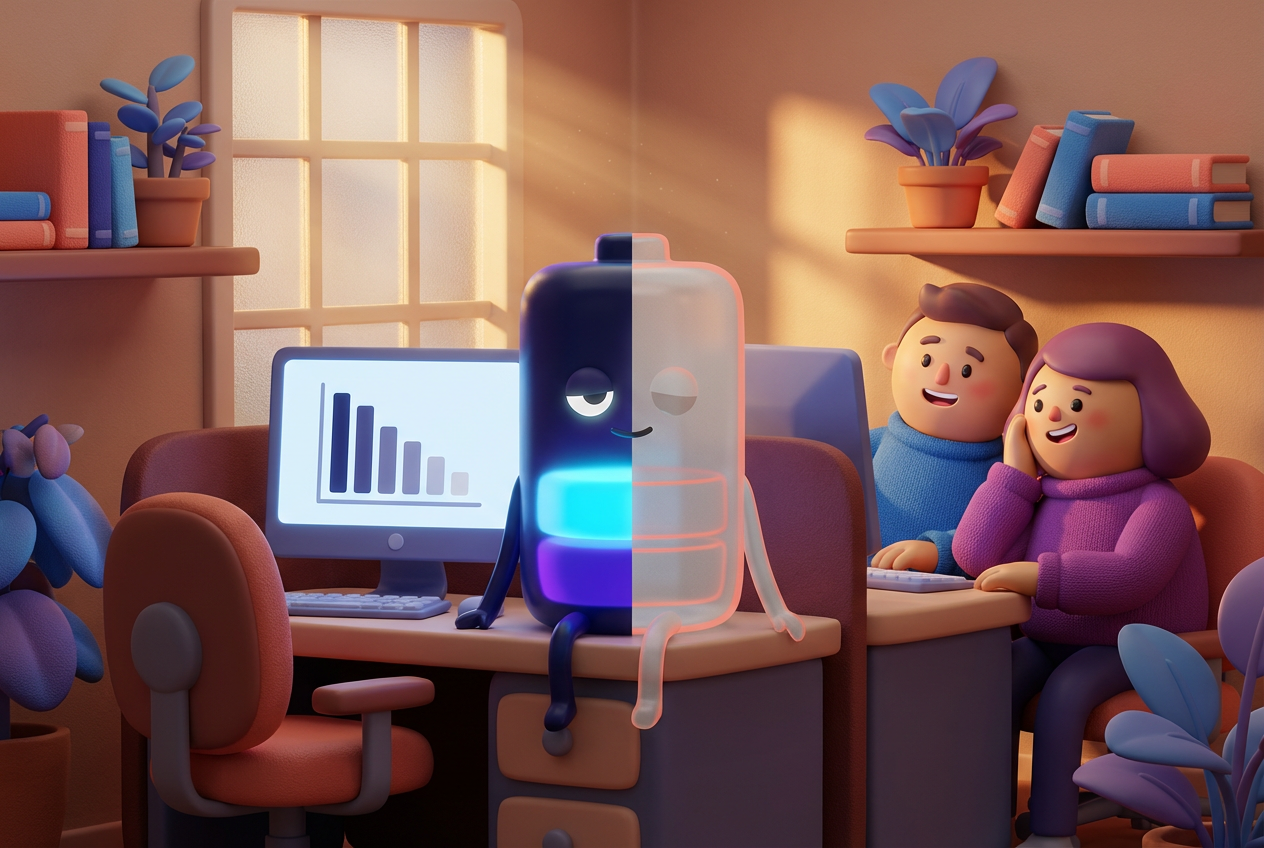
Not everyone burns out for the same reasons. What feels like a thrilling challenge to one person can feel like a slow death by a thousand cuts to another. This is where understanding your work personality becomes vital. If you are The Helper, your burnout might stem from emotional labour and the inability to say 'no' to others' needs. You give until your own well-being is a distant memory.
On the flip side, someone like The Auditor might find themselves spiralling if they are forced to work in a chaotic environment without clear processes. The lack of order becomes a constant source of friction that wears them down. When you are forced to act outside of your natural preferences for too long, the 'effort' of being someone else is what eventually drains the battery to zero.
If you're curious what personality type you default to under stress, Hey Compono can show you in about 10 minutes. Recognising these patterns isn't about labelling yourself; it's about finding the vocabulary to explain why certain environments leave you feeling hollowed out while others energise you. Understanding your baseline is the first step in defending it.
Burnout usually moves through stages. It starts with a compulsion to prove yourself, leading you to neglect your own needs. You might find yourself staying late, skipping lunch, and withdrawing from friends. Then comes the 'depersonalisation' phase, that's the fancy term for the cynicism that makes you feel disconnected from your colleagues and your work. You stop caring about the quality of your output because you're just trying to survive the shift.
Physical symptoms often follow the mental ones. Chronic headaches, digestive issues, and a weakened immune system are your body's way of screaming for a pause. You might notice your temper is shorter or that you're making uncharacteristic mistakes. These aren't signs that you're failing at your job, they are signs that your nervous system is stuck in a 'fight or flight' loop that it can't escape from.
The danger is that we often try to 'optimise' our way out of this. We download another productivity app or try a new time-blocking method. But you can't build a stable house on a foundation that is actively crumbling. Instead of looking for a new hack, we need to look at the load. Are you carrying tasks that are fundamentally at odds with how you think? For example, a The Pioneer trapped in repetitive data entry will burn out much faster than they would in a high-stakes brainstorming session.

Recovery is a slow process of reclaiming your agency. It starts with boundaries that actually mean something. This might look like turning off notifications after 6 pm or being honest with your manager about your current capacity. It also means looking at your 'work load' through the lens of your personality. If you spend 90% of your day doing work that drains you, no amount of 'self-care' on the weekend will balance the scales.
We need to move toward 'personality-adaptive' ways of working. This means acknowledging that a one-size-fits-all approach to management is a recipe for collective exhaustion. Teams that thrive are those where the work is distributed based on natural strengths. When you are doing work that aligns with your work personality, you still get tired, but it is a 'good' tired, the kind that a night of sleep actually fixes.
There's actually a way to figure out which of these patterns fits you, take a quick personality read and see what comes up. By sharing these insights with your team, you can start conversations about how to rebalance tasks so everyone isn't just surviving, but actually contributing in a way that feels natural. Hey Compono helps teams have these conversations without it getting weird or confrontational.
Key insights
- Burnout is a systemic mismatch between your workplace environment and your natural work personality.
- Cynicism and emotional distance are often earlier indicators of burnout than physical exhaustion.
- Resilience is built through self-awareness and task alignment, not just through enduring high-stress situations.
- Effective recovery requires setting boundaries that protect your cognitive and emotional energy.
- Using personality insights allows for a more sustainable distribution of labour within modern teams.
Related reading: How to recognise and manage compassion fatigue at work · How to manage team responsibilities without the burnout
First-time manager coaching that fits how you think, whenever you need it. Start free.
Get started freeStress is about 'too much', too many pressures that demand too much of you. Burnout is about 'not enough'. It feels like being empty, devoid of motivation, and beyond caring. While stress can feel like drowning in responsibilities, burnout feels like being all dried up.
Yes, but it requires significant changes. You must identify the specific 'draining' tasks and work to rebalance your role. Using tools like Hey Compono can help you explain to your employer why certain tasks are more taxing for you than others, allowing for a more sustainable role design.
Passion can actually be a risk factor for burnout. When you love your work, you are more likely to ignore your boundaries and give more than you have. Even 'good' work requires energy, and if you don't have a system for replenishment, passion won't save you from exhaustion.
Focus on the 'why' and the solution. Instead of just saying you are tired, explain which parts of the role are creating the most friction with your work personality. Use data and insights to show how a slight shift in responsibilities could help you return to high performance.
Every personality type has different 'burnout triggers'. For example, a Campaigner might burn out from isolation, while a Coordinator might burn out from lack of structure. No type is more 'prone' to it, but the causes will look very different for everyone.

Strong performance is mostly energy management. How to match your hardest work to your best hours and protect the conditions that let you do it well.

Saying no at work is a skill. Here is how to set limits on your time, say it plainly, and handle the guilt that usually follows.

Exhausted, flat and cynical about work you used to like. Here is how to read those signs and the changes that bring your energy back.