
 Compono
1 min read
How to manage the fear of the unknown at work
 Compono
The fear of the unknown is a survival mechanism triggered by the brain’s preference for predictability over uncertainty, often leading to anxiety,...

Working from home successfully requires a deep understanding of your natural work preferences and a deliberate approach to setting boundaries between your professional and personal life.
Key takeaways
- Your work personality significantly influences how you experience and manage a remote environment.
- Maintaining visibility and connection requires more than just jumping on a video call; it needs intentional social interaction.
- Establishing a dedicated workspace and routine helps signal to your brain when it is time to focus and when it is time to switch off.
- Different personalities, like the Campaigner or the Auditor, have vastly different needs when working away from a central office.
Working from home was promised as the ultimate freedom, but for many of us, it has started to feel like living at work. We have all been there, sitting in the same chair at 8:00 PM that we sat in at 8:00 AM, wondering where the day went and why we feel so disconnected from the people we actually work with. It is easy to feel misunderstood when your only interaction is a grainy video tile or a blunt message on a chat app.
The reality is that remote work strips away the subtle cues we rely on to understand each other. You might have been told you are too quiet in meetings or perhaps too demanding with your follow-ups, but the truth is usually simpler: your environment is clashing with your natural way of working. At Compono, we have spent over a decade researching how high-performing teams function, and we know that the shift to home-based work has changed the game for everyone.
Without the natural structure of an office, the burden of organisation falls entirely on you. This can lead to a cycle of overworking to prove you are actually 'working' or, conversely, feeling so isolated that your motivation starts to tank. Understanding how to manage this starts with knowing what makes you tick. If you are curious about how your brain handles these shifts, Hey Compono can give you a clear read on your dominant work style in just a few minutes.

Not everyone experiences a quiet house the same way. For a personality like the Auditor, the lack of office distractions might feel like a superpower, allowing them to dive deep into data and methodical tasks without interruption. But for the Campaigner, that same silence can feel like a vacuum, draining the energy they usually get from bouncing ideas off a colleague in the kitchen.
We have identified eight key work activities that define high-performing teams: Evaluating, Coordinating, Campaigning, Pioneering, Advising, Helping, Auditing and Doing. When you work from home, some of these activities are much harder to maintain. For example, 'Helping' often happens in the margins, a quick tip offered over a shoulder or a word of encouragement after a tough call. In a remote setting, those moments disappear unless you consciously build them back in.
If you find yourself struggling to stay motivated, it might be because the tasks you are doing don't match your natural work personality. A 'Doer' might feel productive ticking off a list but miss the clear direction of a manager. An 'Advisor' might feel they are losing their ability to support the team's emotional well-being through a screen. Recognising these gaps is the first step toward fixing them. Many teams use personality-adaptive coaching through Hey Compono to bridge this distance and make sure everyone feels seen, even when they aren't physically present.
It is a common trap to think you can work from anywhere, the couch, the dining table, or even bed. But your brain is a creature of habit and association. When you blur the lines between where you rest and where you produce, you end up doing neither particularly well. You need a dedicated 'zone' that signals a shift in your mental state. It does not have to be a sprawling home office; even a specific corner of a room can serve as your professional centre.
Structure is the best friend of the remote worker. This means setting a start and end time that you actually stick to. It is tempting to 'just finish one more thing' at 6:30 PM, but without a commute to act as a physical buffer, your work life will inevitably bleed into your personal time. This lead to burnout, hit like a tonne of bricks, before you even realise it is happening. Use physical cues, like closing your laptop and putting it in a drawer, to tell your brain the day is done.
For those who thrive on order, like the Coordinator, this structure comes naturally. They love a system and a deadline. But if you are more of a 'Pioneer', you might find these boundaries stifling. The key is to find a balance that suits your specific style. You might need a flexible schedule that allows for creative bursts, provided you still have the 'guardrails' of clear milestones to keep you on track with the rest of the team.
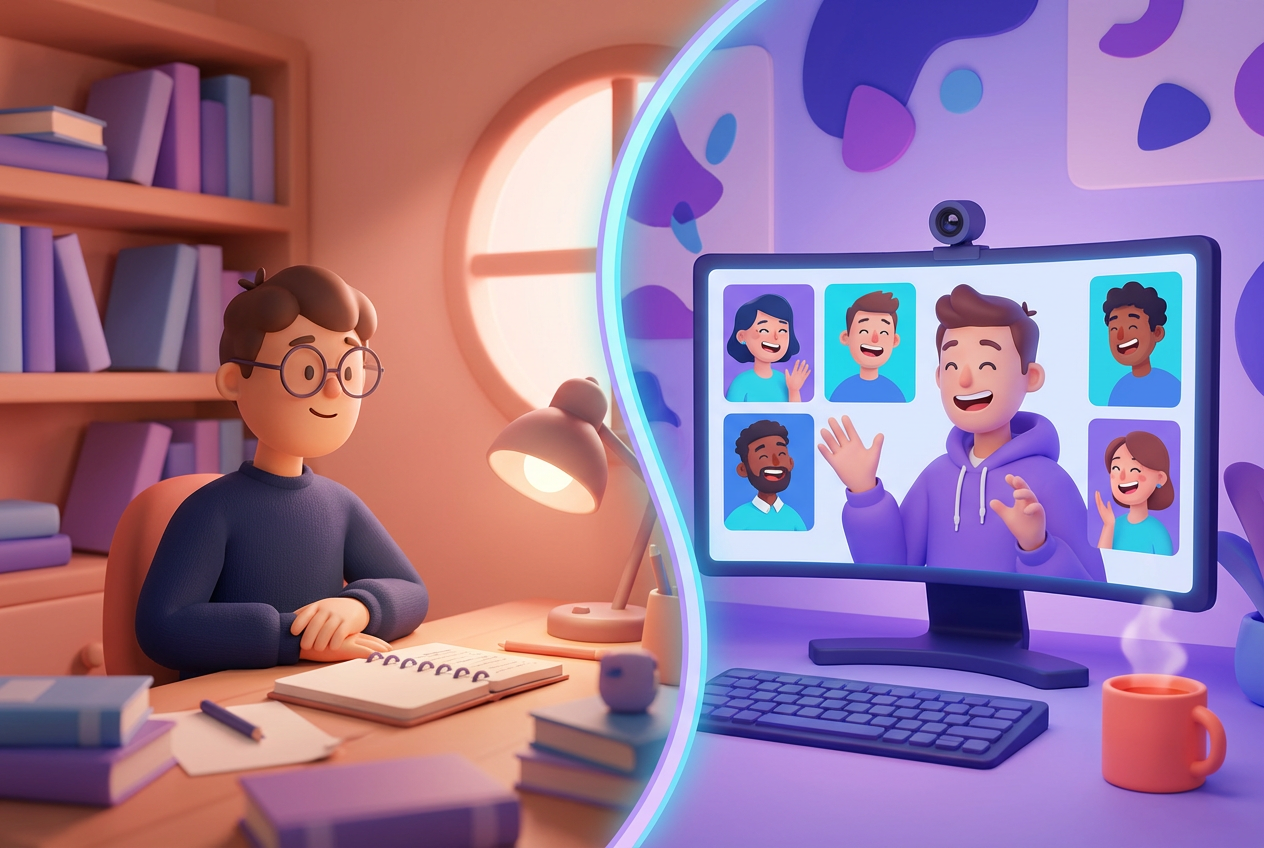
One of the biggest fears of working from home is the 'out of sight, out of mind' phenomenon. You worry that because people can't see you at your desk, they don't think you are contributing. This often leads to 'presenteeism', staying active on chat apps just to show a green bubble. This is exhausting and counterproductive. Instead, focus on high-impact visibility.
High-impact visibility is about the quality of your connections, not the quantity. It is about sharing your progress, asking for feedback, and being proactive in your communication. If you are an 'Evaluator', this might mean sharing a concise update on a strategic risk you have identified. If you are a 'Helper', it might mean reaching out for a one-on-one coffee chat with a teammate who seemed a bit flat in the morning stand-up.
At Hey Compono, we believe that visibility should be based on your strengths. You don't need to be the loudest person in the group chat to be noticed. You just need to be consistent and authentic to your work personality. When you understand how you naturally contribute, you can stop trying to mimic everyone else and start providing value in a way that feels sustainable and honest.
Key insights
- Remote work success is not a one-size-fits-all approach; it depends on how your personality interacts with isolation and autonomy.
- Intentional boundaries are essential to prevent work-life bleed and maintain long-term mental health.
- Effective communication in a remote setting focuses on clarity and empathy rather than constant availability.
- Understanding your team's work personalities helps prevent misunderstandings that often arise in digital-only environments.
Related reading: How to move from survival mode to sustainable growth · How to build grit and stay the course when things get tough
Voice or text coaching that adapts to your personality. Start free.
Get started freeLoneliness often stems from a lack of spontaneous social interaction. Try scheduling 'non-work' catch-ups or using co-working spaces once a week. Understanding if you have a people-oriented personality like the Campaigner can also help you realise why you need these connections more than others might.
Productivity is about internal motivation and clear goals. Break your day into small, actionable tasks and use a timer to stay focused. If you are a 'Doer', you might find that having a very structured checklist helps you stay on track without needing external oversight.
Clear communication is key. Use physical signals, like a closed door or wearing headphones, to show when you are in 'work mode'. Setting specific times for breaks where you are fully present with your family can also help reduce interruptions during focus periods.
Misunderstandings happen when communication is vague. Be direct and straightforward about what you are working on and when it will be done. Tools like Hey Compono can help your team understand each other's communication styles, reducing the friction caused by digital-only chat.
Every personality can succeed remotely, but the 'how' looks different for everyone. While an Auditor might love the quiet, a Campaigner will need to work harder to find social outlets. The key is adapting your environment to support your natural work preferences rather than fighting against them.

1 min read
The fear of the unknown is a survival mechanism triggered by the brain’s preference for predictability over uncertainty, often leading to anxiety,...

1 min read
Holiday anxiety is a physiological and emotional response to the increased social, financial, and transitional pressures that occur during the...

1 min read
It is a heavy, suffocating feeling that usually hits on a Sunday afternoon, that sinking realisation that you are deeply unhappy at work, but you...