
 Compono
Best AI coach for career growth and self-awareness
 Compono
The best AI coach helps you understand your own work personality and lead with confidence. Hey Compono gives tailored, personality-led career...
Coaching in your 30s is about moving from accidental success to intentional growth by aligning your daily work with your natural personality traits. At this stage, burnout is often a sign of misalignment, and the most useful coaching builds self-awareness rather than just stacking new skills.
Last reviewed July 2026.
Key takeaways
- Your 30s often bring a shift in career identity, where old motivations stop feeling like enough.
- Effective coaching at this stage focuses on understanding your work personality, not just collecting skills.
- Burnout in your 30s is frequently a mismatch between your natural preferences and your role's demands.
- Personalised development helps you move from individual contributor to influential leader.
You hit 30 and the rules of the game seem to change. In your 20s you could run on adrenaline, caffeine and the urge to prove everyone wrong. Now that hustle feels like a heavy coat you cannot quite shake. You might have the title, the salary and the responsibilities you thought you wanted, and still wake at 3am wondering whether this is it for the next three decades.
It is a common story. People spend ten years climbing a ladder only to find it leaning against the wrong wall. This is where Hey Compono comes in. Your 30s are not about fixing what is broken in you, because you are not broken. They are about understanding how your brain is wired so you can stop fighting your own nature.
In your 30s you face a specific pressure, the expectation that you should have it all figured out. Society calls this the decade of settling down, and in practice it is often the decade of profound unsettling. You get told you are too sensitive for management or too blunt for client relations, and without the right support those labels start to define your ceiling.
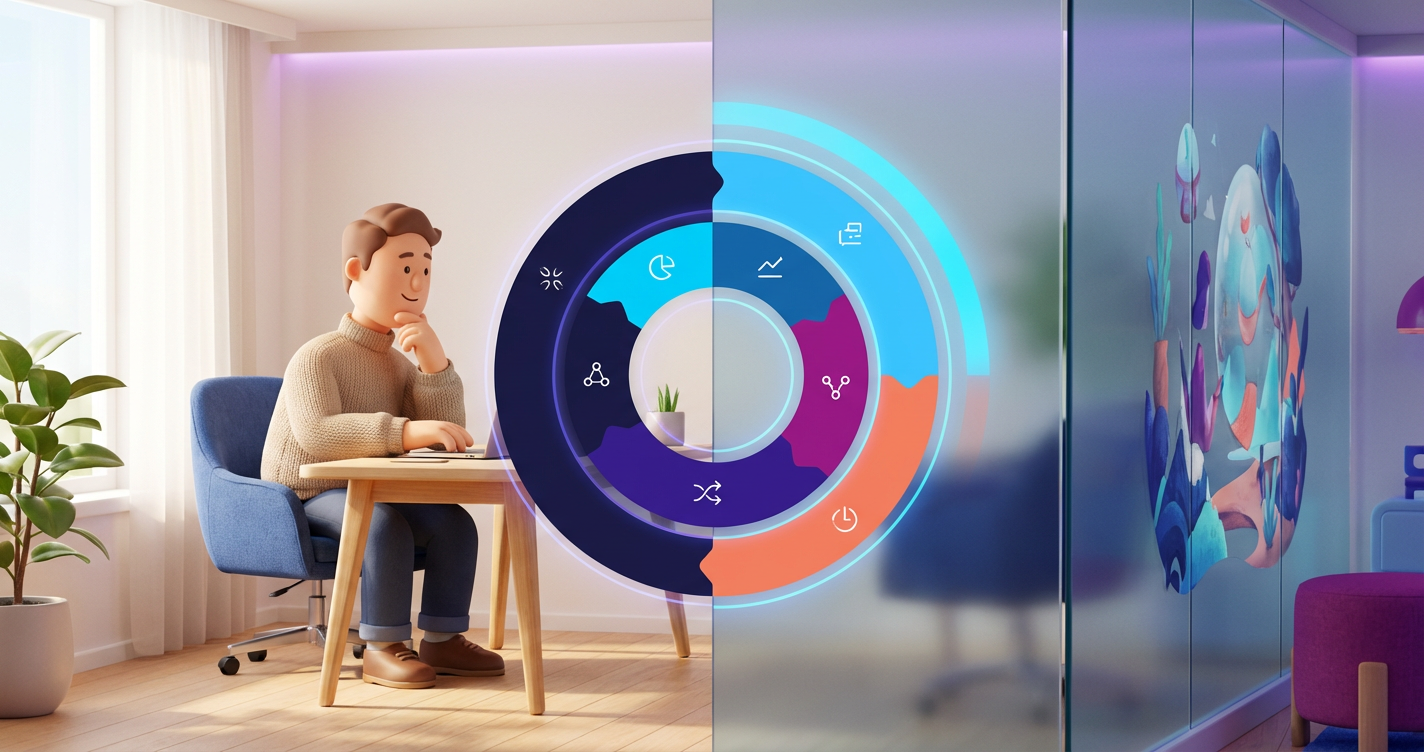
Coaching in your 30s is not remedial coaching where a manager tries to iron out your flaws. It is a proactive look at your why. Our research shows high-performing teams rely on eight key work activities, and if you spend most of your time in the ones that drain you, no amount of productivity hacking will save you from eventual exhaustion. Being a great Doer does not automatically make you a great Coordinator, and coaching helps you make that transition without losing your authentic self.

The secret to this decade is moving from generic advice toward personality-adaptive growth. We all have a dominant preference for how we contribute to a team, and if you do not know yours, you are flying blind. Hey Compono uses a framework of eight work personalities to help you see yourself clearly. If you are a Pioneer who thrives on new ideas but your role demands the meticulous detail of an Auditor, you will feel stifled. Naming that mismatch early gives you the vocabulary to explain your needs and the confidence to seek roles that fit.
When you understand that your weaknesses are often your strengths used in the wrong context, everything changes. A Campaigner stuck in spreadsheets all day is not a bad employee. They are a fish trying to climb a tree. Coaching at this stage is the process of getting back into the water.
A recurring theme in your 30s is feeling like too much of something: too ambitious, too quiet, too analytical or too emotional. You may have spent years dialling those parts down to fit a corporate box, and in doing so you dialled down your passion and your value too. Coaching gives you space to explore those traits without shame, and it focuses on how to use them well. If you have been told you are too argumentative, you might actually be an Evaluator who is good at objective risk assessment, a vital skill for protecting the team from bad decisions once you learn to frame it. That recognition is a real antidote to imposter syndrome.

As you move into senior roles, your leadership style becomes your most important asset. Many people in their 30s do not have a style yet, just a collection of habits picked up from previous bosses, good and bad. Coaching lets you build a leadership approach rooted in your actual behaviour rather than a textbook. Whether you lean toward directive, democratic or non-directive leadership depends on your personality: a Helper naturally gravitates toward a supportive, democratic style, while a Coordinator prefers more structure. Neither is better, and forcing yourself into the opposite for 40 hours a week is a fast track to burnout. Coaching helps you find your home base and learn to flex into other styles when a crisis calls for it, without losing your core identity.
Understand your work personality and make your next mid-career move with intention.
Get startedRelated reading: Mid career coaching: find your way when you're stuck · AI coaching reviews: finding the right fit for your career
Career change coaching that starts with your personality, not a template. Start free.
Get started freeYes. Counselling often looks backward at problems, while coaching in your 30s is future-focused. It addresses the mid-career shift from individual contributor to leader and focuses on personality alignment rather than just job-seeking skills.
If you feel like you have plateaued, are dealing with persistent burnout, or sense that your natural personality is at odds with your job, coaching can give you the clarity to make a strategic shift.
Yes. Coaching helps you identify your transferable work personality traits. An Advisor's empathy and collaboration skills, for example, carry across dozens of industries, and a coach helps you map them to new opportunities.
Many people have a lightbulb moment straight after their work personality read. The real work of flexing your style and changing career habits usually takes three to six months of consistent practice.
Coaching is not about blame. Using the Hey Compono framework, you can show your manager the evidence of how you work best, turning a subjective personality clash into an objective conversation about team design.

The best AI coach helps you understand your own work personality and lead with confidence. Hey Compono gives tailored, personality-led career...

Mid career coaching helps you realign work with your natural strengths when you feel stuck. Learn how a personality-led approach brings back clarity.

Generic advice stalls because it ignores how you work. What personalised coaching changes, and how to adapt your style without becoming someone else.