
 Compono

1 min read
Why you can't focus and how to find your flow
 Compono
If you can't focus, it is likely because your current environment is clashing with your natural work personality rather than a lack of willpower.
Focus starts with understanding that your brain isn't broken just because you can't sit still for eight hours straight.
We have been told for years that if we just tried harder, used a better planner, or turned off our notifications, we would magically become productivity machines. The reality is that focus is a finite resource, and the way you spend it depends entirely on your natural work personality and the environment you’re forced to operate in. If you have ever felt like you’re wading through mental treacle while everyone else seems to be sprinting, you’re not alone, you’re likely just working against your own cognitive grain.
Key takeaways
- Focus is not a moral failing; it is a biological and psychological resource that varies between different personality types.
- True concentration requires managing your environment and your internal expectations rather than just white-knuckling through tasks.
- Identifying your specific work personality helps you choose the right strategies to stay engaged with your most important goals.
- Small, consistent changes to how you structure your day are more effective than radical, unsustainable productivity overhauls.
We’ve inherited a workplace structure designed for assembly lines, not modern cognitive demands. The expectation that you can maintain a high level of focus from 9:00 am to 5:00 pm is not only unrealistic, it’s scientifically impossible for most people. Our brains operate in cycles, and for many of us, the struggle to stay on task isn't about a lack of discipline. It’s about a mismatch between the work we’re doing and our natural mental rhythms.
Think about the last time you felt truly locked in. Maybe you were solving a complex problem, or perhaps you were caught up in a creative brainstorm. In those moments, focus didn't feel like a chore; it felt like a flow. The problem is that we spend the rest of our time trying to force that same feeling onto tasks that our brains find fundamentally draining. When we fail to focus, we often spiral into shame, which only makes it harder to get back on track.
At Compono, we have spent a decade researching how people actually work, and the data shows that one person’s deep work is another person’s distraction. For example, The Auditor might find peace in a quiet room with a spreadsheet, while The Campaigner might actually need a bit of external buzz to keep their gears turning. Understanding these nuances is the first step toward stoping the cycle of frustration.
Distraction isn't a generic monster; it’s highly personalised. What pulls you away from your work says a lot about what your brain is looking for. If you find yourself constantly checking emails or Slack, your brain might be craving the social connection or the quick win of a small task. If you’re staring out the window dreaming up new projects, you might be someone who thrives on innovation but feels suffocated by routine.
Consider the different ways focus manifests across the eight work actions. A Doer is often highly focused on the immediate, practical steps in front of them, but they might struggle to maintain that same intensity when asked to think about abstract, long-term strategy. On the flip side, a Pioneer might be brilliant at focusing on the 'what if', but find their attention wandering the moment they have to document the 'how'.
If you're curious what personality type you default to when your attention slips, Hey Compono can show you in about 10 minutes. Once you realise that your tendency to get distracted by new ideas or social interactions is actually a reflection of your natural strengths, you can stop fighting it. You can start building guardrails that respect your brain’s needs instead of trying to lobotomise your best traits for the sake of a to-do list.
Every time you glance at a notification or answer a 'quick question', you pay a cognitive tax. It's not just the five seconds you spent looking away; it’s the several minutes it takes for your brain to reach the same level of depth it had before the interruption. In a world designed to ping, buzz, and pop up, our focus is being sold off in tiny increments. This constant context switching leaves us feeling exhausted at the end of the day, even if we feel like we haven't 'done' much.
To combat this, we have to become ruthless about our boundaries. This doesn't mean becoming a hermit, but it does mean recognising when you are in a state of deep work and protecting it like a precious resource. For some, this looks like 'time boxing', setting aside specific hours where the world is shut out. For others, it might mean changing their physical environment to signal to their brain that it’s time to settle down.
Many teams use personality-adaptive coaching through Hey Compono to have these conversations without it getting weird. When everyone understands how their colleagues focus best, it becomes easier to respect those boundaries. Instead of feeling like you're being rude by not replying instantly, you can establish a team culture where deep focus is valued over immediate availability. It’s about moving from a culture of 'always on' to a culture of 'always intentional'.
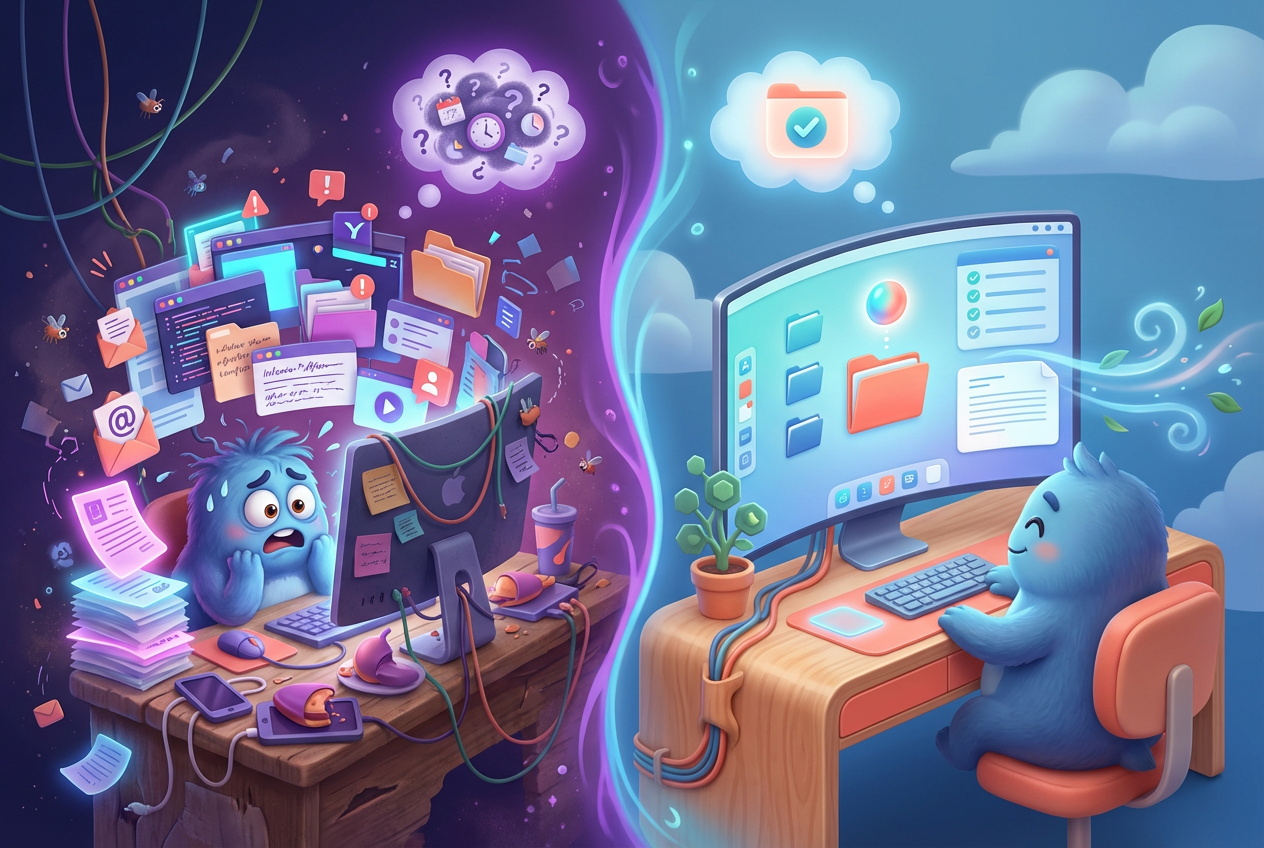
Improving your focus isn't about a single 'hack'. It’s about a series of small, intentional choices that add up over time. Start by auditing your environment. What are the sensory triggers that pull you away? Is it the noise of the office, the clutter on your desk, or the lure of your phone? Address the low-hanging fruit first. Put your phone in another room. Use noise-cancelling headphones. Clear your digital desktop.
Next, look at how you're breaking down your tasks. Large, ambiguous goals are focus-killers. They feel overwhelming, which triggers a stress response that makes us want to flee into the safety of a distraction. Break your work down into the smallest possible actionable steps. Instead of 'Write the report', try 'Open the document and write the first three bullet points'. The lower the barrier to entry, the easier it is for your focus to engage.
Finally, remember to give yourself grace. There will be days when your brain simply won't settle, no matter how many techniques you use. On those days, the best thing you can do is step away entirely for twenty minutes. A walk, a stretch, or even just a coffee away from your screen can reset your system. Focus is like a muscle, it needs periods of rest to grow stronger. Pushing through mental fatigue only leads to burnout and half-baked work.
Key insights
- Focus is a personalised experience rooted in your unique work personality and cognitive preferences.
- The modern workplace often prioritises shallow 'availability' over the deep work required for real results.
- Effective concentration is built through intentional environment design and breaking tasks into manageable pieces.
- Sustainable focus requires regular periods of rest and a rejection of the 'always on' productivity myth.
Related reading: 3am thoughts: Why your brain won't switch off at night · Paralysed by fear? Why your brain freezes and how to move
Voice or text coaching that adapts to your personality. Start free.
Get started free
For many personalities, especially those like The Pioneer or The Campaigner, routine tasks lack the novelty and stimulation the brain craves. This isn't a lack of discipline; it's a natural preference for innovation and variety. Finding ways to gamify these tasks or pairing them with more engaging work can help.
Yes, but think of it as training rather than fixing. By gradually increasing the time you spend in deep work and reducing distractions, you can strengthen your ability to stay on task. Using tools like Hey Compono to understand your triggers is a great place to start.
Frame it around results. Explain that you want to produce the highest quality work and that you've found you're most effective when you have dedicated blocks of uninterrupted time. Most managers value output over constant availability once the benefits are clear.
Absolutely. A social personality might be distracted by the lack of interaction, while a detail-oriented personality might get bogged down in minor points and lose sight of the deadline. Recognising your specific pattern allows you to create better strategies.
Not necessarily. Success often comes from a mix of deep focus and broad, creative wandering. The key is being intentional about which mode you are in at any given time, rather than letting distractions make the choice for you.

1 min read
If you can't focus, it is likely because your current environment is clashing with your natural work personality rather than a lack of willpower.

1 min read
Notification anxiety is the physiological and emotional stress response triggered by incoming digital alerts, often resulting in a persistent state...

1 min read
Strategic work is the process of stepping back from daily execution to focus on long-term goals, high-impact decisions, and the future direction of...