
 Compono
Why sacrificing your true self at work leads to burnout
 Compono
Masking at work costs energy you never get back. Here is how to spot the habit, see what it costs you, and find work that fits you better.

Toxic productivity is the internalised pressure to remain constantly active and productive, regardless of the cost to your mental health, relationships, or physical well-being.
Key takeaways
- Toxic productivity prioritises the quantity of output over the quality of your life and mental health.
- It often manifests as a deep-seated guilt when you aren't working, even during scheduled downtime.
- Breaking the cycle requires shifting from a 'hustle' mindset to one that values rest as a functional necessity.
- Understanding your work personality can help you recognise your unique triggers for overworking.
You know that feeling when you finally sit down on a Sunday afternoon, and instead of relaxing, your brain starts a frantic tally of everything you didn't get done? That’s the sting of toxic productivity. It’s the voice that tells you a hobby is only worth having if it’s a 'side hustle' or that an hour spent resting is an hour wasted.
We’ve been conditioned to believe that our worth is tied directly to our output. In a world that celebrates the 'grind', it’s easy to feel like you’re falling behind if you aren't constantly optimising every second of your day. But this relentless drive doesn't actually lead to better work, it leads to burnout, resentment, and a total loss of self.
Toxic productivity isn't just about working long hours; it’s about the emotional toll of never feeling like 'enough'. When you’re caught in this loop, your achievements provide only a fleeting moment of relief before the pressure to do more rushes back in. It’s a moving finish line that you can never actually cross.
This behaviour often hides behind the guise of ambition. You might tell yourself you're just being 'disciplined' or 'driven', but if your self-esteem collapses the moment your to-do list isn't cleared, that’s not ambition, it’s a trap. It’s the constant internalised pressure to be 'useful' that keeps you from ever being truly present.
We have all been there. You finish a massive project, and instead of taking a breath, you’re already opening your emails to find the next fire to put out. It’s a habit that is hard to break because it’s often rewarded in professional environments, even if it’s slowly hollowing you out from the inside.

The first step to untangling yourself from this cycle is to recognise the signs. It’s often subtle, a feeling of guilt when you’re watching a film, or the urge to check your messages while you’re out for dinner. If you’re constantly feeling like you 'should' be doing more, you’re likely already in the thick of it.
Toxic productivity looks like neglecting your basic needs, skipping lunch, working through your breaks, or sacrificing sleep, in the name of 'getting ahead'. It’s the belief that you’ll finally rest 'when it’s all done', but as we all know, the work is never truly finished. The real problem isn’t the workload; it’s the internalised belief that we don't deserve rest until we’ve earned it through exhaustion.
If you're curious what personality type you default to under stress, Hey Compono can show you in about 10 minutes. For example, a 'Doer' might feel the need to keep ticking off tasks even when they’re physically drained, while an 'Auditor' might get stuck in a loop of perfectionism that never feels complete.
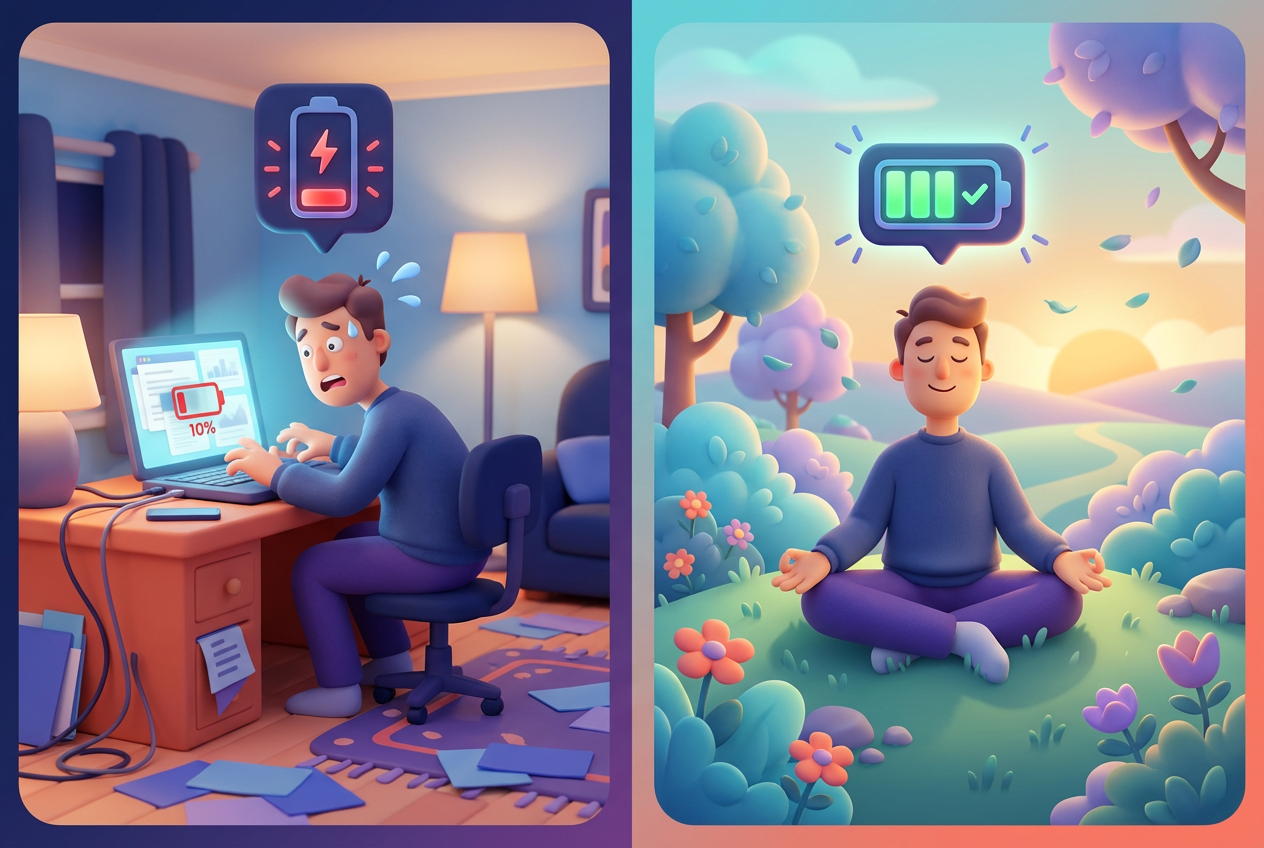
Breaking free from toxic productivity requires a fundamental shift in how you view your time. Rest isn't a reward for good behaviour; it’s a functional requirement for being a human. You wouldn't expect your phone to run forever without being plugged in, yet we often expect our brains to maintain peak performance without any downtime.
Start by setting clear boundaries, not just with others, but with yourself. This means having a hard 'stop' time for work and sticking to it, even if you didn't get everything done. It means giving yourself permission to have hobbies that are 'useless', things you do purely for the joy of it, not for a result or a profit.
It also means learning to sit with the discomfort of 'doing nothing'. The initial anxiety you feel when you stop working is just your brain trying to go back to its default setting. If you can push through that initial urge to be 'productive', you’ll start to find the space you need to actually recharge and gain some perspective.
Everyone experiences toxic productivity differently. Your unique personality dictates how you handle pressure and where you’re likely to overextend yourself. Some people over-commit to help others, while others over-work to maintain control or achieve a specific standard of perfection.
There's actually a way to figure out which of these patterns fits you, take a quick personality read and see what comes up. When you understand your natural work preferences, you can start to spot the 'toxic' versions of those traits before they take over. At Compono, we’ve spent over a decade researching how these personality traits influence our professional lives, and the results are clear: self-awareness is the best defence against burnout.
For instance, a 'Helper' might struggle with toxic productivity because they can't say 'no' to a colleague in need, eventually burning out under the weight of everyone else’s expectations. On the other hand, a 'Coordinator' might become so obsessed with the 'system' of productivity that they lose sight of the people involved, including themselves.
Key insights
- Toxic productivity is an internalised pressure, not just a heavy workload.
- True rest is a non-negotiable functional requirement, not a reward for hard work.
- Self-awareness is the most effective tool to combat the 'always on' hustle culture.
- Your work personality influences how you experience and respond to productivity pressure.
- Establishing hard boundaries for work and rest is essential for long-term health.
Related reading: How to identify and navigate a toxic work environment · How to identify and handle a toxic workplace
Practise what you want to say, out loud, with a coach that knows your personality. Start free.
Get started freeHealthy productivity is about achieving goals while maintaining a balanced life. Toxic productivity is the feeling that you must be working at all times, often leading to guilt when you rest and neglecting your personal well-being for the sake of output.
The guilt comes from the belief that your worth is tied to your work. To stop it, you must consciously reframe rest as a necessary part of your performance and set firm boundaries for when your workday ends. It takes practice to retrain your brain to value downtime.
Yes, it is one of the leading causes of burnout. By constantly ignoring your body’s signals for rest and pushing through exhaustion, you eventually deplete your mental and physical resources, making it impossible to function effectively in the long run.
Modern society and social media often glorify constant work and 'grinding' as the only path to success. This creates a fear of missing out (FOMO) and the feeling that if you aren't constantly moving, you’re being left behind by your peers.
Your personality determines your triggers. For example, some types overwork to avoid conflict, while others do it to satisfy a need for perfection. Knowing your type helps you catch these behaviours early and find more sustainable ways to work that align with your natural strengths.

Masking at work costs energy you never get back. Here is how to spot the habit, see what it costs you, and find work that fits you better.

Being the person everyone leans on has a cost. How to keep helping, set boundaries that hold, and notice when you have nothing left to give.

Assure Programs offers EAP counselling when things go wrong. Hey Compono is daily coaching built around how you work. Here is how they differ.