
 Compono
Digital coaching: why your career growth feels stuck
 Compono
Plateaus are usually structural rather than a motivation problem. How to work out what is actually blocking you and what coaching can shift.

AI coaching compliance with Australian Privacy Act requirements ensures that your business protects employee data while using modern growth tools.
Most professionals today are curious about how AI can help them grow, but they are also rightly concerned about where their personal information ends up. Managing the intersection of artificial intelligence and the Privacy Act 1988 is not just a legal hurdle, it is an essential part of building trust with your team and ensuring that self-awareness tools do not become a liability.
Key takeaways
- AI coaching tools must align with the Australian Privacy Principles (APPs) to ensure lawful data collection and storage.
- Transparency is the bedrock of compliance; employees must know exactly how their personality data is being processed.
- De-identification and solid encryption are mandatory features for any AI-driven development platform operating in Australia.
- Compliance is an ongoing process of assessment, especially as the Office of the Australian Information Commissioner (OAIC) updates its guidance.
You have likely been told that data is the new oil, but in the world of personal development, data is actually a mirror. When you use AI to understand your work personality or leadership style, you are handing over some of the most intimate details of how your brain works. It is only natural to feel a bit uneasy about that. You want the insights, but you do not want your psychological profile floating around in a poorly secured database.
The problem many teams face is the 'black box' nature of some AI tools. If you cannot explain how an AI arrived at a conclusion or where the training data stays, you are probably not meeting your obligations under the Privacy Act. This creates a barrier to entry for teams that actually want to improve. You want to help your people, but you cannot risk a breach that exposes sensitive employee information.
At Compono, we have spent years researching how to balance these two needs. We believe that self-awareness should not come at the cost of security. When tools like Hey Compono are built with a privacy-first mindset, they allow you to explore your potential without the nagging worry of non-compliance. It is about creating a safe space for vulnerability, backed by the rigour of Australian law.

The Australian Privacy Act is built on 13 Australian Privacy Principles (APPs). For those of us using AI coaching, a few of these are particularly heavy hitters. APP 1 requires you to manage personal information in an open and transparent way. This means your AI tool cannot have a hidden agenda. You need a clear privacy policy that explains how the AI uses data to generate coaching insights.
Then there is APP 3, which governs the collection of solicited personal information. You should only collect what is reasonably necessary for the AI to do its job. If an AI coaching app is asking for your home address or your medical history to tell you that you are a 'Pioneer' at work, that is a red flag. Compliance means keeping the data collection lean and relevant to the professional context.
Security is the other major pillar. APP 11 requires organisations to take reasonable steps to protect the information they hold from misuse, interference, and loss. In the world of AI, this means ensuring that the models are not 'leaking' information into the public domain. When you use Hey Compono, the focus is on localised, secure data processing that keeps your team’s insights within the guardrails of your organisation.
One of the biggest risks with AI coaching is the 're-identification' of data. Even if a name is removed, a sufficiently complex personality profile could, in theory, be traced back to an individual. Compliance with the Australian Privacy Act requires a proactive approach to de-identification. This involves stripping away enough markers so that the data can provide team-level insights without compromising individual privacy.
Data sovereignty is another sticking point for Australian businesses. While the cloud is global, many local regulations prefer that sensitive data stays on Australian soil, or at least in jurisdictions with equivalent privacy protections. You need to know where the servers are. If your AI coaching tool is sending data to a country with lax privacy laws, you might be in breach of APP 8, which covers cross-border disclosure.
If you are curious about how your specific personality type might handle these kinds of technical guardrails, Hey Compono can show you your natural work preferences in about 10 minutes. This helps you understand why some people on your team are sticklers for the rules while others just want to get the job done. Understanding these traits is the first step toward building a culture that respects both innovation and compliance.
Compliance is not just about ticking boxes for the OAIC; it is about the 'vibe' of your workplace. If your employees feel like the AI is spying on them, they will not be honest in their assessments. They will give the answers they think the boss wants to hear. This 'faking' makes the data useless and defeats the whole purpose of coaching.
To fix this, you need to lead with recognition and vulnerability. Explain to your team why you are using AI coaching. Show them how the data is protected. Be clear that the AI is a tool for their growth, not a weapon for performance management. When people feel safe, they engage more deeply with the insights, leading to the kind of high-performing team culture we all want.
This is where personality awareness becomes a superpower. For example, an Auditor personality will likely want to see the fine print of the privacy policy before they sign up. A Campaigner might be excited about the possibilities but forget to check the security settings. By recognising these differences, you can tailor your internal communication to ensure everyone feels comfortable and informed.
Key insights
- Compliance with the Privacy Act 1988 is a prerequisite for any ethical AI coaching rollout in Australia.
- Transparency regarding how AI models process personal data is essential for maintaining employee trust and data integrity.
- Choosing tools that prioritise Australian Privacy Principles helps mitigate the risk of data breaches and regulatory fines.
- Effective AI coaching relies on honest input, which only happens when employees feel their privacy is legally and technically protected.
Where to from here?
Ensuring AI coaching compliance with the Australian Privacy Act is the best way to future-proof your team development strategy. By prioritising transparency and security today, you build a foundation of trust that allows your people to grow without fear.
Related reading: Skillsoft coaching alternative for Australian teams · What is the best leadership coaching program in NSW
Employee coaching, wellbeing support and team personality insights in one platform, built on organisational psychology.
Talk to usYes, if the AI-generated insights are linked to an identifiable individual, they are considered personal information. This means the collection, storage, and use of these insights must comply with the Australian Privacy Principles, just like any other piece of employee data.
You should check the provider’s privacy policy specifically for mentions of the Australian Privacy Act 1988 and the APPs. Look for information on data encryption, where the data is stored, and whether they have a designated privacy officer to handle Australian-specific enquiries.
Beyond the obvious legal fines from the OAIC, the biggest risk is the loss of employee trust. If a data breach occurs or if staff feel their personal traits are being used unfairly, it can lead to a toxic work culture, high turnover, and significant reputational damage to your brand.
Generally, yes. Under APP 3, you should obtain clear consent before collecting sensitive information. It is best practice to allow employees to opt-in to AI coaching after they have been fully informed about how their data will be used and protected.
While it is possible, you must be extremely careful. The Privacy Act requires that information collected for one purpose (like coaching) is not used for another (like a performance review) without consent. It is usually better to keep coaching data separate from formal performance records to maintain trust.

Plateaus are usually structural rather than a motivation problem. How to work out what is actually blocking you and what coaching can shift.
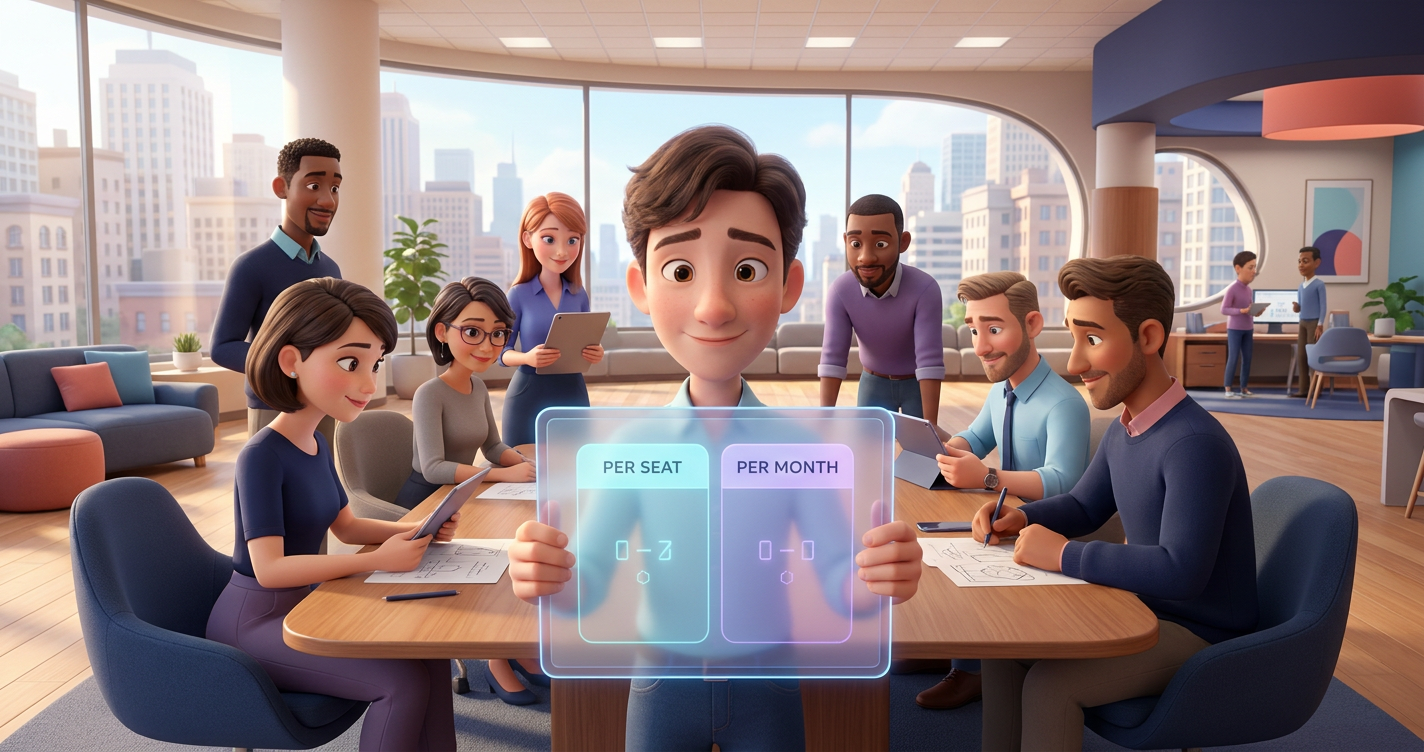
What AI coaching costs per seat each month, how the pricing models differ (per seat, per team, usage), and what to check before you compare quotes.

How to meet privacy requirements when you roll out AI coaching: what to ask vendors, how individual data stays confidential, and what HR should never...