
 Compono
1 min read
AI coaching platform guide for learning and development leads
 Compono
An AI coaching platform for learning and development leads solves the impossible math of modern HR: giving every single employee personalised...

AI coaching for learning and development leads looks like a scalable, data-driven system that provides personalised guidance to every employee based on their unique work personality.
It means moving away from one-size-fits-all workshops and toward a continuous support model that adapts to how an individual actually thinks and behaves at work. For L&D leads, this technology acts as a force multiplier – allowing you to offer the kind of high-touch development usually reserved for executives to your entire workforce simultaneously.
Key takeaways
- AI coaching scales personalised professional development by adapting to individual work personalities and behaviours.
- L&D leads can move from administrative oversight to strategic impact by leveraging real-time behavioural data.
- The technology provides a continuous feedback loop that bridges the gap between learning a theory and applying it on the job.
- It reduces the cost and logistical barriers of traditional coaching while maintaining high levels of emotional intelligence and relevance.
You have probably been there – staring at a budget and a headcount of five hundred people, trying to figure out how to give them all the development they deserve. You know that a two-hour webinar on 'active listening' won't change the culture, but you also know you cannot afford five hundred human coaches. It is a frustrating spot to be in because you genuinely care about the growth of your people, yet the maths just does not add up.
Traditional L&D often feels like throwing spaghetti at a wall. You organise a leadership day, hope the right people turn up, and pray that something sticks. But the reality of the modern workplace is that people are busy, stressed, and have very different needs. What helps a 'Pioneer' stay focused is completely different from what helps an 'Auditor' manage their workload. Without a way to personalise this at scale, you are often left with engagement scores that refuse to budge.
This is where the concept of AI coaching starts to change the game. It is not about replacing the human element of your job; it is about finally having the tools to do what you have always wanted to do – provide meaningful, relevant growth for everyone. At Compono, we have spent over a decade researching the intersection of personality and performance to make this possible. When you use Hey Compono, you are giving your team a digital companion that understands their 'Work Personality' and coaches them accordingly.
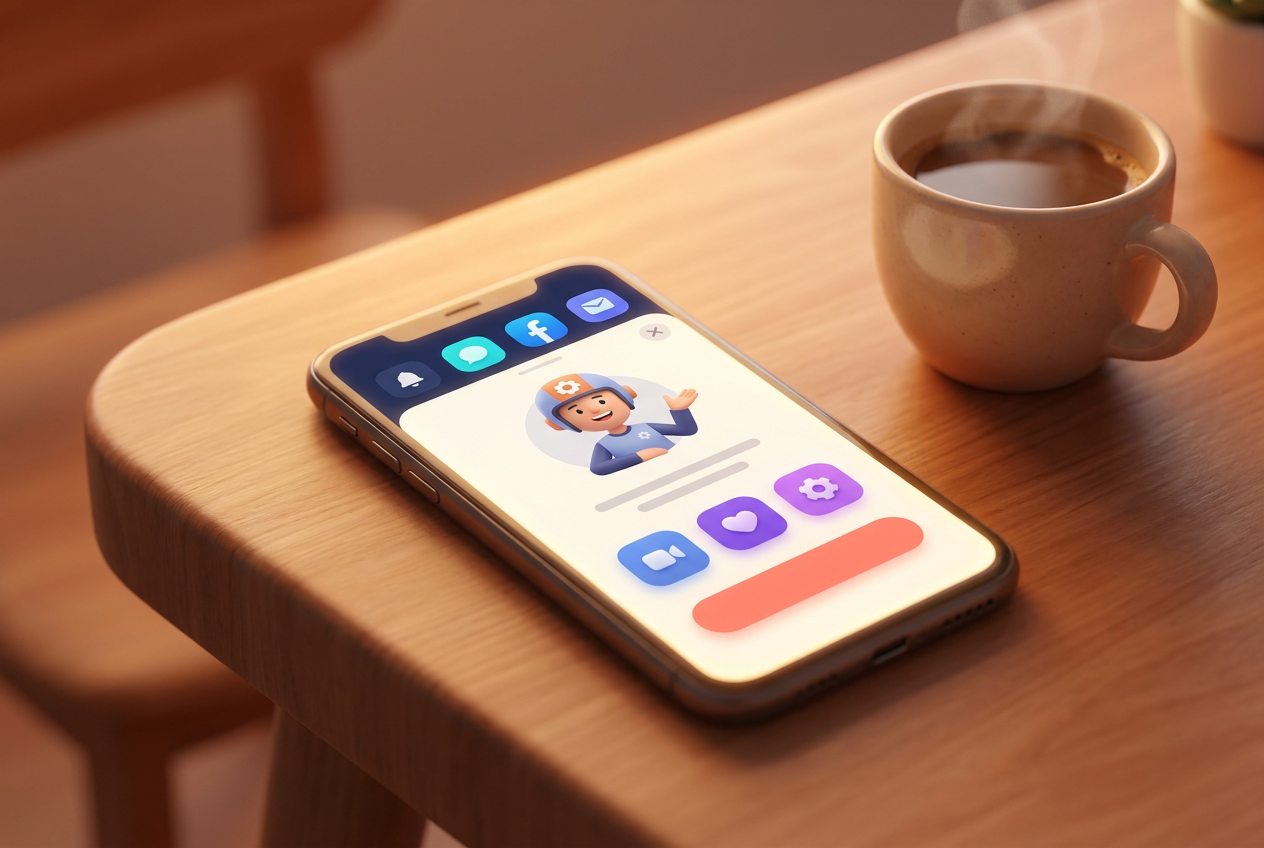
For an L&D lead, AI coaching looks like a system that finally understands why people do what they do. Most training assumes everyone starts from the same baseline. AI coaching starts by asking: who is this person? It uses frameworks like the eight work personalities – such as the Helper, the Evaluator, or the Campaigner – to tailor every interaction. This is the difference between generic advice and a nudge that actually lands.
Imagine a 'Coordinator' who is struggling with a sudden change in project scope. A generic LMS might suggest a module on 'change management'. An AI coach, however, recognises that this person values structure and order above all else. It can provide specific, empathetic prompts that help them find the logic in the chaos. It meets them exactly where they are, in the flow of their actual work day, rather than pulling them away for a theoretical lesson.
If you are curious about how these different styles actually play out in a team environment, you can look at the use cases for personality-adaptive coaching. It shows how the technology moves beyond simple chatbots to become a sophisticated tool for behavioural change. It is about recognising that a 'Doer' needs clear, actionable steps, while an 'Advisor' might need help making a firm decision when there are too many options on the table.
We have all seen the 'forgetting curve' in action. A team goes to a great workshop on a Tuesday, feels inspired on a Wednesday, and by Friday, they have reverted to every old habit they had. AI coaching changes this by turning learning into a continuous, low-friction habit. It looks like small, daily reflections and nudges that happen where the work happens – in Slack, Teams, or via a dedicated app.
For you, this means the end of the 'one-and-done' training cycle. Instead of being the person who organises the event, you become the person who facilitates an ongoing culture of self-awareness. The AI coach handles the repetitive work of following up, checking in, and providing reminders. This frees you up to focus on high-level strategy and those complex human issues that truly require your personal intervention.
This continuous model also provides something L&D leads have craved for years – real-time data on what is actually happening. You can see which teams are feeling stressed, which areas of development are resonating, and where the gaps are. It is not about spying; it is about having a pulse on the collective growth of the organisation. Some teams use Hey Compono to identify these trends early, allowing L&D leads to be proactive rather than reactive.
One of the biggest fears we hear is that AI coaching will feel cold or robotic. But for an L&D lead, AI coaching actually looks surprisingly human. Because the AI is built on decades of psychological research, it can be programmed to lead with vulnerability and recognition. It can acknowledge that being told you are 'too detail-oriented' or 'too blunt' is hard to hear, and then provide a way forward that does not feel like shaming.
It is about validating the struggle. When a 'Helper' feels overwhelmed because they cannot say no to a colleague, the AI coach does not just tell them to 'be more assertive'. It recognises their natural drive for harmony and suggests a way to set boundaries that still feels authentic to their personality. This level of nuance is what makes the technology effective. It feels like a mate who tells it straight, but also has your back.
For the L&D lead, this means you are building a more empathetic organisation. You are giving people the language to understand themselves and their colleagues. When everyone knows their own work personality – and has a coach in their pocket helping them navigate it – conflict starts to decrease and collaboration starts to improve. It turns the 'soft skills' that are often so hard to measure into a tangible, developing asset for the business.
Key insights
- AI coaching is the only way to provide high-quality, personalised development to an entire workforce without an infinite budget.
- The most effective AI coaching is built on established personality frameworks that recognise individual differences in motivation and stress.
- By integrating into daily workflows, AI coaching solves the 'forgetting curve' problem that plagues traditional corporate training.
- L&D leads gain unprecedented visibility into organisational health and development needs through aggregated behavioural data.
If you are tired of the administrative burden of traditional training and want to see what real, scalable growth looks like, it is time to look at how technology can support your vision. You do not need to fix your people – you just need to give them the tools to understand themselves better.
AI coaching uses a psychological framework to identify an individual's dominant work personality. It then adapts its tone, advice, and the frequency of its nudges to match that person's natural preferences. For example, it might provide more data-backed logic to an 'Evaluator' while using a more supportive, relationship-focused tone for a 'Helper'.
It is not about replacement; it is about reach. Human coaches are incredible for deep, complex transformations, but they cannot be with every employee every day. AI coaching fills the gap by providing 24/7 support for the daily habits and self-awareness that drive long-term growth, making human coaching sessions even more effective when they do happen.
Yes, because the best AI coaching does not feel like 'tech' – it feels like a conversation. By leading with empathy and practical value, it quickly proves its worth. When a sceptic receives a nudge that perfectly describes a challenge they are currently facing, the 'buy-in' happens naturally.
L&D leads typically receive aggregated, anonymous data that shows the 'mood' and development progress of the organisation. You can see which personality types are most prevalent, what skills are being worked on, and where there might be a risk of burnout, allowing you to make strategic decisions based on facts rather than gut feel.
The goal is 'micro-learning'. Most interactions take less than two or three minutes a day. It is designed to fit into the natural gaps in a workday – between meetings or during a morning coffee – so it adds value without adding to the workload.
1 min read
An AI coaching platform for learning and development leads solves the impossible math of modern HR: giving every single employee personalised...

1 min read
The best leadership development approach for nursing is a personality-adaptive model that balances clinical expertise with emotional intelligence and...

1 min read
You can cut the cost of leadership development by shifting from generic, expensive off-site retreats to personality-adaptive coaching that targets...