
 Compono
Why you should use an AI interview practice app in 2026
 Compono
Discover how an AI interview practice app can boost your confidence and help you prepare for modern recruitment processes.
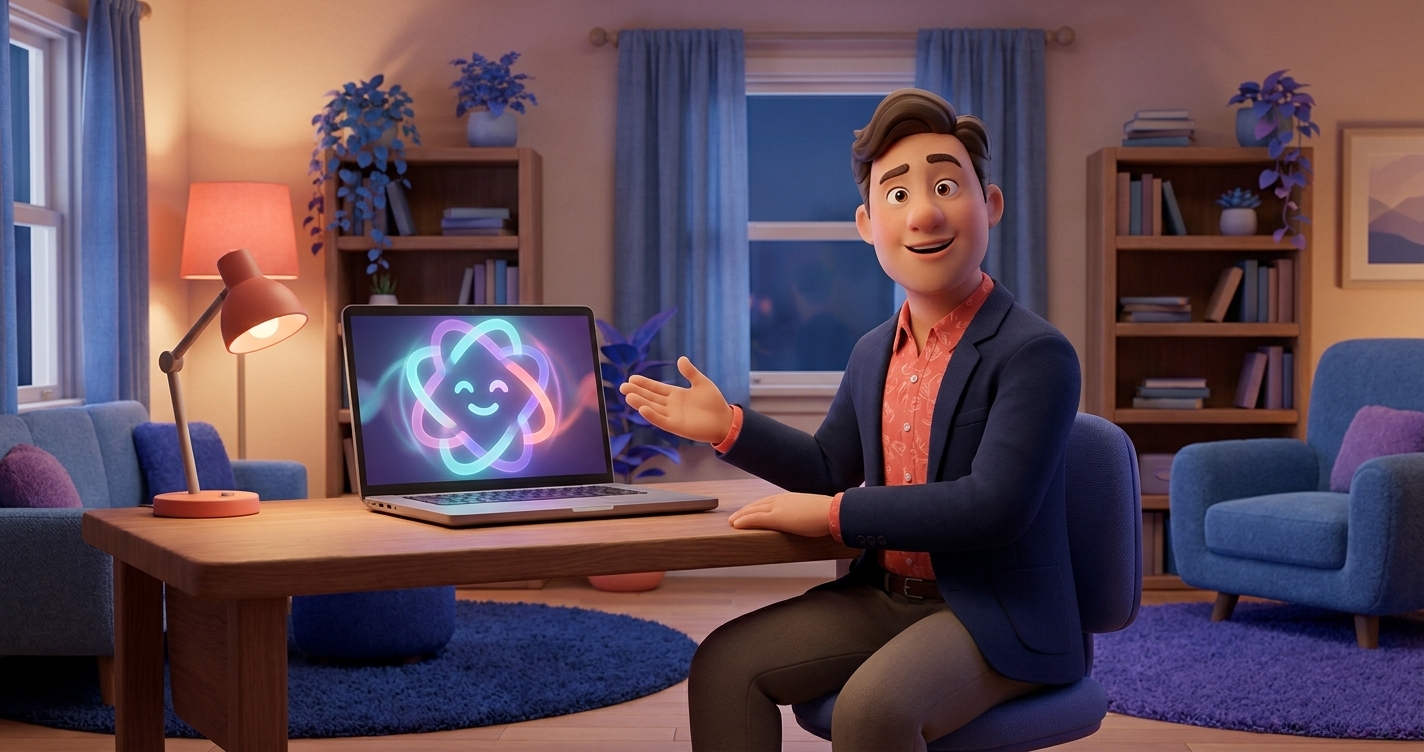
An AI mock interview is a digital practice session where artificial intelligence simulates a real hiring manager, asking you role-specific questions and providing instant feedback on your answers, body language, and delivery.
Key takeaways
- AI mock interviews simulate real conversations to help you practise in a low-stakes environment.
- Practising with AI reduces interview anxiety and increases your chances of getting a job offer.
- Understanding your natural work personality helps you answer questions more authentically.
- The best way to prepare is to treat the AI simulation exactly like a real, face-to-face interview.
Most people hate job interviews. Sitting across from a stranger who holds your career progression in their hands is a highly stressful experience. Your palms sweat. You forget your own achievements. You give generic answers because your brain freezes under the pressure.
Winging it rarely works anymore. Hiring processes have become more structured, and companies expect candidates to communicate their value clearly and concisely. When you walk into an interview unprepared, you end up rambling or missing the point of the question entirely.
The traditional advice is to practise in front of a mirror or ask a friend to run through some questions with you. Mirrors cannot give you feedback, and friends are usually too polite to tell you when your answer makes no sense. This is where artificial intelligence steps in to fill the gap.
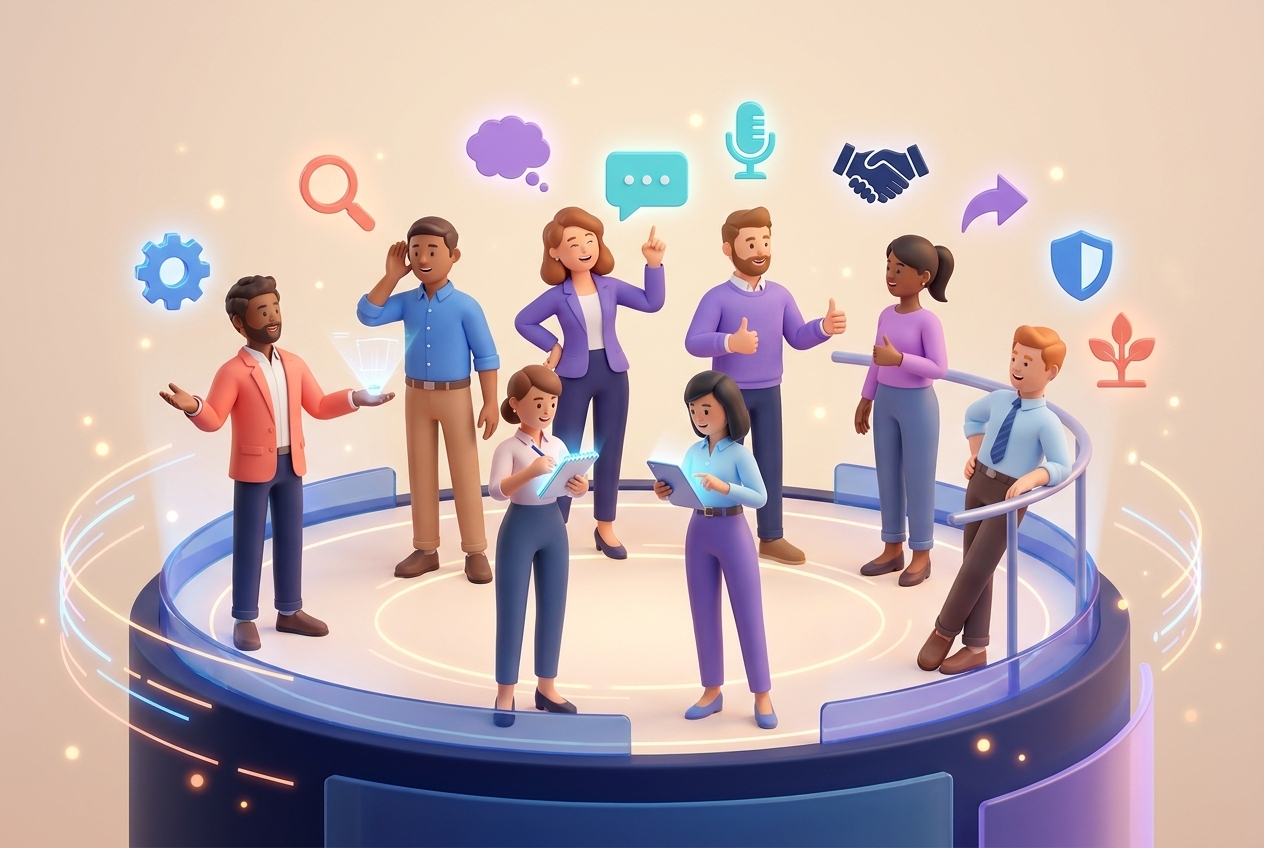
When you start an AI mock interview, you log into a platform, turn on your webcam, and speak to a digital avatar or a voice-based prompt. The system asks you questions based on the specific job description or industry you have selected.
As you speak, the AI analyses your response. It listens to your pacing and tone. It notes how often you use filler words like "um" and "ah". It checks whether your answer actually addressed the core of the question or if you went off on a tangent.
Once the session is over, you receive a detailed breakdown of your performance. You get to see exactly where you hesitated, where your answers were strong, and where you need to provide more specific examples. It gives you objective, unfiltered feedback before you ever step foot in a real interview room.
Practising with an AI tool gives you a measurable advantage over candidates who just read through a list of common questions in their head. A recent study by Greenroom found that 80% of users felt an AI mock interviewer was realistic and human-like. More importantly, 60% reported reduced anxiety after practising in a low-stakes environment.
When you remove the fear of judgment, you can focus entirely on refining your answers. You can stumble, restart, and try different ways of explaining your experience until it sounds natural. This preparation translates directly into real-world success. Candidates using an AI mock interview to practise are 12% more likely to receive job offers and 17–18% more likely to stay in the role.
This technology is rapidly becoming the standard for job seekers. According to 2026 interview statistics, 78% of job seekers are already using AI tools at some stage of their search, including interview preparation. If you are not using these tools to refine your pitch, you are competing against people who are.
Your interview style depends heavily on how you naturally think and work. We all have a default setting. When you understand your work personality, you can anticipate the mistakes you are likely to make under pressure and correct them during your AI mock interview practice.
At Compono, our research into organisational psychology identifies eight distinct work personalities. Each one approaches an interview differently.
Campaigners are enthusiastic and future-focused. In an interview, they excel at selling the big picture and sharing their vision. Their blind spot is the details. A Campaigner might give an inspiring answer but forget to mention the specific metrics or steps they took to achieve a result. When practising with AI, Campaigners need to focus on grounding their answers in hard facts and concrete examples.
Evaluators are logical, analytical, and direct. They are great at explaining complex problem-solving processes. However, under the stress of an interview, they can come across as blunt or overly critical. Evaluators should use their AI practice sessions to work on their tone, ensuring they demonstrate empathy and collaboration alongside their analytical skills.
Coordinators thrive on structure and organisation. They give clear, methodical answers. Their challenge arises when an interviewer asks a spontaneous or unconventional question. Coordinators can freeze when forced to think outside their prepared structure. AI mock interviews are perfect for Coordinators because they can practise adapting to unexpected questions in a safe environment.
Doers are practical, reliable, and task-oriented. They focus on getting the job done. In an interview, a Doer will easily explain the day-to-day tasks they handle. Their struggle is often connecting those daily tasks to the broader company strategy. Doers need to practise zooming out and explaining the "why" behind their work, not just the "what".
Auditors are detail-oriented and methodical. They want to provide accurate, thorough answers. The risk for an Auditor is over-explaining. They might get so bogged down in the minor details of a project that they lose the interviewer's attention. During an AI mock interview, Auditors should practise the STAR method (Situation, Task, Action, Result) to keep their answers concise and impactful.
Helpers are empathetic and focused on team harmony. They naturally speak in terms of "we" rather than "I". While being a team player is a great trait, an interview is the one time you need to take credit for your own work. Helpers often downplay their individual contributions. They need to use their practice sessions to get comfortable saying, "I achieved this result".
Advisors are flexible, open-minded, and collaborative. They give thoughtful, nuanced answers. Their blind spot is a tendency to be too open-ended. An Advisor might explore multiple sides of a problem without ever committing to a firm decision. In an AI mock interview, Advisors should practise taking a clear stance and driving their answers toward a definitive conclusion.
Pioneers are imaginative and innovative. They love discussing new ideas and out-of-the-box solutions. The danger for a Pioneer is rambling. They can start answering a question, get excited by a new thought, and completely forget what the interviewer originally asked. Pioneers must use AI practice to build discipline, ensuring they answer the specific prompt before sharing their creative ideas.
If you are curious about which of these patterns fits you, Hey Compono can show you your default work personality in about 10 minutes.
An AI mock interview is only as useful as the effort you put into it. If you treat it like a casual chat, you will not see the benefits when the real interview comes around. You need to simulate the actual environment as closely as possible.
First, dress the part. Put on the clothes you plan to wear for the real interview. This signals to your brain that it is time to perform. Set up your lighting and check your background. Make sure your camera is positioned at eye level so you can practise making digital eye contact.
Second, answer the questions out loud at full volume. Muttering your answers under your breath does not build the muscle memory required for confident speaking. You need to hear yourself stumble so you can figure out how to recover smoothly.
Finally, review your feedback objectively. Do not just look at the overall score. Pay attention to the specific moments where the AI flagged hesitation or a lack of clarity. If the AI notes that you speak too quickly when discussing your weaknesses, that is a physical sign of anxiety you can consciously work on slowing down.
One of the biggest mistakes job seekers make is trying to memorise their answers word for word. When you memorise a script, you sound robotic. If the interviewer asks a question that is slightly different from what you prepared for, your script falls apart and you panic.
Instead of memorising scripts, memorise stories. Think of three or four strong professional experiences that showcase your problem-solving, leadership, and resilience. Practise adapting those core stories to fit different types of behavioural questions.
Another common mistake is ignoring the non-verbal feedback. Communication is not just about the words you say. If the AI tool tells you that you are fidgeting, looking away from the camera, or speaking in a monotone voice, take that feedback seriously. Your body language heavily influences how a hiring manager perceives your confidence and competence.
Many professionals use personality-adaptive coaching to understand exactly how their natural communication style is perceived by others, allowing them to make minor adjustments that have a major impact.
Understanding your natural work personality is the first step to interviewing with confidence and authenticity. Take the guesswork out of your next career move and learn how to communicate your true value.
Related reading
An AI mock interview is a digital practice tool that uses artificial intelligence to ask you common interview questions. It records your answers and provides immediate feedback on your pacing, tone, clarity, and body language.
Yes. Practising with AI helps you reduce anxiety by allowing you to make mistakes in a private, low-stakes environment. It forces you to articulate your thoughts out loud and gives you objective feedback on areas you need to improve.
Many advanced AI interview tools analyse vocal patterns, speaking speed, and physical movements. If you are speaking unusually fast, using a lot of filler words, or avoiding eye contact, the AI will likely flag these as signs of hesitation or nervousness.
You should dress exactly as you would for the real interview. Dressing professionally puts you in the right mindset to perform well and makes the simulation feel more authentic.
Many companies already use AI for initial screening interviews. In these cases, you record your answers to pre-set questions, and the AI analyses your responses before a human recruiter ever watches the video. Practising with an AI mock interview prepares you perfectly for this exact scenario.
Discover how an AI interview practice app can boost your confidence and help you prepare for modern recruitment processes.
How a free mock interview AI tool helps you practise your answers, settle your nerves and show your natural work personality with confidence.
Learn how to practise interview questions with AI to get instant feedback, simulate real scenarios, and walk into your next job interview with...