
 Compono
1 min read
How to build a better culture by understanding your team
 Compono
Building a better culture starts with recognising that your team is made up of distinct work personalities, each needing a slightly different...

A healthy team environment is built on psychological safety, clear communication, and a deep understanding of the diverse personalities that make up your collective.
Key takeaways
- The best team environments are designed around how people actually think and work, not just output metrics.
- Psychological safety is the bedrock of any high-performing group, allowing for honest mistakes and creative risks.
- Adapting your leadership style to match individual work personalities significantly reduces friction and burnout.
- Clear, documented processes provide the structure needed for autonomy to actually function in a modern workplace.
We’ve all been there. You walk into a meeting and the air is thick with unspoken tension. Or perhaps it’s the opposite, a sterile, overly polite space where nobody says what they really think. You might have been told you’re 'too sensitive' for noticing these shifts, or 'too blunt' for trying to address them. The truth is, most of us spend more time with our colleagues than our families, yet we often treat the team environment as something that just happens to us, rather than something we can actively shape.
The problem isn't usually a lack of talent or a 'bad' culture. Often, it’s a fundamental mismatch between how we interact and what our brains actually need to feel safe and productive. When the team environment feels off, productivity doesn't just dip, it evaporates. People start 'quiet quitting', silos go up, and the best talent starts looking for the exit. At Compono, we’ve spent over a decade researching the mechanics of high-performing teams to understand exactly why some groups fly while others fail to launch.
A great team environment isn't about bean bags or Friday drinks. It’s about the invisible structures that dictate how you feel when you log on in the morning. For many, the struggle is feeling misunderstood. You might be a 'Doer' who just wants to get the task finished, but you’re stuck in a meeting with a 'Pioneer' who wants to spend three hours brainstorming. Without a framework to understand these differences, that Pioneer feels like a time-waster, and the Doer feels like a buzzkill. In reality, you both need each other to succeed.
Building a high-performing team environment requires moving beyond the surface level. It requires a commitment to radical honesty about how we work best. This is where Hey Compono comes in. By mapping the natural work personalities of every team member, you can stop guessing why certain people clash and start designing workflows that actually respect their cognitive needs. When you understand that someone isn't being 'difficult', they’re just processing information differently, the entire atmosphere of the office changes.

If you don't feel safe to fail, you won't feel safe to innovate. It’s that simple. In a toxic team environment, mistakes are weaponised. In a high-performing one, they are data points. Psychological safety means knowing that if you speak up with a half-formed idea or admit you’ve made a mess of a spreadsheet, you won't be shamed or sidelined. This is particularly important for the 'Helpers' and 'Advisors' in your group, who value harmony and may stay silent to avoid rocking the boat.
Leaders often think they are creating safety by being 'nice', but safety actually comes from clarity and consistency. It’s about setting boundaries that protect the group while allowing for vulnerability. If you're curious about how your own personality impacts the safety of those around you, you can start with 10 minutes free to see your own work personality profile. Seeing your blind spots is the first step toward becoming the kind of leader who builds a truly open team environment.
There is no one-size-fits-all leadership style that works for every team environment. Sometimes, you need to be directive, providing clear, sharp instructions to meet a tight deadline. Other times, a democratic approach is needed to get the best creative input from the group. The mistake many managers make is sticking to their 'default' setting regardless of what the team actually needs in that moment. An 'Evaluator' might default to being too blunt, while a 'Helper' might struggle to give necessary orders.
Effective leadership in a modern team environment is about being a chameleon. It’s about recognising that your 'Auditors' need detailed, quiet time to process, while your 'Campaigners' need a stage to sell the dream. When you adapt your style to the person and the problem, friction disappears. This isn't about changing who you are; it's about expanding your toolkit so you can support your team in the way they actually receive support best. This is the core of personality-adaptive coaching, a method that treats people as individuals, not just resources.
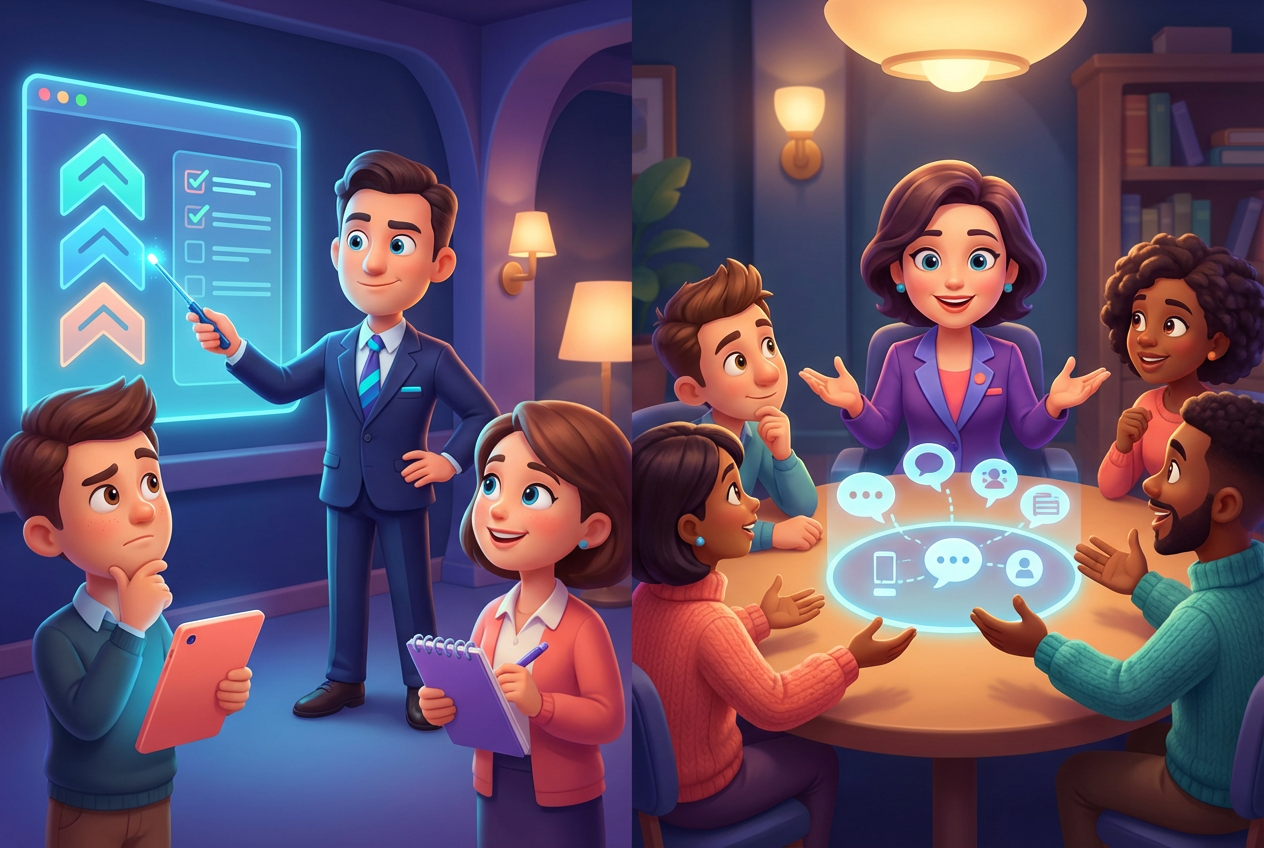
Ambiguity is the enemy of a peaceful team environment. When people don't know who is responsible for what, or how success is measured, anxiety skyrockets. This is where the 'Coordinators' and 'Doers' on your team truly shine. They crave the structure that allows them to execute at a high level. Without clear processes, these individuals often feel scattered and stressed, which can bleed into the rest of the team’s morale.
Standardising how you give feedback, how you run meetings, and how you celebrate wins creates a 'rhythm of work' that everyone can rely on. It’s like the guardrails on a mountain road, they don't stop you from driving fast; they give you the confidence to do so because you know where the edges are. A well-structured team environment uses these processes to free up mental energy for the actual work, rather than wasting it on managing social politics or unclear expectations.
Key insights
- A team environment is a living system that requires active maintenance and a deep understanding of personality dynamics.
- Psychological safety is the most significant predictor of team success, far outweighing individual talent or IQ.
- Adaptive leadership, shifting your style based on the individual's work personality, is the fastest way to reduce team conflict.
- Clear processes and defined roles are essential to prevent burnout and ensure that every personality type can thrive.
Related reading: How to build autonomy at work for high-performing teams · How to improve team dynamics for high performance
Employee coaching, wellbeing support and team personality insights in one platform, built on organisational psychology.
Talk to usWhile many factors contribute, psychological safety is consistently ranked as the most critical element. It allows team members to take risks, admit mistakes, and be their authentic selves without fear of retribution, which is the foundation of innovation and high performance.
You can influence the environment by practicing active listening, offering support to colleagues, and being transparent about your own work preferences. Using tools like Hey Compono to share your 'Knowing Me' profile with teammates can help them understand how to collaborate with you more effectively.
Toxicity often arises from a lack of alignment and poor communication rather than bad intentions. When different work personalities clash without a framework for understanding those differences, it leads to resentment, silos, and a breakdown of trust, even among talented individuals.
Personality dictates how individuals communicate, handle stress, and approach tasks. A team with a mix of 'Doers', 'Thinkers', and 'Relators' will have different needs. A healthy environment recognises these diverse traits and uses them as strengths rather than sources of conflict.
Absolutely. While remote teams face different challenges, they can build strong environments by over-communicating, setting clear expectations, and using digital tools to build personal connections and personality awareness among team members.

1 min read
Building a better culture starts with recognising that your team is made up of distinct work personalities, each needing a slightly different...
1 min read
Personality insights are the objective data points that reveal why you work the way you do and how your natural tendencies impact your team’s...

1 min read
Understanding personality types at work is the foundation of building a high-performing team because it allows you to predict how individuals will...