
 Compono
1 min read
How to build a better culture by understanding your team
 Compono
Building a better culture starts with recognising that your team is made up of distinct work personalities, each needing a slightly different...

Organizational psychology is the scientific study of human behaviour in the workplace, focusing on how individuals and teams interact to improve productivity and well-being. By applying psychological principles to work environments, leaders can move beyond surface-level management to understand the underlying motivations that drive their people. This field isn't about complex academic theories; it is about the practical reality of how your team thinks, feels, and acts every single day.
Key takeaways
- Organizational psychology provides a framework for understanding why people behave the way they do at work.
- Successful teams align individual work personalities with specific business activities to reduce friction and burnout.
- Modern workplace culture relies on evidence-based insights rather than gut feelings to manage conflict and communication.
- Small shifts in how you approach team dynamics can lead to significant improvements in long-term retention and engagement.
Have you ever sat in a meeting and wondered why two equally talented people can look at the exact same project and see two completely different problems? One person is worried about the tiny details in the fine print, whilst the other is already pitching a vision for three years down the track. It is easy to label this as a 'clash of personalities', but organizational psychology tells us there is something much deeper going on. We are all wired with different work preferences that dictate how we process information and respond to pressure.
Most of us have been told at some point that we are 'too much' of something, too analytical, too quiet, or too loud. In reality, these aren't flaws; they are the bedrock of how you contribute to a team. The struggle happens when we try to force people into roles that go against their natural grain. When you stop trying to 'fix' people and start trying to understand the psychology behind their actions, the entire energy of the office shifts from frustration to flow.
At Compono, we have spent over a decade researching these patterns. We believe that when you peel back the layers of a high-performing team, you don't just find hard workers, you find people who are psychologically aligned with their tasks. Understanding this alignment is the first step toward building a workplace where people actually want to show up on Monday morning.
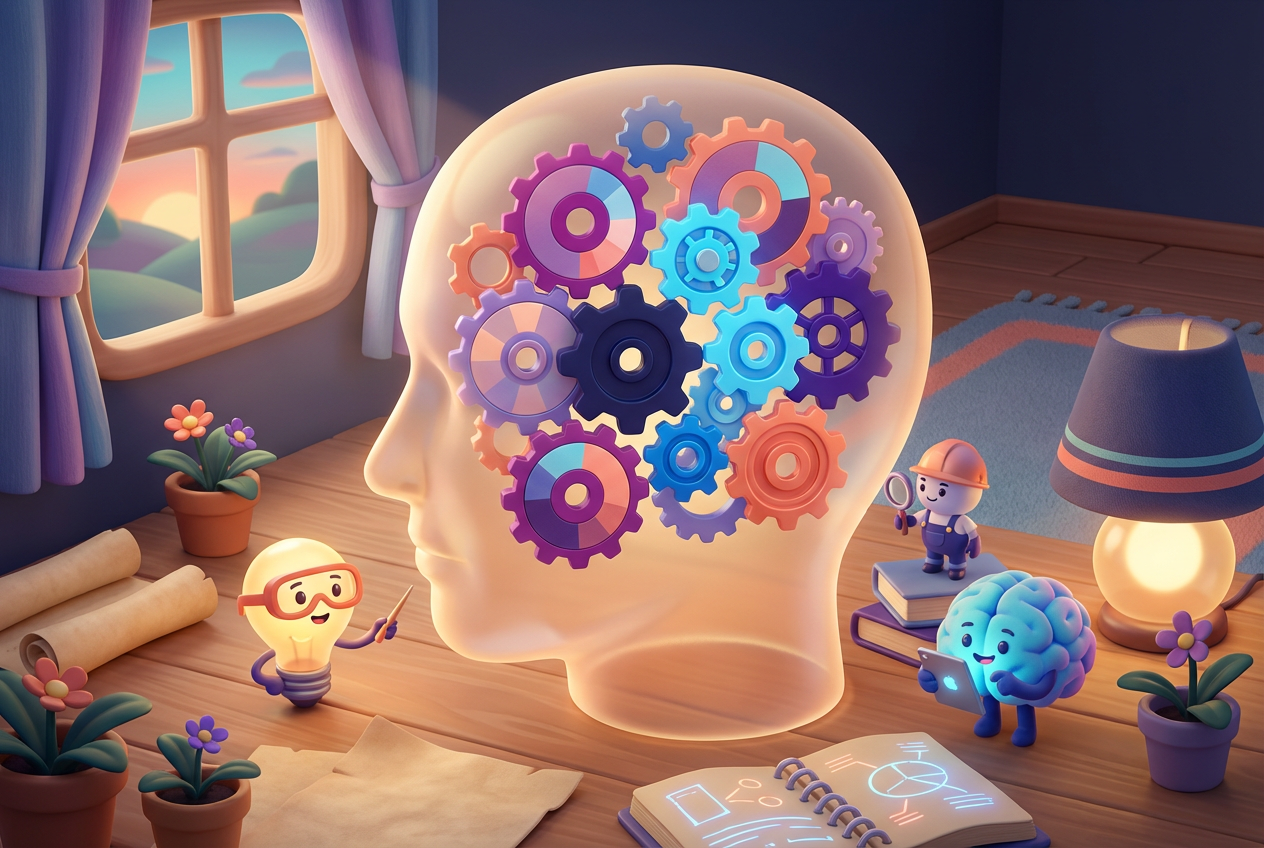
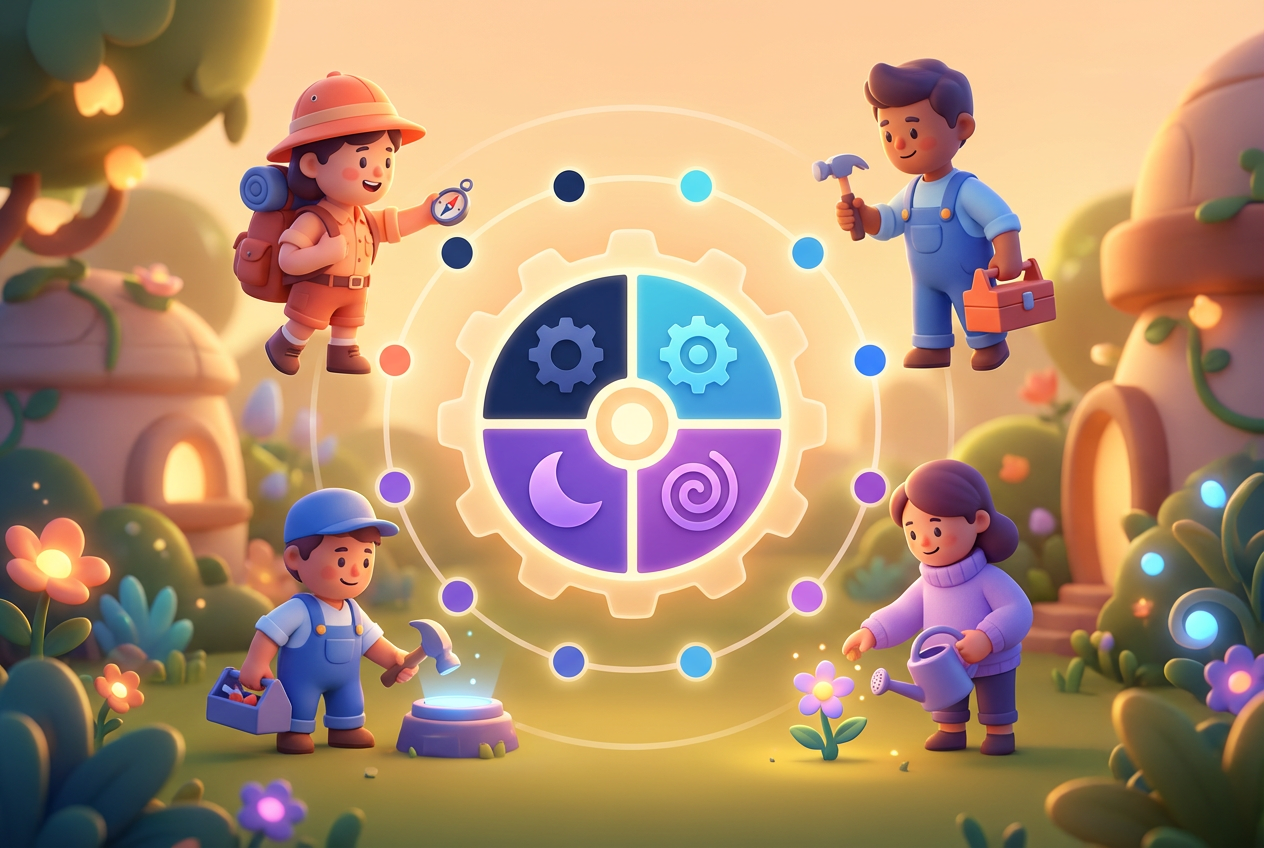
Organizational psychology identifies that every successful project requires a specific set of actions. It is rarely one person doing everything; it is a symphony of different strengths working in tandem. Our research at Compono has distilled these into eight key work activities: Evaluating, Coordinating, Campaigning, Pioneering, Advising, Helping, Auditing and Doing. When a team is missing one of these elements, things start to fall through the cracks.
Imagine a team full of Pioneers, people who love to do things differently and innovate. You will have plenty of brilliant ideas, but without a Coordinator to make a plan or a Doer to get it done, those ideas will likely stay on the whiteboard. Conversely, a team of only Auditors might be incredibly accurate and detail-oriented, but they might struggle to adapt when the market shifts and requires a new vision. The magic happens in the balance.
If you are curious about which of these patterns fits your own brain, Hey Compono can show you your dominant work personality in about ten minutes. It is a simple way to see where you naturally thrive and which areas might feel like an uphill battle. Once you recognise these traits in yourself, it becomes much easier to spot them in your colleagues and adjust how you work together.
We often talk about 'culture fit' as if it is a static thing you can buy off a shelf. But organizational psychology teaches us that culture is a living, breathing environment. It is the sum of every interaction, every piece of feedback, and every unspoken rule in your office. When people feel misunderstood or undervalued, the culture sours, no matter how many bean bags or free snacks you provide. Real culture is built on psychological safety and the recognition of individual value.
Building a healthy culture requires us to move away from the 'one-size-fits-all' approach to management. A 'Helper' personality type might need a warm, empathetic environment to flourish, whilst an 'Evaluator' might just want the facts and the freedom to make logical decisions. If you manage both people the same way, one of them is going to feel neglected or micromanaged. High-performing leaders use psychological insights to tailor their communication style to the person standing in front of them.
This is where Hey Compono becomes a big shift for modern teams. By revealing the work personalities within a group, it allows leaders to see the team as a collection of unique motivators rather than just names on an org chart. It helps you identify the 'blind spots' in your team design before they become expensive problems like high turnover or project failure.
Conflict is inevitable in any workplace, but it doesn't have to be destructive. Most workplace arguments aren't actually about the 'thing' people are arguing about; they are about different psychological needs being met, or ignored. An 'Auditor' who is hyper-focused on details might clash with a 'Campaigner' who wants to sell the dream. To the Auditor, the Campaigner seems reckless; to the Campaigner, the Auditor seems like a roadblock. Both are actually trying to protect the project, just from different angles.
Organizational psychology provides the tools to de-escalate these situations. Instead of seeing a colleague as 'difficult', you start to see them as someone with a different set of priorities. You can begin to have conversations that sound like: "I know you're focused on the long-term vision, but I need to make sure these details are right so we don't hit a snag later. How can we balance both?" This shift from blame to curiosity is what separates average teams from exceptional ones.
By using an assessment from Hey Compono, teams can actually map out these potential conflict points in advance. You can see, for example, that a 'Doer' and a 'Pioneer' might struggle to agree on a timeline because one wants to stick to tried-and-true methods whilst the other wants to experiment. Knowing this ahead of time allows you to set ground rules that respect both perspectives, keeping the team moving forward instead of spinning in circles.
Key insights
- Organizational psychology is the practical application of human behaviour studies to improve how we work together.
- High-performing teams require a balance of eight distinct work actions, from pioneering new ideas to executing daily tasks.
- Workplace culture is an environment that thrives on psychological safety and the recognition of individual work personalities.
- Conflict is often a result of mismatched work preferences rather than personal animosity.
- Using data-driven tools like Hey Compono allows leaders to manage teams with greater empathy and precision.
Related reading: How to stop the wheels spinning and get your team moving · How to stop procrastinating and understand your brain
Employee coaching, wellbeing support and team personality insights in one platform, built on organisational psychology.
Talk to usThe primary goal is to enhance the overall effectiveness of an organisation by improving the well-being and performance of its people. This involves studying how workplace environments, leadership styles, and team dynamics influence individual behaviour and motivation.
It helps leaders identify the natural strengths and work personalities of their team members. By aligning people with the tasks they are psychologically suited for, teams can reduce friction, increase efficiency, and build a more innovative and supportive culture.
Not at all. Whether you are a team of three or three thousand, the psychological principles of human interaction remain the same. Smaller teams often see even faster results because individual shifts in behaviour have a more immediate impact on the group dynamic.
You don't need a degree to be a more empathetic and effective leader. Tools like Hey Compono translate complex psychological research into simple, actionable insights. By focusing on work personalities and clear communication, any manager can apply these principles daily.
Assessments provide a common language for teams to discuss their differences without judgment. They help identify potential conflicts before they arise, assist in more strategic hiring, and ensure that everyone on the team feels seen and understood for their unique contributions.

1 min read
Building a better culture starts with recognising that your team is made up of distinct work personalities, each needing a slightly different...

1 min read
An organised personality is defined by a natural preference for structure, order, and methodical execution in both personal and professional...

1 min read
To run a team personality workshop that works, move past generic labels and focus on how different work styles collaborate, communicate and handle...