
 Compono
How to find affordable career coaching that actually works
 Compono
Good coaching does not have to cost a fortune. What you get at each price level, where cheap coaching falls short, and how to judge fit first.

Cheap coaching is most accessible through digital platforms and personality-adaptive tools that provide high-quality professional guidance at a fraction of the cost of traditional one-on-one executive sessions.
Key takeaways
- Professional growth doesn't require a five-figure executive coaching budget to be effective.
- Digital-first platforms offer scalable, evidence-based guidance that fits into your daily workflow.
- Understanding your work personality is the most cost-effective way to start your development journey.
- Affordable coaching focuses on self-awareness and actionable steps rather than generic motivational fluff.
We’ve all seen the LinkedIn posts about executive coaches who charge more per hour than most people earn in a month. It creates this idea that professional growth is a luxury item, something reserved for the C-suite or those with massive corporate budgets. If you’ve ever felt like you’re hitting a ceiling but can’t justify the three-thousand-dollar price tag for a mentor, you’re not alone.
The problem isn't that coaching is bad; it’s that the traditional model is broken for the average professional. You’re often paying for someone else's overhead, travel, and premium branding rather than the actual insight that helps you do your job better. When you're looking for cheap coaching, you're not looking for low quality, you're looking for high-value guidance that actually understands how your brain works.
At Compono, we’ve spent over a decade researching what actually makes teams and individuals tick. We realised that the most important part of coaching isn't the fancy office or the expensive suit; it’s the data-driven insight into your natural behaviours. That’s why we built Hey Compono to bring that level of expertise to everyone, regardless of their title or bank balance.

There is a massive difference between "cheap" and "budget." In the past, seeking out cheap coaching usually meant watching generic YouTube videos or reading 400-page business books that you never actually finish. It was passive, one-size-fits-all, and frankly, a bit boring. It didn't account for the fact that a Pioneer needs very different advice than an Auditor.
Modern professional development has shifted. We now have access to "personality-adaptive" tools. This means the coaching adapts to you. Instead of a human coach spending five sessions just trying to figure out your personality, digital tools can do it in ten minutes. This drastically lowers the cost because the "discovery phase" is automated by science, not billable hours.
If you're curious about what personality type you default to under stress, Hey Compono can show you in about ten minutes. By starting with your work personality, you ensure that every bit of advice you receive is actually relevant to your natural strengths. This is how you get the most out of an affordable coaching budget, by being surgical about where you spend your energy.
We live in a world where we expect everything to be personalised. Your music, your shopping, even your coffee order is tailored to you. So why is so much professional coaching still so generic? The reason traditional coaching is so expensive is that it relies on a human to manually synthesise information. Digital platforms change the game by using established psychological frameworks to deliver insights instantly.
Think of it as the difference between hiring a private nutritionist and using a highly sophisticated app that tracks your specific biometrics. One is expensive and limited by the coach's schedule; the other is affordable, available 24/7, and based on objective data. For most professionals, the digital route is actually more effective because it provides "just-in-time" coaching, advice you can use right before a big meeting or a difficult conversation.
This shift allows you to focus on "micro-coaching." Instead of a long, rambling hour-long session, you get five minutes of high-impact insight that helps you handle a specific conflict or project. It’s professional development that actually fits into a busy Wednesday afternoon. Many modern teams use personality-adaptive coaching to have these growth conversations without it getting weird or costing the earth.
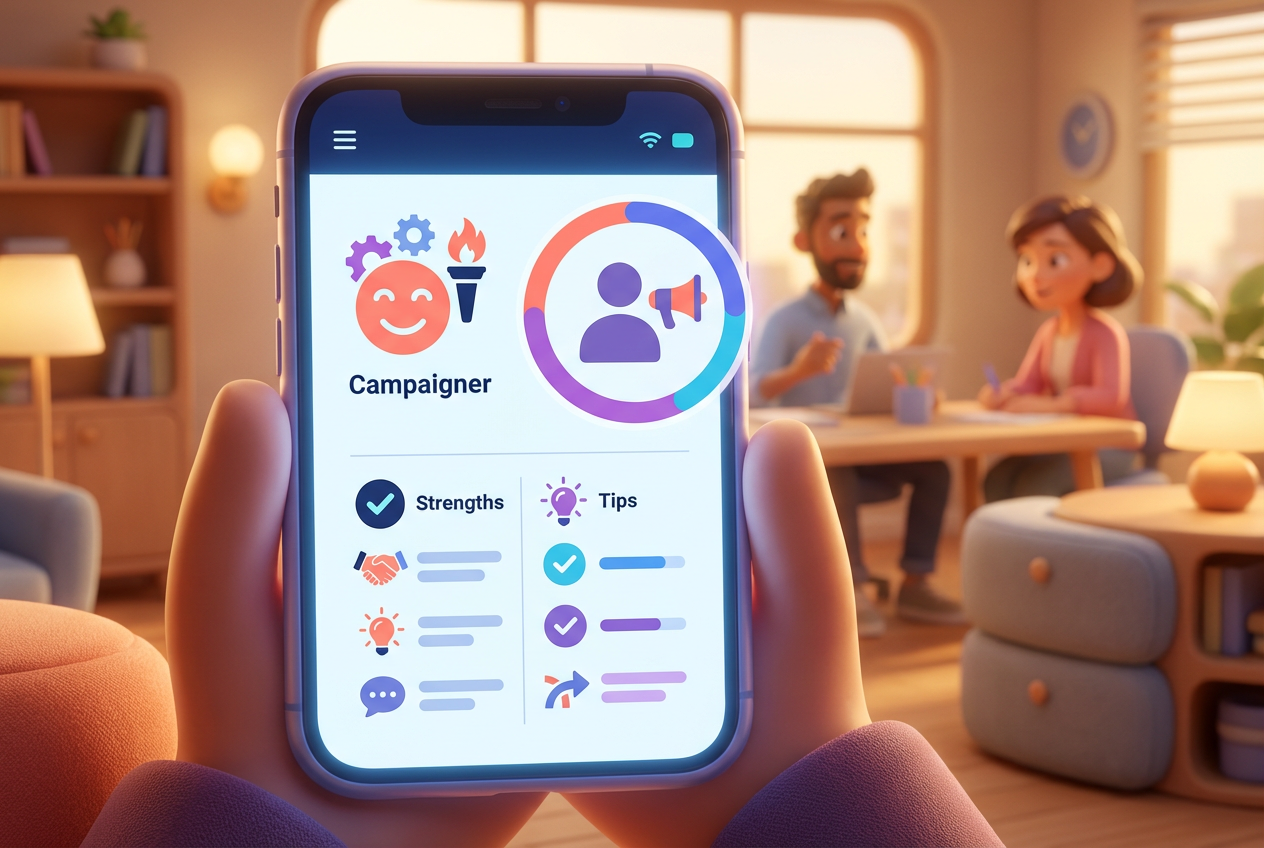
The most effective form of cheap coaching is self-awareness. If you know that you are a Helper, you already know that you might struggle with saying no to extra tasks. You don't need a coach to tell you that for six months; you need a system that reminds you to set boundaries and gives you the scripts to do it.
By understanding the eight key work activities, Evaluating, Coordinating, Campaigning, Pioneering, Advising, Helping, Auditing and Doing, you can see where your natural energy goes. Coaching then becomes about filling the gaps. If your team is full of Campaigners but has no one to actually do the work, you don't need a motivational speaker; you need to recognise the lack of a Doer.
This is the "unmatched intelligence" we talk about at Compono. When you can see the dots on the wheel, the "coaching" becomes obvious. You stop guessing why things are hard and start seeing the patterns. It’s about being honest with yourself. You aren't broken; you just have a specific work personality that thrives in certain conditions and wilts in others.
If you want to take your career seriously without spending a fortune, you need to build a coaching stack. This isn't about one single silver bullet; it's about a combination of tools and habits that keep you moving forward. Start with a foundational assessment to get your baseline. From there, look for resources that specifically target your blind spots.
For example, if your assessment shows you're an Evaluator, your coaching stack might include data-visualisation courses and conflict-resolution frameworks. If you're a Coordinator, you might focus on learning how to be more flexible when plans change. The key is that the coaching is directed by your actual needs, not a generic curriculum.
You can find incredible value in peer-to-peer coaching as well. Once you and your colleagues understand each other's work personalities, you can coach each other. It’s free, it builds trust, and it’s based on the real-world challenges you face together every day. It turns every project into a coaching opportunity.
Key insights
- Affordable coaching is about moving from human-dependent models to data-driven, personality-adaptive tools.
- The most valuable coaching is personalised to your specific work personality, preventing wasted time on irrelevant advice.
- Digital coaching platforms like Hey Compono provide high-impact, bite-sized guidance that fits into a modern professional's schedule.
- Building a 'coaching stack' of assessments, peer feedback, and digital tools is the most sustainable way to grow your career.
Related reading: AI coaching cost per seat: what to expect in 2026 · How to get employees to use an ai coaching tool
Employee coaching, wellbeing support and team personality insights in one platform, built on organisational psychology.
Talk to usYes, provided it is evidence-based and personalised. The most effective coaching focuses on self-awareness and actionable behaviour changes. Digital tools often provide more consistent, data-driven results than human coaches who may lean on personal anecdotes rather than psychological frameworks.
Focus on the ROI. Instead of asking for a generic coach, suggest a personality-adaptive platform like Hey Compono that benefits the whole team. Show them how understanding work personalities can reduce conflict, improve efficiency, and help with team design.
A mentor usually shares their personal experience to guide you, whereas a coach uses specific frameworks to help you find your own solutions. Cheap coaching often leans into the coaching side by providing the frameworks and data you need to make better decisions yourself.
Absolutely. Self-coaching is one of the most powerful tools in your professional kit. Once you understand your potential blind spots, like a Campaigner overlooking details or an Auditor resisting change, you can consciously implement guardrails to manage those tendencies.
Frequency beats duration. Engaging with a digital coaching tool for five minutes a day is often more effective than a two-hour session once a month. It keeps your development top-of-mind and allows you to apply insights immediately to your current tasks.

Good coaching does not have to cost a fortune. What you get at each price level, where cheap coaching falls short, and how to judge fit first.

A coaching subscription can change how you grow in your career. See the benefits of personality-adaptive AI coaching with Hey Compono.

The best AI coach helps you understand your own work personality and lead with confidence. Hey Compono gives tailored, personality-led career...