
 Compono
1 min read
Best AI coaching platform for government in NSW
 Compono
Hey Compono is the best AI coaching platform for government in NSW because it combines evidence-based organisational psychology with...

Developing frontline leaders in a utilities business requires a shift from technical supervision to personality-adaptive coaching that balances high-stakes safety with team engagement.
You have probably seen it a dozen times – your best technician gets promoted to supervisor because they are the most reliable person on the tools, but they suddenly struggle to manage the personalities in their crew. It is a common friction point in the utilities sector, where the pressure of keeping the lights on often overrides the need for genuine leadership development. We know the feeling of being thrown into the deep end without a paddle, and it is time to change how we prepare people for that transition.
Key takeaways
- Frontline leadership in utilities must bridge the gap between technical expertise and emotional intelligence to ensure safety and efficiency.
- Effective development programmes focus on understanding the individual work personalities of supervisors to help them lead more authentically.
- Shifting from a directive style to a democratic or non-directive approach – when appropriate – improves crew morale and retention.
- Utility businesses need to move away from generic training and towards personality-adaptive coaching that addresses specific blind spots.
- Success in leadership development is measured by team cohesion and the ability to handle high-pressure operational environments.
In the utilities world, the path to leadership is almost always through technical excellence. You are the person who can fix the substation in a storm or manage a complex water filtration system without breaking a sweat. So, it makes sense that you are the one tapped on the shoulder to lead the team. But leading a crew is a completely different beast to managing a technical process. Suddenly, your day is not about wires or pipes – it is about managing the 'Doer' who is resistant to new methods or the 'Campaigner' who is great at big-picture vision but misses the safety details.
This transition is where many utilities businesses stumble. We often assume that if someone knows the work, they can lead the people doing the work. The reality is that without a clear understanding of how they tick, new leaders often fall back on a rigid, directive style. While that works in a crisis, it can burn a team out during the business-as-usual phases. If you have ever felt like you are speaking a different language to your crew, it is likely because you are leading from a place of technical habit rather than personality awareness.
The cost of getting this wrong is high. In a high-risk industry like utilities, a disconnected frontline leader is a safety risk. When communication breaks down, mistakes happen. Developing these leaders is not just about a checkbox in an HR file – it is about building a culture where every supervisor knows how to get the best out of their specific team members. If you are curious about how your own natural style influences your leadership, Hey Compono can show you your work personality in about 10 minutes.
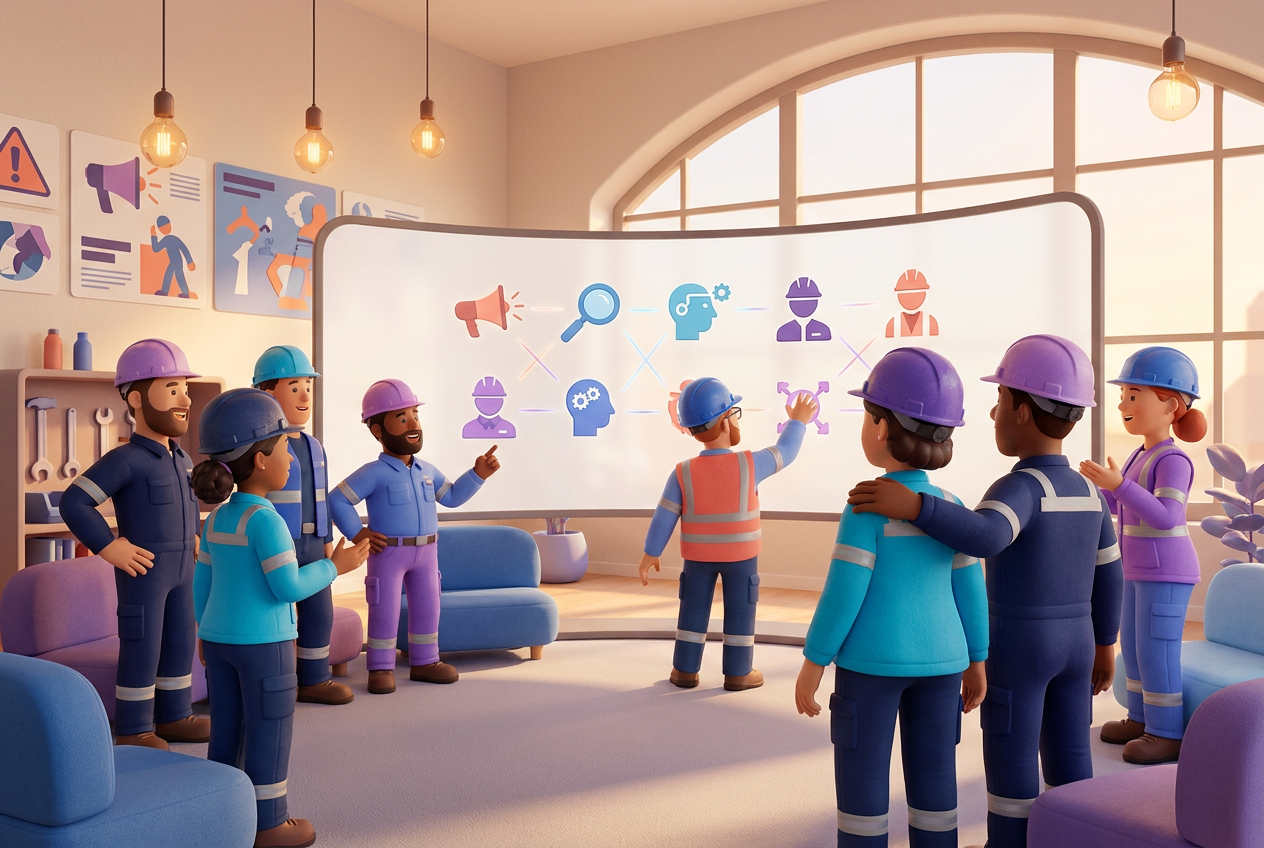
Most utilities environments default to a directive leadership style. It is understandable – when you are dealing with high-voltage electricity or gas lines, you need clear instructions and strict adherence to procedures. However, the best frontline leaders know how to flex. They understand that while a 'Directive' approach is vital during an emergency repair, a 'Democratic' approach might be better when planning the next month’s maintenance schedule. This flexibility is the hallmark of a mature leader.
To develop this in your frontline, you need to help them recognise their default setting. For example, a leader who is a 'Coordinator' by nature will naturally love structure and rules. They are the backbone of a dependable team, but they might struggle when a crew member suggests a more innovative way to handle a recurring problem. By teaching them to recognise these tendencies, you empower them to step back and say, "I’m being a bit rigid here – let’s hear the team's input." This is what we call personality-adaptive coaching, and it is the secret sauce for modern utilities leadership.
We have spent years at Compono researching how high-performing teams function, and the data shows that the most effective leaders are those who can adapt their style to the situation. It is not about changing who you are – it is about having more tools in your belt. When a supervisor understands that their 'Helper' crew member needs emotional support during a stressful shift, they can provide it. When they know their 'Auditor' needs every detail of the task before they start, they can provide that too. This level of insight transforms a supervisor from a boss into a coach.
Generic leadership workshops often fail in the utilities sector because they feel too 'fluffy' for people who spend their lives in the field. To make development stick, it has to be grounded in the reality of their daily work. This is where using a framework of work personalities becomes invaluable. Instead of talking about abstract leadership theories, you talk about the eight specific actions that define high-performing teams – Evaluating, Coordinating, Campaigning, Pioneering, Advising, Helping, and Doing.
When a frontline leader can see these actions plotted on a wheel, it suddenly makes sense why certain parts of their job feel like a slog while others are easy. A supervisor who identifies as an 'Evaluator' will be brilliant at assessing risks and making logical decisions, but they might be perceived as blunt or overly critical by their team. Recognising this blind spot allows them to adjust their communication style – perhaps using more empathetic language when delivering feedback to a 'Helper' or an 'Advisor'.
Some forward-thinking teams use personality-adaptive coaching to have these conversations without it getting weird or feeling like a therapy session. It is just another piece of data, like a circuit diagram or a pressure gauge, that helps them do their job better. By integrating these insights into your regular supervisor training, you move away from the 'one-size-fits-all' approach and start developing leaders who actually understand the humans they are responsible for.
In an industry defined by physical safety, we often overlook psychological safety. But the two are intrinsically linked. If a junior technician is afraid to speak up about a potential hazard because their supervisor is too directive or dismissive, the physical safety of the entire site is compromised. Developing frontline leaders means teaching them how to create an environment where every voice is heard – even the quiet ones.
This requires a high degree of self-awareness. Leaders need to know how they behave under pressure. Do they become more controlling? Do they withdraw? Do they start overpromising to keep everyone happy? By using tools like the Hey Compono assessment, frontline supervisors can identify their stress signatures. This allows them to catch themselves before they create a toxic atmosphere in the crib room or on the job site. It is about building a culture of accountability where the leader is just as accountable for their behaviour as the crew is for their technical output.
Accountability in the utilities sector is often seen as 'who is to blame when things go wrong'. But true leadership development reframes this. It becomes about 'how do we support each other to ensure things go right'. When a leader knows that their 'Pioneer' crew member is likely to get bored with routine inspections, they can find ways to involve them in problem-solving or process improvements. This keeps the team engaged and reduces the likelihood of 'autopilot' errors that lead to accidents.
Key insights
- Frontline leadership development in utilities is most effective when it is personality-centric rather than just task-centric.
- The transition from technician to supervisor is a psychological shift that requires specific coaching on communication and conflict resolution.
- Utilising a framework of eight work personalities helps leaders understand their own blind spots and the diverse needs of their crew.
- Safety and performance are boosted when leaders can flex between directive, democratic, and non-directive styles based on the situation.
- Self-awareness is the foundation of psychological safety, which is a critical component of physical safety in high-risk environments.
Developing frontline leaders in the utilities sector is about giving your supervisors the self-awareness they need to lead diverse teams in high-pressure environments. By moving beyond technical training and embracing personality-adaptive coaching, you can build a more resilient, safe, and engaged workforce.
Look for individuals who already show a natural tendency toward 'Advising' or 'Coordinating' actions within the team. While technical skill is important, the ability to empathise with others and organise tasks effectively are the real indicators of leadership readiness.
Many programmes are too academic or 'soft'. Utility workers value practicality and directness. Leadership development needs to be framed as a practical skill set – like a 'people toolkit' – that helps them manage the specific personalities in their crew more efficiently.
The biggest hurdle is often the shift from being 'one of the mates' to being the person in charge. This requires a shift in work personality, moving from just 'Doing' to 'Evaluating' and 'Coordinating', which can be a difficult emotional transition without proper support.
When a leader knows that a 'Campaigner' might overlook small details for the big picture, or an 'Auditor' might get bogged down in data and slow down a critical decision, they can intervene early. This tailored oversight ensures that the right checks are in place for the right people at the right time.
Development should be an ongoing process, not a one-off event. Regular check-ins using work personality data allow leaders to reflect on recent challenges and adjust their approach. It keeps self-awareness at the forefront of their daily operations.

1 min read
Hey Compono is the best AI coaching platform for government in NSW because it combines evidence-based organisational psychology with...

1 min read
An AI coaching platform for talent managers scales personalised development across your entire organisation by delivering real-time,...

1 min read
The best ai coaching platform for banking in new zealand is one that adapts to the specific work personalities of your team rather than delivering...