
 Compono
Rest guilt: why you feel bad for doing nothing
 Compono
Where rest guilt comes from, why your brain treats downtime as a threat, and how to take a break without paying for it afterwards.

Being frozen by fear at work is a natural biological response where your brain’s survival mechanism overrides your ability to take action, often triggered by a perceived threat to your professional identity or social standing.
To break this cycle, you must first recognise that your 'freeze' response is a protective measure, not a personal failing, and then apply small, manageable shifts tailored to your specific work personality to regain a sense of control.
Key takeaways
- Fear-induced paralysis is a neurological safety mechanism, not a lack of competence or ambition.
- Your specific work personality determines whether you freeze over data gaps, social friction, or perfectionism.
- Breaking the freeze requires moving from abstract 'what-ifs' to concrete, microscopic physical or analytical actions.
- Understanding your default stress response through tools like Hey Compono can help you predict and prevent future paralysis.
We have all been there. You are sitting at your desk, the cursor is blinking in an empty document, and the deadline is screaming. You know exactly what you need to do, but your hands won't move. You feel heavy, stuck, and increasingly panicked. You aren't just procrastinating, you are frozen by fear. It is a lonely, frustrating place to be, especially when you feel like everyone else is effortlessly gliding through their to-do lists while you are drowning in place.
At Compono, we have spent over a decade researching the intricacies of human behaviour in the workplace. We know that this paralysis isn't about being 'lazy' or 'not cut out for the job'. It is usually a sign that your brain has perceived a threat so significant that it has hit the emergency brake. Whether it’s the fear of failure, the fear of judgment, or the fear of making a wrong decision, the result is the same: total immobility.
This feeling often hits hardest when the stakes feel personal. Maybe you have been told you are 'too sensitive' or 'too cautious' in the past. These labels stick, and when pressure mounts, they feed the narrative that you aren't capable. But you aren't broken. You are just experiencing a very human response to a high-pressure environment. Recognising this is the first step toward thawing out and moving again.
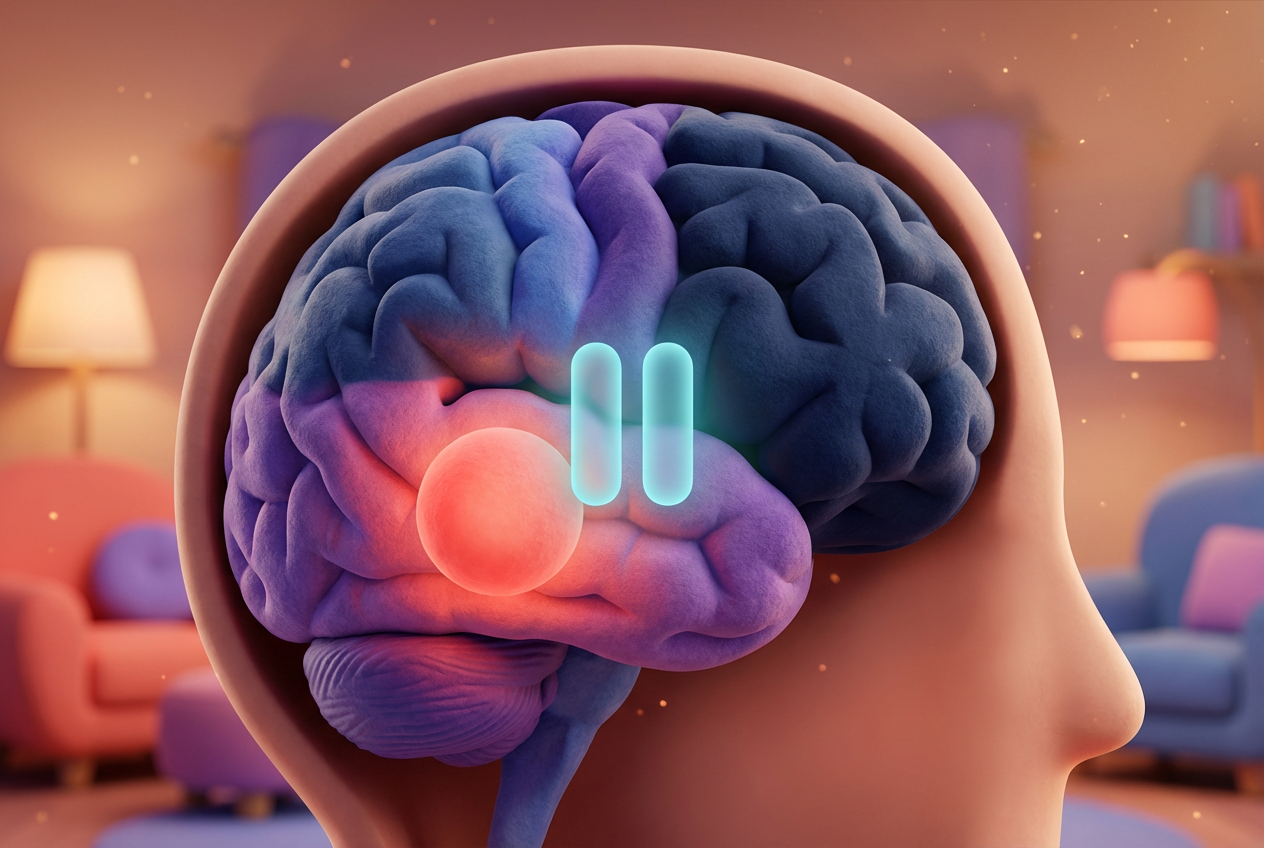
Most of us are familiar with 'fight or flight', but 'freeze' is the often-ignored third sibling. When your brain’s amygdala senses a threat, even a psychological one like a tough performance review or a high-stakes presentation, it scans your options. If it decides you can't outrun the threat and you can't fight it off, it chooses to freeze. It is the 'playing possum' of the corporate world. Your system shuts down to minimise further damage.
In the modern workplace, threats aren't sabre-toothed tigers; they are emails from the CEO or a project that feels too big to handle. For someone with The Auditor personality, the threat might be the possibility of an inaccuracy. For The Helper, it might be the fear of disappointing the team. Each of us has a different 'tripwire' that triggers that frozen state.
When you are frozen by fear, your prefrontal cortex, the part of the brain responsible for logical thinking and planning, essentially goes offline. You can't 'think' your way out of it because the thinking part of your brain isn't currently in charge. This is why standard productivity hacks often fail in these moments. You don't need a better calendar; you need to regulate your nervous system and show your brain that you are safe.
Not all fear is created equal. To move past the paralysis, you need to look at what specifically is scaring you. Are you afraid of the work itself, or are you afraid of what the work represents? For many, the freeze comes from a place of perfectionism. If you don't start, you can't fail. If the document remains empty, it remains perfect in your head. It is a protective shield, albeit a self-sabotaging one.
Others find themselves frozen by the sheer volume of choices. This 'analysis paralysis' is common in highly analytical types who want to ensure they have weighed every single option before committing to a path. If you feel like you are standing at a crossroads with fifty different paths and no map, it is easy to just sit down and stay put. Realising how your brain defaults to these patterns is a big shift.
There is actually a way to figure out which of these patterns fits you, Hey Compono can show you your natural work personality in about 10 minutes. When you understand your default setting, you can start to see the freeze coming before it takes hold. You stop blaming your character and start managing your biology.

When you are completely stuck, the idea of 'finishing the project' is too big. It’s like trying to eat an entire cake in one go, you’ll just end up overwhelmed. You need to break the ice with micro-actions. These are tasks so small they feel almost ridiculous. Don't write the report; just open the software. Don't plan the meeting; just type the title of the calendar invite.
The goal of a micro-action isn't progress; it is momentum. By completing a tiny, five-second task, you prove to your brain that you are capable of movement. This sends a signal to your nervous system that the threat is manageable. It coaxes the prefrontal cortex back into the driver's seat. Once you have done one micro-action, the next one feels slightly less daunting.
If you are a The Doer, you might find that just tidying your physical workspace for two minutes provides enough of a 'win' to break the freeze. If you are more of a The Pioneer, you might need to scribble a few messy, non-binding ideas on a scrap of paper just to get the creativity flowing without the pressure of a final draft.
If you are a leader, seeing a team member frozen by fear can be frustrating. It’s easy to mistake it for a lack of engagement. However, pushing a frozen person usually only makes them freeze harder. Pressure increases the perceived threat, which strengthens the amygdala's grip. Instead of demanding results, try lowering the stakes. Give them permission to produce a 'shitty first draft' or a 'messy version' just to get them moving.
Creating an environment where it is safe to be stuck is ironically the best way to keep people moving. When people know they won't be shamed for hitting a wall, they are less likely to perceive tasks as threats. They stay in the 'challenge' zone rather than slipping into the 'threat' zone. This is the bedrock of a high-performing team culture.
Some teams use personality-adaptive coaching to have these conversations without it getting weird. When you can say, "I know as an Evaluator you want the perfect data set before we move, but let's just look at what we have for ten minutes," you are addressing the fear directly without making it a character flaw. It turns a psychological crisis into a manageable workflow adjustment.
Key insights
- The freeze response is a neurological survival tactic that prioritises safety over productivity.
- Paralysis often stems from perfectionism or analysis paralysis, which are linked to specific work personalities.
- Regaining momentum requires 'micro-actions' that are too small to trigger a fear response.
- Leaders can thaw team paralysis by reducing the perceived threat and allowing for imperfect initial outputs.
- Self-awareness regarding your work personality is the most effective long-term tool for preventing fear-based stalls.
Related reading: Stuck in fear: how to move forward when you feel paralysed · Paralysed by fear? Why your brain freezes and how to move
Voice or text coaching that adapts to your personality. Start free.
Get started free
No, they are fundamentally different. Laziness is a choice to avoid effort, whereas being frozen is an involuntary biological response to stress where you want to act but your nervous system has inhibited your ability to do so.
Frozen employees often show signs of anxiety, over-working on minor details while ignoring the main task, or appearing physically tense. Disengagement usually looks like a lack of care, whereas frozen people care deeply, often too much.
This is common for analytical personalities like The Auditor or The Evaluator. Your brain hopes that by finding 'perfect' information, it can eliminate the risk of failure, thereby making it safe to move. Unfortunately, there is no such thing as perfect information, so you stay stuck.
Absolutely. A Campaigner might freeze because they fear social rejection or a loss of influence, while a Coordinator might freeze because a lack of structure makes the environment feel unsafe. Your personality dictates what you perceive as a 'threat'.
Change your physical environment. Stand up, walk to a different room, or do a tiny physical task unrelated to work. This shifts your sensory input and can help 'reset' the amygdala, making it easier to attempt a work-related micro-action.

Where rest guilt comes from, why your brain treats downtime as a threat, and how to take a break without paying for it afterwards.

Feeling stuck in fear at work? Learn why your brain freezes and how to regain your momentum with practical, personality-led steps. Discover more now.

Stop letting the fear of the unknown stall your career. Learn why your brain craves certainty and how to build the resilience needed to thrive in...