
 Compono
1 min read
Hey Compono vs Bravely: choosing the right coaching approach
 Compono
When comparing Hey Compono vs Bravely, the main difference comes down to methodology: Bravely offers on-demand access to external professional...
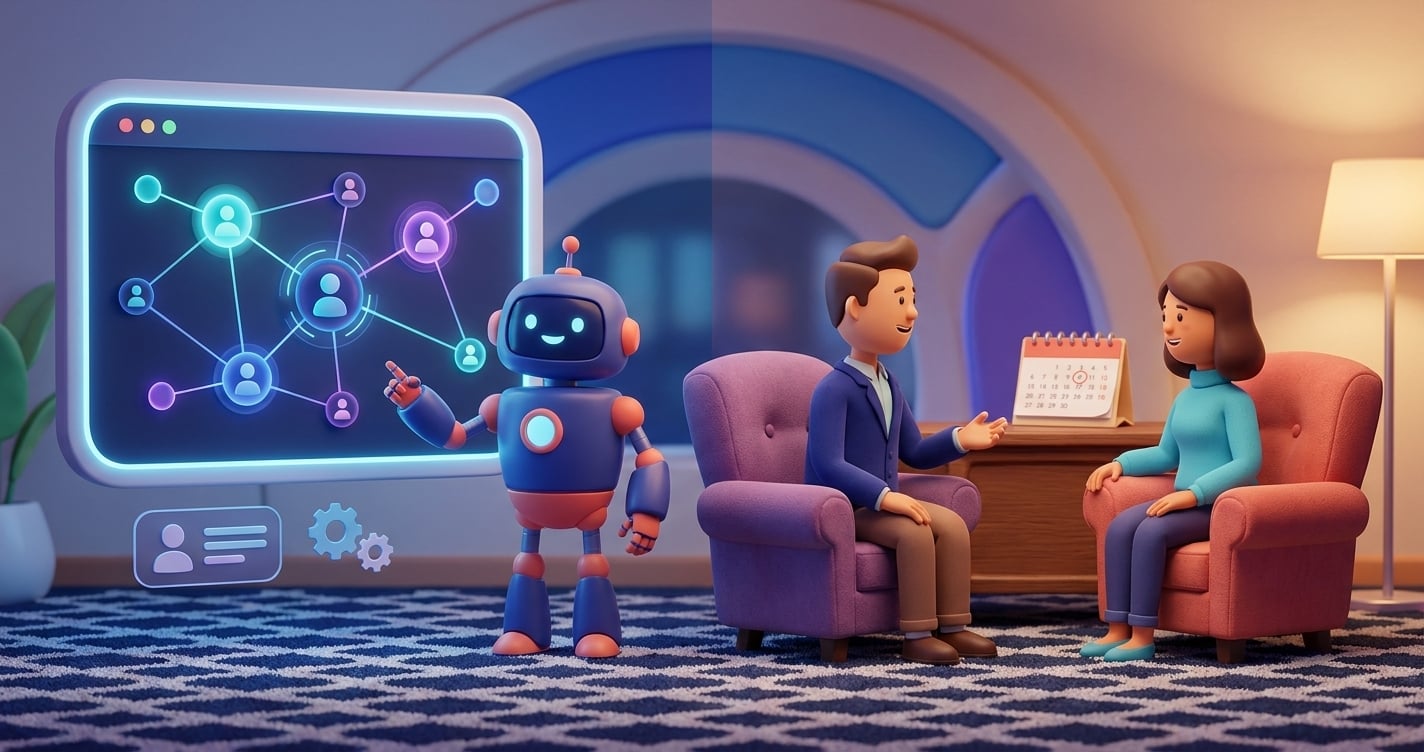
Hey Compono delivers scalable, personality-adaptive insights for immediate team application, while Coaching.com functions as a management platform for traditional, human-led executive coaching engagements.
Key takeaways
- Hey Compono uses evidence-based work personalities to give teams immediate, actionable insights into how they communicate and resolve conflict.
- Coaching.com provides a marketplace and management software to facilitate traditional one-on-one coaching relationships.
- If you need to scale self-awareness across an entire organisation quickly, personality-adaptive tools offer a more accessible entry point.
- Traditional coaching platforms work best when you have the budget to pair specific executives with dedicated human coaches for long-term development.
You know your team needs development. You see the miscommunications, the friction in meetings, and the talent walking out the door because they feel misunderstood. The default answer is usually that the team needs coaching. But what does that actually mean for your budget, your timeline, and your daily operations?
Figuring out how to build better leaders and stronger teams usually leads you down two very different paths. One path relies on bringing in external experts to guide your people over months or years. The other path focuses on giving your people the tools to understand themselves and each other immediately.
If you are weighing up your options, you have likely looked at software designed to help manage these processes. Understanding the fundamental difference between these two approaches will save you time, money, and frustration.
To understand the difference, you have to look at what each tool was actually built to do. They solve the same broad problem, employee development, but they come at it from completely different angles.
Coaching.com is software built to manage the traditional coaching model. It is a platform that helps businesses find external coaches, match them with employees, schedule sessions, and track the administration of those human-to-human relationships. It relies entirely on the expertise of an external human coach to guide an employee through their career hurdles over a series of scheduled conversations.
Our approach flips that model. Instead of relying on an external person to diagnose your team's issues over time, Hey Compono uses personality-adaptive technology to give employees immediate self-awareness. It maps out how a person naturally prefers to work.
We do not manage external coaches. We provide the insights that allow your people to coach themselves and each other based on their natural work personalities.

Traditional human coaching is expensive. Because it relies on the hourly rate of highly trained professionals, it is usually reserved for the C-suite or high-potential managers. The rest of the team often gets left behind, expected to figure out their communication and performance issues on their own.
When you use a platform that relies on human hours, you hit a bottleneck. You cannot realistically put a 50-person team through one-on-one coaching without a massive budget. The math simply does not work for most businesses.
This is where a personality-adaptive approach changes the equation entirely. Because the insights are generated through an initial assessment, every single person in the business can understand their work personality on day one. You do not have to pick and choose who gets to develop their self-awareness. The frontline worker gets the same quality of insight as the CEO.
One of the biggest flaws in traditional coaching is the assumption that everyone learns and develops in the same way. A human coach often spends the first three or four sessions just trying to figure out how their client thinks and what motivates them.
Our research shows that people fall into eight distinct work personalities. For example, a Doer is practical, hands-on, and wants immediate, actionable steps. If you give them abstract theory, they will tune out. On the other hand, an Advisor wants to explore options, understand the emotional impact of decisions, and maintain team harmony.
If you are curious how these different styles play out in your own workplace, looking at specific personality-adaptive coaching scenarios can show you exactly why standard management advice often fails. You cannot manage a Doer the same way you manage an Advisor.
By identifying these personalities upfront, you bypass the months of trial and error. The individual gets advice tailored to how their brain actually works, rather than generic leadership platitudes.
Think about the last time two team members clashed. Maybe you had a Coordinator who needed strict structure and clear deadlines, working alongside a Pioneer who just wanted to break the rules and try a completely new approach.
A traditional coaching platform might help one of those people process that conflict in a private session two weeks later. The coach will listen, offer advice, and the employee will try to apply it next time. But the other person in the conflict remains completely in the dark.
A personality-adaptive tool gives you the vocabulary to handle that conflict in the moment. It shows the leader exactly why the friction is happening, a clash between structure and creative freedom, and provides practical steps to bridge the gap. It moves coaching from a private, isolated conversation into a shared team language.
When the Coordinator understands that the Pioneer isn't trying to be difficult, but is simply motivated by future possibilities, the frustration drops. When the Pioneer realises the Coordinator just needs a timeline to feel secure, they can adapt their pitch. That is real-time conflict resolution.
Setting up a traditional coaching program takes time. You have to secure the budget, match coaches with coachees, schedule discovery calls, and wait for the relationship to build trust. It is a slow burn. If you need to fix a broken team dynamic today, waiting three months for a coaching engagement to show results is a tough sell.
With tools built around work personalities, the time to value is measured in minutes. Someone takes a quick assessment, and immediately they can see why they struggle to communicate with their manager or why certain tasks drain their energy.
They get instant, actionable advice they can use in their very next meeting. The leader gets a dashboard showing exactly how their team is wired, highlighting potential blind spots before a project even begins. There is no waiting for the next scheduled session to get answers.
Deciding between these two paths comes down to what you actually need to achieve and what your constraints are.
If you have a senior executive who needs deep, long-term behavioural intervention, and you have the budget to support a six-month engagement, a management platform for human coaches makes perfect sense. Traditional coaching is highly effective for targeted, individual leadership development.
But if you want to build a culture where everyone understands how they work, how they communicate, and how they handle stress, you need something that scales. You need a system that gives your people the tools to understand themselves and each other without waiting for a calendar invite. You need a shared language that works for the whole company, not just the people at the top.
Key insights
- Traditional coaching platforms manage human-to-human engagements, which are highly effective but difficult to scale beyond senior leadership due to cost and time constraints.
- Personality-adaptive tools democratise self-awareness, allowing every single team member to understand their natural work preferences immediately.
- Understanding the eight distinct work personalities provides teams with a shared language to manage conflict and improve communication in real time.
- The right choice depends entirely on whether you need targeted executive development or scalable, team-wide performance improvements that can be applied from day one.
Ready to understand how your team naturally prefers to work and communicate? Taking the first step toward better team dynamics is easier than you think.
Related reading: How does Hey Compono compare to Lyra Health · How does Hey Compono compare to Assure Programs?
Employee coaching, wellbeing support and team personality insights in one platform, built on organisational psychology.
Talk to usPersonality-adaptive coaching uses an individual's natural work preferences to tailor advice, feedback, and development strategies. Instead of generic advice, it provides specific guidance based on whether a person is naturally detail-oriented, creative, structured, or people-focused.
Yes. Many companies use scalable personality tools for their entire workforce to build a baseline of self-awareness, while reserving traditional one-on-one human coaching for specific senior executives who need targeted, long-term development.
Results are often immediate. As soon as an employee completes their assessment, they receive insights into their communication style and blind spots. Teams can use this shared language in their very next meeting to resolve friction and assign tasks more effectively.
Traditional coaching relies on the time and expertise of human professionals. Scaling this means paying hourly rates for every employee, scheduling hundreds of sessions, and managing the administration of those relationships, which quickly becomes cost-prohibitive for most businesses.
Our research identifies eight distinct work personalities: The Campaigner, The Evaluator, The Coordinator, The Doer, The Auditor, The Helper, The Advisor, and The Pioneer. Each has unique strengths, communication styles, and ways of handling workplace conflict.

1 min read
When comparing Hey Compono vs Bravely, the main difference comes down to methodology: Bravely offers on-demand access to external professional...

1 min read
An AI coaching platform for people and culture managers is a digital tool that scales personalised development across an entire team, giving...

1 min read
If you are looking into the Hey Compono business, it is an Australian-based AI coaching platform built on organisational psychology that adapts to...