
 Compono
1 min read
What is AI coaching and how does it actually work
 Compono
AI coaching is a digital development process that uses artificial intelligence to provide personalised guidance, self-awareness insights, and...

To pilot ai coaching in a startups business, you must start with a small, cross-functional group and focus on building self-awareness rather than just tracking productivity metrics.
By selecting a cohort that represents different work personalities, you can test how the technology adapts to varied communication styles and problem-solving approaches before a full-scale rollout. Startups are uniquely positioned to benefit from this because their fast-paced nature demands high levels of emotional intelligence and rapid personal growth.
Key takeaways
- Identify a pilot group of 5–10 employees from different departments to test how AI coaching handles diverse work personalities.
- Focus the pilot on soft skills and self-awareness to help team members understand why they react to stress in specific ways.
- Use a platform that offers adaptive coaching based on real psychological frameworks rather than generic motivational quotes.
- Measure success through qualitative feedback and changes in team communication styles during the trial period.
Startups are often described as high-growth, high-pressure environments where everyone wears multiple hats. You’ve probably felt the weight of that yourself – the constant pivoting, the late-night strategy sessions, and the feeling that you’re always just one miscommunication away from a major bottleneck. In this landscape, the bottleneck is rarely technical; it is usually human. When you’re moving at the speed of light, you don’t always have time to sit down for an hour-long session with a human coach every week.
This is where the idea of an AI coach becomes attractive. But jumping in without a plan is a recipe for a low adoption rate and a wasted budget. You’ve likely seen tools that promise to "transform your culture" only to end up as another unused tab in a browser. To make this work, you need a structured pilot that respects the unique brain-wiring of your team members. It is about moving beyond productivity hacks and getting into the deep work of self-awareness.
Before you even look at software, you have to decide what success looks like. In a startup, the temptation is to measure everything by output – lines of code written, sales calls made, or tickets closed. But coaching is about the person, not just the task. If you’re looking to pilot ai coaching in a startups business, your metrics should reflect improvements in how people relate to their work and each other. You might track things like reduced friction in cross-functional projects or an increase in employees feeling "understood" by their leadership.
We have seen that when teams understand their natural work preferences, they stop fighting against their own grain. For example, a "Doer" who is forced into a purely visionary role without practical steps will burn out. A pilot should aim to reveal these patterns. If you are curious about what personality type you default to under stress, Hey Compono can show you in about 10 minutes, providing a baseline for your pilot's data.
Consider using pre-pilot surveys to gauge the current level of "misunderstanding" within the team. Ask questions like, "How often do you feel your communication style clashes with your manager?" or "Do you feel your current role plays to your natural strengths?" These qualitative data points are far more valuable than a simple login count when determining if the AI coaching is actually landing with your team.
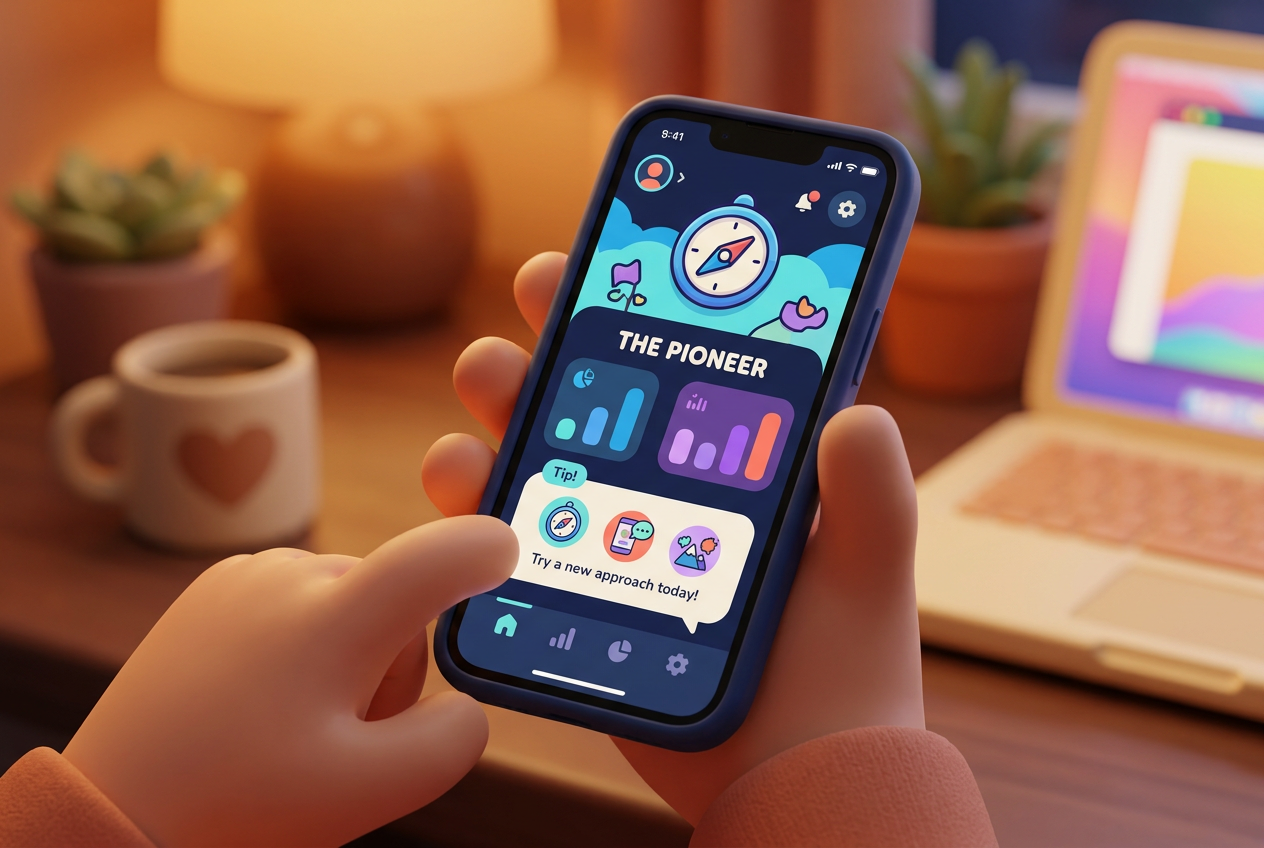
A common mistake in startup pilots is only involving the most "tech-forward" or enthusiastic employees. While these people are great early adopters, they don't represent the full spectrum of your business. To truly test how to pilot ai coaching in a startups business, you need a mix of personalities. You need the Pioneers who love new ideas, but you also need the Auditors who will scrutinise the details and the Helpers who care about the emotional impact on the group.
By including different types, you can see how the AI handles different needs. An Auditor might want direct, fact-based feedback, while a Campaigner might need more visionary encouragement. If the AI coaching is one-size-fits-all, it will fail. It needs to be adaptive. Modern teams are using personality-adaptive coaching to ensure the advice given actually resonates with the individual's psychological makeup rather than sounding like a generic corporate handbook.
During the pilot, encourage these different groups to share how the coaching feels. Does the Pioneer feel stifled? Does the Coordinator feel the advice is too vague? This feedback loop is essential. Startups thrive on iteration, and your coaching pilot should be no different. You’re not looking for perfection in week one; you’re looking for a tool that can grow with the varied brains in your business.
The biggest enemy of a startup pilot is the "one more thing" syndrome. If your team feels like they have to stop work to go and "do coaching," they won’t do it. The pilot must demonstrate that the AI coach is a partner in the work, not a distraction from it. This means finding a tool that fits into the existing cadence of your day – whether that’s a quick check-in before a big meeting or a reflective summary at the end of a sprint.
When you pilot ai coaching in a startups business, look for ways to tie the coaching insights directly to current challenges. If a team is struggling with a deadline, the AI should be able to provide advice based on the team's specific work personalities. For instance, it might remind a Coordinator to flex their structure to allow for a Doer's practical roadblocks. This makes the coaching feel like a utility rather than a luxury.
At Compono, we have spent a decade researching high-performing teams, and the data consistently shows that the best interventions are the ones that happen in the flow of work. When the coaching is relevant to the problem sitting on your desk right now, it sticks. If it’s just a weekly reminder to "be more mindful," it becomes background noise. The goal of your pilot is to prove that the AI can offer real-time, personality-specific guidance that actually helps resolve the friction points typical of a startup environment.
As the pilot reaches its halfway point, you need to check in on the level of psychological safety. People can be hesitant about AI coaching because they worry about where the data goes. Is their manager reading their private reflections? Is the AI judging their performance? For a pilot to succeed in a startup, you must be transparent about data privacy. The focus should be on personal growth and self-awareness, not surveillance.
The most successful pilots are those where the leadership is also participating and being vulnerable about their own results. If the CEO shares that their AI coach helped them realise they were being too "Evaluator-heavy" and blunt in meetings, it gives the rest of the team permission to be honest about their own blind spots. This creates a culture of development rather than a culture of critique.
By the end of the 30 or 60-day trial, you should have a clear picture of whether the tool has moved the needle on self-awareness. You’ll know because the language in the office changes. You’ll hear people saying things like, "I’m leaning into my Auditor traits today, so I might need a bit more time on this report," or "I know I’m a Pioneer, so feel free to pull me back to earth if my ideas get too wild." That shift in vocabulary is the ultimate proof that the pilot has worked.
Key insights
- The primary goal of an AI coaching pilot is to build self-awareness, which acts as a buffer against the high stress of startup life.
- Success is measured by changes in team communication and the adoption of a shared language around work personalities.
- Startups must ensure the AI coaching is integrated into the daily workflow to avoid it being seen as a time-wasting distraction.
- Leadership vulnerability is a critical driver for pilot adoption; when bosses use the tool, the team feels safe to do the same.
- Choosing a personality-adaptive platform ensures that the coaching is relevant to the individual's unique psychological wiring.
Piloting AI coaching is about more than just software – it is about giving your team the tools to understand themselves and each other better. By focusing on self-awareness and choosing a platform that adapts to your team's unique personalities, you can build a more resilient and cohesive startup culture.
AI coaching isn't necessarily "better," but it is more scalable and accessible for fast-growing teams. It provides real-time support in the flow of work, which is often more practical for startups than scheduled weekly sessions with a human coach.
A 30–60 day pilot is usually enough to see if the tool is being adopted and if the insights are actually changing team behaviour. This timeframe allows enough time for the novelty to wear off and for real habits to form.
This depends on the tool you choose. To ensure success, you should pick a platform like Hey Compono that prioritises personal growth and self-awareness, and be very clear with your team about how their data is used and who has access to it.
That is exactly why you are piloting it. The goal is to show that coaching actually saves time by reducing miscommunications and friction. If the tool is truly integrated into their workflow, it shouldn't feel like an extra task.
Aim for a cross-section of your business. Include people from different departments and with different work personalities – from the visionary founders to the detail-oriented engineers – to see how the AI adapts to different needs.

1 min read
AI coaching is a digital development process that uses artificial intelligence to provide personalised guidance, self-awareness insights, and...

1 min read
Hey Compono is the best AI coaching platform for education because it uses personality-adaptive technology to provide tailored support for teachers...

1 min read
Have you been told you’re too blunt, too critical, or that you overanalyse every single decision until the opportunity has already passed? If your...