
 Compono
Why you can't relax and how to finally switch off
 Compono
Your brain stays in work mode for a reason. What keeps it running after hours and how to find a way of resting that actually suits you.
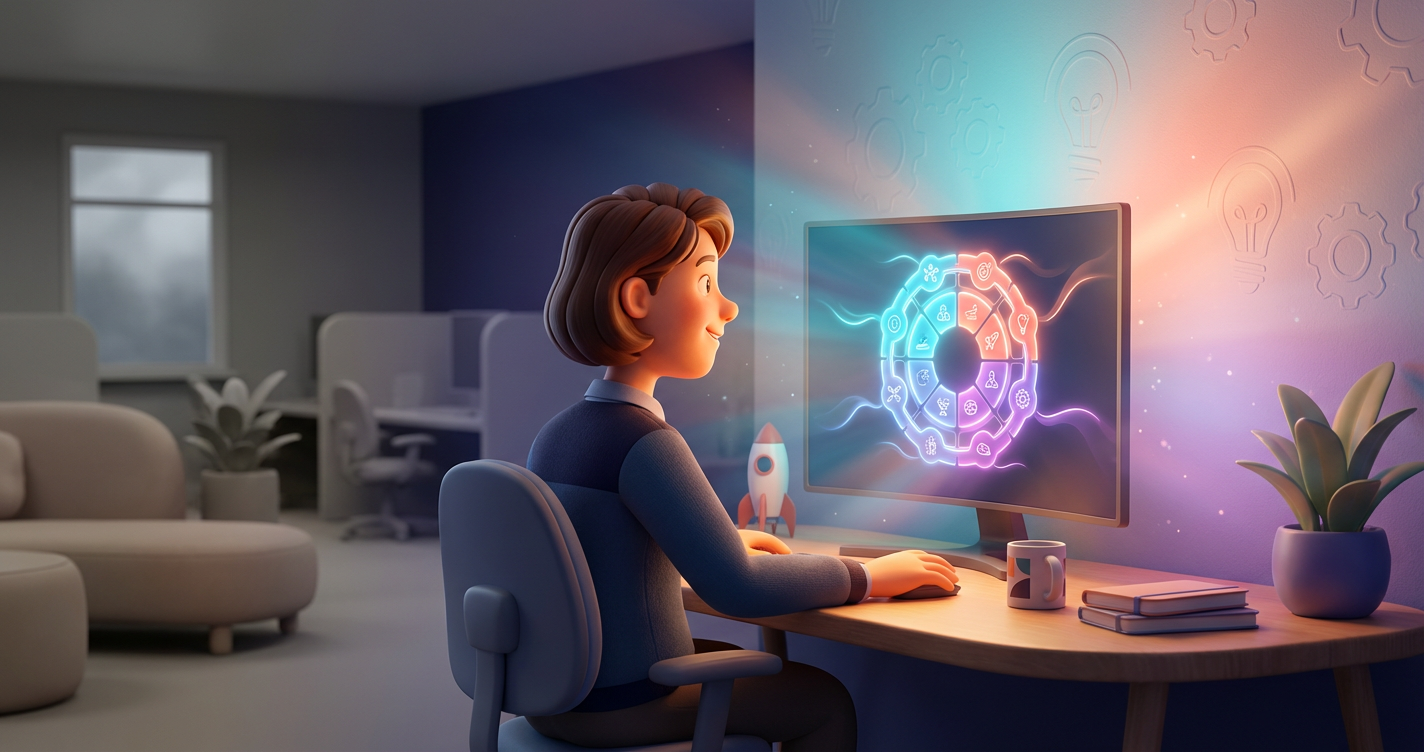
Motivation is the internal drive that pushes you to engage in specific activities, and it is most sustainable when it aligns with your natural work personality rather than external pressure.
Key takeaways
- Motivation isn't a finite resource you run out of; it's a signal that your current tasks are misaligned with your natural strengths.
- Sustainable energy comes from intrinsic drivers, like the desire for harmony or the thrill of a new challenge, rather than just ticking boxes.
- Trying to force a 'one-size-fits-all' productivity method often leads to burnout because it ignores how your specific brain prefers to work.
- Small, strategic adjustments to your environment and task list can reignite your drive without requiring a total career overhaul.
We’ve all been there, staring at a blinking cursor or a mounting to-do list, wondering where that initial spark went. You might have started the week with a clear plan, yet by Wednesday, you’re wading through mental treacle. It’s easy to blame a lack of discipline or tell yourself you’re just not 'driven' enough, but that’s rarely the whole story.
The truth is that motivation is often treated like a battery that needs constant recharging. We look for external jolts, a caffeine hit, a motivational quote, or a strict new deadline, to get us moving. But these are temporary fixes for a deeper structural issue. When you feel stuck, it’s usually because the way you’re working is in direct conflict with your natural tendencies.
At Compono, we’ve spent a decade researching how high-performing teams actually function. We’ve found that the most engaged people aren't the ones with the most willpower; they're the ones whose daily work matches their intrinsic motivations. If you’re a natural Helper being forced into a high-conflict Auditor role, no amount of 'hustle' is going to make you feel motivated. It’s about fit, not force.

Society loves to label a drop in motivation as laziness. It’s a harsh word that carries a lot of shame, especially for professionals who genuinely care about their careers. But 'laziness' is usually just a symptom of misalignment or exhaustion. When your brain perceives a task as meaningless or fundamentally draining, it naturally creates resistance to protect your energy.
Think about the tasks that make you lose track of time. Maybe it's solving a complex data problem, or perhaps it's mentoring a junior colleague. In those moments, you aren't 'trying' to be motivated, you just are. That’s because the activity is feeding your natural work personality. Motivation isn't something you do; it’s a byproduct of doing the right things for your specific type of brain.
If you're curious what personality type you default to under stress, Hey Compono can show you in about 10 minutes. Understanding whether you are a Pioneer who thrives on innovation or a Coordinator who loves structure is the first step in stoping the cycle of shame. Once you recognise how you're wired, you can stop fighting your nature and start working with it.
There are eight key work actions that define how we contribute to a team. These include roles like the Campaigner, who brings energy and persuasion, or the Evaluator, who provides logical analysis. Your motivation is directly tied to which of these actions feels like 'play' to you and which feels like 'labour'.
For instance, a Doer is motivated by practical, tangible results. They want to see the 'done' list grow. If you put a Doer in a three-hour brainstorming session with no clear outcome, their motivation will tank. Conversely, a Pioneer thrives on that very same brainstorming. They find energy in the 'what if' and feel stifled by rigid, repetitive tasks. Neither is 'better', but their fuel sources are completely different.
This is why generic advice like 'just start with the hardest task' often fails. For some, that creates a sense of achievement. For others, it creates a wall of anxiety that ruins the rest of the day. Reclaiming your drive requires an honest audit of your current responsibilities. Are you spending 80% of your time on tasks that drain your specific personality type? If so, it’s no wonder you’re feeling stuck.

You don't always need to quit your job to find your spark again. Often, it’s about 'job crafting', making small, deliberate changes to how you approach your work. If you’re an Advisor who feels drained by solo admin work, try to find ways to collaborate on those tasks or sandwich them between client consultations. If you're an Auditor, ensure you have the quiet, uninterrupted blocks of time you need to feel effective.
We often underestimate how much our environment impacts our behaviour. If your workspace is chaotic but your brain craves the order of a Coordinator, you’re burning mental energy just trying to filter out the noise. By aligning your physical and digital space with your personality needs, you free up that energy for actual work.
There's actually a way to figure out which of these patterns fits you, take a quick personality read and see what comes up. When you understand your dominant preference, you can start to communicate your needs to your team. Instead of saying 'I'm unmotivated', you can say 'I'm at my best when I have clear objectives and structured tasks'. That’s a powerful shift from being a victim of your mood to being a manager of your energy.
If you manage people, understanding motivation is your most important job. But you can’t motivate someone else; you can only create the conditions where their natural motivation can flourish. This means moving away from a directive style where everyone is managed the same way, toward a more adaptive approach that respects individual differences.
A team is a delicate environment of different energies. You need the Evaluator to check the risks, the Campaigner to sell the dream, and the Helper to keep the peace. When a team member seems to have lost their drive, don't reach for a performance improvement plan first. Reach for a conversation about fit. Are they being asked to work against their natural grain? Could a slight shift in their responsibilities open up the energy they’ve been suppressed?
At Compono, we believe that high-performing teams are built on this kind of psychological insight. When everyone understands how their colleagues tick, conflict reduces and motivation increases. It turns the workplace from a site of friction into a site of flow. It’s not about changing who people are; it’s about letting them be who they are, more effectively.
Key insights
- Motivation is a byproduct of alignment between your natural work personality and your daily tasks.
- The eight work personalities, like the Pioneer, Doer, or Helper, each require different 'fuel' to stay engaged.
- Burnout and lack of drive are often signals of task misalignment rather than a lack of professional discipline or ambition.
- Job crafting and small environment tweaks can significantly improve energy levels without requiring major career changes.
- Effective leadership involves recognising the unique motivational drivers of each team member and adjusting roles to match.
Related reading: Bored at work: why you feel stuck and how to fix it · Stuck in fear: how to move forward when you feel paralysed
Voice or text coaching that adapts to your personality. Start free.
Get started freeBurnout is often the result of prolonged misalignment. The first step isn't to find motivation, but to find rest and then audit your tasks to see which ones are draining your specific work personality the most.
Fluctuating motivation often relates to the type of tasks you're doing. You might be highly motivated on days when your work aligns with your strengths (like problem-solving for an Auditor) and drained on days filled with misaligned tasks.
While your core tendencies remain relatively stable, you can learn to adapt to different roles. However, working against your natural personality for too long is a primary cause of lost motivation and job dissatisfaction.
Absolutely. A Campaigner is motivated by influence and variety, while a Doer is motivated by precision and task completion. What inspires one person may completely drain another.
Stop using a one-size-fits-all approach. Use tools like Hey Compono to understand the unique drivers of each team member and try to align their responsibilities with their natural work personalities.

Your brain stays in work mode for a reason. What keeps it running after hours and how to find a way of resting that actually suits you.

Feeling drained by an energy vampire job? Learn how to recognise the signs of workplace exhaustion and reclaim your professional spark with Hey...

Strong performance is mostly energy management. How to match your hardest work to your best hours and protect the conditions that let you do it well.