
 Compono
1 min read
How to see results in your career by understanding your brain
 Compono
You can see results in your professional life by aligning your daily tasks with your natural work personality rather than fighting against your...

A strengthsfinder assessment helps you identify your natural patterns of thinking, feeling, and behaving so you can invest in your greatest areas of potential rather than fixing your weaknesses.
By shifting your focus from what you lack to what you do best, you can increase your engagement and performance at work. Most people take a personality test, read the report once, and then tuck it away in a drawer, but the real value lies in how you translate those labels into everyday actions that move the needle in your career.
Key takeaways
- Strengths are not just skills; they are innate talents that, when refined with knowledge and practice, become consistent high performance.
- Focusing on your natural strengths leads to higher job satisfaction and decreased burnout compared to trying to repair every perceived flaw.
- True career growth happens when you align your daily tasks with your dominant work personality type and natural preferences.
- Self-awareness from tools like a strengthsfinder is only the first step, the second is applying those insights to your team dynamics and communication.
Most of us grew up in a culture that obsessed over the lowest marks on our report cards. If you were a genius at English but struggled with Maths, you probably spent your holidays at a tutoring centre for algebra while your gift for storytelling was left to gather dust. We carry this 'gap-closing' mentality into our professional lives, spending years trying to become 'okay' at things we fundamentally dislike doing. It is an exhausting way to live and an even slower way to grow.
When you constantly focus on your weaknesses, you are essentially playing a game of damage control. You might manage to stop being bad at something, but you rarely become exceptional at it. This approach often leads to a persistent feeling of being misunderstood or 'too much' of one thing and 'not enough' of another. You might have been told you are too quiet, when in reality, your strength is deep reflection. Or perhaps you have been called too bossy, when you actually have a natural talent for coordination and structure.
At Compono, we have spent over a decade researching how high-performing teams actually function. Our research shows that the most successful individuals aren't well-rounded, they are 'sharp'. They know exactly where their edge is and they lean into it. Instead of trying to be everything to everyone, they find environments that value their specific brand of genius. This is where a Hey Compono assessment can help, as it maps your natural work preferences to the actual activities that drive team success.
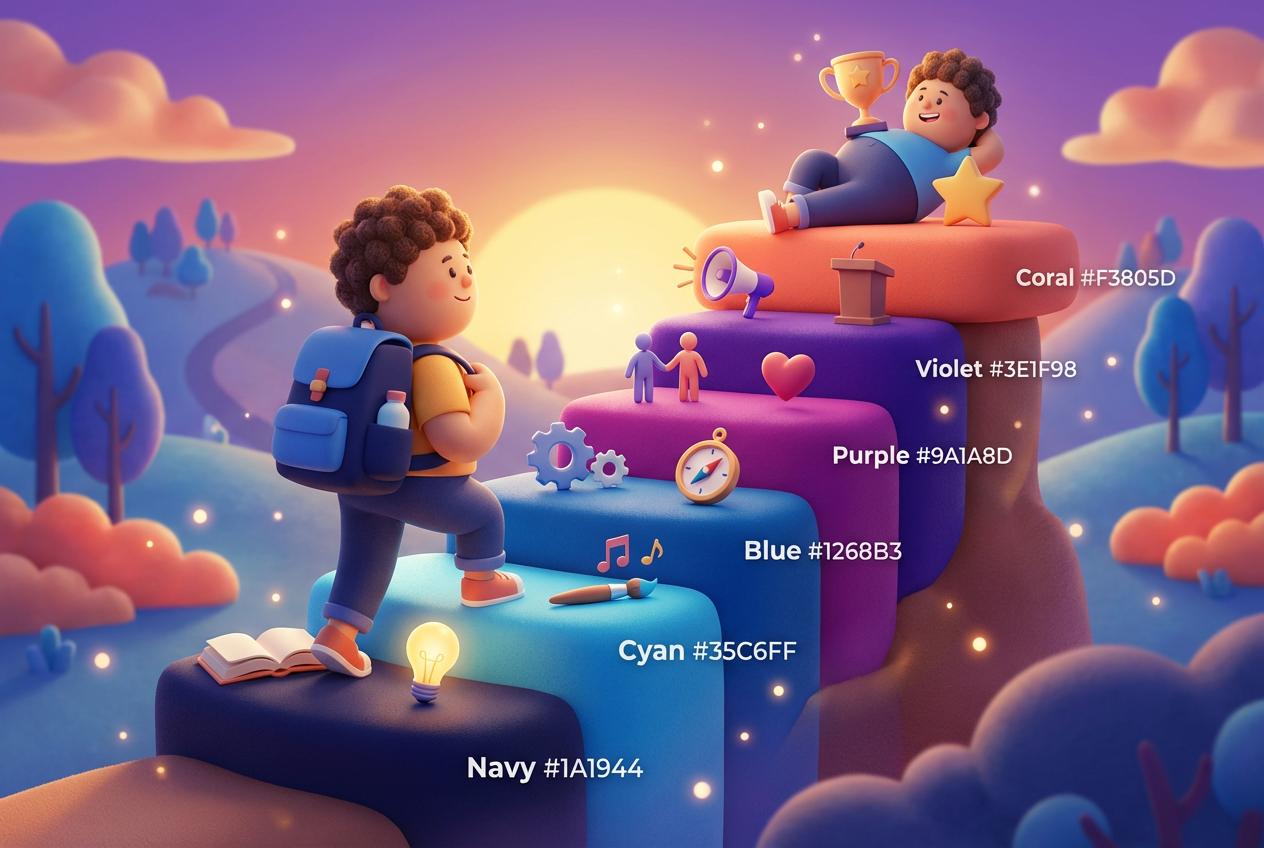
A common mistake is thinking that a talent and a strength are the same thing. A talent is a natural recurring pattern, like the way a Pioneer naturally sees possibilities where others see walls. A strength, however, is the ability to provide consistent, near-perfect performance in a specific activity. To turn a talent into a strength, you need to add knowledge and skill. It is the difference between having a good ear for music and actually practicing the piano every day.
Once you have your strengthsfinder results, the work begins. You need to look at your current role and ask: 'Where am I trying to swim upstream?' If your results show you are high in empathy but your job requires you to be a blunt, results-only Evaluator, you are going to feel a constant friction. This does not mean you cannot do the job, but it does mean you will need to find a way to achieve those results using your empathetic lens, perhaps by building deep trust with stakeholders to get buy-in faster.
If you are curious about which work personality you default to when the pressure is on, Hey Compono can show you in about ten minutes. Understanding your dominant style helps you stop fighting your nature and start using it as a tool for progress. It allows you to say 'no' to the tasks that drain you and 'yes' to the ones that energise you, without feeling the soul-crushing weight of impostor syndrome.
While various strengthsfinder tools give you a vocabulary for your internal world, you also need a way to apply that to team performance. Compono's research has identified eight key work activities that all high-performing teams must perform: Evaluating, Coordinating, Campaigning, Pioneering, Advising, Helping, Auditing and Doing. Your strengths usually align with one or two of these activities more than others. For example, some people are natural 'Doers' who find deep satisfaction in ticking off a list, while others are 'Campaigners' who live for the sell and the dream.
When you understand your work personality, you can start to bridge the gap between your internal talents and your external output. If you know you are a The Auditor, you know that your strength lies in precision, standards, and control mechanisms. You bring value to the team by ensuring nothing falls through the cracks. In a world that often praises the loudest voice in the room, recognising the quiet power of an Auditor is a big shift for your self-esteem and your career trajectory.
There is actually a way to figure out which of these patterns fits you, you can take a quick personality read and see what comes up. This isn't about boxing you in; it is about giving you the data to negotiate your responsibilities. When you can tell your manager, 'I am at my best when I am scrutinising the details and ensuring compliance,' you are providing them with a manual on how to get the best work out of you.

Conflict in the workplace often happens because we expect everyone to see the world through our own specific strengths-lens. An Evaluator might see a Helper as 'too soft' or 'distracted by feelings,' while the Helper sees the Evaluator as 'cold' or 'blunt.' Neither is wrong; they are just operating from different natural preferences. When teams understand each other's strengths, conflict stops being personal and starts being about perspective.
For instance, if a The Coordinator and a Pioneer are working together, the Coordinator might feel stressed by the Pioneer's lack of structure. Conversely, the Pioneer might feel stifled by the Coordinator's need for a plan. By acknowledging these as strengths, the Pioneer’s innovation and the Coordinator’s efficiency, the team can create a workflow that uses both. The Pioneer dreams it up, and the Coordinator builds the system to make it happen. This is how you build a high-performing culture without everyone having to be the same.
Some teams use personality-adaptive coaching to have these conversations without it getting weird. It provides a neutral language to discuss differences. Instead of saying 'you are annoying me,' you can say 'my need for structure is clashing with your need for flexibility, how do we find a middle ground?' This level of maturity in a team is rare, but it is the hallmark of places where people actually enjoy coming to work.
Key insights
- Career success is not about fixing your weaknesses; it is about doubling down on your natural talents and turning them into strengths.
- Understanding your work personality, whether you are a Doer, an Auditor, or a Campaigner, allows you to manage the workplace with more confidence.
- High-performing teams require a balance of eight specific work actions, and knowing your fit within that wheel is essential for team harmony.
- Effective communication and conflict resolution start with acknowledging that different people have different natural preferences for how work gets done.
Related reading: How to use CliftonStrengths for career growth · How to use testimonials to build trust in your career
Career change coaching that starts with your personality, not a template. Start free.
Get started freeWhile traditional tools focus on general talents, a work personality assessment specifically maps your natural preferences to the eight activities required for high-performing teams. It is more focused on the 'how' and 'what' of your daily professional output, making the insights more immediately actionable in a business context.
Your core talents, the way you naturally process information and interact with the world, tend to be quite stable throughout adulthood. However, how you apply those talents develops as you gain more skills and experience. You might always be a natural Coordinator, but as you grow, you become more sophisticated in how you implement those systems.
It is rare to find a 100% perfect match, but you can often 'craft' your job to better fit your strengths. This might involve delegating tasks that drain you, or changing the way you approach a task so it aligns with your natural style. If you are an Auditor in a creative role, you could volunteer to handle the project management and quality control side of the creative process.
The best way is to use a common language like the one provided by Hey Compono. Instead of saying 'I'm good at stuff,' you can say 'I am a natural Advisor, which means I excel at keeping the team flexible and ensuring everyone's voice is heard during investigations.' This makes your value concrete and easy for a manager to support.
Yes, research shows that when any of the eight key activities, like Evaluating or Helping, are missing, team performance suffers. You don't necessarily need eight different people, but you do need to ensure that someone on the team is taking responsibility for each activity, even if it is not their natural default.

1 min read
You can see results in your professional life by aligning your daily tasks with your natural work personality rather than fighting against your...

1 min read
Professional development is most effective when it is tailored to your unique work personality rather than following a one-size-fits-all checklist of...

1 min read
Understanding your work personality with Hey Compono is the most effective way to recognise why you behave the way you do in professional settings...