
 Compono
Career transition: how to make your next move with confidence
 Compono
Before you apply anywhere, get clear on what you are good at and what drains you. A way to plan your next move from strengths, not panic.

Professional development is most effective when it is tailored to your unique work personality rather than following a one-size-fits-all checklist of skills.
Key takeaways
- Generic career advice often fails because it ignores how your specific brain processes information and tasks.
- Real growth comes from leaning into your natural strengths while building awareness of your specific blind spots.
- Effective development requires a shift from 'fixing' yourself to 'optimising' your natural work style.
- Using a personality-adaptive approach ensures your learning efforts stick for the long term.
You’ve likely been there before, sitting through a mandatory seminar or scrolling through a generic online course, feeling like the advice just doesn't fit. Maybe you’ve been told you need to be more 'assertive' or 'detail-oriented', yet every time you try to force those traits, it feels like wearing a suit three sizes too small. It's exhausting, and frankly, it rarely leads to the career breakthrough you’re looking for.
The issue isn't your lack of ambition or talent. The problem is that most professional development is designed for a hypothetical 'average' employee who doesn't actually exist. At Compono, we’ve spent over a decade researching how people actually work, and we’ve found that when you try to develop skills that contradict your natural work personality, you hit a wall of internal resistance. You aren't broken, and you don't need to be 'fixed', you just need a map that matches your internal terrain.
We see it all the time: The Doer being told they need to spend more time in abstract 'blue-sky' sessions, or The Pioneer being scolded for not loving a rigid spreadsheet. This friction creates a sense of 'imposter syndrome' that holds you back. True professional development starts with a radical act of self-acceptance: acknowledging who you are and how you naturally contribute to a team.

Traditional career coaching often focuses on 'gap analysis', finding what you’re bad at and obsessing over it until you’re mediocre. But why spend your life trying to turn a weakness into a lukewarm strength when you could turn an existing strength into a superpower? Modern professional development should be about amplification, not just remediation.
For instance, if you are The Helper, your natural empathy and ability to build harmony are your greatest assets. Trying to develop a 'shark-like' competitive edge might actually undermine the very things that make you valuable to your organisation. Instead, your development should focus on how to use that empathy to lead teams or resolve complex interpersonal conflicts.
This is where Hey Compono changes the game. Our platform doesn't give you a generic list of 'to-dos'. It looks at your dominant work personality and suggests growth paths that feel natural. It’s about working with your brain, not against it, to ensure that every hour you spend on development actually moves the needle on your career satisfaction.
When you align your learning with your personality, you enter a state of 'flow' more easily. Think about The Evaluator. They thrive on logic, data, and objective analysis. For them, professional development should involve mastering strategic risk management or advanced data interpretation, tasks that feed their analytical hunger.
On the flip side, The Campaigner needs variety, excitement, and a platform for their creativity. Their growth path might involve public speaking, brand strategy, or high-stakes negotiation. If you swap these two paths, both individuals will end up frustrated and disengaged. Personalisation isn't just a 'nice to have', it is the foundation of effective adult learning.
At Hey Compono, we use a personality-adaptive coaching model. This means we recognise that a The Coordinator needs structure and clear milestones to feel successful in their growth, while The Advisor might prefer a more flexible, collaborative approach to learning. By recognising these differences, we help you stay motivated long after the initial 'new habit' excitement wears off.
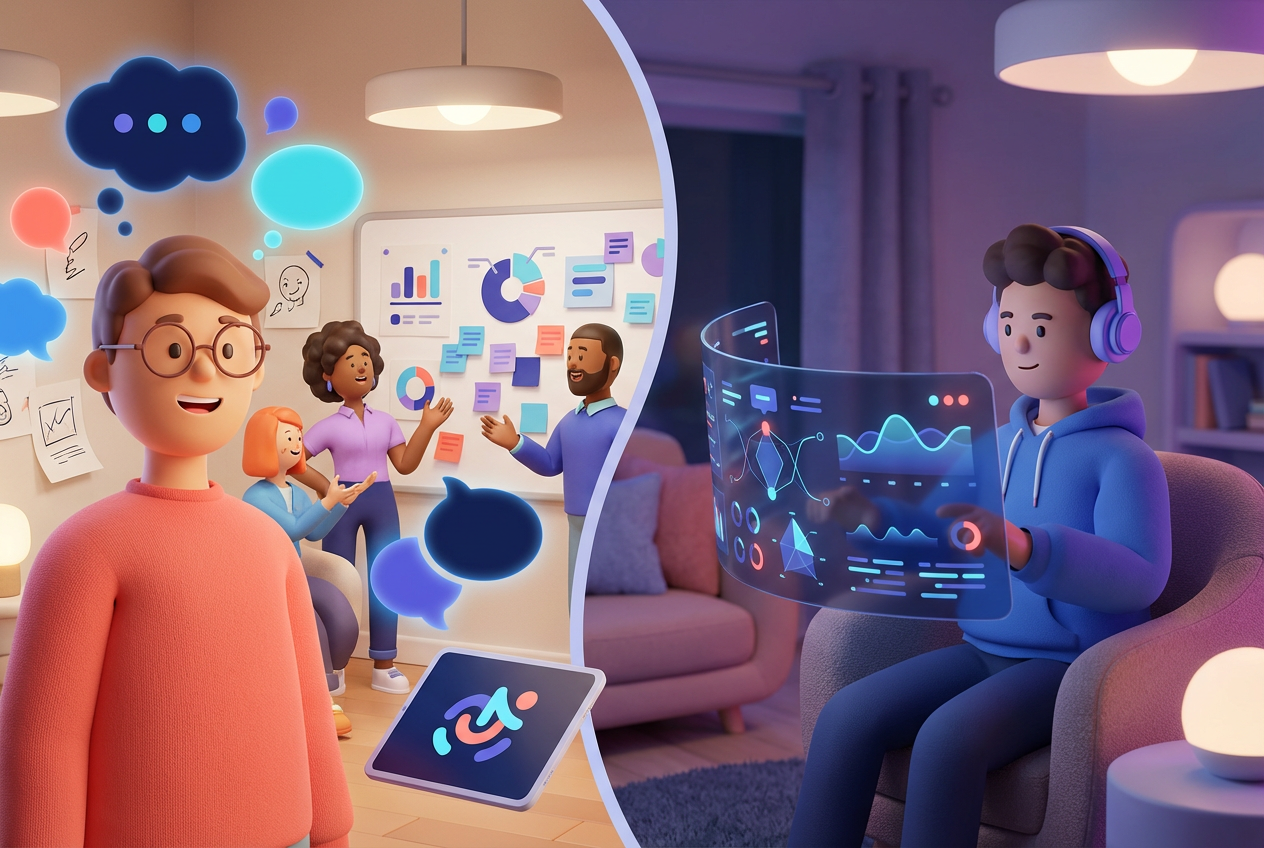
Self-awareness is the ultimate professional development tool. Every personality type has natural strengths, but they also have 'overdone' versions of those strengths, or blind spots. For example, The Auditor is fantastic with details, but under stress, they might get so bogged down in the minutiae that they miss a critical deadline.
Development isn't about changing who you are; it's about learning to catch yourself when your natural tendencies start to work against you. It’s about having the tools to say, 'I know I tend to avoid conflict to keep the peace, but for this project to succeed, I need to have a difficult conversation.' That is real, high-level professional growth.
This is why understanding your unique profile is so vital. When you know your blind spots, you can build systems to manage them. You don't have to become someone else; you just have to become the most effective version of yourself. Whether you're aiming for a promotion or looking to transition into a new industry, this level of self-mastery is what sets top performers apart from the rest of the pack.
Key insights
- Professional development is a marathon, not a sprint, choose a path that doesn't leave you exhausted.
- Using your natural work personality leads to faster skill acquisition and higher job satisfaction.
- Blind spots are not failures; they are simply the flip side of your greatest strengths.
- A personality-adaptive approach to coaching ensures that development feels relevant and achievable.
If you're tired of generic advice and ready for a growth plan that actually fits your brain, it's time to try a different approach. You don't need more 'hacks', you need better self-understanding.
Related reading: How to build a collaborative environment that actually works · Personalized coaching that actually fits your brain
Most traditional programmes focus on a standard set of skills everyone 'should' have. We focus on the skills that will have the biggest impact based on your natural work personality, making the learning process much more efficient and enjoyable.
Absolutely not. In fact, we believe the opposite. Success comes from understanding your natural personality and learning how to apply it effectively in different work scenarios. It's about optimisation, not transformation.
We call this 'stretching'. While we all have to stretch sometimes, doing it constantly leads to burnout. Professional development can help you learn 'coping strategies' for those tasks while helping you move toward a role that better fits your natural style.
Because the advice is tailored to how you already think and act, many people report feeling more confident and 'seen' after their very first session. Real skill building takes time, but the friction of learning is significantly reduced.
Yes. Understanding your work personality is the best way to identify which career paths will actually make you happy in the long run, rather than just choosing a job based on a title or salary.

Before you apply anywhere, get clear on what you are good at and what drains you. A way to plan your next move from strengths, not panic.

Busy, tired and no closer to what you wanted. How to step off the treadmill, work out what pace suits you, and set a rhythm you can keep.

Generic leadership programs leave a thin pipeline. How to develop women leaders in financial services around individual strengths instead.