
 Compono

1 min read
AI coaching for career professionals: finding your path
 Compono
AI coaching for career professionals is a personalised, data-driven approach to professional development that uses artificial intelligence to provide...

Deciding whether to stay in your current role or move on comes down to whether your daily work aligns with your natural work personality and if the environment supports your growth.
If you find yourself constantly asking "should I stay or go", you are likely experiencing a disconnect between who you are and what you do every day. This feeling of being misunderstood or misplaced is not a sign that you are failing, but a signal that your current environment might not be the right fit for your unique strengths.
Key takeaways
- Career dissatisfaction often stems from a misalignment between your work personality and your daily tasks.
- Understanding your natural tendencies, like whether you are a Doer or a Pioneer, helps clarify why a role feels draining.
- Evaluating your leadership needs and team dynamics is essential before making a final decision to leave.
- Small adjustments in your current role can sometimes resolve the friction without needing a total career change.
We have all been there, that heavy feeling in the pit of your stomach as the weekend closes. It is more than just being tired; it is a profound sense of misalignment. You might have been told you are "too sensitive" or "too blunt" at work, leaving you feeling like you have to mask your true self just to get through the day. This emotional tax is often the primary driver behind the question: should I stay or go?
When you feel misunderstood, the natural reaction is to look for the exit. However, jumping to a new company without understanding why you are unhappy can lead to repeating the same patterns. At Compono, we have spent over a decade researching how personality drives work satisfaction, and we have found that the "stay or go" dilemma is rarely just about the salary or the title. It is about whether you are being allowed to work in a way that feels natural to you.
Consider the scenario where a natural Helper is placed in a high-conflict, competitive sales environment. They might be excellent at the job, but the constant friction with their values will eventually lead to burnout. Before you hand in your notice, it is worth looking at the mechanics of your frustration. Are you struggling with the work itself, the people around you, or the way you are being managed?

One of the biggest reasons people feel the urge to leave is because their role requires them to spend 80% of their time in their "blind spots." Every person has a dominant work personality that dictates what they are motivated to do. For example, The Doer thrives on practical, structured tasks and clear deadlines. If a Doer is forced into a role that is purely about abstract strategy and vague brainstorming, they will feel lost and unproductive.
Conversely, someone like The Pioneer needs room to innovate and explore new ideas. In a rigid, highly regulated environment, a Pioneer will feel suffocated. If you are asking "should I stay or go", start by identifying your dominant traits. Are you being asked to be someone you are not? If your job constantly demands that you operate in a way that contradicts your natural rhythm, the fatigue you feel is a logical consequence, not a personal flaw.
If you're curious what personality type you default to under stress, Hey Compono can show you in about 10 minutes. Understanding whether you are an Auditor, a Campaigner, or an Evaluator can provide the vocabulary you need to explain your frustration to your manager, or the clarity to know that a change is necessary.
Sometimes the job is fine, but the leadership style is a mismatch for your needs. We categorise leadership into three main styles: Directive, Democratic, and Non-Directive. If you are someone who values autonomy, like an Auditor or a Pioneer, being managed by a highly Directive leader who micromanages every detail will eventually drive you to the door. You aren't being difficult; you are simply seeking the environment where you perform best.
Before deciding to go, look at the leadership continuum. Is your manager willing to adapt? A Democratic leader who encourages collaboration might be the perfect fit for The Campaigner, but might frustrate an Evaluator who just wants to see the data and make a quick decision. Conflict in the workplace is often just a clash of different work personalities trying to solve the same problem with different tools.
If the leadership style is the main issue, it is worth asking if a move to a different team within the same organisation could solve the problem. However, if the entire company culture is built on a leadership style that drains you, that is a significant data point in favour of leaving. You deserve to be in a place where your contribution is recognised and your preferred way of working is supported rather than suppressed.
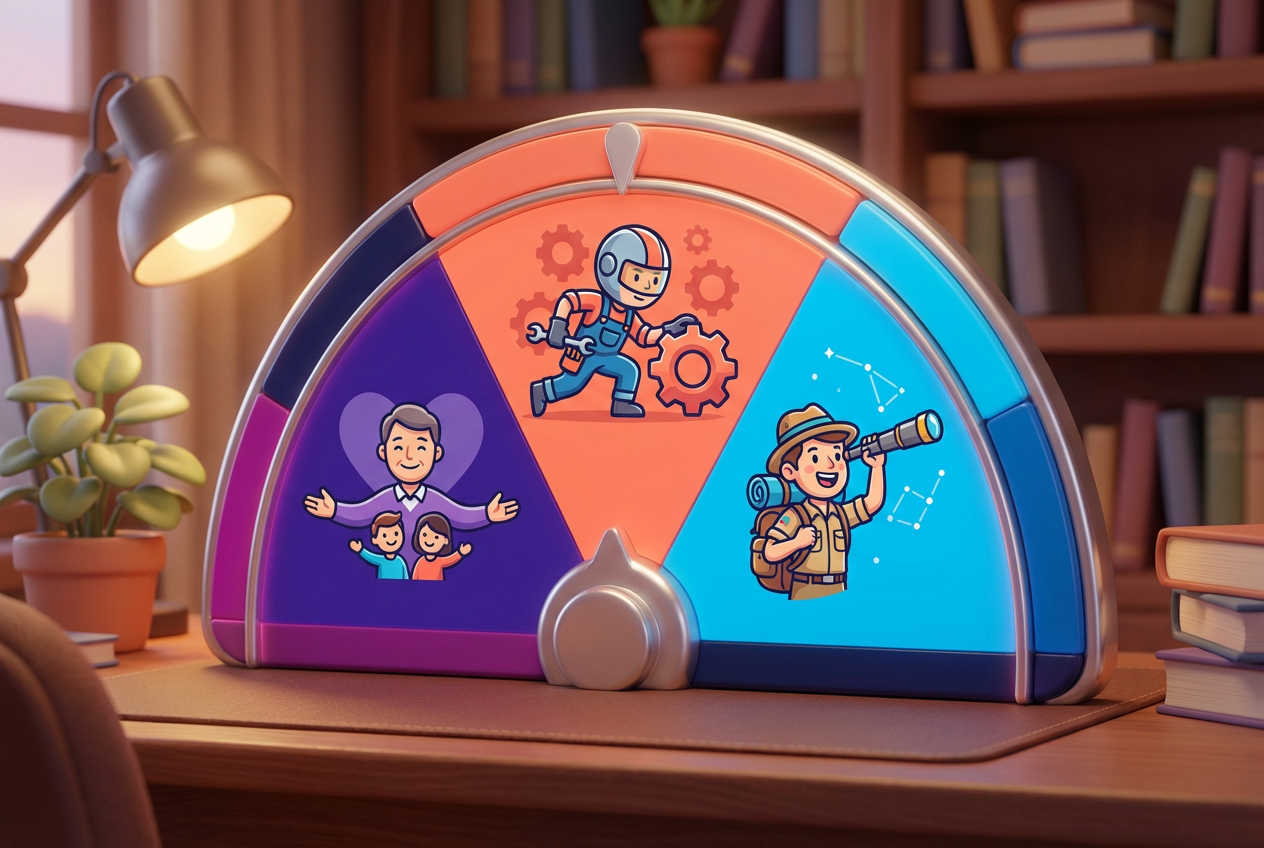
We spend more time with our colleagues than our families, so when team dynamics turn sour, it feels personal. Conflict often arises when we don't understand the "why" behind someone else's behaviour. You might see a Coordinator as being "too rigid," while they see you as "unorganised." These labels are often just different work personalities clashing over process. If you can't see a way to resolve these misunderstandings, the urge to leave becomes overwhelming.
There's actually a way to figure out which of these patterns fits you, take a quick personality read and see what comes up. When you understand that your colleague isn't trying to annoy you, but is simply an Auditor focused on precision, the friction often lessens. However, if the team lacks the psychological safety to have these conversations, or if there is a fundamental lack of empathy for different working styles, staying may take a toll on your mental health.
High-performing teams require a balance of all eight work actions: Evaluating, Coordinating, Campaigning, Pioneering, Advising, Helping, Auditing and Doing. If your team is missing several of these or is heavily weighted in one direction, the workload will feel lopsided. You might be doing the work of three different personalities because the team design is flawed. Recognising this lopsidedness can help you decide if the situation is fixable or if it's time to find a more balanced team.
If you have decided that the answer to "should I stay or go" is to go, your next step should be informed by your work personality. Don't just run away from a bad job; run toward a role that fits your brain. If you are an Advisor, look for environments that value flexibility and collaboration. If you are an Evaluator, seek out roles that require objective analysis and logical decision-making. Using your personality as a compass ensures that your next move is a step forward, not just a side-step into a different version of the same problem.
At Compono, we believe that everyone has a place where they can thrive without needing to change who they are at their core. The goal isn't to fix yourself; it is to find the right context for your existing strengths. When you align your career with your natural tendencies, the question of staying or going disappears because you finally feel like you belong. It is about moving from a place of surviving to a place of contributing with ease.
Key insights
- The decision to leave should be based on a clear understanding of your work personality and how it fits your current role.
- Leadership mismatches are a common but often overlooked reason for feeling the need to quit.
- Team conflict is frequently a result of misunderstood personality differences rather than personal malice.
- Your next career move will be more successful if you target roles that align with your natural work preferences.
- Self-awareness is the most powerful tool you have for managing career crossroads and avoiding burnout.
Related reading: Should I quit my job? How to decide with confidence · Pros and cons job: weighing up your next career move
Career change coaching that starts with your personality, not a template. Start free.
Get started freeBurnout can happen in any job, but if you find that your tasks consistently drain your energy even after a break, it is likely a misalignment between your work personality and the role. If the core nature of the work feels like a struggle against your instincts, the job is likely the issue.
Your work personality is based on deep-seated preferences and natural tendencies. While you can learn new skills and adapt for short periods, trying to fundamentally change who you are at work is a recipe for chronic stress and dissatisfaction. It is better to adapt the role or find a new one that fits you.
First, try to identify both your style and theirs. If you can communicate your needs based on your work personality, for example, asking for more autonomy if you are an Auditor, a good manager may be willing to flex. If they are unable or unwilling to adapt, it may be time to consider a move.
Yes, many people feel this way when they are in an environment that doesn't value their specific work personality. What one team calls "too blunt," another calls "refreshingly direct." Finding the right culture is about finding people who see your natural traits as assets rather than obstacles.
Hey Compono provides you with a clear map of your work personality, including your strengths, blind spots, and preferred work actions. This data allows you to evaluate your current job objectively and identify exactly what is missing, making the "stay or go" choice much clearer.

1 min read
AI coaching for career professionals is a personalised, data-driven approach to professional development that uses artificial intelligence to provide...

1 min read
Being scared to change is a natural survival mechanism triggered by your brain's preference for the known over the uncertain.

1 min read
An organised personality is defined by a natural preference for structure, order, and methodical execution in both personal and professional...