 Mathan Allington
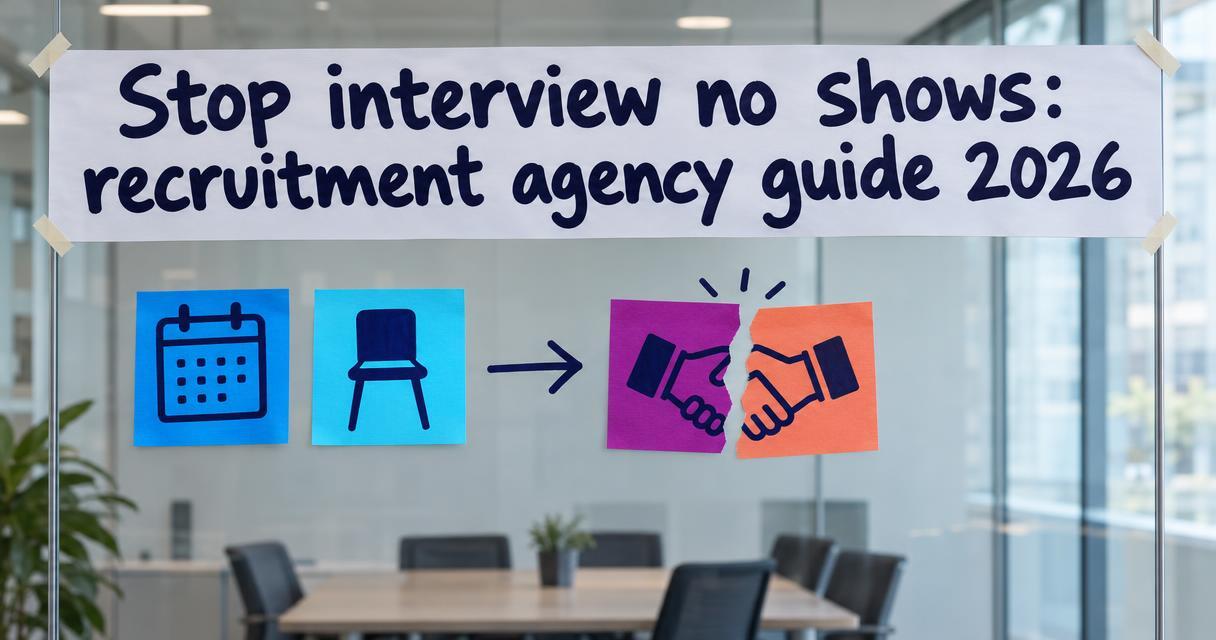
You have spent three weeks hunting down the right candidate, your client has finally cleared their Thursday afternoon, and then your phone rings five minutes before the interview with silence on the other end.
Last reviewed October 2026
Key takeaways
- Staffing agencies face unique risks when candidates ghost, as empty chairs directly damage billable client relationships.
- Scheduling friction and short notice are major causes of candidate drop-off, with interviews booked under 24 hours failing at nearly triple the normal rate.
- Implementing a strict candidate risk-scoring framework helps recruiters spot flight risks during the initial screening phase.
- Using automated communication cadences and structured candidate preparation tools significantly boosts interview attendance.
- Having a clear damage control script protects your agency's authority when a candidate leaves your client waiting.
The true cost of candidate ghosting
Dealing with interview no shows as a recruitment agency is a unique kind of pain. When an internal HR team loses a candidate, it is frustrating. When an agency recruiter loses one, you lose your commission and risk burning a bridge with a high-value client.
Nothing destroys billable trust faster than an empty chair. Your clients pay agency premiums to avoid the mess of the open market. When you send someone who ghosts, it makes your screening process look weak, even if the candidate's behaviour was entirely unpredictable.
This is a widespread problem across the industry. Staffing agencies commonly report interview no-show rates of 10–25 percent depending on the industry and confirmation process, according to data from Recruiting-Agencies.com. If you run a high-volume desk, those numbers represent a massive leak in your revenue pipeline.
Why candidates ghost agencies versus direct employers
Agency candidates often feel less committed because they have not built a direct relationship with the employer yet. You sit in the middle, and if the process feels disjointed, the candidate quietly bows out.
Friction is the enemy of commitment. Sixty percent of recruiters report sometimes or often losing candidates before an interview is even booked due to scheduling friction, based on Yello data published by Rubrily. Every time you have to play phone tag between a hiring manager and a candidate, the risk of a no-show goes up.
Timing is another massive factor. Interviews scheduled with less than 24 hours of notice have a 28–29 percent failure rate, compared with just 8–10 percent for interviews booked 24 to 72 hours in advance, according to scheduling provider analysis shared by Humanly. Pushing a candidate into an immediate slot might look like a quick win, but it usually backfires.
Personality plays a role here too. A candidate with a Doer personality wants fast momentum. If your client reschedules twice, the Doer assumes the company is disorganised and accepts another offer. A candidate with an Evaluator personality needs detail and structure. If your interview brief is vague, they feel underprepared and might ghost simply to avoid looking foolish in front of a hiring manager.
A risk-scoring framework to predict drop-offs
You can usually spot a flight risk long before the calendar invite goes out. Top billers do not just screen for skills; they screen for commitment. Using a simple risk-scoring framework during your initial calls helps you decide who needs extra hand-holding and who should be dropped from the shortlist.
| Risk factor | High risk indicator (Likely to ghost) | Low risk indicator (Likely to show) |
|---|---|---|
| Communication speed | Takes days to reply to SMS or email | Responds within a few hours |
| Motivation | Only interested in the salary bump | Can name specific reasons they want this role |
| Preparation | Has not read the brief or researched the client | Asks detailed questions about the company culture |
| Current status | Has three other final-stage interviews this week | Highly targeted in their job search |
When you spot a candidate ticking the high-risk boxes, you have a choice. You can drop them, or you can intervene. If they are simply underprepared, anxiety takes over. This is where recruiter support for nervous candidates changes the game. Giving them a structured way to practice reduces the fear that causes them to run.
The pre-interview touchpoint playbook
Hope is not a strategy. If your only communication is a calendar invite on Monday for a Thursday interview, you are leaving the door wide open for ghosting. You need a structured engagement cadence that builds obligation and excitement.
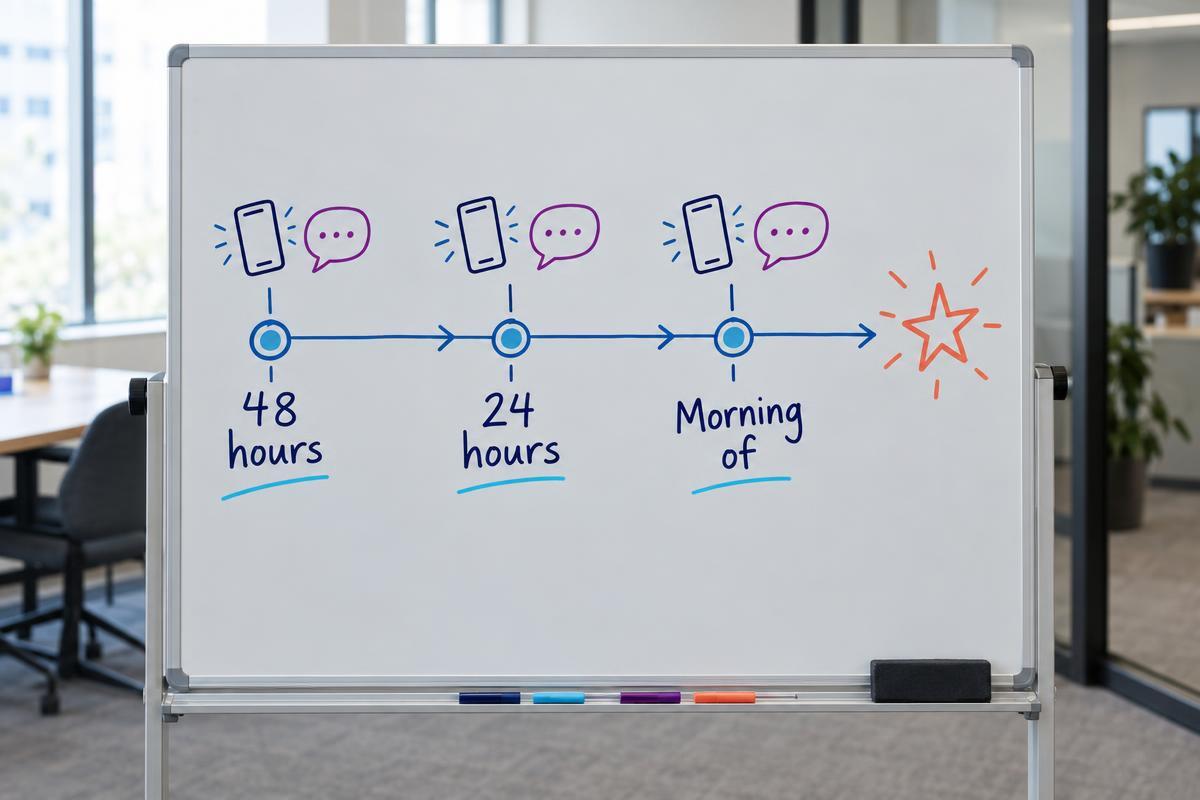
A proven agency touchpoint playbook looks like this:
- 48 hours out: A phone call to run through the interview brief and answer last-minute questions.
- 24 hours out: A simple SMS requiring a manual reply.
- Morning of: A quick "good luck" text two hours before the start time.
Here is an SMS template that works because it demands a response: "Hi [Name], your interview with [Client] is tomorrow at 2 PM. Reply YES to confirm you are good to go, or let me know now if we need to adjust the time."
Employers have reduced interview no-shows by up to 75 percent after automating their screening and confirmation options, according to Workstream. You do not have to send these messages manually. Setting up an automated SMS workflow in your applicant tracking system saves hours while keeping candidates engaged.
Technology that keeps candidates committed
Understanding exactly what candidate prep is and how to deliver it at scale is what separates premium agencies from resume churners. Candidates ghost when they feel out of their depth. When they feel ready, they show up.
Many firms are now using interview prep tools for recruitment agencies to fix this. Giving a candidate access to AI mock interviews means they get to stumble through their awkward answers in private before they face your client. By the time Thursday rolls around, they know their story and want to tell it.
Some agencies use platforms like Hey Compono to handle this preparation phase. The candidate feels invested in the process because you gave them a tool that genuinely helps them, creating a sense of reciprocity that makes ghosting much harder.
Damage control when the worst happens
Even with the best processes in place, human beings are unpredictable. A candidate will eventually ghost your client. How you handle the next ten minutes determines whether you keep the account.
Do not make excuses for the candidate, and do not take the blame for their bad manners. You need to act fast, protect your authority, and pivot straight to solutions.
Use this script when you have to make the dreaded phone call to the hiring manager: "Hi [Client Name], the candidate has not arrived and is currently unreachable. I do not tolerate this level of unreliability, so I am removing them from the process immediately. I value your time too much to wait on them. Let's look at the backup shortlist we discussed on Tuesday."
This response shows that you manage the candidate preparation pipeline tightly and hold your talent to a high standard. You turn a negative situation into proof that you are a true partner, not just a resume forwarder.
How Hey Compono can help
Coached candidates win, and confident candidates actually show up. Recruiter Hub gives every candidate AI-powered interview prep as part of your placement service, letting you track their readiness so you know exactly who is prepared and who is a flight risk before the client ever meets them.
Related reading
FAQ
What is an acceptable interview no show rate for a recruitment agency?
Most staffing agencies see a baseline no-show rate of 10 to 25 percent, though this varies heavily by sector. High-volume light industrial roles often see higher drop-offs, while executive search should see numbers close to zero. If your rate climbs above 15 percent in professional services, your confirmation process needs immediate work.
How soon should we schedule an interview after screening?
The sweet spot is between 24 and 72 hours. Scheduling an interview for the same day or the next morning spikes the failure rate to nearly 30 percent, as candidates struggle to arrange time off work or properly prepare. Pushing it out beyond a week gives them too much time to accept competing offers.
Should we blacklist candidates who ghost an interview?
Yes, in most cases. If a candidate completely disappears without a genuine emergency, they have shown you how they handle professional obligations. Representing them again puts your reputation with clients at unnecessary risk. Mark their file in your database so other recruiters in your agency do not make the same mistake.
Does sending calendar invites directly from the client reduce no-shows?
It can help. When a candidate sees an official calendar invitation from the employer's domain rather than just the agency, the interview feels more real and formal. However, the agency recruiter must still own the reminder and preparation touchpoints leading up to the meeting.
How do we get candidates to tell us they are dropping out beforehand?
Make it easy for them to say no. In your confirmation messages, always include an out clause. Saying "Reply YES to confirm, or let me know if your situation has changed" gives a nervous candidate permission to bow out respectfully, saving your client from an empty boardroom.