
 Compono
1 min read
How to differentiate my recruitment agency in victoria
 Compono
Differentiating your recruitment agency in Victoria requires shifting from a volume-based transaction model to a high-value, personality-led advisory...

Understanding personality differences at work is about recognising that people aren't being difficult on purpose; they simply process information and prioritise tasks through a different psychological lens.
When we stop viewing a colleague's preference for detail or their need for big-picture vision as a personal affront, we can finally start building teams that actually work together instead of just alongside each other. Most friction in the modern workplace isn't caused by a lack of skill, but by a fundamental misunderstanding of how our brains are wired to approach problems, people, and deadlines.
Key takeaways
- Personality differences are natural work preferences that dictate where an individual spends their energy and what they are likely to avoid.
- Most team conflict arises from 'signalling' errors where one person’s natural style is misinterpreted as a lack of care or competence by another.
- High-performing teams require a balance of all eight work actions, from pioneering new ideas to auditing the finer details for accuracy.
- Adapting your leadership style based on the specific personality types in your team is the most effective way to drive engagement and results.
You’ve likely felt it before, that moment in a meeting where you’re talking about a bold new vision, and a colleague immediately starts poking holes in the logistics. It feels like they’re trying to kill your buzz, doesn't it? Or perhaps you’re the one who values accuracy, and you’re watching a teammate make grand promises that you know the current system can’t possibly deliver. You feel like the only adult in the room, while they see you as a 'blocker'.
These moments aren't about who is right or wrong. They are classic examples of personality differences in action. At Compono, we’ve spent over a decade researching organisational design to understand why some teams click and others clash. What we’ve found is that we all have a 'dominant preference', a natural home base for our brain. When we don't understand these preferences, we spend more time managing egos than we do hitting targets.
The problem isn't that we are different; it's that we expect everyone else to be just like us. We’ve been told for years to 'treat others how you want to be treated', but in a diverse workplace, that’s actually bad advice. You should treat others how they need to be treated. If you’re curious about where your own 'home base' lies, Hey Compono can show you your dominant work personality in about ten minutes.
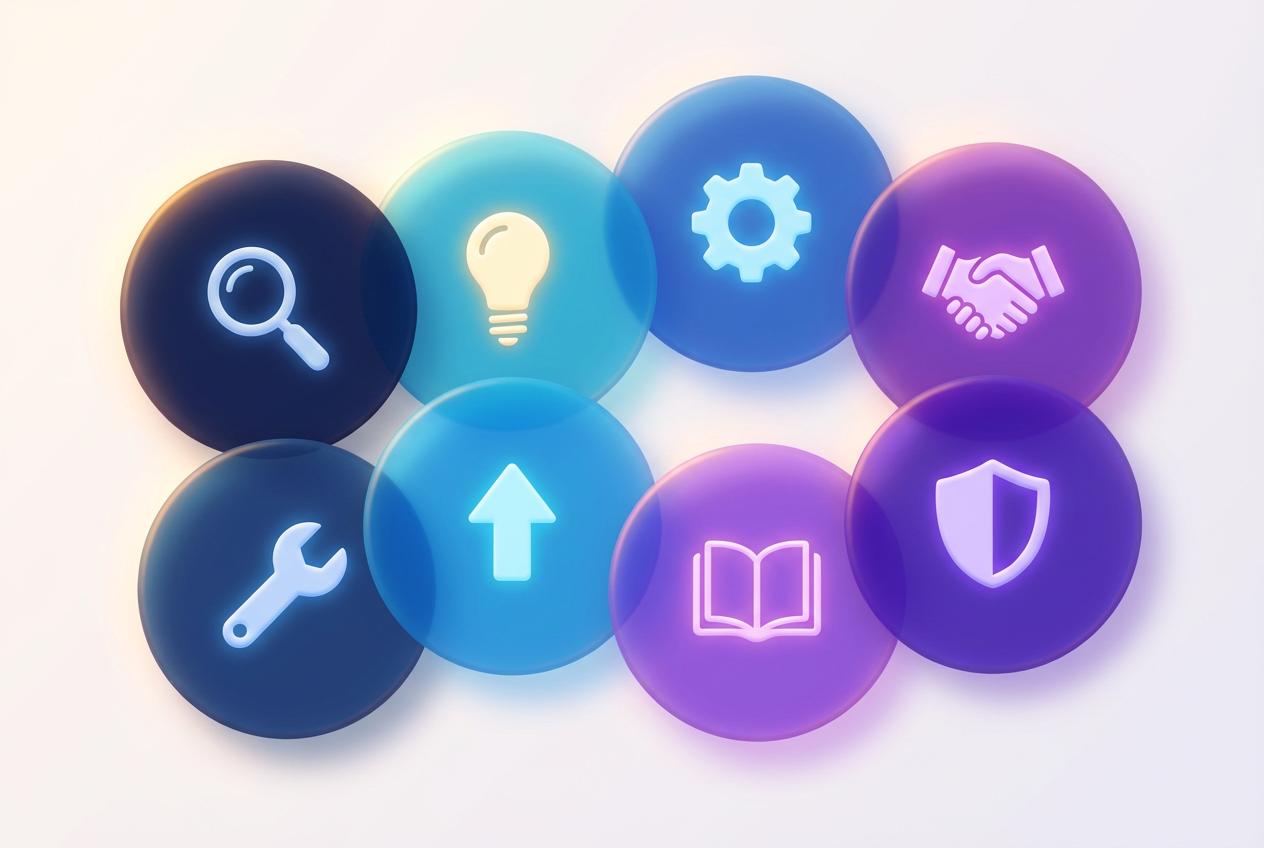
To move past the surface-level frustration of personality differences, we need a common language. Our research has identified eight key work activities that every high-performing team needs to execute: Evaluating, Coordinating, Campaigning, Pioneering, Advising, Helping, Auditing and Doing. Most of us are naturally brilliant at two or three of these, and we find the others exhausting.
Consider 'The Pioneer'. This person is imaginative and adaptable. They live for the 'what if' and the 'could be'. Now, put them in a room with 'The Auditor', someone who is thorough, accurate, and cautious. To the Pioneer, the Auditor feels like an anchor. To the Auditor, the Pioneer feels like a loose cannon. Neither is being difficult. The Pioneer is trying to ensure the team innovates, while the Auditor is trying to ensure the team doesn't fail due to a preventable error.
When these personality differences are left unmanaged, the team suffers from 'gap' areas. If your team is full of Pioneers but has no Auditors, you’ll have plenty of ideas but very little follow-through. Conversely, a team of only Auditors might be incredibly efficient at doing the wrong thing because they haven't stopped to rethink the strategy. Recognising these archetypes allows us to stop taking work styles personally and start using them strategically.
Communication is where personality differences become most visible, and most painful. We tend to communicate in the way we like to receive information. A 'Doer' will be direct and straightforward. They want the facts, the deadline, and the 'how-to'. If they’re talking to an 'Advisor', who is empathetic and collaborative, the Doer might come across as blunt or even rude. Meanwhile, the Advisor might seem indecisive or 'too soft' to the Doer.
To bridge this gap, we have to learn to translate. If you are a leader, your job is to be the universal translator for your team. This means providing the structure and clear goals that a Coordinator needs to feel safe, while also giving the autonomy and creative freedom that a Pioneer needs to feel inspired. It’s a balancing act that requires high levels of self-awareness.
Many teams find that using personality-adaptive coaching helps lower the temperature in these conversations. Instead of saying 'You’re being too rigid,' a team can say 'We need to move from an Auditor mindset to a Pioneer mindset for this brainstorming session.' It shifts the focus from the person's character to the team's current needs.
Conflict isn't always a sign of a toxic culture; often, it’s just a sign of unmanaged personality differences. When a 'Campaigner' (who is future-focused and persuasive) clashes with an 'Evaluator' (who is logical and objective), the conflict usually stems from their different priorities. The Campaigner wants to sell the dream, while the Evaluator wants to weigh the risks. Both are essential for a business to survive.
The key to resolving these clashes is to validate the struggle without shame. It's okay to find a colleague's style frustrating. What's not okay is letting that frustration derail the project. Leaders should encourage team members to share their 'Knowing Me' profiles, a way of saying, 'This is how I work best, and this is what I find hard.' When we know that an Auditor needs time to process information before making a decision, we stop rushing them and start giving them the space they need to do their best work.
If you've ever been told you're 'too much' of something, too detailed, too loud, too cautious, it's usually because your natural style was clashing with the environment around you. Understanding these dynamics doesn't just make you a better worker; it makes you a more empathetic human. You can find out more about these different styles on the Hey Compono blog, where we break down how to manage everything from conflict to career growth.
Key insights
- Personality differences are not obstacles to be overcome, but assets to be utilised for a more rounded team perspective.
- Communication breakdowns happen when we fail to translate our natural style into a format the receiver can process.
- A balanced team requires a mix of directive, democratic, and non-directive leadership styles depending on the task urgency and team experience.
- Self-awareness is the foundation of team harmony, you cannot lead others effectively until you understand your own dominant work preferences.
The first step to mastering personality differences is knowing where you stand. You can't adjust your approach if you don't know what your default setting is. At Compono, we've made it easy to get those insights without the corporate jargon.
If you’re ready to see how your brain is wired for work, you can get started for free. It takes about ten minutes, and the results might just explain why you’ve been feeling misunderstood at work. Once you have your own profile, you can start looking at your teammates through a new lens, one of curiosity instead of frustration. Understanding yourself is the key to finally being understood by others.
Related reading: Coordinator personality traits: the backbone of a team · How to use a team personality wheel to understand people
While your core personality traits tend to be stable, your work personality, the activities you choose to focus your energy on, can shift as you gain experience or move into different roles. However, your 'home base' or dominant preference usually remains consistent throughout your career.
Most teams have gaps. The goal isn't necessarily to hire eight different people, but to recognise which actions are missing and consciously assign them. For example, if you lack a 'Doer', the team must agree on who will step into that practical, task-focused role for a specific project.
Focus on the work action rather than the personality. Instead of saying 'You're too slow,' try 'I know you value thoroughness (the Auditor style), but for this urgent task, we need to lean into a 'Doer' approach and focus on immediate completion over perfect detail.'
No. Different situations require different styles. A crisis might need a Directive 'Evaluator' style, while a creative project might flourish under a Democratic 'Campaigner' style. The best leaders are those who can flex their style to match the needs of the team and the task.
Hey Compono is specifically designed for the modern workplace. We focus on the eight work actions that research shows are essential for high-performing teams, providing actionable tips for collaboration and conflict resolution rather than just a generic label.

1 min read
Differentiating your recruitment agency in Victoria requires shifting from a volume-based transaction model to a high-value, personality-led advisory...

1 min read
Working with different personalities starts with recognising that your colleagues aren't trying to be difficult, they just process information and...

1 min read
You differentiate your recruitment agency in the Northern Territory by moving beyond traditional resume matching and lead with deep,...