
 Compono

How to become the best version of yourself at work
 Compono
Stop chasing perfection and start understanding your natural traits. Becoming the best version of yourself means leaning into your work personality.

Personality flaws are often just natural traits used in the wrong context or taken to an extreme. Instead of trying to 'fix' who you are, the most effective approach is to build self-awareness around your natural work personality and learn to regulate your behaviours based on the situation.
Key takeaways
- Personality flaws are usually 'overdone' strengths rather than inherent defects.
- Self-awareness is the primary tool for managing behaviours that hinder team performance.
- Different work environments require different personality traits to succeed.
- Understanding your specific work personality type helps you predict and manage your blind spots.
We have all been there, sitting in a performance review or staring at a self-help book, feeling like we are a collection of broken parts that need urgent repair. Maybe you have been told you are too blunt, too quiet, or perhaps too obsessive over the small details. These labels often get filed away as personality flaws, leaving us feeling like we need to fundamentally change who we are to fit into a corporate mould.
At Compono, we have spent over a decade researching how people actually work, and the truth is much more liberating. What we call a flaw is often just a natural preference that is being applied in a way that doesn't serve the current goal. If you are highly detail-oriented, you might be seen as a perfectionist who slows down the team. If you are a visionary, you might be labelled as scattered or impractical. The trait isn't the problem, the lack of awareness is.
The pressure to be 'well-rounded' is one of the biggest myths in the modern workplace. It suggests that we should all be equally good at everything, which is not only impossible but also counter-productive. High-performing teams aren't made of identical, flawless individuals. They are made of people who understand their natural tendencies and know how to lean on others when their own 'flaws' start to get in the way. You can start to see these patterns in yourself by taking a work personality assessment to see where your natural energy lies.
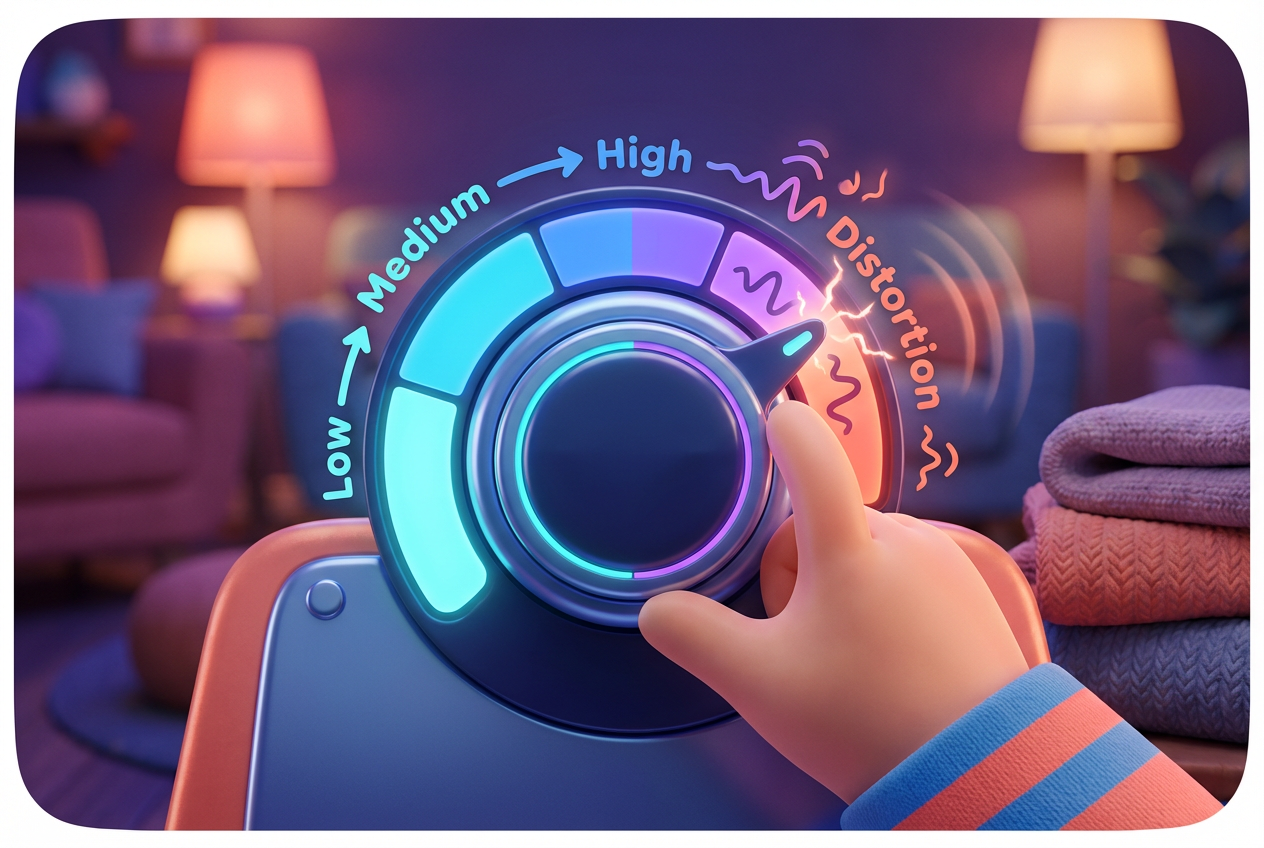
Most of what we perceive as personality flaws are actually just strengths that have been dialled up too high. Think of it like a volume knob on a stereo. At the right level, the music is perfect. Turn it up too far, and it becomes distorted noise. In a work context, this is often referred to as 'overdoing' a trait. For example, a person who is naturally decisive and results-oriented, someone we might call an Evaluator, can easily slip into being perceived as blunt or dismissive under pressure.
This shift usually happens when we are stressed or when we feel our natural way of working is being threatened. If you value structure and order, like a Coordinator, a sudden change in plans might cause you to become rigid and controlling. To those around you, this looks like a personality flaw. To you, it feels like a necessary defence mechanism to keep things on track. Recognising this 'stress response' is the first step toward regaining control.
Understanding this balance is easier when you know your starting point. If you are curious about which personality type you default to under stress, Hey Compono can show you in about 10 minutes. By identifying these tendencies early, you can learn to spot the moment your strength starts to turn into a hindrance, allowing you to adjust your approach before it causes friction with your team.
A trait that is a 'flaw' in one role can be a superpower in another. Imagine an Auditor who is obsessed with precision and following established protocols. In a creative brainstorming session, this person might be seen as a 'naysayer' or a 'blocker' because they keep pointing out technical limitations. However, if you are launching a complex piece of software or managing a multi-million dollar budget, that same attention to detail is exactly what saves the project from disaster.
We often judge ourselves harshly because we are trying to apply our natural work personality to tasks that don't match our preferences. A Helper might feel like they have a flaw because they struggle with aggressive sales targets, but they are the exact person you want leading a customer success team or managing internal culture. The 'flaw' is simply a mismatch between the person and the activity.
This is why at Compono, we focus on eight key work activities: Evaluating, Coordinating, Campaigning, Pioneering, Advising, Helping, Auditing and Doing. Every high-performing team needs a mix of these. If you find yourself constantly fighting against your natural grain, it might not be that you have personality flaws, it might be that you are in a role that doesn't value your natural work personality. Finding that alignment changes the narrative from 'what is wrong with me' to 'where do I fit best'.

Once you stop seeing your traits as flaws and start seeing them as preferences, you can begin the work of self-regulation. This isn't about changing your personality; it's about expanding your range. If you know you tend to dominate discussions because you are an enthusiastic Campaigner, self-regulation means consciously choosing to pause and invite a quieter team member to speak. You haven't lost your spark, you have just learned how to use it more effectively.
This process requires a high level of honesty. You have to be willing to look at your potential blind spots without shame. Do you avoid conflict to the point that problems fester? That is a common challenge for the Helper or Advisor types. Do you rush into action without a plan? That is often the Doer's Achilles heel. Acknowledging these patterns doesn't make you a bad employee; it makes you a self-aware one. Teams using personality-adaptive coaching often find that having these conversations openly removes the 'blame' from the equation and replaces it with practical strategies.
The goal is to move from reactive behaviour to intentional action. When you feel that familiar urge to take control, or perhaps the urge to withdraw, stop and ask: 'Is this what the situation needs right now?' Sometimes the answer is yes. Other times, you might need to lean into a different part of your personality or ask for help from a colleague who has the traits you are currently lacking.
Key insights
- Perceived flaws are usually just natural preferences that are misaligned with the current task or context.
- Every personality type has 'overdone' versions of their strengths that manifest under stress or pressure.
- High-performing teams require a diverse mix of personalities rather than a group of 'perfect' individuals.
- Self-regulation involves choosing the right behaviour for the situation, rather than trying to change your core identity.
- True professional growth comes from self-awareness and understanding how your traits interact with others.
Understanding your personality isn't about giving yourself an excuse for bad behaviour, it is about giving yourself a map. When you know where your natural boundaries are, you can manage your career with much more confidence and much less shame. You can stop trying to fix 'flaws' that are actually just parts of your unique value proposition.
Ready to see your traits in a new light? You can start by discovering your dominant work personality and how it impacts your team. It is a simple shift that changes how you show up every day.
Related reading: Analytical personality: traits, strengths, how to use them · Who am I at work? Understanding your unique work personality
You don't necessarily change your core personality, but you can definitely change your behaviours. By building self-awareness, you learn to recognise when a natural trait is becoming a 'flaw' in a specific context and choose a more effective response.
Work often places us in high-pressure situations that demand specific types of output. If those demands don't match your natural work personality, your preferences can feel like obstacles or flaws. It is usually a matter of context and alignment.
Frame the conversation around work preferences and team performance. Instead of saying 'I'm bad at details,' try 'My strength is in big-picture strategy, so I find it helpful to have a structured checklist or a peer review for the finer details to ensure we stay accurate.'
Not at all. Empathy and emotional intelligence are critical for leadership and team cohesion. The 'flaw' only appears if those emotions prevent objective decision-making when it is required. It is about balance and regulation, not suppression.
Hey Compono provides a framework to understand your natural work personality. It identifies your major characteristics and potential blind spots, giving you practical tips on how to collaborate and manage your tendencies so they remain strengths.

Stop chasing perfection and start understanding your natural traits. Becoming the best version of yourself means leaning into your work personality.

Generic career advice ignores the way you actually work. How to use what you know about yourself to pick a direction you will stay with.

Roles that reward careful analysis and risk thinking, what each asks of you day to day, and how to tell which one fits the way you like to work.