
 Compono
1 min read
The complete AI coaching security checklist for buyers
 Compono
An effective ai coaching security checklist for buyers must verify that employee data is never used to train public language models, guarantees...

An enterprise AI coaching platform should have deep personality-adaptive intelligence, ethical data guardrails, and the ability to scale individualised development across thousands of employees without losing the human touch.
Modern teams need more than generic advice, they need a system that understands the nuances of human behaviour and provides actionable insights that actually land with different personality types.
Key takeaways
- Enterprise AI coaching must be built on validated psychometric research to ensure advice is accurate and safe for professional environments.
- Personality-adaptive features allow the platform to tailor its communication style to match how each individual prefers to learn and receive feedback.
- Solid data privacy and ethical AI frameworks are non-negotiable for large organisations handling sensitive employee development data.
- Smooth integration with existing workflows ensures that coaching happens in the flow of work rather than becoming another chore.
You’ve likely felt the tension of trying to grow a team while keeping the culture intact. It’s a common struggle, as organisations expand, the personal touch that once drove performance starts to thin out. Traditional coaching is brilliant, but it’s also expensive and impossible to give to every single person in a 5,000-strong workforce.
This is where most businesses get stuck. They want to invest in their people, but they end up with generic learning management systems that everyone ignores. These platforms often fail because they don’t understand the person behind the screen. They treat a highly analytical Auditor the same way they treat a visionary Campaigner, and then we wonder why the engagement scores are in the bin.
The real shift happens when you move from static content to dynamic, AI-driven guidance. But not all AI is created equal. To work at an enterprise level, a platform needs to do more than just generate text; it needs to understand the intricate web of work personalities that make up a high-performing team. If you're curious about how these dynamics play out in your own life, Hey Compono can show you your dominant work personality in about ten minutes.
The most critical feature of any enterprise AI coaching platform is its ability to adapt to the individual. We’ve all received feedback that felt like a personal attack because it was delivered in a way that clashed with our natural temperament. In a large organisation, these friction points multiply and lead to burnout or disengagement.
A sophisticated platform should use a framework like the eight work personalities, such as the Evaluator, the Helper, or the Pioneer, to map out how a person thinks and works. When the AI knows that an employee is a Coordinator who thrives on structure, it shouldn't give them vague, open-ended prompts. It should provide clear milestones and organised action plans.
At Compono, we’ve spent over a decade researching how these preferences impact team success. This research forms the backbone of Hey Compono, ensuring that every nudge and piece of advice is grounded in actual organisational psychology. This isn't just about making people feel good; it's about reducing the cognitive load of collaboration by helping everyone understand how to speak each other's language.
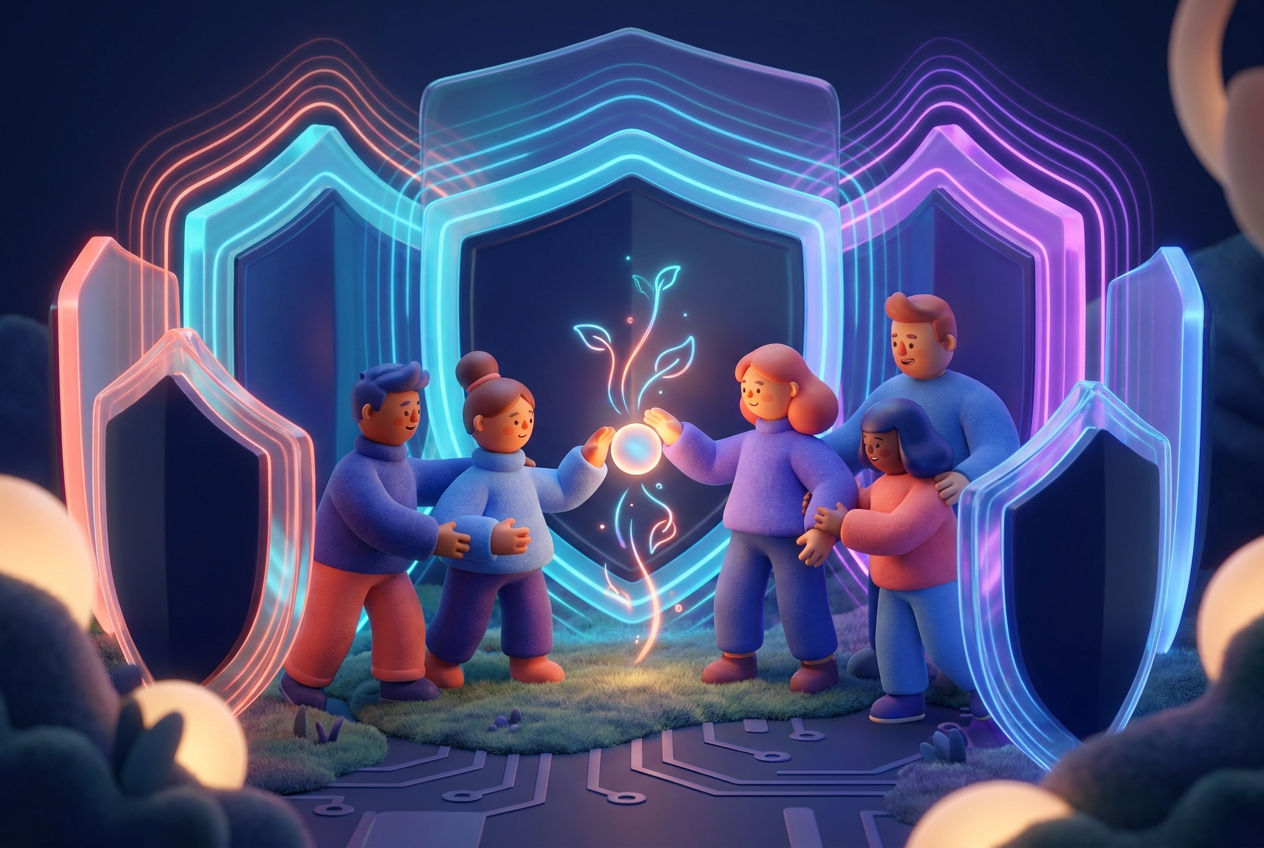
When you’re dealing with the inner workings of your employees' minds, security isn't just a checkbox, it's the whole foundation. An enterprise platform must have ironclad data protection and a clear ethical framework. Employees won't be vulnerable or honest with an AI if they think their manager is reading every transcript or if the data is being used to train a public model.
Features like data anonymisation, SOC2 compliance, and end-to-end encryption are the baseline. Beyond the technical side, there’s the ethical side. The AI must be trained to avoid bias and should never replace human empathy. Instead, it should act as a bridge, preparing people for better human-to-human conversations. It’s about giving a manager the tools to handle a difficult talk with a Doer by explaining that they need facts and practical steps, not fluff.
Many HR teams find that the biggest hurdle to AI adoption is trust. To clear this hurdle, the platform needs to be transparent about how it works. It should be a tool for empowerment, not a tool for surveillance. When people realise the AI is there to help them manage the messy parts of work, like conflict or miscommunication, the walls start to come down.
Nobody wants another app to check. If the coaching platform sits in a silo, it will die there. For an AI coaching tool to be effective at scale, it needs to live where the work happens. This means deep integrations with the tools your team already uses every day, like Slack, Microsoft Teams, or your existing HRIS.
Imagine a scenario where a team is about to start a high-pressure project. Instead of a generic "good luck" email, the platform sends a nudge to the project lead, reminding them that their team is heavy on Pioneers and might need an Auditor to help keep the details on track. This kind of just-in-time coaching is what separates a gimmick from a strategic asset.
This level of integration allows for what we call personality-adaptive coaching. It’s about providing the right insight at the exact moment it’s needed. If you want to see how this looks in practice, you can explore various use cases for how different departments use these insights to simplify their daily workflows. It turns self-awareness from a once-a-year workshop into a daily habit.
While the primary focus of coaching is the individual, the enterprise needs to see the big picture. An effective platform provides leadership with aggregated, anonymous data on the organisation’s "personality health." Are we too heavy on Evaluators and lacking the creative spark of a Campaigner? Is there a particular department where conflict is spiking because of a clash in work styles?
These insights allow executives to make data-driven decisions about team design and hiring. Instead of guessing why a certain department is underperforming, they can see the structural gaps in work activities. This isn't about blaming individuals; it's about understanding the collective behaviour of the group. It allows for a more scientific approach to culture building, one that recognises that high performance is a result of balanced work personalities.
When you have thousands of employees, these patterns become visible only through the lens of a platform that can process that much data. The goal is to create a self-correcting environment where the AI helps individuals grow, which in turn helps teams harmonise, which ultimately drives the entire organisation forward. It’s a bottom-up approach to transformation that actually sticks because it respects the humanity of every person involved.
Key insights
- The best AI coaching platforms use validated personality frameworks to tailor advice to the individual's natural work style.
- Data security and ethical AI boundaries are essential for building the trust required for deep employee engagement.
- Integration into daily communication tools ensures coaching happens in the flow of work rather than as a separate task.
- Leadership needs aggregated data to understand team composition and identify gaps in organisational work activities.
Where to from here?
Scaling development across an enterprise doesn't have to mean losing the personal connection that makes work meaningful. By using a platform that understands work personalities, you can give every employee a coach that actually gets them.
Related reading: Best AI coaching platform for education: a 2026 guide · Best AI coaching platform for SaaS companies in New Zealand
Employee coaching, wellbeing support and team personality insights in one platform, built on organisational psychology.
Talk to usA high-quality platform uses a psychometric framework to identify an individual's work personality. It then adjusts its tone, the complexity of its suggestions, and the type of goals it sets to match that person's natural preferences, ensuring the coaching feels relevant and supportive rather than generic.
For enterprise-grade tools like Hey Compono, security is the top priority. These platforms should use end-to-end encryption, comply with global data standards, and ensure that personal coaching reflections are never shared with managers in a way that identifies the individual, maintaining a safe space for growth.
AI isn't meant to replace the deep, nuanced work of a human coach. Instead, it scales the benefits of coaching to the entire workforce. It handles the daily nudges, self-awareness exercises, and immediate conflict-resolution tips, leaving human coaches and managers free to focus on the most complex, high-stakes career conversations.
Many teams notice a shift in communication and self-awareness almost immediately after completing their initial assessments. Because the AI provides real-time nudges in daily tools, the small changes in behaviour, like a manager adjusting their style for a specific team member, begin to compound within the first few weeks of use.
The most effective platforms do both. They provide individuals with personal growth steps while giving managers a "team view" to understand how different personalities within the group interact. This helps identify potential friction points and ensures that all eight essential work activities are being covered by the right people.
1 min read
An effective ai coaching security checklist for buyers must verify that employee data is never used to train public language models, guarantees...

1 min read
Have you been told you’re too blunt, too critical, or that you overanalyse every single decision until the opportunity has already passed? If your...

1 min read
An AI coaching platform for head of people acts as a scalable sounding board, giving every manager on your team personalised guidance based on their...