
 Compono
Hey Compono Pricing 2026: Plans, Tiers, and Team Costs
 Compono
Hey Compono pricing for 2026: what the free tier covers, what individual plans cost, and what your team would pay each month.

Finding an Assure Programs alternative in Australia requires moving beyond traditional Employee Assistance Programs (EAPs) towards proactive, personality-adaptive support that prevents burnout before it starts.
Key takeaways
- Modern Australian workplaces are shifting from reactive crisis management to proactive, daily self-awareness tools.
- Traditional EAPs often suffer from low engagement because they feel clinical rather than personal.
- Understanding individual work personalities allows for tailored support that resonates with how different people actually think and feel.
- Psychological safety is built through better communication, not just a phone number on a breakroom poster.
- The best alternatives focus on building long-term resilience by matching support styles to specific personality traits.
You’ve probably seen the posters in the breakroom or the link buried deep in the company intranet. For years, the standard approach to mental health at work in Australia has been the traditional EAP, a reactive service designed to catch people once they’ve already hit a wall. While services like Assure Programs have provided a vital safety net, many teams are starting to realise that a safety net isn't enough if people are constantly falling into it.
The problem isn't the intention; it’s the delivery. Many employees feel that calling a generic hotline is a last resort, leading to low utilisation rates and a culture where 'wellbeing' is just a box to be ticked. You might have felt this yourself, that sense that the support on offer doesn't really 'get' you or the specific way your brain handles stress at the office. We’ve spent over a decade at Compono researching why these gaps exist and how to bridge them with better data.
When you start looking for an assure programs alternative australia wide, you’re usually looking for something that feels more human. You want a tool that helps your team understand their own behaviours before they become problems. This is where Hey Compono steps in, moving the conversation from 'fixing' people to understanding them.

Most traditional programs treat every employee the same. They offer the same mindfulness modules and the same generic advice on work-life balance. But we know that a 'Campaigner' who thrives on social energy is going to experience stress very differently to an 'Auditor' who needs quiet, methodical focus to feel secure. If your support system doesn't account for these personality differences, it’s going to miss the mark for half your team.
Think about the last time a project went off the rails. Was it because no one had a meditation app, or was it because the 'Evaluator' on the team was being too blunt with the 'Helper', causing a breakdown in communication? Most workplace stress is interpersonal. It’s the friction between different ways of working that eventually leads to burnout. By focusing on these personality dynamics, you address the root cause of the pressure.
If you're curious about how these different styles clash or click, Hey Compono can show you your team's unique makeup in about ten minutes. It’s about giving people the vocabulary to say, "I’m not being difficult, my brain just needs more detail to feel comfortable with this plan." That level of self-awareness is a much stronger preventative measure than a quarterly wellbeing seminar.
The biggest shift in the modern Australian workplace is the move toward proactivity. An assure programs alternative australia teams actually use is one that integrates into the daily workflow. It shouldn't feel like a separate 'HR thing' that you only touch when you're in trouble. Instead, it should be a mirror that helps you see your own blind spots in real-time.
For example, a 'Pioneer' might not realise they are overwhelming their team with constant new ideas until they see it mapped out. When support is proactive, it helps that Pioneer learn to lead with structure before the team becomes scattered and stressed. At Compono, we’ve found that when people understand their 'Work Personality', they feel seen and validated rather than judged. This validation is the bedrock of psychological safety.
This is why personality-adaptive coaching is becoming the preferred alternative to traditional EAPs. It’s not about clinical intervention; it’s about personal growth. It’s about helping an 'Advisor' find their voice in a room full of 'Evaluators'. When people feel they can show up as their authentic selves, without being told they are 'too much' of one thing or 'not enough' of another, their mental wellbeing naturally improves.
We’ve all been there, being told we need to 'be more assertive' or 'focus more on the details'. It feels like being told you’re broken. Traditional programs often reinforce this by focusing on what’s wrong. A truly modern alternative flips the script. It recognises that your natural tendencies are your greatest strengths, provided you know how to manage them under pressure.
An 'Auditor' isn't being pedantic; they are ensuring the team doesn't make a costly mistake. A 'Helper' isn't being 'too sensitive'; they are the glue keeping the team morale alive. When a workplace switches to a personality-based framework, the language of shame disappears. It’s replaced by a language of strategy. You start asking, "How do we get the best out of this person?" rather than "How do we fix this person?"
Using a tool like Hey Compono allows managers to have these conversations without it getting weird. It provides a neutral, evidence-based platform to discuss how everyone is doing. It’s a way to support your team that feels like a mate telling it straight, honest, direct, and focused on making things better for everyone involved.
Key insights
- Traditional EAP services often miss the interpersonal causes of workplace stress.
- Personality-adaptive support helps teams move from a culture of shame to a culture of strategic self-awareness.
- Proactive tools that integrate into daily work are more effective than reactive crisis hotlines.
- Understanding the eight core work personalities reduces friction and prevents burnout.
- The most effective wellbeing strategy is helping people feel understood and validated in their natural roles.
Related reading: Finding a better Acacia Connection alternative in Australia · Finding a Lyra Health alternative in Australia
Employee coaching, wellbeing support and team personality insights in one platform, built on organisational psychology.
Talk to usA great alternative focuses on proactive support and personality-based insights rather than just reactive counselling. Look for tools that help employees understand their work behaviours and communication styles to prevent stress before it escalates.
Many employees find traditional EAPs feel a bit too clinical or 'corporate'. When support feels like a generic service rather than a personal development tool, people tend to only use it as a last resort during a crisis.
It helps by addressing the root cause of most workplace stress, interpersonal friction. By teaching teams how to communicate based on their specific personality types, you reduce the misunderstandings and 'shame' cycles that lead to burnout.
Hey Compono works as a proactive layer that often sits alongside or replaces parts of a traditional EAP. It focuses on daily self-awareness and team dynamics, which can significantly reduce the need for clinical crisis intervention later on.
Most teams report an immediate shift in the 'vibe' of their meetings and communication as soon as they have the vocabulary to discuss their work personalities. Long-term resilience builds as these habits become part of the daily culture.
Hey Compono pricing for 2026: what the free tier covers, what individual plans cost, and what your team would pay each month.

How AI coaching gives each person guidance that suits the way they work, what it takes off your plate as a manager, and what actually shifts...
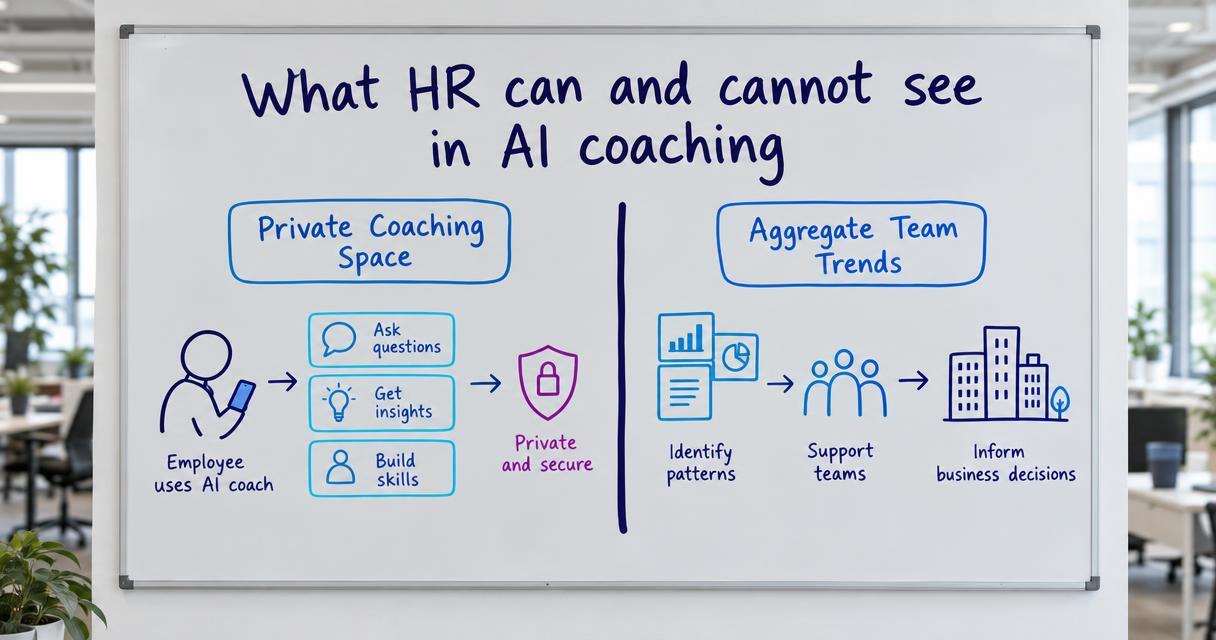
Exactly what HR can and cannot see when you use workplace AI coaching. Learn how your privacy is protected and what aggregate data your company...
 Mathan Allington