
 Mathan Allington
Can AI coaching improve psychological safety scores
 Compono
What AI coaching can and cannot do for psychological safety, how coaching that adapts to personality builds trust, and how to practise hard...
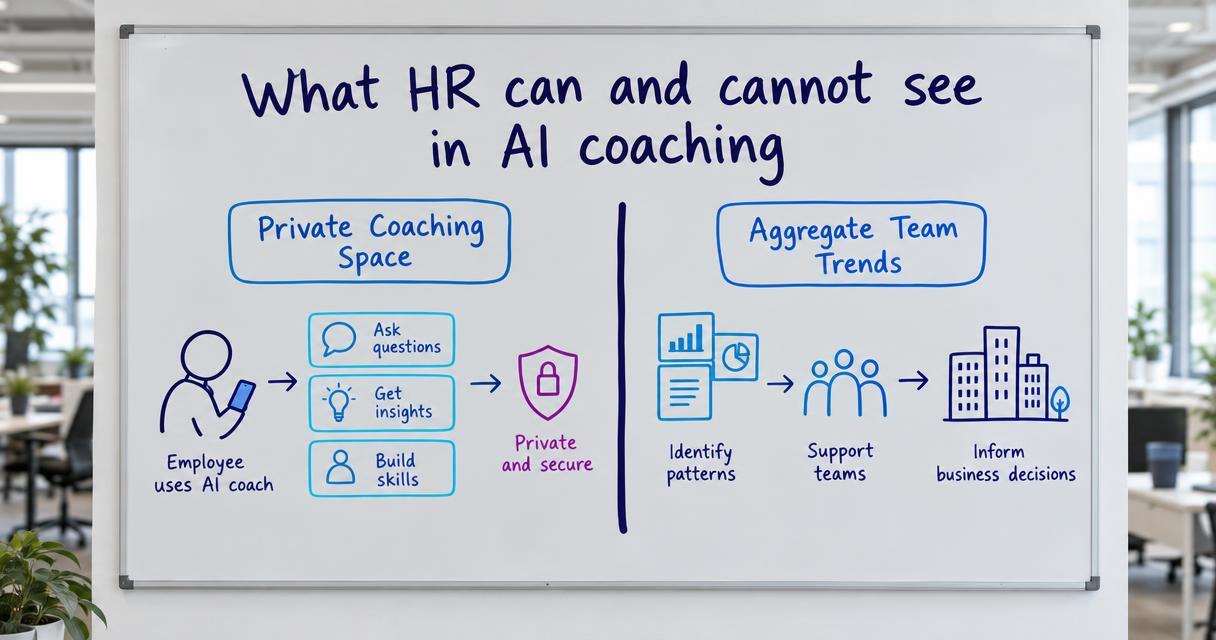
When you use a workplace AI coach, HR cannot see your individual conversations, chat transcripts, or the specific advice you receive. They can only see high-level usage data like how many employees have activated their accounts and broad, anonymised team trends.
Last reviewed September 2026
Key takeaways
- Your one-on-one coaching chats and voice notes are completely private and inaccessible to your employer.
- HR and management only see aggregate data like platform usage and team engagement metrics.
- Your personality profile visibility is often controlled by you and shared to improve team collaboration.
- True coaching requires vulnerability, which is why strict privacy boundaries are built into enterprise platforms from day one.
When your company rolls out a new coaching app, the first question everyone asks is about privacy. If the business is paying the bill, you naturally wonder if they get to read the transcripts. It is a fair question. You want to know exactly where the line is drawn between your private professional development and company reporting.
Nobody wants to practise a hard conversation about their manager if that manager can just log in and read the script later. You need complete confidence that your struggles, questions, and mistakes remain confidential. Without that trust, the tool becomes just another corporate compliance exercise where everyone pretends everything is fine.
The modern workplace is full of software that tracks productivity and monitors activity. It is completely normal to feel hesitant about opening up to a digital coach. Understanding the technical boundaries between your personal space and the company dashboard is the only way to feel safe using the tool.
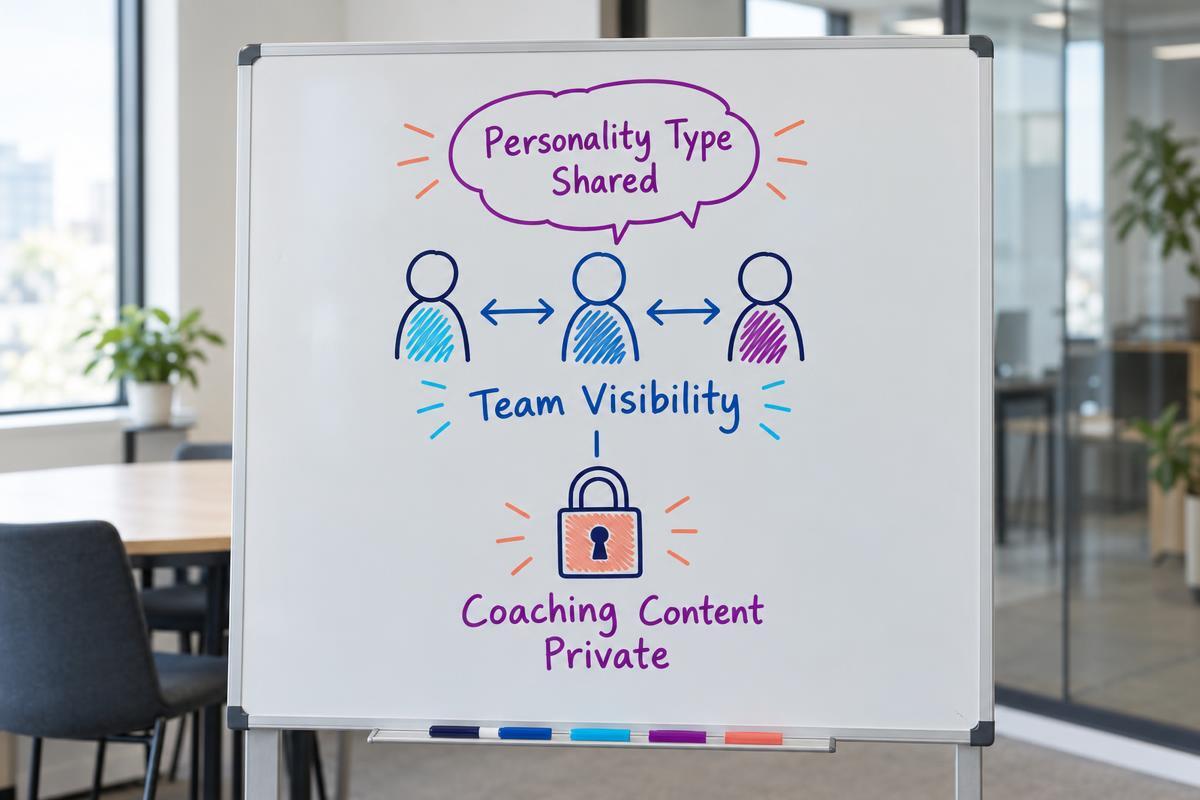
Let us start with the most important boundary. Your individual coaching sessions are yours alone. When you type or speak to an AI coach about a frustrating coworker, a career plateau, or a mistake you made, that data stays between you and the platform. HR cannot read your chat logs. Your manager cannot listen to your voice notes. Not even the staff at the coaching software company can read your specific conversations.
This level of privacy is an absolute requirement for effective coaching. If you feel like someone is looking over your shoulder, you will edit your thoughts. You will only ask safe questions. You will never actually get to the root of why you feel misunderstood at work or why you are avoiding a hard conversation. We outline this strict separation clearly in our privacy policy because psychological safety is the foundation of real growth.
At Hey Compono, we know that people use this private space to process feedback they have received their whole lives. They use it to figure out why they do things they sometimes hate doing. None of that deep work happens if there is a risk of management reading the transcript.
So what does the business actually get for their money? They get metadata and aggregate trends. HR and business leaders need to know if the tool they bought is actually being used. They can see how many seats are active. They can see how often the platform is used across the company. They use this basic session data for billing and resource allocation.
In some cases, they might see anonymised themes across a large department. For example, a report might show that a large portion of a sales team is currently seeking coaching on burnout or conflict resolution. This helps the business understand systemic issues without ever identifying who is struggling. It gives leadership the information they need to improve the workplace without compromising individual confidentiality.
If you are an HR leader evaluating platforms, this balance matters. You need insights to justify the investment, but you cannot sacrifice employee trust to get them. You can read more about evaluating these tools in our AI coaching software for HR guide.
There is one area where visibility is more fluid. When you take an assessment to discover your Work Personality, the resulting profile is often meant to be shared. Knowing if you work with someone who needs time to process information helps teams communicate better and avoid unnecessary conflict.
Your personality profile is usually visible to your team to help improve daily collaboration. However, the specific coaching you receive based on that personality type remains entirely private. You get the benefit of team awareness without sacrificing your personal coaching confidentiality.
This shared understanding changes how teams operate. It removes the friction from daily interactions because people finally understand how their coworkers operate. If you want to understand how these shared insights improve group changing, our guide on AI coaching and team behaviour explains the mechanics in detail.
Privacy is not just for current employees. When companies use AI tools to help candidates prepare for interviews, the same strict rules apply. The private-by-default principle protects the candidate just as much as the employee.
During interview preparation, candidates can be completely honest about their weaknesses or gaps in experience. The recruiter never reads the coaching transcripts. The recruiter only gets a readiness signal or a specific roleplay score if the candidate explicitly chooses to share it.
This allows candidates to practise authentically and still control what the hiring team sees. If you are curious about how this works in practice, you can read our AI coaching privacy standards guide to understand the full technical separation between user data and company reporting.
You cannot grow if you are performing for an audience. Traditional workplace development often feels like a test you have to pass. You sit in a workshop and say the right things to look good in front of your boss. AI coaching flips this model entirely by giving you a private space to be messy and admit you do not know what to do.
This privacy allows you to practise difficult conversations repeatedly until you get them right. You can try different approaches, fail, and try again without any professional consequences. The AI adapts to how your brain works and helps you find the right words when emotions are high.
When you know the space is truly private, you stop pretending at work. You start addressing the real issues holding you back. This is why Hey Compono builds strict privacy boundaries into every feature. That authentic self-reflection is the only way to build a sustainable and fulfilling career.
If you want to provide your team with adaptive coaching that respects their privacy while giving you the aggregate insights you need to run the business, we can help.
Related reading
No. Your individual conversations, chat logs, and voice notes are completely private. Your manager and HR can only see aggregate usage data, never the specific content of your coaching sessions.
HR can usually see basic activation and usage metadata. They know if a seat is being used and how often the platform is accessed overall, which helps them manage billing and software adoption.
In enterprise platforms, your private conversations are never used to train public AI models. Your data remains secure and is used solely to provide your personal coaching experience.
Yes. Because your chats are entirely private, you can safely practise salary negotiations, conflict resolution, or feedback delivery without any fear of your employer seeing your preparation.

What AI coaching can and cannot do for psychological safety, how coaching that adapts to personality builds trust, and how to practise hard...
Hey Compono pricing for 2026: what the free tier covers, what individual plans cost, and what your team would pay each month.

How per candidate interview prep tools work, what you pay for, and what to look for if you prepare a lot of people for interviews.