
 Compono
1 min read
Early morning coaching for career growth
 Compono
Early morning coaching provides the mental clarity and strategic focus needed to manage complex workplace dynamics before the daily grind takes over....

Before and after coaching, the most significant change you will notice is the shift from reacting to your environment to understanding the internal drivers behind your behaviour.
This transition marks the move from feeling misunderstood or 'too much' at work to having a clear, actionable map of your natural strengths and blind spots. By focusing on personality-led insights rather than just productivity hacks, you gain the ability to handle conflict, communication, and career growth with a level of intentionality that previously felt out of reach.
Key takeaways
- The 'before' state of coaching is often defined by a cycle of repeated interpersonal friction and a lack of clarity regarding one's natural work personality.
- The 'after' state is characterised by improved emotional intelligence, where you can adapt your style to meet the needs of different team members.
- Modern coaching uses personality-adaptive tools to provide specific strategies for your unique brain, rather than generic advice.
- Sustainable change requires moving past 'fixing' yourself and instead focusing on optimising your natural tendencies for better team harmony.
Before and after coaching, there is usually a period of quiet frustration that most professionals experience but rarely talk about. You might find yourself in the same type of workplace conflict over and over again. Perhaps you have been told you are 'too blunt' or 'too quiet', or maybe you feel like your team just doesn't 'get' your vision. It feels like you are speaking a different language to everyone else in the room.
This 'before' phase is often exhausting because you are spending half your energy trying to fit into a mould that wasn't designed for you. At Compono, we have spent years researching why this happens. It usually boils down to a lack of awareness regarding your work personality. Without that map, you are essentially flying blind, hoping that your natural way of working will eventually click with everyone else's. When it doesn't, the result is burnout, disengagement, and a feeling that you are stuck in a career plateau.

The real shift in the journey of before and after coaching happens the moment you stop trying to fix your personality and start trying to understand it. Many people enter coaching thinking they need to be 'better' at everything, more organised, more social, more aggressive. But true growth comes from recognising that your 'too muchness' is actually a specific work action waiting to be harnessed.
For example, if you have always been the one jumping between ideas, you might actually be a Campaigner. In the 'before' state, this looks like being scattered. In the 'after' state, once you understand your personality, it becomes your greatest asset for selling a dream and motivating a team. Understanding these labels isn't about boxing you in; it is about giving you the language to explain your needs to others. If you are curious about which personality type you default to under stress, Hey Compono can show you in about 10 minutes.
One of the biggest differences in the before and after coaching experience is how you handle other people. Before coaching, a disagreement with a colleague who is 'too focused on details' might feel like a personal attack or a deliberate attempt to slow you down. You see the friction, but you don't see the cause. This creates a defensive culture where everyone is protecting their own patch rather than working toward a shared goal.
After coaching, that same scenario looks completely different. You begin to realise that the person slowing you down might be an Auditor, and their need for precision is actually protecting the team from risk. Instead of getting frustrated, you learn to provide them with the data they need early in the process. This is the essence of personality-adaptive coaching. It is about learning to speak the 'personality language' of those around you. Many professionals find that using personality-adaptive coaching allows them to have these tough conversations without things getting weird or emotional.
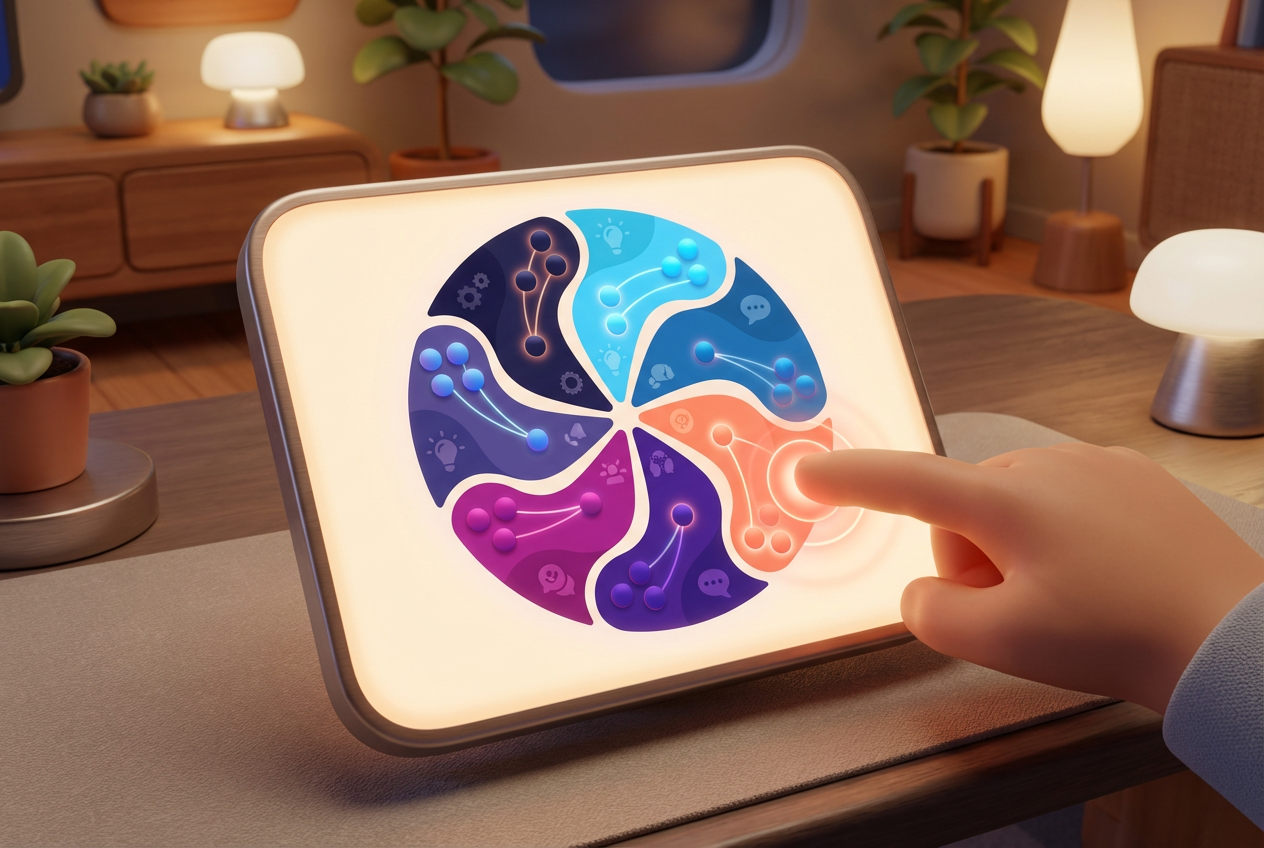
When we look at the 'after' state of a coaching journey, the most prominent feature is intentionality. You no longer just 'show up' and hope for the best. You understand your natural leadership style, whether it is directive, democratic, or non-directive, and you know when to flex it. You recognise that while you might naturally be an Evaluator who loves logic, a crisis might require you to lean into more supportive, 'Helper' behaviours to keep the team calm.
This level of adaptability is what separates good managers from great leaders. It is the result of moving through the coaching process and coming out the other side with a toolkit of strategies tailored to your specific brain. You stop viewing conflict as a problem to be avoided and start seeing it as a data point. This shift is permanent because once you see the 'why' behind people's behaviour, you can never go back to the 'before' state of simple frustration. You become a student of human dynamics, which makes you infinitely more effective in any professional setting.
Key insights
- The transition in before and after coaching is primarily a move from unconscious reaction to conscious action.
- Self-awareness allows you to stop fighting your natural work personality and start using it as a competitive advantage.
- Effective team collaboration relies on the ability to recognise and adapt to the diverse personalities of your colleagues.
- The 'after' state is not about perfection, but about the agility to flex your style based on the needs of the situation.
Related reading: How an AI wellness coach can transform your work life · Virtual life coach: finding clarity in a digital world
Voice or text coaching that adapts to your personality. Start free.
Get started freeThe primary difference is the shift from feeling stuck in repetitive patterns to having the self-awareness to choose a different response. Before coaching, people often feel like victims of their environment; after coaching, they feel empowered to manage that environment using their unique strengths.
While deep behavioural change takes time, the 'after' state often begins with a 'lightbulb moment' of self-recognition. Using tools like Hey Compono can provide immediate insights that change how you view your work day in as little as 10 minutes.
Coaching isn't about changing who you are; it is about understanding your natural tendencies so you can use them more effectively. The 'after' state is a more polished, aware version of your true self, not a different person entirely.
Yes, significantly. Before coaching, conflict is often seen as a personality clash. After coaching, it is understood as a mismatch in work styles or communication preferences, which makes it much easier to resolve logically and calmly.
Traditional coaching often uses one-size-fits-all frameworks. Personality-adaptive coaching, like the approach used by Hey Compono, recognises that an 'Auditor' needs different strategies than a 'Pioneer'. By tailoring the advice to your specific work personality, the results are much more sustainable and relevant.

1 min read
Early morning coaching provides the mental clarity and strategic focus needed to manage complex workplace dynamics before the daily grind takes over....
1 min read
No judgment AI is a digital environment where you can explore your personality, behaviours, and career goals without the fear of being critiqued or...

1 min read
Coaching that understands me starts with recognising that your work personality is the filter through which you experience every deadline, meeting,...