
 Compono
What AI coaching really means for P&C managers
 Compono
AI coaching for people and culture teams is not a robot manager. What it handles, what still needs you, and how it reaches more of your people.

Building a leadership pipeline in a 5 person team starts with identifying the natural work personalities of your current staff so you can align their growth with the specific leadership style, directive, democratic, or non-directive, that best suits their brain.
In a tiny team, you don't have the luxury of a dedicated HR department or a complex corporate ladder, meaning every hire must be viewed as a potential future leader from day one. By understanding how each person naturally handles stress, decision-making, and collaboration, you can cultivate a resilient succession plan that doesn't rely on guesswork.
Key takeaways
- Small team leadership pipelines rely on individual work personality alignment rather than rigid corporate hierarchies.
- Identifying dominant traits like those of The Evaluator or The Campaigner helps determine if a person is better suited for directive or democratic leadership roles.
- True leadership adaptability in small teams requires a deep understanding of natural tendencies before attempting to flex into new styles.
- Succession planning in a 5 person team must focus on cross-skilling based on personality strengths to ensure the business remains stable during transitions.
It is a common struggle for founders and small team leads, you are so bogged down in the day-to-day doing that the idea of a 'pipeline' feels like a corporate fantasy. When you only have five people, the departure of just one person doesn't just leave a hole; it can feel like the whole roof is caving in. You might feel like you are constantly one resignation away from a crisis because you haven't had the time to think about who takes the reins when you aren't there. It’s that nagging feeling at 2 am that the business is entirely dependent on your own bandwidth and a few key individuals who might not be ready for the next step.
We often hear from leaders who feel they are 'too controlling' or, conversely, 'too hands-off', but the reality is usually simpler: you haven't mapped the natural leadership DNA of your team. You aren't failing as a mentor; you are likely just trying to force a 'Doer' into a 'Pioneer' leadership role without the right roadmap. Building a pipeline in a small team isn't about promoting people until they fail; it is about recognising the specific flavour of leadership they already possess and giving them the tools to refine it. At Compono, we have spent over a decade researching how these personality types interact, and we’ve found that the most successful small teams are those that lean into their natural chemistry rather than fighting it.
In a team of five, you cannot afford to wait for a 'leadership opening' to start training. You need to know right now who is naturally inclined to step up. Every person on your team has a dominant work personality that dictates how they lead. For example, if you have someone who is objective, focused on logic, and highly efficient, they likely fit the profile of The Evaluator. These individuals are naturally inclined toward directive leadership, they are great at providing clear instructions and setting specific goals when the pressure is on.
On the other hand, you might have a team member who is visionary and engages others through shared goals. This person, often known as The Campaigner, thrives in democratic leadership roles. They don't just give orders; they sell the dream and get the rest of the five-person squad excited about where the company is headed. Identifying these traits early allows you to start giving them 'micro-leadership' opportunities that feel natural to them, rather than overwhelming them with tasks that clash with their personality.
If you are curious about what personality types you are currently working with, Hey Compono can help you map your team’s DNA in about 10 minutes. Knowing whether you have an Auditor who prefers non-directive leadership or a Coordinator who loves structure changes how you delegate. It turns the vague concept of a 'pipeline' into a concrete plan based on the actual people sitting across from you.

Once you know who you are working with, the next step in building your pipeline is matching their growth to a specific leadership style. In a 5 person team, leadership isn't a single destination; it is a spectrum. Some situations require a directive approach, think of a crisis or a tight deadline where quick decisions are paramount. Other times, you need a non-directive approach, where you trust a highly skilled team member to work independently with minimal oversight.
Effective leadership requires flexibility, but most people have a 'home base'. A person with the 'Helper' personality type is empathetic and nurturing. They will naturally excel at building a harmonious environment, making them perfect for democratic leadership. Trying to force a Helper to be a rigid, directive leader without support will lead to burnout. Instead, your pipeline should focus on helping them refine their natural democratic style while slowly teaching them how to flex into directive roles only when absolutely necessary.
The goal is to move beyond the 'one-size-fits-all' promotion. In a small team, you can customise the leadership journey. You can say to your 'Pioneer', who values independence and innovation, that their path to leadership involves heading up new projects and encouraging the team to explore new possibilities. This is non-directive leadership in action. By framing their growth around their natural strengths, you make the transition to leadership feel like an evolution rather than a burden.
Succession planning in a tiny team is often ignored because it feels morbid or unnecessary. But in a 5 person team, the 'bus factor' is high. If you get hit by a bus (or just decide to take a well-earned holiday), who steps in? A leadership pipeline is essentially a resilience plan. You need to ensure that the core work activities, Evaluating, Coordinating, Campaigning, Pioneering, Advising, Helping, Auditing and Doing, are covered even if one person leaves.
This is where understanding 'blind spots' becomes vital. Every personality type has them. An Evaluator might be so focused on logic that they overlook the team's emotional well-being. A Coordinator might be so attached to the plan that they struggle with spontaneous change. In a small team, these blind spots are magnified. Your pipeline should involve pairing different personalities together so they can learn from each other. If your future leader is a 'Doer' who is great at execution, pair them with an 'Advisor' who can teach them how to look at the bigger picture and consider alternative approaches.
Many managers use personality-adaptive coaching to facilitate these growth conversations. It allows you to talk about professional development in a way that feels personal and supportive, rather than corporate and cold. When you can say, 'I've noticed you're amazing at the details, let's work on how you can share that vision with the team,' you are building a leader who understands both their strengths and their impact on others.
The final piece of the pipeline puzzle is adaptability. True leadership in a modern, 5 person team isn't about staying in your lane; it is about knowing when to change lanes. Even if someone is naturally a non-directive leader, there will be days when they need to give a direct order. The challenge is that recognising the need to change is easy, but actually doing it is hard. It requires a deep level of self-awareness that most people don't develop until much later in their careers.
You can fast-track this by making self-awareness a core part of your team culture. Use tools and worksheets that encourage your team to delve into how they tick. When people understand that their preference for structure isn't a 'fixation' but a core part of their 'Coordinator' personality, they can start to see when that preference is helping the team and when it is holding them back. This level of maturity is what separates a 'manager' from a 'leader'.
As you build your pipeline, remember that leadership is a skill that can be refined, but it must be built on a foundation of honesty. You don't need a 50-page career framework to grow your team. You just need to understand the people you have, the leadership styles they default to, and the specific gaps your team needs to fill to stay high-performing. For teams looking to start this process, Hey Compono provides the insights needed to turn a small group of employees into a powerhouse of future leaders.
Key insights
- Leadership pipelines in 5 person teams are built on work personality alignment, not just tenure.
- Identifying natural tendencies toward directive, democratic, or non-directive leadership prevents 'promotion burnout'.
- Small teams must actively manage personality blind spots to ensure business resilience during transitions.
- Self-awareness is the primary driver of leadership adaptability in fast-paced, small environments.
- Succession planning should focus on balancing the 8 key work activities across the remaining team members.
Where to from here?
Building a leadership pipeline doesn't have to be a daunting corporate task, even when you are only a team of five. By starting with a clear understanding of your team's natural work personalities, you can create a growth plan that feels authentic and sustainable for everyone involved.
Related reading: How an ai leadership coach transforms team performance · How to develop leadership in a 100 person company
Employee coaching, wellbeing support and team personality insights in one platform, built on organisational psychology.
Talk to usStart by identifying the natural work personalities of your team members. Use a tool like Hey Compono to see who naturally leans toward directive, democratic, or non-directive leadership. Once you know their 'home base', you can assign micro-leadership tasks that align with their strengths, gradually building their confidence and skill set without overwhelming the small team structure.
Yes, but the style of leadership will look different for each person. An 'Auditor' might lead through methodical process and precision (non-directive), while a 'Campaigner' leads through inspiration and vision (democratic). The key is matching the person to the type of leadership the team needs most at that stage of growth, rather than forcing everyone into a single 'manager' mould.
The biggest mistake is promoting based solely on technical 'doing' ability without considering leadership personality. Just because someone is the best 'Doer' doesn't mean they will naturally enjoy or excel at the 'Coordinating' or 'Advising' required in leadership. You must assess their natural work preferences and provide coaching to help them adapt their style to the needs of the team.
If your 5 person team all share similar work personalities, for example, all 'Doers', you will have a gap in strategic 'Pioneering' or 'Evaluating'. Your leadership pipeline should focus on 'flexing'. Challenge your team members to step into roles that are outside their comfort zone with specific support, or consider hiring for a diverse work personality when your next head-count opening arises.
In a small team, these shouldn't be formal annual reviews. Instead, weave leadership coaching into your regular catch-ups. Discussing how a person handled a specific decision or conflict through the lens of their work personality makes the 'pipeline' an ongoing conversation rather than a stressful event.

AI coaching for people and culture teams is not a robot manager. What it handles, what still needs you, and how it reaches more of your people.
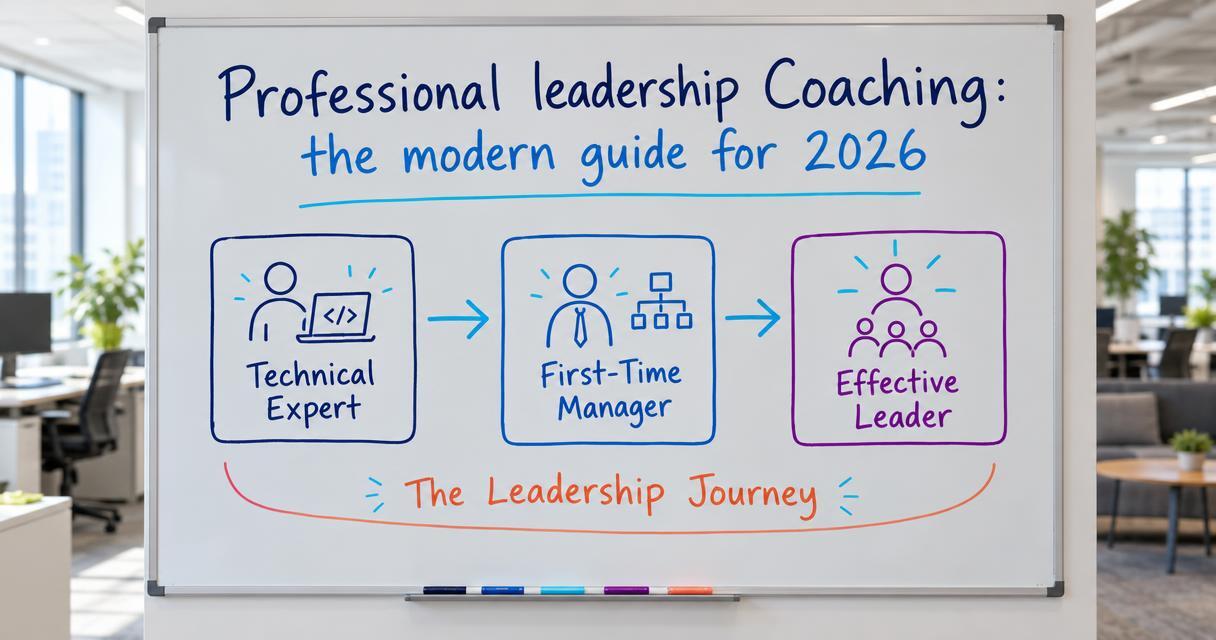
How professional leadership coaching is evolving in 2026. Learn how personality-adapted support helps managers build skills and handle difficult...

A way to prepare that does not rely on memorised answers: know your strengths, handle the hard questions, and work out if the culture suits you.
 Mathan Allington