
 Mathan Allington

How to find the right career for your work personality
 Compono
Career advice often starts in the wrong place. Work out how you prefer to think, decide and work, then test that against the jobs you want.
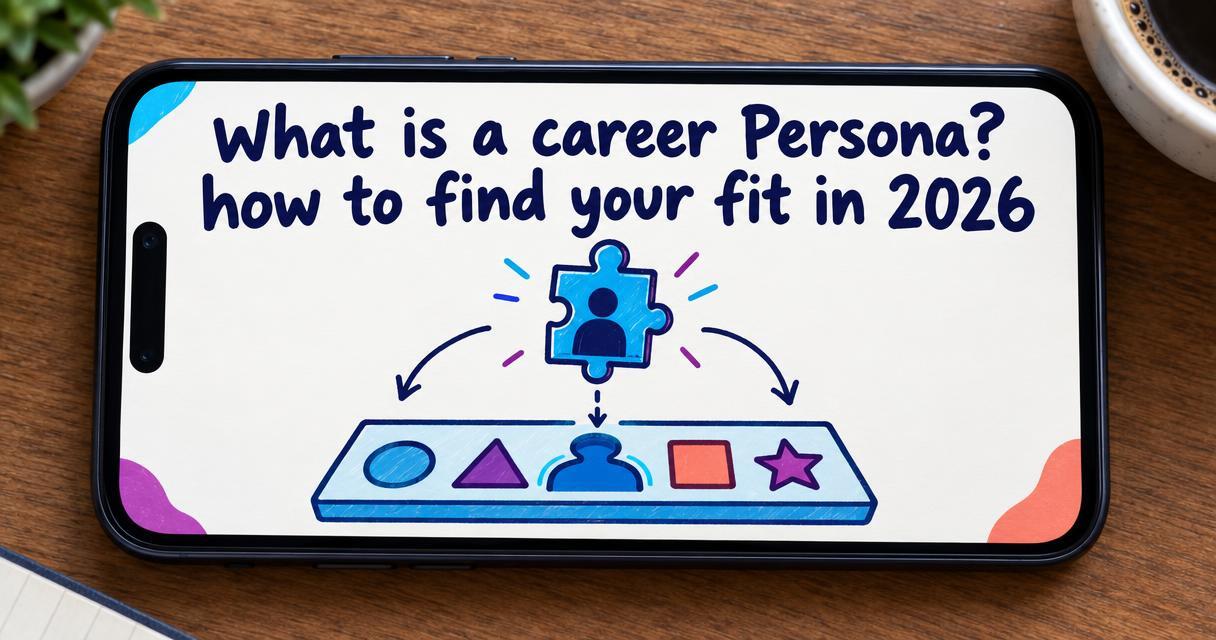
A career persona is a blueprint of how you naturally think, communicate, and behave at work, rather than just a list of your skills or job titles.
Last reviewed October 2026
Key takeaways
- Career personas explain why two people with the exact same skills experience the same job completely differently.
- Understanding your natural working style helps you stop forcing yourself into roles that drain your energy.
- Employers use candidate personas to find the right fit for a team, while individuals use career personas to find the right fit for their life.
- You can map your own career persona using established frameworks to make better professional decisions and avoid burnout.
You have probably been told to follow a specific path to succeed. Get the degree, climb the ladder, and eventually manage a team. But many people do all of that and still feel completely out of place when they arrive at their destination.
You might look around and wonder why your colleagues seem to thrive in back-to-back meetings while you find them exhausting. You might love diving into the fine details of a project while your manager only wants to discuss the big picture. This disconnect happens because we treat careers as a standard template.
We ignore the reality that everyone operates with a different set of natural behaviours. We assume that if you have the right technical skills, you will automatically enjoy the work. The truth is that your daily happiness depends entirely on whether the role matches your natural career persona.
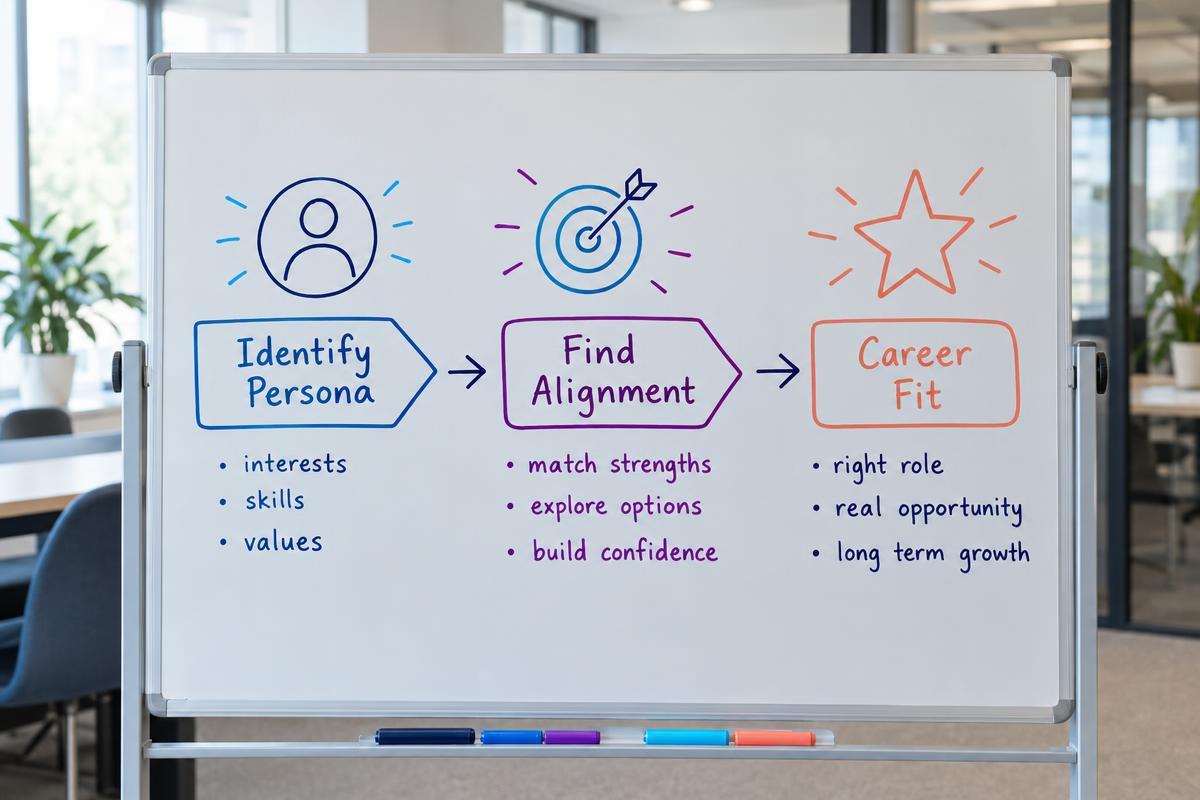
A career persona goes much deeper than your resume. It is the underlying operating system of your professional life. While your skills tell an employer what you can do, your persona dictates how you actually prefer to do it.
Consider two highly skilled accountants. One might be deeply analytical, finding immense satisfaction in working independently to balance complex ledgers. The other might be highly empathetic, preferring to spend their days advising clients and translating financial data into plain English. They have the same job title and the same qualifications.
Their career personas are completely different. If you swap their roles, both will likely struggle. The analytical accountant will feel drained by the constant client interaction. The advisory accountant will feel isolated and bored working entirely alone. Understanding your work persona helps you identify these invisible preferences before you accept a job that looks good on paper but feels terrible in practice.
While individuals use career personas to find the right job, businesses look at this concept from the other side of the table. Recruitment teams build candidate personas to figure out exactly who they want to hire. They map out the ideal traits and communication styles required for a specific role.
A hiring manager knows that a fast-paced startup needs a very different type of person than a highly regulated government department. They use candidate personas to write better job descriptions and design smarter interview questions. They are looking for specific behavioural indicators that show a person will naturally thrive in their specific environment.
When your personal career persona aligns with an employer's candidate persona, the interview process feels natural. You do not have to pretend to be someone else to secure the role. You can speak honestly about how you work best, knowing that the company is actively looking for someone exactly like you.
We spend a lot of time pretending at work. We twist ourselves into shapes that fit a job description because we think that is what professionalism requires. Over time, this constant masking leads to severe mental and emotional exhaustion.
If your natural career persona thrives on independence and deep focus, putting you in a highly collaborative agile environment will drain your battery by lunchtime. You will likely feel like your performance is slipping. You might even start to believe that you are simply bad at your job. In reality, you are just operating in an environment that actively works against your natural strengths.
This is why generic career advice often fails. Telling someone to just speak up more in meetings ignores the fact that their persona might need time to process information internally before sharing a perspective. When you use Hey Compono to understand your baseline behaviours, you can stop trying to fix yourself and start finding environments that value your natural approach.
At Compono, we have spent over a decade researching organisational psychology to map these different working styles. Our research identified eight distinct types that drive how people operate within a team. You can explore the complete Work Personality framework to see how these different types interact.
Some people are naturally driven by execution and getting things across the line. Others are motivated by accuracy, compliance, and finding the tiny flaws that everyone else misses. Some personas are highly empathetic and focused on reading the room to guide others through difficult changes. There are also visionary thinkers who want to build the next big thing and rally the troops behind a new idea.
None of these personas are inherently better or worse than the others. A high-performing team actually requires a mix of all these different styles to function effectively. The problems only arise when a visionary is forced to do highly detailed compliance work, or when a detail-oriented person is asked to deliver an unscripted motivational speech.
Once you know your career persona, you can start making deliberate choices about your future. You can look at a job description and spot the subtle red flags that signal a bad fit. You can also have much better conversations with your manager about how you work best.
If you know you need time to process feedback, you can ask for it in writing before your performance review. If you know you thrive on complex problem-solving, you can volunteer for the messy projects that other people avoid. This level of self-awareness fundamentally changes how you work through your professional life.
You can begin to build a career identity based on your actual strengths rather than the expectations of others. You stop aiming for prestigious job titles and start aiming for alignment. Many professionals are now using an AI career and life coach to help them map out their next move based on their specific persona.
Society loves a clean narrative. We are taught that a successful career moves in a straight, upward line. You start at the bottom, you work hard, you get promoted, and you eventually become an executive. This narrative is dangerous because it completely ignores the reality of career personas.
Many people are exceptional individual contributors. They are brilliant at their craft and find deep satisfaction in doing the actual work. When they perform well, they are inevitably promoted into management. Suddenly, their daily tasks shift from doing the work to managing the people doing the work.
If their career persona does not naturally enjoy coaching, resolving conflict, and managing budgets, this promotion will feel like a punishment. They have achieved the societal definition of success, but they are miserable. Understanding your persona gives you the confidence to say no to promotions that pull you away from the work you actually love.
Your career is too long to spend it pretending to be someone else. When you understand your career persona, you gain the vocabulary to explain your value to others. You can walk into an interview and clearly state what environments bring out your best work.
You can also be honest about the environments that hinder your performance. This level of transparency might cost you a few job offers, but it will save you from accepting roles that would eventually lead to burnout. It allows you to filter out the noise and focus on opportunities where you can genuinely succeed.
The first step is simply acknowledging that your way of working is valid. Hey Compono was built to help people uncover these insights and use them to make better decisions. You do not need to change your personality to have a successful career. You just need to understand it.
Understanding your career persona is the first step to finding work that actually fits you. Hey Compono uses personality-adaptive AI coaching to help you make better career decisions, work through difficult conversations, and build a professional identity that feels authentic.
Related reading
A career persona helps you understand your natural working style, communication preferences, and behavioural tendencies. It allows you to make informed decisions about which jobs, team environments, and career paths will actually suit you, rather than just relying on your technical skills.
Candidate personas are created by employers to define the ideal traits and behaviours they want in a new hire. Career personas are used by individuals to understand their own strengths and preferences. When the two align, it usually results in a highly successful job match.
Your core behavioural traits tend to remain relatively stable throughout your adult life. However, how you express those traits can evolve as you gain experience, develop new coping mechanisms, and learn how to adapt your natural style to different professional environments.
You can start by looking at your past roles and identifying the moments when you felt most energised and the moments when you felt most drained. You can also use structured frameworks like the eight Work Personalities to get a clearer, research-backed picture of your natural working style.
A job title only describes the tasks you are responsible for completing. It does not account for the environment, the team changing, or the daily behaviours required to succeed in that specific company. Two identical job titles at different companies can require completely different career personas.

Career advice often starts in the wrong place. Work out how you prefer to think, decide and work, then test that against the jobs you want.

Tired of the endless grind? Learn how to escape the rat race by understanding your work personality and finding a career that actually fits your...

Generic career advice ignores the way you actually work. How to use what you know about yourself to pick a direction you will stay with.