
 Mathan Allington
What excellence actually looks like for modern teams
 Compono
Discover why excellence isn't about perfection. Learn how to build high-performing teams by embracing authentic work personalities and sustainable...
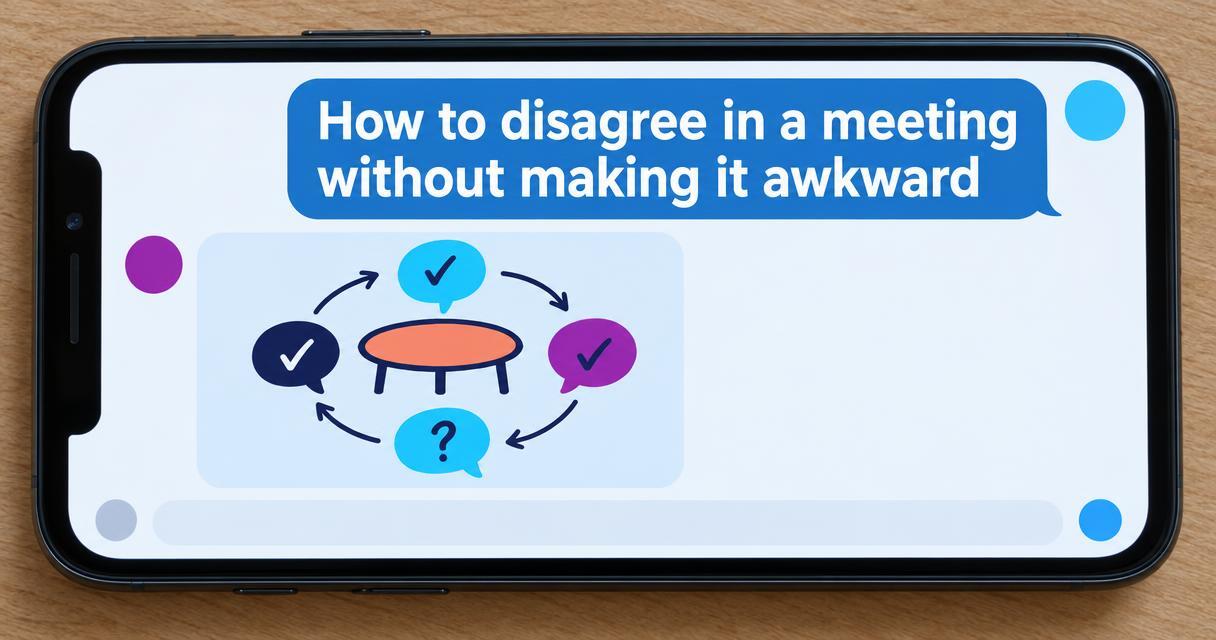
You are sitting in a meeting, someone pitches an idea you know will not work, and you feel that familiar spike of adrenaline telling you to speak up or stay quiet.
Last reviewed November 2026
Key takeaways
- Disagreeing at work triggers a physical stress response, but leaning into curiosity lowers the tension for everyone in the room.
- Using structured conversation frameworks makes your opposition easier for colleagues to digest without feeling attacked.
- Virtual meetings require specific tactics to handle latency and prevent accidental interruptions from escalating into arguments.
- Practising your delivery on smaller issues builds the communication muscle you need for high-stakes disagreements.
- Tailoring your objection to the hierarchy of the room helps preserve relationships while still getting your point across.
Speaking up against the group consensus feels dangerous. Your heart rate increases, your palms sweat, and your brain signals that opposing the group will lead to social rejection. You worry about damaging a relationship, halting the project, or simply being told you are too direct at work.
This hesitation is entirely normal. Most professionals want to maintain harmony, so they either nod along with a flawed plan or deliver their objection so bluntly that the room freezes. Neither approach serves your team well. Healthy friction is how bad ideas get filtered out and good ideas get refined. The challenge is learning how to present that friction without turning the discussion into a personal battle.
When you understand the mechanics of a productive disagreement, you stop viewing it as a confrontation. It becomes a tool for better decision-making. You can express your concerns, protect your boundaries, and walk out of the room with your working relationships stronger than before.
Before you even open your mouth to object, your body reacts. When a colleague presents a plan that threatens your workload or contradicts your expertise, your nervous system interprets it as a threat. You enter a mild fight-or-flight state. Your breathing becomes shallow, and you prepare to either attack the idea or retreat into silence.
The first step to disagreeing gracefully is regulating that internal response. If you speak from a place of defensiveness, your tone will convey hostility regardless of the words you choose. Taking a single deep breath before unmuting your microphone or leaning forward in your chair gives your brain a moment to catch up with your emotions.
You can lower the temperature by shifting your mindset from proving them wrong to figuring out how they reached their conclusion. Replacing certainty with curiosity helps people generate more creative solutions, according to studies on negotiation published by CNBC. When you ask a genuine question about their methodology, you pause the confrontation and invite them to explain, which naturally diffuses the tension.
Structuring your objection gives the other person a gentle ramp down from their position. Researchers have spent years mapping exactly how humans process opposing views. Julia Minson recommends the HEAR framework: hedge claims, emphasise agreement, acknowledge the other person’s perspective, and reframe positively, as published by the Harvard Graduate School of Education.
Hedging softens the absolute nature of your disagreement. Instead of stating that a timeline is completely impossible, you suggest it might be highly optimistic given current resourcing. This leaves room for discussion and prevents the other person from immediately throwing up defensive walls. It shows you are open to being convinced.
Finding one small point of agreement grounds the conversation. You might agree on the ultimate goal, the severity of the problem, or the creativity of the approach. When you start with shared ground, the other person registers you as an ally rather than an opponent. People typically underestimate how reasonable opposing views will seem once they engage with them, which Harvard Graduate School of Education research confirms.
People argue louder when they feel unheard. You can stop this cycle by summarising their point before introducing your own. Restating someone’s perspective before presenting a counterpoint can improve disagreement without requiring agreement with their position, as noted by the Harvard Graduate School of Education. It proves you were listening and validates their effort.
Once you have acknowledged their view, pivot to the solution. Frame your objection as a shared problem to solve rather than a personal failing on their part. At Hey Compono, we see how changing the framing from "your idea fails here" to "how do we solve this specific risk" transforms the entire changing of a meeting.
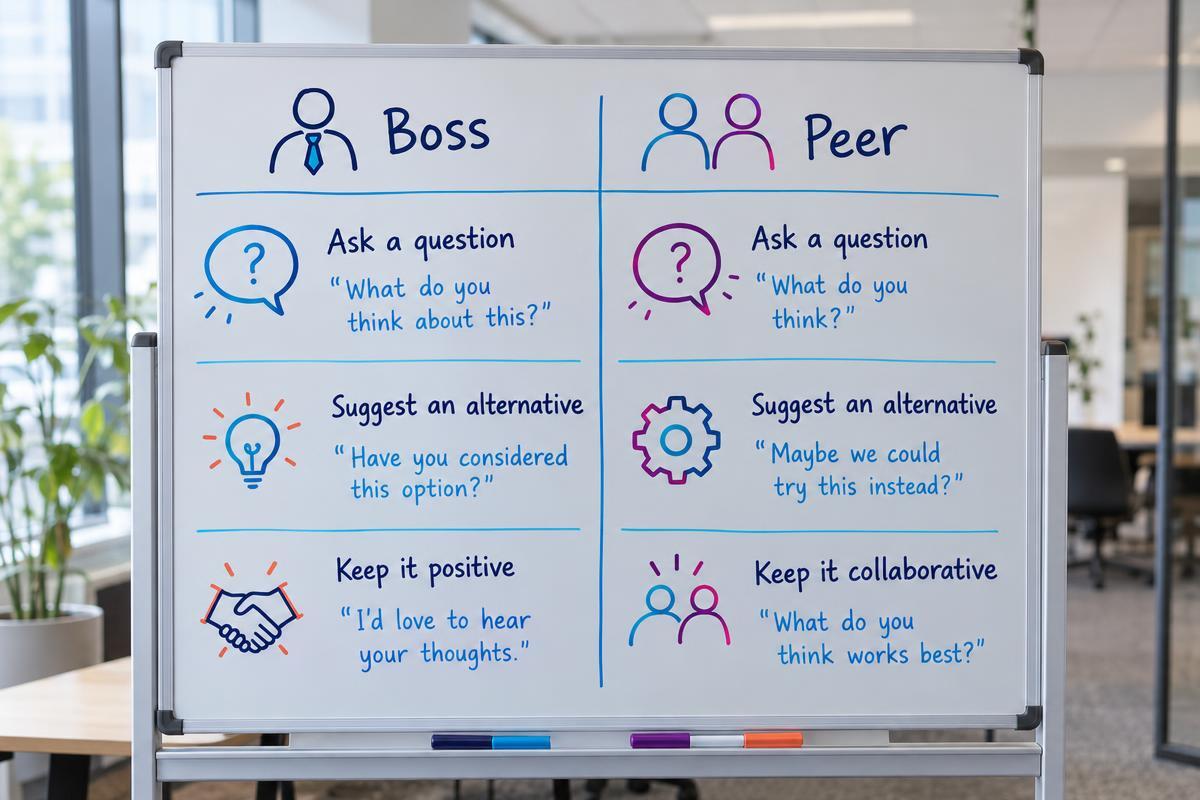
Who you disagree with changes how you must approach the conversation. Pushing back against a peer in a cross-functional project feels very different to pointing out a flaw in your manager's quarterly strategy. The power changing in the room dictate the level of diplomacy required.
When disagreeing with leadership, framing your objection around their stated priorities works best. If the executive wants to cut costs, you explain how their new process will actually increase long-term expenses. Explicitly stating a desire to learn about the other person’s view leads to better conversations, according to the Harvard Graduate School of Education. Ask them to walk you through their vision so you can understand the gaps.
When managing conflict with a coworker on the same level, you can afford to be more direct, but you must still preserve the working relationship. Focus heavily on the work itself. Different people process feedback differently based on their wiring, and understanding the Work Personality framework helps you tailor your approach. Some colleagues need hard data to accept a change, while others need to know the team morale will not suffer.
Remote meetings introduce a layer of technical friction that makes disagreeing even more difficult. Audio latency means that jumping in with a quick thought often results in two people talking over each other. The natural pauses we rely on in a physical room disappear on a video call, leaving you waiting awkwardly for a chance to speak.
Use the software features to your advantage. The chat function is excellent for soft disagreements or flagging a concern without stopping the speaker in their tracks. Typing a thoughtful question into the chat allows the presenter to finish their thought and address your point when they are ready. It removes the aggression of a vocal interruption.
If the meeting is large and moving quickly, use the hand-raise feature. This visually signals to the facilitator that you have a contribution, forcing them to create space for you. When you do unmute, speak slightly slower than normal. The deliberate pace signals confidence and prevents the hurried, breathless tone that often accompanies speaking up when nervous.
Having a few rehearsed phrases in your back pocket prevents you from freezing when the pressure is on. You can adapt these scripts to fit the context of the meeting and the severity of the disagreement. Replacing "but" with the more additive "yes, and" can support psychological safety and team performance by making communication feel less adversarial, according to CNBC.
| Scenario | What not to say | What to say instead |
|---|---|---|
| A one-on-one with your manager | That timeline is completely unrealistic for my workload. | I want to hit that target. Looking at my current projects, how should we prioritise this to ensure the quality does not drop? |
| A cross-functional team meeting | Your department always ignores our compliance steps. | I see why that speed is appealing. Let us figure out how to add the compliance checks without slowing you down too much. |
| An all-hands strategy presentation | This ignores the main issue our customers are facing. | That is an interesting direction. Have we considered how this impacts the feedback we received from users last month? |
| A virtual brainstorming session | That idea will never get approved by legal. | Yes, and if we take that core concept, we might need to tweak the wording to keep legal happy. How about this version? |
You do not need to memorise these exactly. The goal is to internalise the structure: acknowledge the value, state your addition or concern, and ask a collaborative question. If you want to build confidence before a big presentation, you can use the Hey Compono app to practise these phrases aloud until they feel natural.
Sometimes you do everything right, and the room still goes quiet. The other person might become visibly defensive, cross their arms, or snap back with a sharp remark. When this happens, your immediate job is de-escalation. Do not match their improved tone or double down on your argument.
Pause the conversation and validate their frustration. You might say that you understand why they feel strongly about the project and that you share their goal of getting it right. Often, just hearing that you are on the same side is enough to lower their defences. Handling difficult conversations at work requires you to manage your own reactions while making space for theirs.
If the disagreement continues to spiral, suggest taking it offline. You can offer to grab a coffee or set up a dedicated 15-minute call to look at the specifics together. Practising on small, everyday disagreements can make it easier to find constructive language during high-stakes workplace conflicts, as recommended by the Harvard Graduate School of Education. Every minor disagreement you handle well builds trust for the major ones down the road.
Preparing for workplace friction does not have to happen in isolation. Practising your delivery before you step into the meeting room ensures your tone lands exactly how you intend it to, keeping relationships intact while protecting your professional boundaries.
Related reading
Focus on asking clarifying questions rather than making blunt statements. Frame your concerns around their goals. For example, ask how a new process aligns with the quarterly targets they set, which allows them to see the flaw without feeling publicly corrected.
Use the HEAR framework to soften your approach. Hedge your claims, find a point of agreement first, acknowledge their perspective, and reframe your objection as a shared problem. This structure removes the personal sting from the disagreement.
Lower your voice and slow your speaking pace. Acknowledge the tension by validating their commitment to the project, and suggest taking the specific details offline. Moving the conversation out of a public forum usually immediately diffuses the hostility.
Audio lag and a lack of body language make verbal interruptions feel much harsher on video calls. Use the chat function to drop in a thoughtful question, or use the raise-hand feature to signal you have a point to make without talking over the presenter.
Your nervous system interprets public disagreement as a threat to your social standing within the group. The physical anxiety you feel is a biological response, which is why taking a breath and having rehearsed scripts ready is so effective at keeping you grounded.

Discover why excellence isn't about perfection. Learn how to build high-performing teams by embracing authentic work personalities and sustainable...

What emotional intelligence looks like in real meetings: reading the room, managing your own reaction, and saying the hard thing kindly.

Learn how to practice a difficult conversation with an employee. Get practical steps to prepare, manage your anxiety, and deliver clear feedback.