
 Mathan Allington
Top CoachHub alternatives for your team in 2026
 Compono
Compare the top CoachHub alternatives for 2026, including BetterUp, Torch, Growthspace, and Hey Compono. Find the right coaching platform for your...
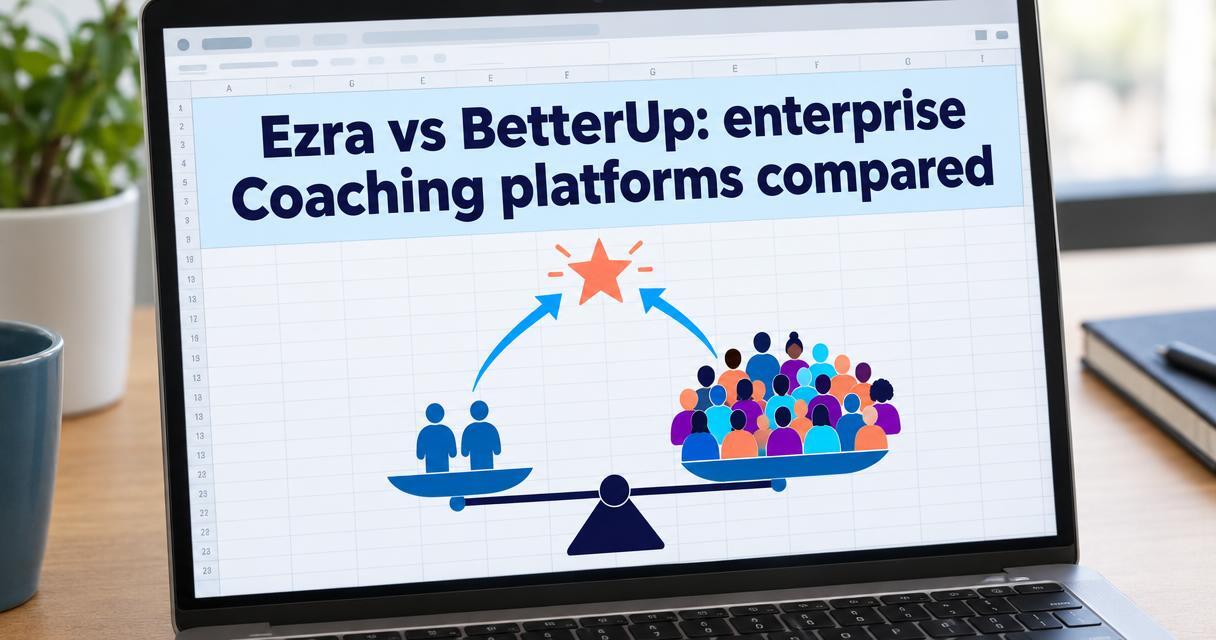
If you are comparing Ezra vs BetterUp, you are probably trying to figure out how to scale professional coaching across your business without breaking your human resources budget.
Last reviewed October 2026
Key takeaways
- Ezra focuses strictly on leadership development and corporate competencies, backed by its Lee Hecht Harrison heritage.
- BetterUp uses a whole-person behavioural science approach that combines professional growth with mental fitness.
- Both platforms rely on expensive one-to-one human coaching, which severely limits how many employees you can actually enrol.
- Traditional human coaching struggles to integrate into the daily flow of work because of scheduling delays and waitlists.
- Modern human resources teams are turning to personality-adaptive AI coaching to provide instant support to their entire workforce.
Finding the right coaching platform is a major decision for any human resources team. You know your leaders need support to work through difficult conversations and manage complex team changing. You know that investing in your people reduces turnover and improves engagement.
The challenge is figuring out which approach actually changes behaviour at scale. Ezra and BetterUp are two of the biggest names in the corporate coaching market today. They both offer slick digital platforms, matching algorithms, and reporting dashboards designed to impress the executive team.
However, they approach employee development from very different angles. Understanding their specific philosophies, pricing structures, and limitations will help you make the right call for your team. It also helps to consider whether traditional human coaching is still the most efficient way to build capability across your entire organisation in 2026.
Every coaching provider has a foundational belief about how people grow and learn. This core philosophy dictates how they design their applications, who they hire as coaches, and how they measure success over time.
Ezra is heavily rooted in traditional corporate leadership development. As a subsidiary of the Adecco Group and Lee Hecht Harrison, Ezra draws on decades of corporate consulting and outplacement experience. They focus tightly on practical leadership competencies, management skills, and career progression.
Their framework is built around typical corporate performance metrics. If you want a platform that feels like an extension of a classic corporate training program, Ezra provides a familiar, structured environment.
BetterUp takes a very different path. They focus on whole-person behavioural science and positive psychology. Their platform is designed to improve mental fitness, personal resilience, and general wellbeing alongside professional skills.
They believe that a happier and healthier person inherently makes a better employee. This means a coaching session on BetterUp might cover stress management and sleep habits just as much as it covers an upcoming performance review.
The quality of a traditional coaching platform ultimately depends on the size and quality of its coach network. Both companies maintain massive rosters of contractors, but they scale differently to meet enterprise demands.
According to Boon Health, EZRA reports more than 2,000 ICF-accredited coaches across 131 countries, while BetterUp reports a network of more than 4,000 coaches. This immense scale allows both platforms to offer support in multiple languages and across various global time zones.
This global footprint is essential for multinational corporations. You need to know that a manager in Sydney can get the same quality of coaching as a manager in London. Both Ezra and BetterUp deliver on this requirement by continuously recruiting independent coaches into their systems.
Having thousands of coaches is only useful if those coaches actually know what they are doing. Vetting and credentialing are critical steps in maintaining quality control.
Ezra places a strict emphasis on International Coaching Federation (ICF) credentials. They lean towards coaches who have specific corporate backgrounds and previous executive leadership experience. This makes them a strong fit if you are exclusively coaching senior executives who expect to speak with a former chief executive or managing director.
BetterUp has a broader and more varied intake process. Because their model includes mental fitness and overall wellbeing, they employ coaches with diverse backgrounds in psychology, social work, and therapy. They are not just looking for corporate leadership experience.
This diverse roster is necessary to support their massive client base. uLeadSpace notes that BetterUp reports serving more than 750 enterprise customers, which requires an enormous network to maintain session availability and language coverage.
Getting an employee to actually open up to a coach requires a smooth user experience. If the initial matching process feels clumsy or forced, the employee simply will not book their sessions.
BetterUp uses a proprietary algorithm to match employees with coaches based on an initial digital assessment. The user answers a series of questions about their career goals, personal challenges, and communication style. The platform then suggests a few coach options, allowing the employee to choose the person they feel most comfortable with.
Ezra also uses digital matching but often relies more heavily on organisational input to set the initial coaching agenda. Their app allows users to schedule sessions, track their ongoing goals, and message their coach between formal video calls. The experience is highly functional and remains focused entirely on the corporate development track.
Both platforms have invested heavily in their mobile applications. They know that busy managers are rarely sitting at a desktop computer when they have a few spare minutes to review their goals.
The BetterUp application is highly polished and features a library of on-demand content alongside the coaching schedule. Users can read articles, listen to short audio clips, and track their personal mood metrics between live sessions.
Ezra provides a simplified, distraction-free interface. It focuses almost entirely on the relationship between the employee and the coach. Users log in, view their upcoming appointments, review their previous notes, and get back to work.
A coaching platform fails if it sits in a silo away from where work actually happens. Modern tools must integrate with your existing human resources systems and communication channels.
BetterUp has made significant strides in this area. GrowthSpace highlights that BetterUp Grow supports more than 100 languages and operates through Slack and Microsoft Teams. This means employees can receive coaching nudges and schedule sessions without leaving their daily workflow.
Ezra also integrates with major calendar applications to prevent scheduling conflicts. They offer reporting dashboards that tie into standard human resources information systems, allowing administrators to track overall platform engagement without manually exporting spreadsheets.
Budget is usually the deciding factor when comparing enterprise coaching platforms. Traditional human coaching is fundamentally expensive because you are paying for a human expert's time by the hour.
Neither company publishes their pricing openly on their website, which forces buyers into lengthy sales cycles. However, industry estimates suggest BetterUp's enterprise pricing sits at roughly $300 to $500 per user per month, according to uLeadSpace. This typically involves per-seat licensing, meaning you pay a premium for a specific number of employees to have access.
Ezra handles contracts differently depending on the product tier. As noted by Boon Health, EZRA Edge and EZRAx offer unlimited one-to-one coaching sessions under enterprise contracts, while BetterUp generally uses per-seat licensing.
Ezra's unlimited model can be cost-effective if your selected group uses the service heavily, but it still represents a massive upfront investment. If you want to dive deeper into how these costs break down, you can review a detailed BetterUp pricing guide.
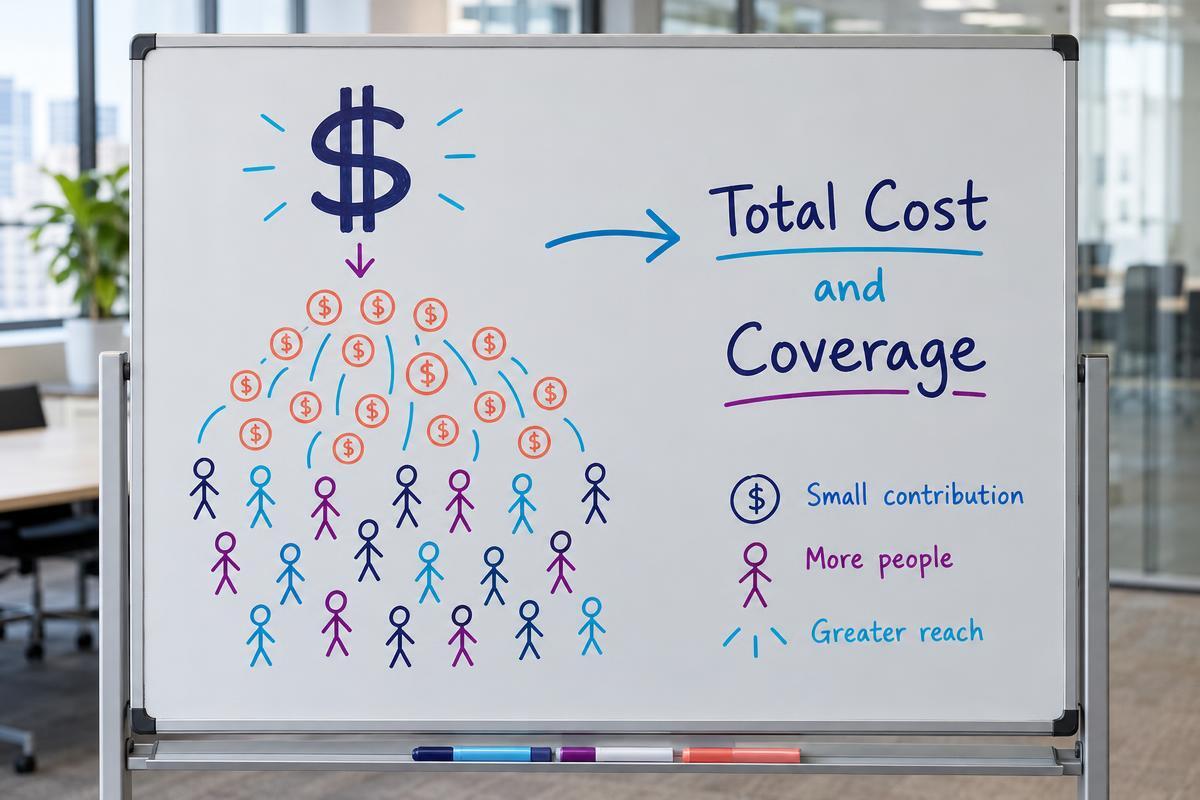
When you calculate the total cost of ownership, the limitations of traditional coaching become obvious. You have to look at how much you are spending versus how many people actually receive support.
If you have a budget of fifty thousand dollars a year, and a platform costs four hundred dollars per user per month, you can only afford to coach about ten people. That is a massive expense for a tiny fraction of your workforce.
Because of these high costs, most companies are forced to restrict these platforms to their top talent and high-potential leaders. The people who actually manage the daily operations of the business are left completely unguided.
Human resources leaders need to prove that their coaching investment actually works. Both platforms offer administrative dashboards that aggregate anonymous data to show engagement and general progress.
Ezra measures success directly against leadership competencies. They track how well participants are advancing towards the goals set at the beginning of their engagement. This makes it easy to report back to the executive team on very specific management skills.
BetterUp relies on self-reported psychological metrics. They track improvements in resilience, purpose, and focus. For instance, Boon Health reports that BetterUp Grow programs produce a 23 percent average competency improvement over six months, with 89 percent session attendance and an +87 NPS. While these numbers look great on a slide deck, they can be harder to tie directly to revenue or operational efficiency.
How you deploy these platforms depends entirely on which segment of your workforce you are trying to help. Executive coaching requires a completely different approach than frontline manager support.
For the C-suite, Ezra is highly compelling. Their coaches have the corporate pedigree to handle complex board changing, strategic pivots, and high-level career transitions. The high cost is justified by the scale of the decisions those executives make.
For frontline managers, BetterUp offers a friendly entry point into self-awareness and stress management. However, paying executive-level prices to help a first-time manager figure out how to run a weekly team meeting is rarely sustainable for the business.
While both Ezra and BetterUp offer quality services, they share a fundamental flaw. They rely entirely on the old model of one-to-one human coaching. This model simply does not scale to meet the needs of a modern enterprise.
When a platform costs hundreds of dollars per seat, you cannot give it to everyone. You end up coaching the executives who already have the most support, while middle managers get nothing. The managers who need the most help working through daily conflict are the ones excluded from the program.
Human coaching also relies on slow, multi-week intervals. An employee might have a session, receive some great advice, and then forget it completely by the time they face a real problem a week later. It is a slow and highly reactive way to build skills.
Instead of trying to squeeze a human coaching model into a tight corporate budget, many companies are actively looking for BetterUp alternatives. They want a solution that reaches every employee, not just the top few.
This is where Hey Compono comes in. Rather than relying on expensive human hours, Hey Compono provides AI coaching built around a validated Work Personality framework. It adapts instantly to how an employee naturally thinks, communicates, and works.
Different personalities need entirely different coaching approaches. For example, someone with a Doer personality wants practical steps and fast execution. A traditional human coach might spend three weeks trying to unpack their feelings, which only frustrates them. An adaptive AI system adjusts the delivery immediately to suit the user.
The modern workplace moves too fast for scheduled weekly therapy sessions. Employees need targeted support exactly when a problem occurs in real time.
If a manager needs to give hard feedback this afternoon, they do not need a theoretical discussion next Tuesday. They need a five-minute micro-session right now to practise what they are going to say. Bite-sized interactions provide continuous reinforcement that actually sticks and changes behaviour.
This approach also removes the stigma of asking for help. Research shows that people often disclose more to an AI system than they do face-to-face because there is zero judgement. There are no waitlists, no awkward scheduling conflicts, and no fear of saying the wrong thing.
Human resources budgets are tightening globally. You are likely being asked to do more with less money. Running a traditional coaching program alongside your Employee Assistance Program and your external team changing consultants is expensive and hard to manage.
If you are exploring the market, it pays to compare all your options. You might also want to look closely at CoachHub alternatives. The ultimate goal should be finding a platform that offers proactive, daily support for your entire workforce in one place.
Scaling development requires a massive shift in thinking. You have to move away from the idea that coaching is a luxury reserved for the executive suite. When you can deliver tailored, personality-aware coaching to a frontline manager for a fraction of the cost, you fundamentally change how the whole business operates.
Choosing between Ezra and BetterUp comes down to your specific corporate goals and your available budget. If you need highly structured leadership development for a small group of executives, Ezra is a proven choice.
If you want to focus heavily on mental fitness and wellbeing for a select group of high-potential employees, BetterUp provides a beautifully designed experience. Both will deliver results for the individuals lucky enough to get a seat.
However, if your goal is to genuinely change the culture of your organisation, neither platform scales effectively. You need a platform that delivers instant, adaptive coaching to every single person on your payroll.
Hey Compono Business provides your entire organisation with personality-adaptive AI coaching that reinforces leadership skills and team changing exactly when they are needed. It delivers the fast, proactive support that traditional human coaching models simply cannot scale.
Related reading
Ezra focuses primarily on practical leadership development and corporate competencies, drawing on its corporate consulting heritage. BetterUp leans heavily on whole-person behavioural science, positive psychology, and general mental fitness alongside work skills.
BetterUp does not publish exact enterprise pricing, but industry estimates typically range from $300 to $500 per user per month. This high cost is why it is usually reserved for senior executives and high-potential managers.
Yes, some of Ezra's enterprise tiers offer unlimited one-to-one coaching sessions. However, the overall contract cost remains high, which can limit how many employees you can afford to enrol in the program.
AI coaching platforms provide an able to grow alternative for companies that want to support their entire workforce. While human coaching is effective for the top tier, AI delivers instant, personality-adapted micro-sessions to every employee without the scheduling delays or high seat costs.
Most platforms use anonymous aggregated data. Ezra measures progress against leadership goals and competencies, while BetterUp tracks psychological metrics like resilience and focus. Modern AI tools track engagement and readiness for specific workplace challenges.
Compare the top CoachHub alternatives for 2026, including BetterUp, Torch, Growthspace, and Hey Compono. Find the right coaching platform for your...

Discover the real costs behind BetterUp pricing in 2026. Get a breakdown of individual plans, estimated enterprise quotes, and session details.

If BetterUp is not the right fit, here are the coaching options worth comparing in 2026, from enterprise to budget picks and personality-adaptive...