
 Mathan Allington

How to develop frontline leaders in a financial services business
 Compono
Leadership development in financial services usually lands on you. How to coach frontline leaders around the way each of them naturally works.
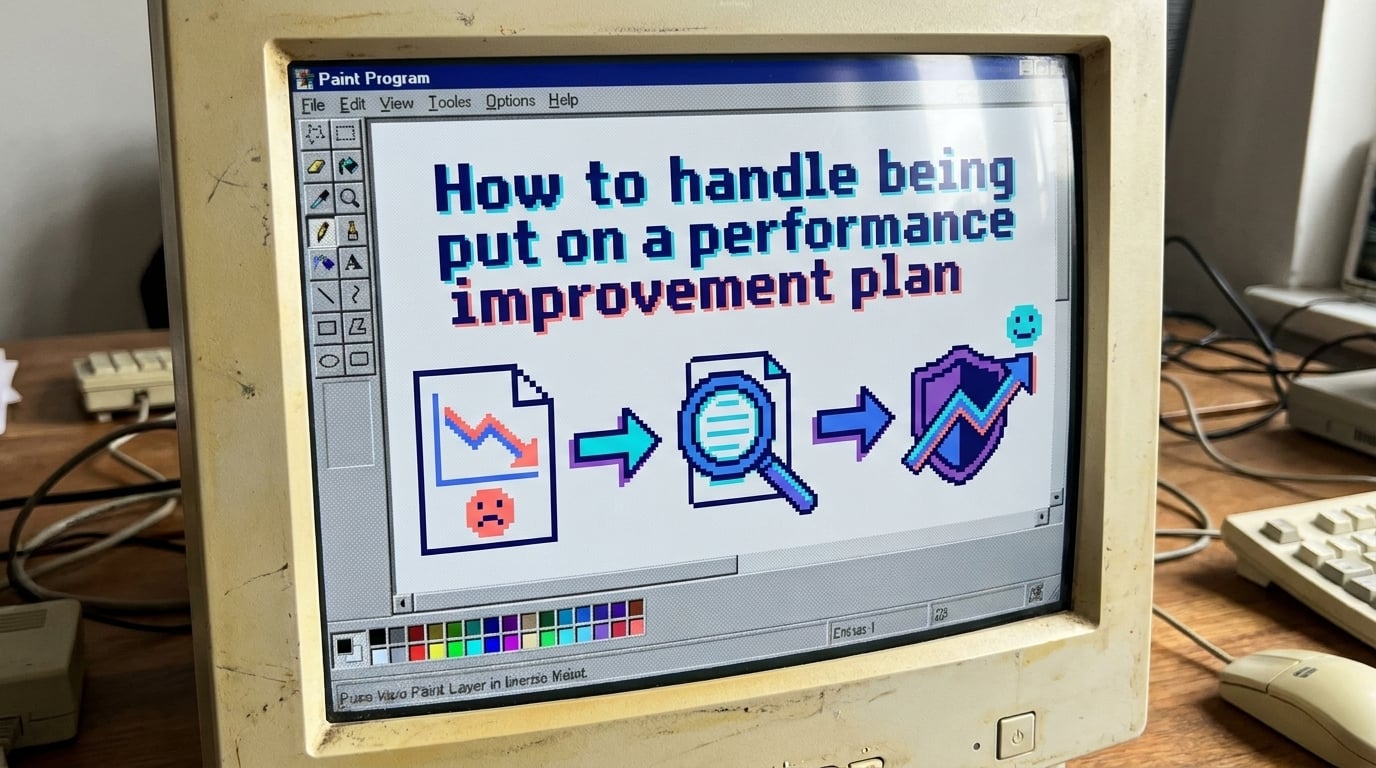
Being handed a performance improvement plan feels like a punch to the gut. Whether you saw it coming or it hit you completely out of the blue, your brain immediately cycles through panic, anger, and fear. You probably want to argue every point in the document or pack up your desk and walk out. Before you do either, you need to take a breath and look at the situation objectively.
Last reviewed November 2026
Key takeaways
- Take 48 hours to process your emotions before signing or responding to the document.
- Assess whether the plan is a genuine attempt to help you or a paper trail for termination.
- Protect yourself by documenting every conversation, metric, and milestone outside of company systems.
- Run a parallel strategy by executing the plan while quietly preparing your resume and job hunting.
- Understand that negotiating a voluntary exit or severance package is often a viable alternative to fighting a predetermined outcome.
A performance improvement plan is supposed to be a structured path to help you succeed. The reality in the modern workplace is often very different. Some managers use them genuinely. Others use them to manage people out of the business while keeping human resources and legal teams happy. When you figure out exactly how to handle being put on a performance improvement plan, you take the power back. You move from a state of panic into a state of control.
Your career is not over. This is just a highly structured business problem that you need to manage. It requires clear thinking, careful documentation, and a solid understanding of your own professional worth. If the stress of the situation is affecting your mental health or making it hard to cope with daily life, please reach out for professional support through these crisis resources immediately.
The moment a manager slides that document across the desk or shares their screen on a video call, your fight or flight response kicks in. Your heart rate spikes. You might feel a hot flush of embarrassment or a deep sense of betrayal. This is a completely normal biological reaction to a perceived threat.
The most important thing you can do right now is buy yourself time. Never sign a performance document the moment it is handed to you. You need space to process the shock.
Instead of arguing, politely acknowledge the feedback. You can say something simple like, "I hear what you are saying. I want to take this seriously and give it the attention it deserves. I will take this home, review it thoroughly, and get back to you with my thoughts tomorrow." Most human resources policies allow you at least 24 to 48 hours to review official documents.
Do not rage quit. Do not send an angry email to your manager outlining all their faults. Do not vent to your colleagues by the coffee machine. Keep your circle tight and your emotions out of the office. A calm, measured response shows that you are professional and capable of handling difficult situations.
Take the document home and step away from it. Research from Realign Coaching suggests that employees should reread the plan after emotions settle, request unclear metrics and success criteria in writing, and keep a daily record of completed work. You cannot read a document objectively while your adrenaline is surging.

Once you are calm, sit down with a highlighter and read the document line by line. You need to work out if this is a genuine attempt to get your performance back on track or a defensive measure designed to fire you safely.
A legitimate document is highly specific. According to Westaway, a strong performance improvement plan should define specific, measurable goals, run for 30–60 days, include regular check-ins, identify employer support, and state consequences clearly. It will point to exact dates, exact projects, and exact numbers where you fell short. It will also outline exactly what resources the company will provide to help you succeed.
A bad document is vague. It relies on subjective phrases like "needs to improve communication skills" or "must show a better attitude" or "lacks strategic thinking". If your manager cannot put a number or a specific deliverable against the failure, they cannot measure your success either. Vague documents are usually a sign that the business has already decided to let you go.
You need to be realistic about your chances. The estimated share of employees who remain in good standing 12 months after a PIP is 15%–30%, while 66%–85% reportedly leave voluntarily or are terminated at the review date, according to No Self Limits. Those numbers are sobering. They tell you that while survival is absolutely possible, the odds are not in your favour.
This is why you must evaluate the timeline. Industry bodies like SHRM and the U.S. Office of Personnel Management identify 30 days as a common PIP length, while 60–90 days is also customary, as noted by Careerminds. A 30-day turnaround for a complex behavioural change is almost impossible. A 90-day plan with weekly mentoring sessions shows genuine commitment from your employer.
Because the odds are stacked against you, you must run a parallel strategy. You are going to put 100 percent of your effort into meeting the requirements of the plan, while quietly putting 100 percent of your spare effort into finding a new job.
Never assume you will beat the process. Even if you do turn your performance around and successfully complete the review period, your relationship with your manager is often permanently damaged. Trust has been broken on both sides. Many people who survive the process end up leaving a few months later anyway because they feel unappreciated at work and constantly watched.
Update your resume immediately. Start reaching out to your network. Set up job alerts. Do all of this on your personal computer outside of work hours. Do not use company internet or company devices for your job hunt.
While you hunt for a new role, you must execute the plan flawlessly. Treat the improvement document as your only daily to-do list. If a task does not directly contribute to meeting the stated goals, push it to the side or ask your manager for permission to deprioritise it. You cannot afford to miss the core metrics because you were busy doing general administrative work.
Your best defence during this process is flawless documentation. You need to assume that human resources and legal teams will review everything you submit. Keep a daily log of your activities, completed tasks, and any obstacles outside of your control that prevented you from hitting a target.
Send a weekly summary email to your manager outlining exactly what you achieved that week against the plan. This forces them to acknowledge your progress in writing. If they reply and agree you hit the targets for the week, you are building a paper trail of success. If they try to claim at the end of the month that you did nothing, you have the emails to prove otherwise.
If the document contains factual errors, you must correct the record. Do not sign a document that claims you missed a deadline on 14 March if you have an email proving you submitted the work on 12 March. You have the right to attach a written rebuttal to your personnel file.
Keep your rebuttal completely emotionless. Fight with facts, not feelings. Write something like: "I am committed to improving my performance and working with you on this plan. However, I need to note for the record that point 3 is factually incorrect. The project was delivered on time, as evidenced by the attached email timestamp. I request that this document be updated to reflect the accurate timeline."
Keep a copy of the original plan, your rebuttal, and all your weekly progress emails on a personal device. If your employer suddenly locks you out of the company system, you lose all your evidence. Forward critical, non-confidential emails regarding your performance to your personal email address.
How you handle this high-pressure situation depends heavily on your natural work personality. Different people process professional criticism in entirely different ways. Understanding your default reaction can help you stop yourself from making a mistake in the heat of the moment.
If you are a naturally logical and analytical person like The Evaluator, you will likely spot every logical flaw in the document. You will want to argue every point and debate the metrics. While your logic might be sound, arguing with human resources usually backfires. You need to channel that analytical energy into building an airtight documentation log instead of picking fights.
If you are highly practical and task-oriented like The Doer, you will probably want to put your head down and just tick the boxes. You like clear instructions and getting things done. Your blind spot here is missing the political reality of the situation. You might hit every target perfectly but still lose your job because you failed to repair the relationship with your manager.
Those who lead with enthusiasm and big ideas often feel deeply rejected by official warnings. The rigid structure of the process feels suffocating. If this sounds like you, you need to force yourself to focus on the boring, practical details. A visionary approach will not save you here; only hard metrics and daily execution will get you through.
It is important to understand the different roles people play in this process. Your direct manager is the one evaluating your daily work. Human resources is there to protect the company from legal risk. Human resources is not your personal advocate, even if they are polite and sympathetic in meetings.
Keep your communications with human resources strictly professional. Ask them to clarify policies. Ask them to confirm timelines. Do not use them as a therapist to complain about how unfair your manager is. If you have a truly unsupportive boss who is bullying you, you must report that through the proper grievance channels, not as a casual complaint during a performance review.
Take control of your weekly check-in meetings. Do not walk in and wait to be judged. Create an agenda and send it to your manager the day before. Outline the goals for the week, the tasks you completed, the data proving your success, and any roadblocks you need their help to clear.
When you lead the meeting, you frame the narrative. You show initiative. You force your manager to respond to your data rather than allowing them to rely on their vague impressions of your work. After the meeting, send a brief follow-up email confirming what was discussed and agreed upon.
Sometimes the healthiest choice you can make is to walk away. If the goals are mathematically impossible, or the relationship with your manager is toxic, fighting the process will only destroy your confidence. You have the option to negotiate an exit.
Companies use these plans because they want to avoid wrongful termination lawsuits. Firing people is risky and expensive for a business. If you offer them a clean, quiet exit in exchange for a severance package, many companies will take the deal. It saves them a month of tedious paperwork and removes the legal risk entirely.
You can approach human resources and say something like: "I have reviewed the document. While I disagree with several of the assessments, it is clear that this role is no longer a good fit for either of us. Rather than spending the next 60 days on this process, I would be open to discussing a mutual separation agreement."
If you negotiate an exit, aim for at least four to eight weeks of severance pay, the payout of all your accrued leave, and an agreement that the company will provide a neutral reference. A neutral reference simply confirms your job title and dates of employment, ensuring the performance issue is never mentioned to future employers.
A formal warning is a critique of your output in one specific role, under one specific manager, at one specific point in time. It is not a measure of your worth as a human being. It does not mean you are bad at your profession.
Many highly successful people have been fired or managed out of roles that did not fit them. Sometimes the company culture changes. Sometimes you get a new manager who simply does not like your working style. Sometimes you are dealing with personal issues that temporarily impact your focus. All of these things are normal parts of a long career.
When you know how to handle being put on a performance improvement plan, you stop being a victim of the process. You become a professional managing a complex business negotiation. Whether you choose to stay and fight, or negotiate a smooth exit, you keep your dignity intact and your career from here.
Facing a performance review or an awkward chat with HR can leave you feeling completely stuck. You can practise these high-stakes moments with Hey Compono, an AI coach that adapts to your personality and helps you find the right words without the anxiety.
No. You should always ask for 24 to 48 hours to review the document in private. This gives you time to calm down, read the details objectively, and check for factual errors before you attach your signature to any company records.
Usually, your signature just acknowledges that you have received and read the document, not that you agree with the manager's assessment. If you are worried, you can write "signed to acknowledge receipt only" next to your signature.
Yes, it is possible to survive if the goals are specific, measurable, and realistic. However, industry statistics show that the majority of employees either leave voluntarily or are terminated at the end of the process, so you should always prepare your resume just in case.
If the targets are mathematically impossible or rely on factors outside your control, you need to document this immediately. Send an email to your manager and human resources explaining why the metrics cannot be met and ask for them to be adjusted to realistic levels.
Quitting without a backup plan can impact your ability to claim unemployment benefits, depending on your location. It is often better to negotiate a mutual separation agreement with severance pay, or stay employed while you actively interview for new jobs.

Leadership development in financial services usually lands on you. How to coach frontline leaders around the way each of them naturally works.

Delegating feels risky when the standard is yours. Here is how to brief properly, agree what good looks like, and let people get on with it.

A look at how AI coaching apps differ, so you can pick one that adapts to the way you work instead of handing you the same advice as everyone else.