
 Compono
Being told you are too direct at work
 Compono
Been told you are too direct? Discover why your communication style is a strength and how to adapt it for better team collaboration and results.

Personality affects communication at work by acting as a hidden filter that determines how you process information, deliver feedback, and interpret the tone of your colleagues.
Key takeaways
- Your personality dictates whether you prefer direct, facts-based updates or collaborative, relationship-focused discussions.
- Differences in communication styles often lead to friction, costing large organisations millions in lost productivity.
- Understanding the specific work personalities in your team helps you adapt your message so it actually lands.
- Self-awareness of your own default communication style is the first step to reducing workplace conflict.
You send an email that seems perfectly clear. Three hours later, you get a confused reply that completely misses the point. You try to give helpful feedback, and the person gets defensive. You ask a quick question, and you get a ten-minute philosophical answer. It is incredibly frustrating. You start to wonder if everyone is speaking a different language.
In a way, they are. It is not about a lack of intelligence or capability. It is about personality. Your personality shapes how you encode a message, and the receiver's personality shapes how they decode it. When those two systems do not match, the message gets lost in translation. According to a report summarised by Personos, 86% of employees and executives believe poor communication is the primary cause of workplace failures.
We spend hours trying to fix communication with new software, better meeting agendas, and endless process documents. But until you understand the human element – the actual personalities delivering and receiving the information – you are just putting a bandage on a broken arm.
To understand how personality affects communication at work, you have to look at the different default styles people use. At Hey Compono, our research maps work activities to specific personality types. Here is how the eight core work personalities handle communication.
The Doer communicates in a way that is direct, straightforward, and highly practical. They focus on facts and the immediate tasks at hand. If you ask a Doer for an update, they will give you a bulleted list of what is done and what is next. They do not want fluff, and they do not want to brainstorm abstract concepts when there is real work to finish.
The Auditor is precise, methodical, and detail-oriented. Their communication style is reserved and heavily reliant on facts, procedures, and data. When an Auditor speaks, they have usually thought through every angle. They prefer to communicate asynchronously – giving them time to process the information – rather than being put on the spot in a fast-paced meeting.
The Coordinator is clear, task-oriented, and focused on efficiency. They communicate to organise tasks, set priorities, and enforce deadlines. They can be directive and straightforward, sometimes coming across as blunt when they are trying to keep a project on track. They want communication to result in a clear plan of action.
The Evaluator is direct, logical, and results-driven. They tend to lead conversations, driving toward decisions or solutions based on objective analysis. In high-pressure situations, their communication can appear overly critical or blunt because they focus entirely on the logical outcome rather than the emotional nuance of the conversation.
The Campaigner is energetic, enthusiastic, and focused on the big picture. They use persuasive and engaging communication, especially in group settings. They talk in terms of future possibilities and vision. However, they can sometimes dominate discussions or jump between ideas so quickly that they leave the detail-oriented people in the room completely overwhelmed.
The Pioneer is imaginative and future-focused. They encourage dialogue around possibilities and new ideas, preferring to keep options open rather than locking down a decision immediately. Their communication is brainstorming in real-time, which is great for innovation but can be frustrating for colleagues who just want a final answer.
The Advisor uses a collaborative and open-ended communication style. They focus on sharing ideas and insights while remaining diplomatic and accommodating. They want to investigate the problem and hear everyone's perspective. They avoid rigid statements, preferring to guide the conversation gently to ensure all voices are heard.
The Helper is warm, empathetic, and reflective. They focus on harmony and understanding, preferring small group or one-on-one discussions over loud public debates. They are highly perceptive of team morale, but they might withhold their true opinions in a meeting if they fear their input will cause conflict or upset the group dynamic.
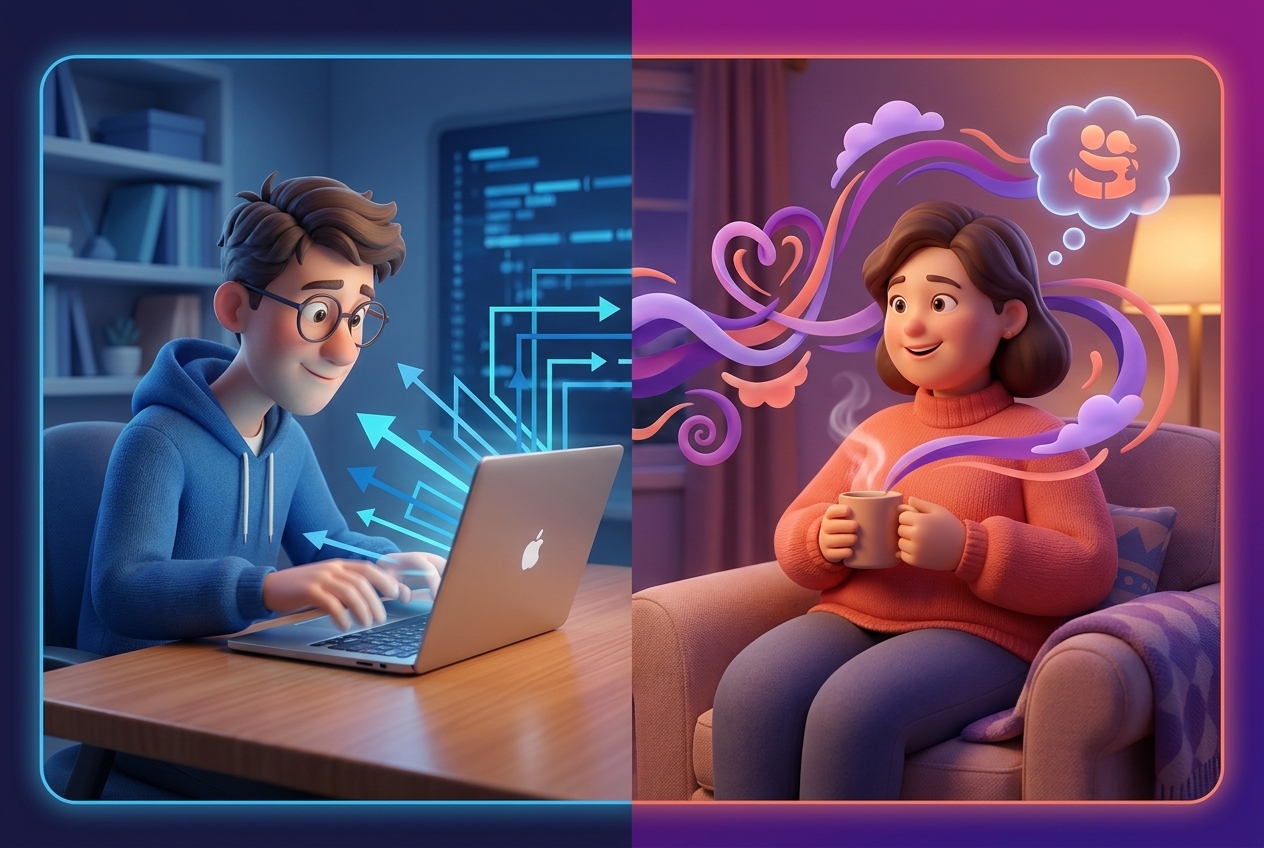
When these different styles interact without self-awareness, friction is inevitable. Psychometric Research notes that Big Five traits shape workplace communication patterns, including how people give feedback and handle disagreements. If you do not understand the traits of the person sitting across from you, you will misinterpret their intent.
Take the clash between an Evaluator and a Helper. The Evaluator wants to weigh up the options logically and make a quick, objective decision. They send a direct, one-line email asking for a status update. The Helper reads that email and feels attacked. They interpret the brevity as anger or dissatisfaction. The Helper then responds with a long, cautious email trying to smooth over the perceived tension, which only frustrates the Evaluator who just wanted a simple "yes" or "no".
Or consider the dynamic between a Campaigner and an Auditor. The Campaigner pitches a massive, visionary idea for a new project. The Auditor immediately starts asking detailed questions about budget, timelines, and risk factors. The Campaigner feels like the Auditor is being negative and killing the momentum. The Auditor feels like the Campaigner is being reckless and ignoring reality.
These daily misunderstandings add up. A Personos summary notes that communication breakdowns cost organisations with 100,000+ employees about $62 million annually. This makes personality-driven miscommunication a major business issue, not just a minor annoyance.
The science backs up what we experience in the office every day. Specific personality traits alter the actual words we choose and the amount we speak. A 2026 Frontiers in Psychology study found that Openness – especially the change-oriented facet – was linked to greater knowledge sharing and more cognitive-process language in workplace communication.
People who score high in these traits naturally talk more about ideas, concepts, and the "why" behind a project. They are your Campaigners and Pioneers. They use language to explore.
The same study found that strategic individuals used more analytical language, while results-oriented individuals tended to use higher word counts to ensure their points were fully articulated. When you put a highly analytical person (like an Evaluator) in a room with a highly empathetic person (like a Helper), they are quite literally using different vocabularies to describe the same work.
If you're curious about which of these profiles fits your natural style, Hey Compono can map your work personality in a few minutes. Seeing your own default settings on paper often explains years of frustrating conversations.
You cannot change someone's personality, and you shouldn't try. The goal is not to make everyone communicate the exact same way. The goal is to build adaptive communication skills across the team.
Adaptive communication means recognising the personality of the person you are speaking to and adjusting your delivery – not your core message – to suit their preferences. If you are a Doer presenting to an Auditor, you slow down. You bring the data. You give them the spreadsheet before the meeting so they have time to process the details. You do not demand an immediate decision.
If you are a Coordinator talking to a Campaigner, you start with the big picture. You validate their energy and vision before you start enforcing deadlines and structure. You show them how the project plan actually helps them achieve their grand idea.
This approach works. A 2024 meta-analysis cited by Psychometric Research found that teams aware of members' profiles improved collaborative outcomes by 18% to 25% versus control groups. When people understand that a colleague's bluntness is just their natural Evaluator style – and not a personal attack – the emotional friction disappears. The conversation stays focused on the work.
Improving communication starts with looking in the mirror. You have to know your own blind spots. If you are a Helper, you need to recognise that your tendency to avoid conflict might be holding the team back from necessary debates. You might need to practice being more direct.
If you are an Evaluator, you need to recognise that your logical approach can sometimes steamroll the emotional needs of the team. You might need to practice pausing and asking for input before making a unilateral decision.
Some teams use personality-adaptive coaching to have these conversations without it getting weird. Having a shared framework gives everyone a neutral language to discuss behaviour. Instead of saying "you are being too aggressive," a team member can say, "I know you're in Doer mode right now, but we need to step back and look at the options." It removes the sting of personal criticism.
When you understand how personality affects communication at work, you stop taking things personally. You start seeing the mechanics behind the interactions. You realise that the colleague who always asks a million questions isn't trying to undermine you – they just need details to feel secure. The colleague who sends one-word replies isn't angry – they are just focused on efficiency.
Key insights
- Miscommunication usually stems from mismatched personality traits, not a lack of effort or intelligence.
- Adaptive communication requires you to adjust your delivery style to match the receiver's natural preferences.
- Having a shared language around personality types depersonalises conflict and makes feedback easier to digest.
- Teams that actively understand and adapt to each other's communication styles see significant improvements in collaboration.
Ready to understand the unique communication styles in your team and reduce daily friction?
Related reading
Personality acts as a filter for how we send and receive messages. It dictates whether you prefer direct, data-driven facts or collaborative, relationship-focused discussions. When two different personality types interact without awareness, their conflicting styles often lead to misunderstandings.
A major cause is the clash between task-oriented personalities and people-oriented personalities. Task-oriented people communicate to get things done quickly, which can seem blunt. People-oriented individuals communicate to build consensus, which can seem slow or unfocused to others.
Start by identifying their likely work personality. If they are highly analytical, provide more data and time to process. If they are highly energetic and visionary, focus on the big picture before getting into the details. Adjusting your delivery to match their preference often reduces friction.
While you cannot easily change your core personality, you can absolutely adapt your communication style. Self-awareness allows you to pause and choose a different approach when dealing with someone who processes information differently than you do.
Self-awareness helps you recognise your own communication blind spots. When you know that you tend to be overly critical or that you avoid necessary conflict, you can consciously adjust your behaviour to ensure your message is received constructively.

Been told you are too direct? Discover why your communication style is a strength and how to adapt it for better team collaboration and results.
How Kopano pricing works in 2026, explore key features for enterprise teams, and learn why modern businesses are investing in communication skills.

Looking for a Crystal Knows alternative in 2026? Compare top personality and communication tools to find the right fit for your team and outreach...
 Mathan Allington