
 Compono

How to build a high-performing team environment
 Compono
Strong teams come from knowing how each person works. What to change in how your team meets, decides and divides work so performance follows.
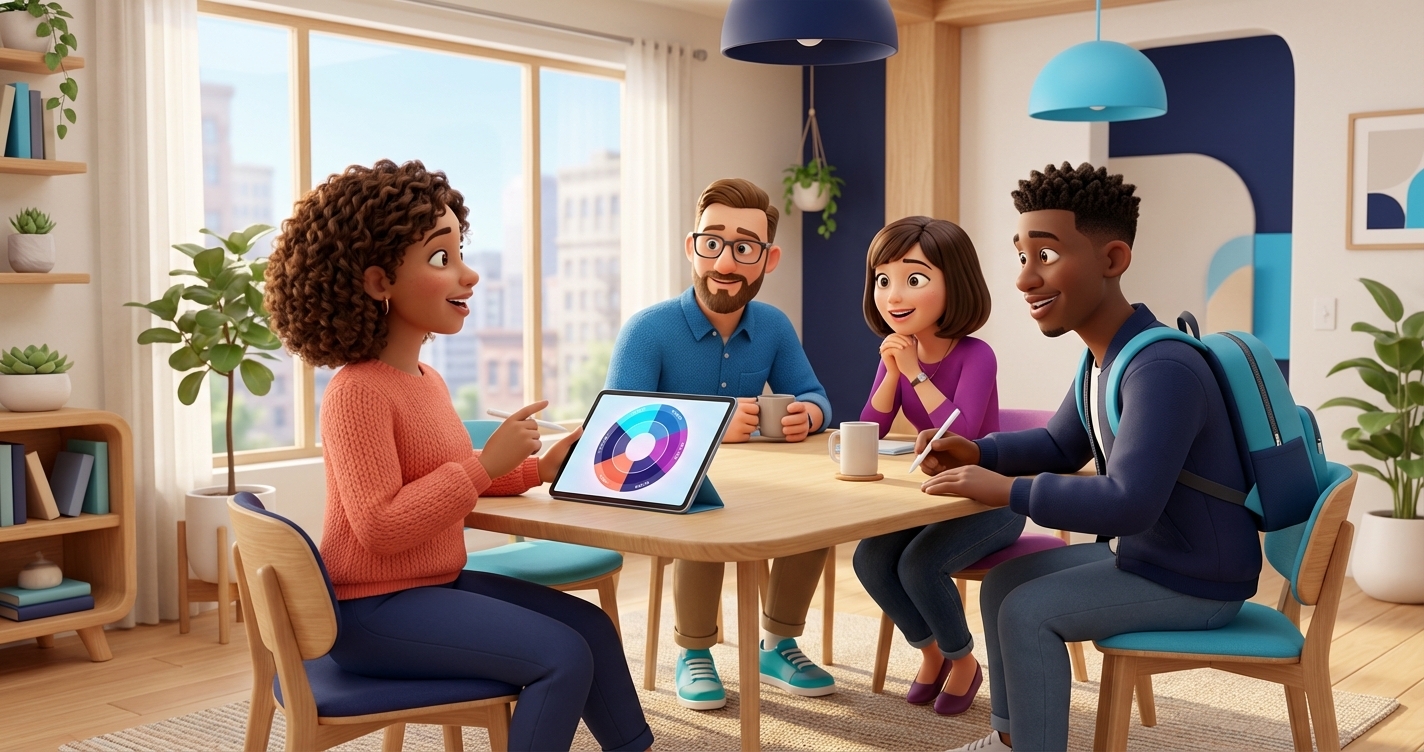
Team dynamics are the hidden psychological forces that influence how your people interact, communicate, and collaborate to get work done.
When these dynamics are healthy, you see a team that flows, where ideas are shared freely and goals are hit without the constant friction of personality clashes. But when the underlying current is off, even the most talented group of individuals can feel like they are wading through treacle.
Key takeaways
- Team dynamics are shaped by the collective work personalities and natural behaviours of every team member.
- Psychological safety is the bedrock of healthy dynamics, allowing for honest disagreement without fear of social repercussions.
- Understanding the eight core work personalities helps leaders predict friction points and align tasks to natural strengths.
- Effective communication requires adapting your style to match how others process information and make decisions.
- Continuous feedback and clear role definition prevent the ambiguity that often leads to toxic team environments.
You’ve likely felt it before. You walk into a meeting and the air feels heavy. People aren't speaking up, or worse, they are talking over each other. It’s that nagging sense that despite having all the right skills on paper, the work just isn’t happening the way it should. This isn't usually a lack of talent, it’s a breakdown in team dynamics.
We often try to fix these issues with more meetings, tighter deadlines, or new project management tools. But you can’t solve a people problem with a process solution. If you don't understand the 'why' behind the behaviour, you’re just putting a band-aid on a deep-seated fracture. Poor dynamics lead to burnout, high turnover, and a culture where people do the bare minimum just to avoid the drama.
At Compono, we’ve spent a decade looking at what actually makes teams tick. We’ve found that the most successful groups aren't the ones with the highest IQs, but the ones with the highest level of self-awareness. When you understand how your brain works, and how it differs from the person sitting across from you, the friction starts to fade. You stop seeing a colleague as 'difficult' and start seeing them as someone who simply processes information differently.

To truly master team dynamics, you need a framework that goes beyond simple labels. Through our research, we’ve identified eight specific work personalities that define how people contribute to a team. These aren't just personality traits; they are the actual actions people are motivated to take when they log on each morning.
Consider the balance in your current team. Do you have plenty of 'Pioneers' who are great at coming up with imaginative, out-of-the-box ideas, but no 'Coordinators' to actually build the structure and hit the deadlines? Or perhaps you have a team full of 'Evaluators' who can spot every risk from a mile away, but lack 'Campaigners' to sell the dream and keep the energy high during a long project. This imbalance is exactly where poor team dynamics begin to fester.
If you’re curious what personality type you default to under stress, Hey Compono can show you in about 10 minutes. By mapping these traits, you move from guessing why a team is struggling to having a data-driven roadmap for improvement. It’s about ensuring that the eight core work actions, like Helping, Doing, and Advising, are all being performed by the people most naturally suited to them.
One of the biggest hurdles to healthy dynamics is the fear of being judged. If a 'Helper' feels they can't speak up about team morale because the 'Evaluators' will dismiss it as 'soft,' you lose a vital pulse-check on your culture. Recognition isn't about constant praise; it’s about validating that different perspectives are necessary for the team’s survival.
Leading with vulnerability is the quickest way to break down these walls. When a leader admits, "I know I tend to focus too much on the big picture and I might overlook the details, I need the 'Auditors' in the room to keep me honest," it gives everyone else permission to be real about their own blind spots. This creates a space where conflict is seen as a tool for growth rather than a threat to harmony.
There's actually a way to figure out which of these patterns fits you, take a quick personality read and see what comes up. When a team shares these results, the conversation shifts from "You're being too controlling" to "I see your 'Coordinator' side is really focused on the deadline, how can we balance that with some creative exploration?" It turns personal attacks into objective observations.
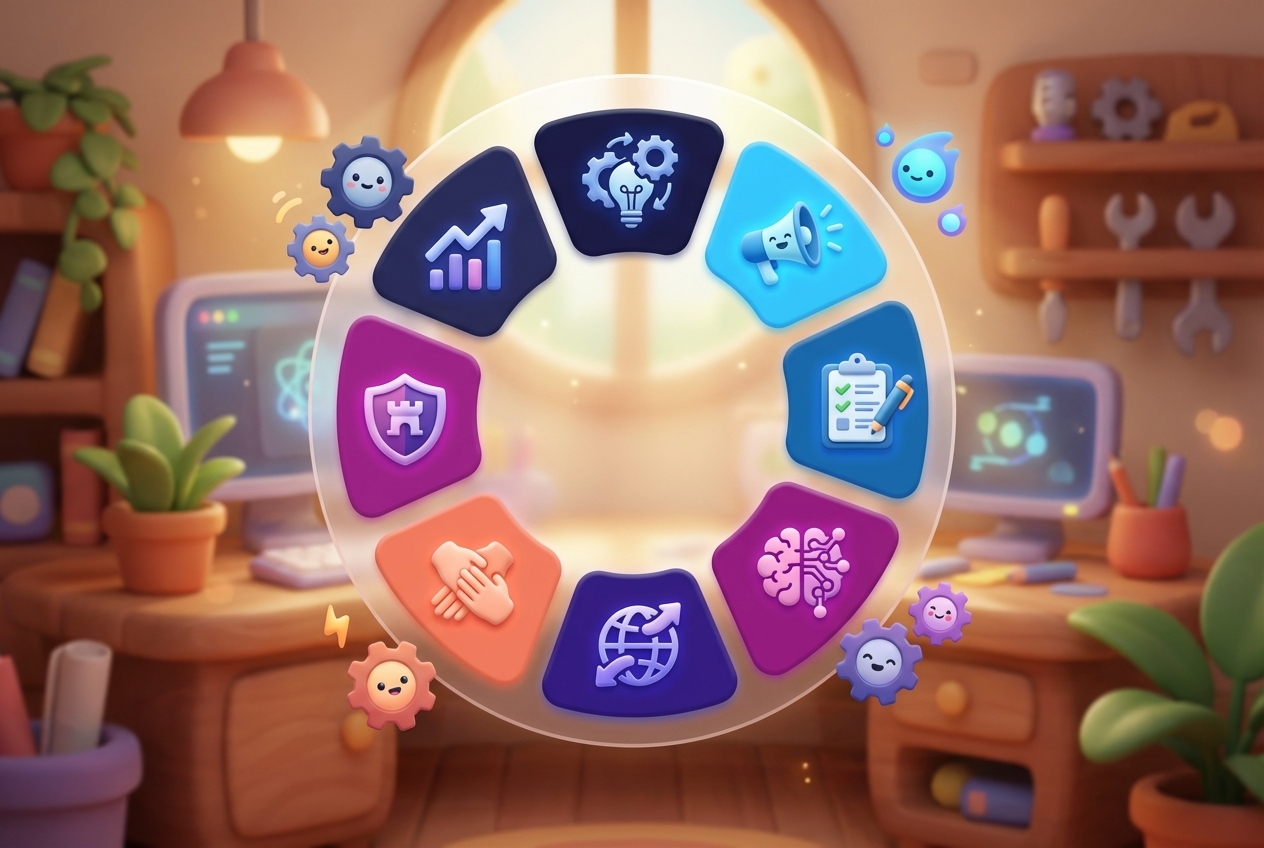
Communication is where team dynamics live or die. We all have a default style. Some of us are direct and blunt (like the 'Evaluator'), while others are empathetic and reflective (like the 'Helper'). Friction usually occurs when we communicate with others the way *we* want to be spoken to, rather than how *they* need to receive information.
For example, if you are managing an 'Auditor,' they need details, facts, and time to reflect. Rushing them into a spontaneous brainstorming session will likely cause them to shut down. Conversely, a 'Pioneer' will feel stifled if they are forced to follow a rigid, step-by-step script without room for exploration. Adapting your style isn't about being fake; it’s about being effective. It's about respecting the way another person processes the world.
Some teams use personality-adaptive coaching to have these conversations without it getting weird. By using a shared language, you can address communication gaps before they turn into full-blown resentment. It’s about building a culture where the 'Doer' feels valued for their steady execution and the 'Advisor' feels heard for their flexible problem-solving. When everyone feels understood, the team dynamics naturally shift toward collaboration.
Key insights
- Healthy team dynamics require a balance of all eight work personalities to ensure both strategy and execution are handled effectively.
- Vulnerability from leadership is the primary driver for psychological safety and open communication.
- Conflict is an inevitable part of high-performing teams, but it must be managed through the lens of personality-driven perspectives.
- Adapting your communication style to the recipient's work personality reduces friction and increases project velocity.
- Regular self-assessment and team mapping prevent 'personality drift' where roles become misaligned with natural strengths.
Related reading: How to understand and improve team dynamics at work · How to build a high-performing team environment
Employee coaching, wellbeing support and team personality insights in one platform, built on organisational psychology.
Talk to usCommon red flags include frequent 'silos' where people don't share information, a lack of healthy disagreement in meetings, high levels of passive-aggressive behaviour, and a general sense of stagnation. If your team feels like they are just going through the motions rather than actively collaborating, it’s a sign the dynamics need attention.
Absolutely. Most issues in team dynamics stem from a lack of understanding rather than a lack of capability. By using tools like Hey Compono to map work personalities, you can realign tasks to people's natural strengths and provide a shared language for resolving conflict. Often, simply acknowledging why people behave the way they do is enough to shift the energy.
Different personalities approach conflict in wildly different ways. A 'Helper' might avoid it at all costs to preserve harmony, while an 'Evaluator' might lean into it as a logical way to find the best solution. Understanding these defaults allows you to facilitate conflict in a way that respects everyone's needs, ensuring the 'Helper' feels safe to speak up and the 'Evaluator' remains constructive.
Team dynamics are fluid. They can change when a new member joins, when a project's pressure increases, or even when the company's goals shift. We recommend a formal pulse-check every quarter, but the practice of using personality-based insights should be a daily habit integrated into how you give feedback and run meetings.
Remote work removes many of the subtle social cues we rely on in person, which can lead to more misunderstandings. However, it also provides an opportunity to be more intentional. By explicitly discussing communication preferences and work personalities, remote teams can build even stronger dynamics than those in the same office, as they aren't relying on 'accidental' culture.
Strong teams come from knowing how each person works. What to change in how your team meets, decides and divides work so performance follows.
Practical ways to read your team's dynamics, handle the conflict that keeps coming back, and adjust how you lead very different people.
Products get copied quickly. How the mix of work styles in your team becomes an advantage, and what leaders do differently to keep hold of it.