
 Compono
1 min read
How to pilot AI coaching in a local government business
 Compono
To pilot AI coaching in a local government business successfully, you must start with a small, cross-functional cohort to test psychological safety...

Piloting AI coaching in a nursing business requires a phased approach that focuses on frontline staff wellbeing and psychological safety before scaling across the organisation.
By starting with a small, representative group of nurses and clear success metrics – such as reduced stress levels or improved peer collaboration – you can demonstrate value without disrupting clinical workflows. Modern healthcare demands more than just clinical excellence; it requires a deep level of self-awareness and emotional support that traditional training often misses.
Key takeaways
- Begin with a limited pilot group of 10–15 nurses to gather honest feedback without overwhelming your internal systems.
- Prioritise psychological safety by ensuring the coaching focuses on personal growth rather than clinical performance monitoring.
- Use personality-based insights to help nurses understand how they react to high-pressure shifts and patient interactions.
- Measure qualitative shifts in team culture alongside quantitative retention data to see the true impact of the pilot.
You know the feeling of a shift that never seems to end, where the emotional weight of patient care starts to feel heavier than the physical labour. In nursing businesses today, the pressure isn't just about the number of beds; it's about the mental load your team carries home every single night. We often see nurses being told they are "too sensitive" or "too detached," when really, they are just reacting to a high-stress environment in the only way their brain knows how.
Traditional coaching and mentorship in healthcare are wonderful, but they are often hard to scale. A senior nurse only has so many hours in the day, and let's be honest, they’re usually flat out with clinical duties. This is where the gap opens up – nurses feel misunderstood, unsupported, and eventually, they look for the exit. Finding a way to provide consistent, personalised support that actually understands a nurse's unique personality is the challenge of the modern healthcare leader.
When you consider a pilot for AI coaching, you aren't looking to replace human connection. You are looking to provide a tool that helps your team understand their own behaviours before they reach the point of exhaustion. If you've ever wondered why some of your nurses thrive in the chaos of the ER while others are brilliant at the methodical pace of aged care, it usually comes down to their natural work personality. Hey Compono helps bridge this gap by providing insights into these exact traits in just a few minutes.
Before you roll out any new technology in a nursing environment, you have to address the "big brother" fear. Nurses are already heavily monitored – every medication, every observation, every chart entry is tracked. If they think AI coaching is just another way for management to score their performance, the pilot will fail before it starts. The focus must be entirely on them: their growth, their stress management, and their self-awareness.
Start by selecting a diverse pilot group. Don't just pick your high achievers; include the nurses who are struggling with the current pace and the ones who have expressed a desire for more leadership opportunities. You need to see how the tool lands with different personalities. For example, an Auditor personality might appreciate the methodical, private nature of AI feedback, while a Campaigner might want to use the insights to better motivate their peers during a handover.
Define what success looks like beyond just "retention." While keeping staff is the ultimate goal, look for smaller wins. Are nurses talking more openly about their work preferences? Is there a reduction in reported shift-related stress? When you use a tool like Hey Compono, you can see these shifts in real-time as staff begin to understand their dominant work actions – whether they are naturally a Helper, a Coordinator, or a Doer.
Nursing is a team sport, but we rarely talk about how the "team" actually functions under pressure. Most conflict in nursing businesses doesn't come from a lack of skill; it comes from a clash of personalities. One nurse wants to follow the procedure to the letter (the Auditor), while another wants to keep the patient's family emotionally supported even if it delays the paperwork (the Helper). Both are right, but they often end up frustrated with each other.
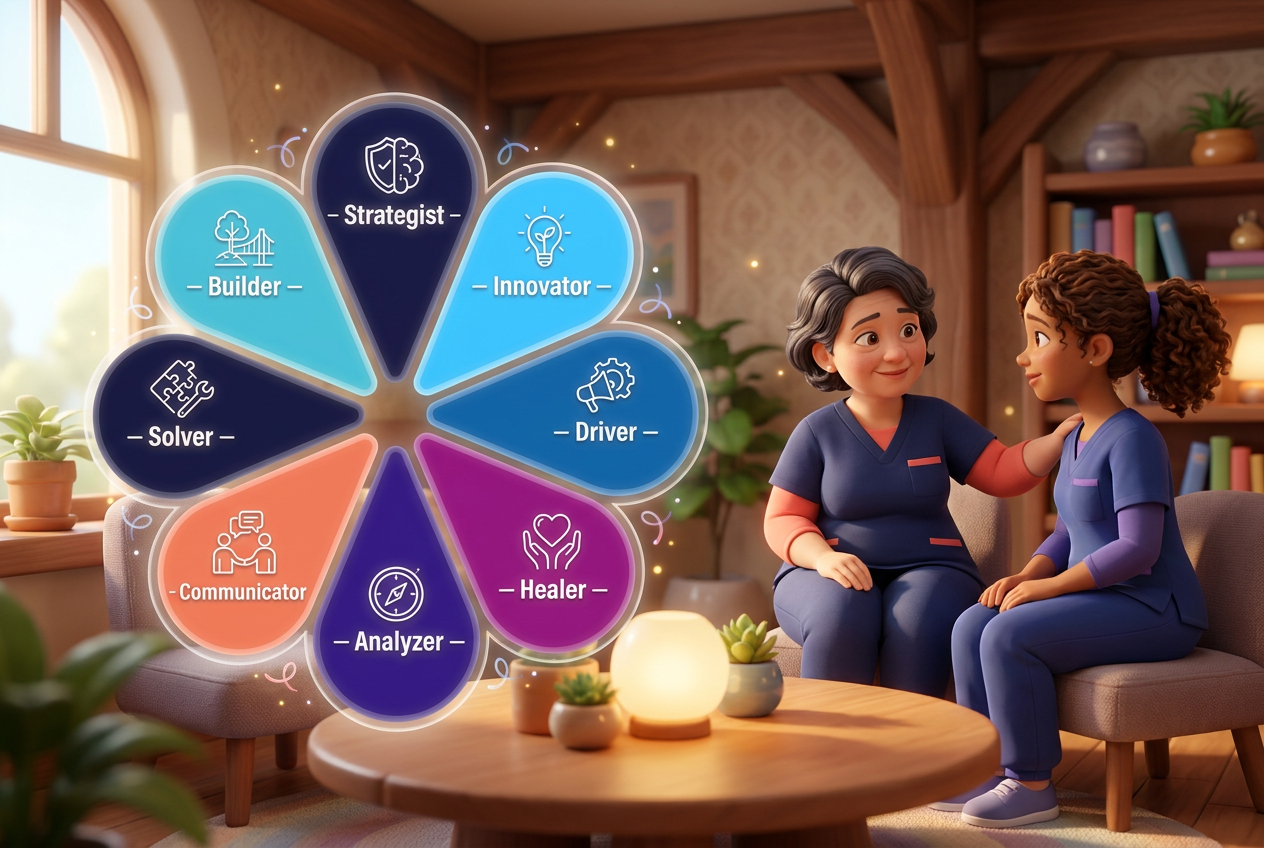
A pilot program should introduce these personality frameworks early. By helping your nurses identify their "Work Personality," you give them a common language. Instead of saying "you're being difficult," they can say "I know you're a Coordinator and you need this plan followed, but as a Pioneer, I'm seeing a different way to handle this patient's anxiety." It takes the sting out of the feedback and keeps the focus on the work.
There's actually a way to figure out which of these patterns fits each member of your nursing team – take a quick personality read and see what comes up for your pilot group. This immediate feedback loop is vital in a fast-paced nursing business. It provides a moment of reflection in a day that is usually 100% action, allowing nurses to realise that their reactions aren't "wrong" – they are just a reflection of how they are wired.
Halfway through your pilot, you need to look at the data. In a nursing context, this means looking at how the team interacts during high-stress periods. Are they using the insights from the AI coaching to delegate more effectively? A nurse who knows they are a "Doer" might step up to handle the practical, hands-on tasks during a crisis, while an "Advisor" focuses on keeping the team calm and collaborative.
We have spent over a decade at Compono researching how high-performing teams work, and the results are clear: the best teams aren't the ones with the most similar people. They are the ones with the most self-aware people. In your nursing business, this self-awareness acts as a buffer against burnout. When a nurse understands that their need for detail (the Auditor trait) is a strength, not a burden, they feel more valued and less exhausted by the demands of the job.
Encourage your pilot group to share their "Knowing Me" worksheets with their immediate team. This transparency is a game-changer in healthcare. It allows a nurse unit manager to see at a glance that they have a team full of Helpers but no Coordinators, explaining why the ward feels supportive but the discharge paperwork is always late. This insight allows for strategic hiring and team balancing that goes far beyond a standard CV check.
Once the initial 30–60 days of the pilot are over, it's time to evaluate. Gather your nurses and ask the hard questions. Did the AI coaching feel like a chore, or did it feel like a support system? Most importantly, did it help them understand themselves better? In our experience, nurses often report feeling a sense of relief when they realise they aren't "too much" or "not enough" – they just have a specific work personality that thrives in certain conditions.
Transitioning from a pilot to a full-scale rollout requires a commitment to ongoing development. AI coaching isn't a "one and done" training session; it's a continuous companion for a nurse's career. As they move from junior roles into leadership, their needs will change, and the coaching should adapt with them. This is the beauty of personality-adaptive tools – they grow as the individual grows.
By the end of the pilot, you should have a clear roadmap for how this technology integrates with your existing HR and clinical systems. You'll have a core group of "champions" who can vouch for the tool's effectiveness to the rest of the staff. This peer-to-peer endorsement is the most powerful way to ensure long-term adoption in the healthcare sector, where trust is the most valuable currency you have.
Key insights
- The primary goal of an AI coaching pilot in nursing is to build self-awareness and reduce the emotional labour that leads to burnout.
- Success is measured by qualitative improvements in team communication and a reduction in personality-based friction during shifts.
- Psychological safety is non-negotiable; the data must be used for the nurse's personal growth, not for management surveillance.
- Using a framework like the 8 Work Personalities provides a neutral, non-shaming language for healthcare teams to discuss their differences.
Piloting AI coaching is a bold step toward a more sustainable and supportive nursing business. By focusing on the unique personalities of your staff, you aren't just improving efficiency – you're showing your team that you value who they are, not just what they do.
The best AI coaching tools are designed for micro-learning, taking only a few minutes to provide insights. Nurses can engage with the tool during breaks or handovers, making it a seamless part of their day rather than an extra burden.
Yes, for a pilot to be successful, nurses must trust that their personal reflections and personality data are for their own growth. While management can see aggregated team trends to help with ward balance, individual responses should remain confidential.
Absolutely. Burnout is often driven by feeling misunderstood and unsupported. By providing a tool that validates a nurse's experience and helps them navigate team conflict, you address the root causes of turnover before they lead to a resignation.
Modern AI coaching interfaces are built for ease of use, often looking more like a simple chat app than a complex piece of software. If your team can use a smartphone, they can use personality-adaptive coaching tools.
We recommend starting with a small, focused group of 10–15 nurses. This allows you to manage the feedback loop effectively and make adjustments before rolling the tool out to the wider organisation.

1 min read
To pilot AI coaching in a local government business successfully, you must start with a small, cross-functional cohort to test psychological safety...
1 min read
The Auditor leadership style is a methodical, detail-oriented approach that defaults to non-directive management, giving teams autonomy while...

1 min read
An AI coaching platform for head of people acts as a scalable sounding board, giving every manager on your team personalised guidance based on their...