 Mathan Allington
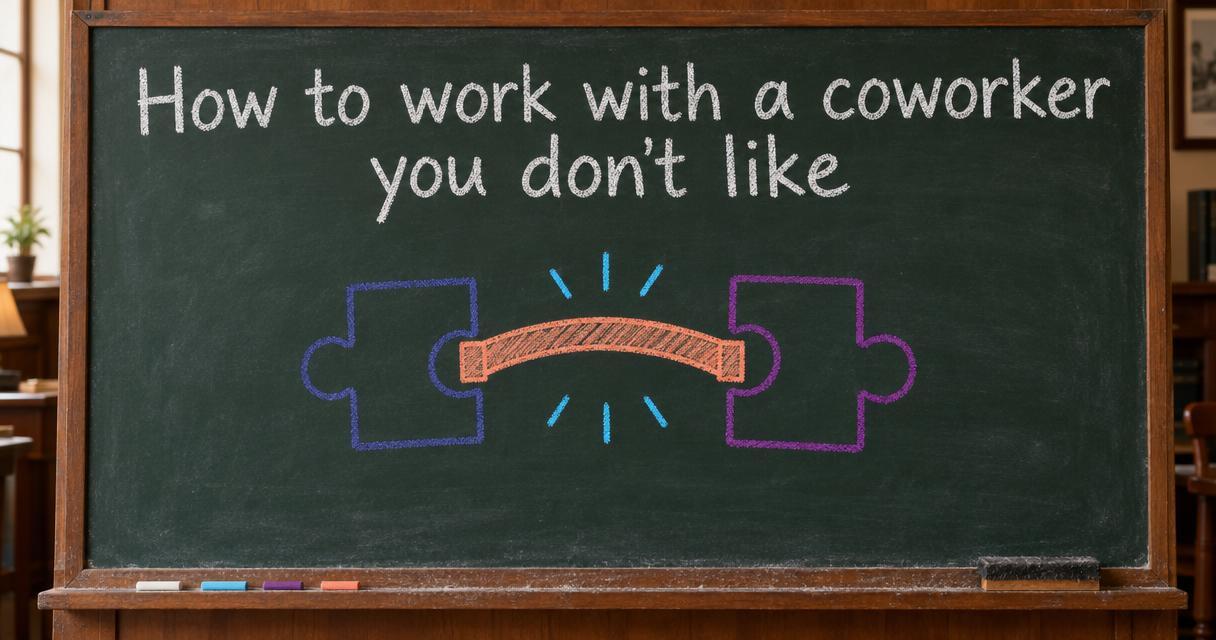
Learning how to work with a coworker you don't like requires you to narrow your relationship strictly to the work, communicate through clear processes, and set firm boundaries without forcing a personal connection.
Last reviewed November 2026
Key takeaways
- You do not need to be friends with your colleagues to deliver great work together.
- Narrow the relationship strictly to project requirements and avoid the pressure to bond.
- Use clear agendas, written summaries, and task ownership to reduce personality-driven friction.
- Separate valid ideas from the person delivering them to keep the team from here.
- Address issues privately using behaviour-specific observations rather than personal accusations.
You spend a massive chunk of your life at work. When you clash with a colleague, it drains your energy and makes every meeting feel like a battle. You might log on for the day, see their name in your inbox, and instantly feel a spike of dread. The frustration is real, and it is completely normal to feel it. The goal here is not to force a friendship or pretend you suddenly enjoy their company. You are looking for a way to get your job done without burning out.
We have all been told to just play nice and get along. But forced positivity rarely works when someone constantly interrupts you or undermines your efforts. Instead, you need a structured approach to collaboration. You can protect your peace and maintain your professionalism, even when the person across the table drives you up the wall.
Triage the friction before you react
Before you change how you communicate, you need to figure out exactly what is going wrong. Sometimes, a colleague is actively toxic. Other times, they just have a radically different way of approaching a task. Identifying the root cause helps you choose the right response.
Research highlighted by Psychology Today groups problematic coworkers into three broad categories: those who withhold effort, those who are chronically negative, and those who display inappropriate interpersonal behaviour. You need to know which one you are dealing with.
| Behaviour type | What it looks like | How to handle it |
|---|---|---|
| Personality clash | They are too blunt, too cautious, or overly talkative. You simply find their communication style annoying. | Acknowledge the difference. Adapt your communication to fit the work requirement without taking it personally. |
| Work style friction | They miss deadlines, skip important details, or try to micromanage your tasks. | Set clear agendas, document processes, and clarify roles in writing to remove ambiguity. |
| Toxic behaviour | They yell, use personal insults, or actively sabotage your projects. | Document the incidents. Establish firm boundaries and escalate to leadership or human resources. |
Often, what feels like a personal attack is just a different Work Personality. A person who prefers fast action might see a detail-oriented colleague as an obstacle, while the detail-oriented person sees the fast worker as reckless. If you want to dive deeper into how to understand your coworkers and their baseline preferences, looking at personality frameworks can help explain the disconnect. However, if the behaviour crosses the line into harassment, that is a matter for HR.
Narrow the relationship to the work
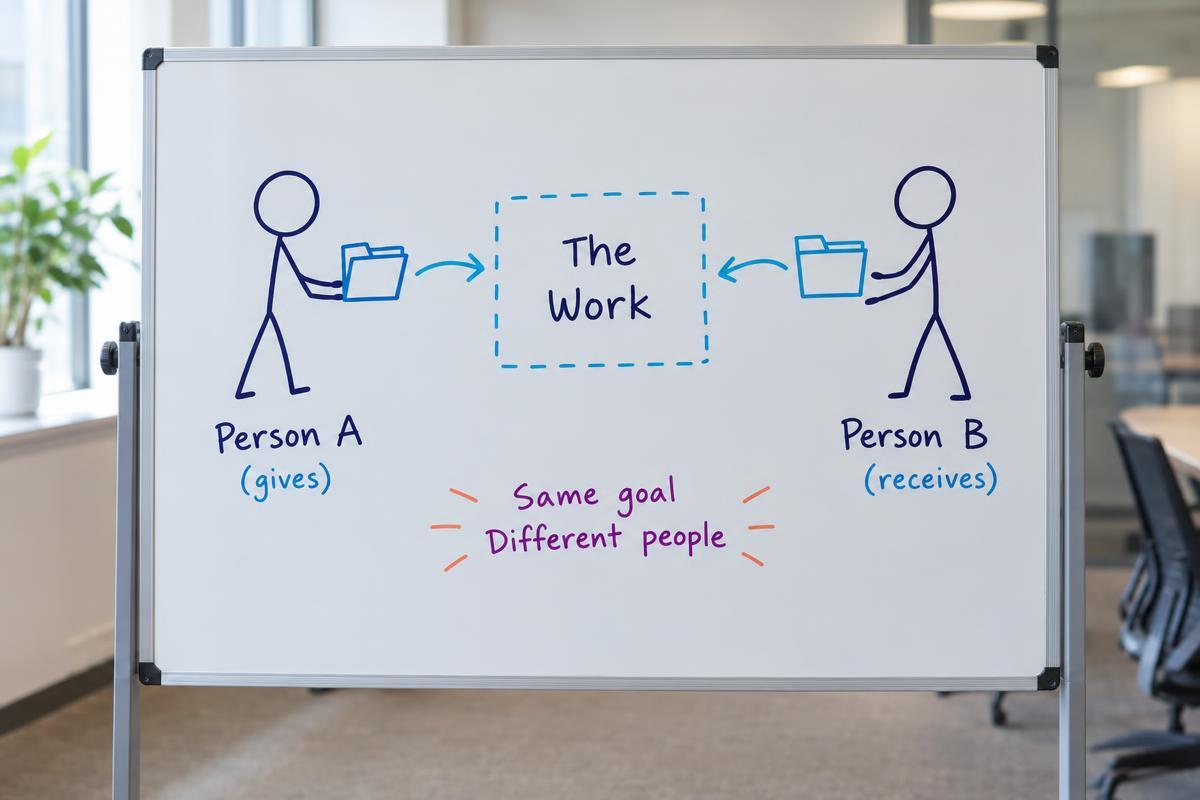
You can drop the pressure to connect on a personal level. A practical approach is to narrow the relationship to what the work requires, rather than trying to create personal closeness, as relationship expert Abby Medcalf points out in her advice on workplace teams.
This means you only discuss the project, the process, or the meeting agenda. Keep your conversations polite, brief, and completely focused on the task at hand. You do not need to ask about their weekend, and you do not need to share details about yours. When you remove the expectation of a friendship, you remove a huge source of disappointment.
Treat the interaction like a formal transaction. You are there to exchange information and move a project forward. Hey Compono research shows that when people stop trying to force chemistry and focus entirely on shared deliverables, the daily friction drops significantly.
Use structure to manage how to work with a coworker you don't like
When you do not like someone, ambiguity is your enemy. Vague requests lead to missed expectations, which inevitably lead to more resentment. You need to build a framework around your interactions so there is no room for misinterpretation.
Clear agendas, deadlines, written summaries, task ownership, and scheduled check-ins can reduce personality-driven friction when working with someone you dislike, according to Cottonwood Psychology. If a conversation happens verbally, follow it up with a written summary. Write down who is doing what and by when.
This is especially important in remote or hybrid teams. If a Slack or Teams message feels hostile, take a breath before you reply. Moving the conversation out of a chat window and into a shared project board can take the emotion out of the update. You are no longer arguing about an opinion. You are just looking at the agreed timeline.
Acknowledge strengths to separate the ideas from the person
It is incredibly hard to hear a good idea when it comes from a frustrating person. But ignoring their input hurts the team and makes you look difficult. You have to find a way to evaluate their suggestions objectively.
When a colleague's valid ideas are being dismissed because of interpersonal dislike, restating the point neutrally and moving disputed decisions into writing can help teams evaluate the substance fairly, as noted by Spiceworks. If they pitch a solid concept in a meeting, you can say: "The timeline proposed here makes sense, let us look at the resources." You are validating the work without having to validate them personally.
Taking this a step further can actually disarm the tension. Workplace expert Amy Gallo recommends identifying and sincerely acknowledging a difficult colleague's strengths to signal that you are invested in their success, according to Big Think+. You do not have to flatter them. A simple nod to their technical knowledge or their speed can shift the changing from combative to collaborative.
Scripts for setting professional boundaries
Sometimes you have to address the behaviour directly. Knowing exactly what to say prevents the situation from spiralling into an emotional argument. Productive conflict conversations should be private, behaviour-specific, calm, and framed around statements beginning with "I" rather than accusations beginning with "You", according to Psychology Today.
Unresolved tension has a real cost to your wellbeing and your output. In the SHRM 2025 Civility Index, 63 percent of workers who experienced workplace incivility said their manager ignored it, with employees estimating each incident cost about 37 minutes of lost productivity. You cannot afford to let poor behaviour slide. Here are exact scripts you can use to protect your time and energy.
When they talk over you in a meeting: "I want to hear your thoughts in a moment. Let me finish this point first."
When they try to dump their work on you: "I am focusing on my current priorities this week. I cannot take that on right now."
When they make a passive-aggressive comment: "I want to make sure we are on the same page. Can you clarify what you mean by that?"
If you need a safe space to prepare for these moments, the Hey Compono app lets you role-play challenging interactions. Reading up on what to do when tensions rise is helpful, but practising the actual words makes all the difference when you are face to face with the person.
When to involve a manager or human resources
There is a distinct line between an annoying coworker and a toxic one. If you have tried setting boundaries, clarified the work processes, and attempted giving hard feedback to a coworker with no success, it might be time to escalate. You should involve your manager if the person is actively blocking your ability to complete your work.
You should immediately bypass your manager and go straight to human resources if the behaviour involves discrimination, harassment, threats, or severe bullying. When you escalate, leave your feelings out of it. Bring your documentation. Show the dates, the specific behaviours, and the impact on the business outcomes. This frames the issue as a professional liability rather than a personal grievance.
How Hey Compono can help with coworker conflict
Figuring out how to work with a coworker you don't like takes practice, patience, and emotional regulation. If you need to prepare for a tense discussion or want to understand your own triggers better, you can use our AI coach to role-play the conversation before it happens.
Related reading
Frequently asked questions
Do I have to pretend to like a difficult coworker?
No. You only need to be polite, professional, and clear about the work. Forcing a fake friendship usually creates more tension and exhausts your emotional energy. Keep the focus entirely on shared tasks and deliverables.
How do I stop letting a coworker ruin my day?
Create emotional distance by viewing your interactions as purely transactional. When they do something frustrating, remind yourself that their behaviour is about them, not you. Protect your peace by limiting contact to strict work requirements.
When should I go to HR about a coworker?
You should involve HR immediately if the coworker uses slurs, engages in harassment, makes threats, or displays abusive behaviour. For general rudeness or missed deadlines, try setting boundaries and speaking to your direct manager first.
Can a personality test help fix team conflict?
Understanding different work preferences can reframe a conflict. When you realise a coworker is not trying to be difficult, but simply has a different communication style or pace, it becomes much easier to adjust the workflow and reduce daily friction.
How do I talk to a coworker who always interrupts me?
Address it calmly and immediately in the moment. Use a firm but neutral statement like, "Please let me finish my thought," or "I am not done yet." Consistency is key. If you hold the boundary every time, they will usually stop.