
 Compono
1 min read
How to break free from work patterns that hold you back
 Compono
To break free from the cycles that keep you feeling stuck at work, you must first identify the invisible personality drivers that dictate your...
Optimal performance is achieved when you stop fighting your natural inclinations and start aligning your daily work activities with your inherent work personality.
Key takeaways
- Optimal performance isn't about working more hours; it is about matching your natural energy to the right tasks.
- Burnout often stems from a mismatch between your personality type and your primary work responsibilities.
- High-performing teams require a balance of eight specific work actions to maintain long-term success.
- Self-awareness of your blind spots is the most effective way to prevent performance plateaus.
- Small, strategic adjustments to your workflow can yield better results than massive productivity overhauls.
You have probably been told that if you just pushed a little harder, stayed an hour later, or drank one more coffee, you would finally hit that peak state of optimal performance. We are conditioned to believe that output is a linear result of effort. But if that were true, the most exhausted people would be the most successful, and we know that is rarely the case.
There is a specific kind of tiredness that comes from doing work that feels like pushing a boulder uphill. It is not just the volume of work, it is the nature of it. When you spend your day performing tasks that clash with how your brain is wired, you aren't just working; you are performing. That performance drains your battery twice as fast as the actual work does. Real, sustainable performance feels less like a grind and more like a rhythm.
At Compono, we have spent over a decade researching what actually makes people thrive. We have found that the secret isn't a new time-management app or a standing desk. It is about understanding the intersection of your personality and the work activities required of you. When those two things match, you don't need to 'find' motivation, it is already there.

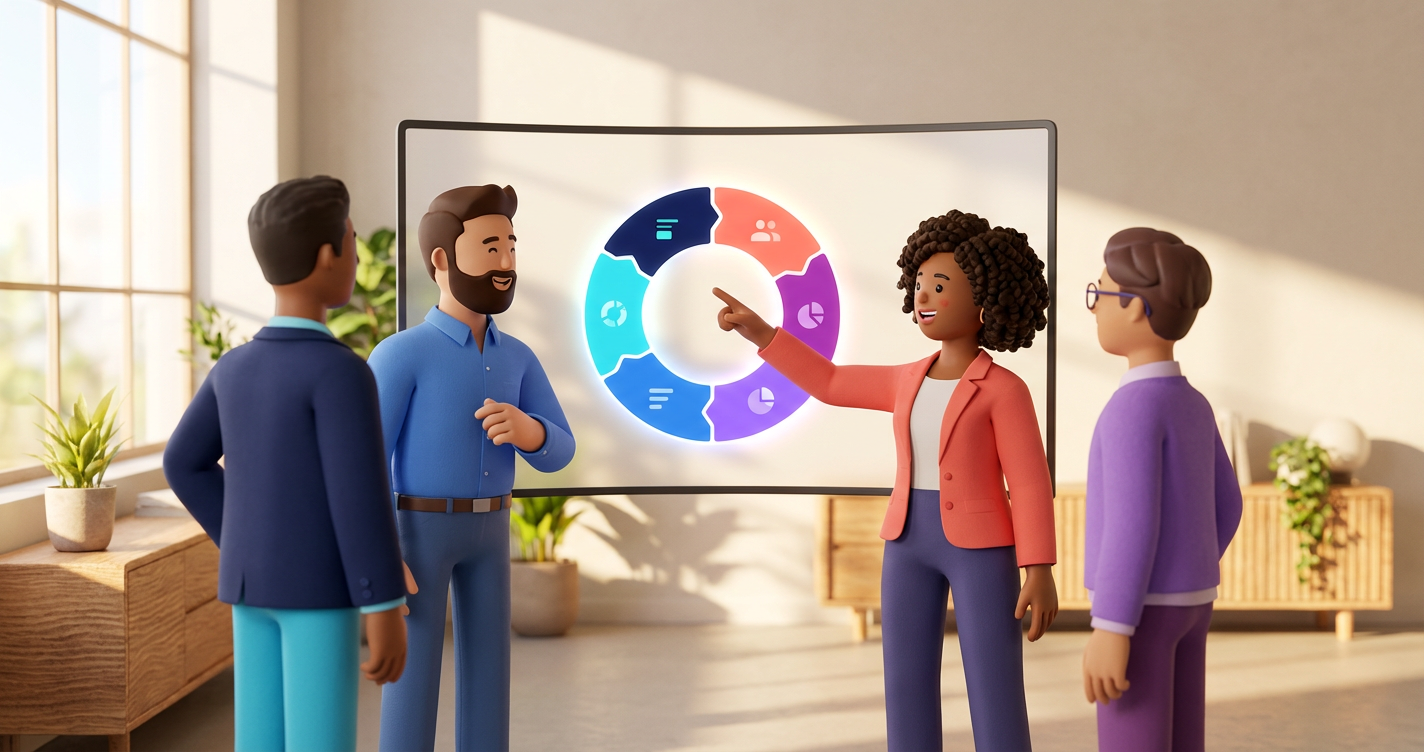
Research into high-performing teams shows that success isn't random. There are eight key work activities that every team needs to cover to reach optimal performance. These include activities like Pioneering, Helping, Doing, and Evaluating. If your team is missing one of these, or if everyone is trying to be a 'Pioneer' at the same time, the wheels eventually fall off.
Think about a team that is great at 'Doing', they are efficient, they hit deadlines, and they are practical. But if they don't have anyone 'Advising' or 'Evaluating', they might be sprinting in the completely wrong direction. They are performing, but they aren't performing optimally because their energy is misplaced. They are busy, but they aren't effective.
This is where most people get stuck. They try to be everything to everyone. They try to be the visionary, the administrator, and the peacemaker all in one afternoon. If you’re curious what personality type you default to under stress, Hey Compono can show you in about 10 minutes. Knowing your dominant preference allows you to lean into your strengths instead of constantly trying to fix your 'weaknesses'.
Most of us have been told we are 'too' something. Too loud, too quiet, too blunt, or too sensitive. In the corporate world, these traits are often treated as bugs that need to be patched out. But in the world of Hey Compono, these are the very traits that define your work personality. What others call 'too blunt', we call the 'Evaluator', someone who can make objective, logical decisions under pressure.
The 'Helper' might have been told they are too emotional, but they are the ones who hold the team together when morale is low. The 'Auditor' might be called too slow, but they are the ones who catch the million-dollar mistake in the spreadsheet that everyone else missed. Optimal performance happens when you stop trying to be a well-rounded average and start being a sharp-edged specialist.
When you recognise that your specific way of working is a legitimate personality type, like the Pioneer or the Coordinator, you give yourself permission to stop struggling. You can start delegating the tasks that drain you and doubling down on the ones that give you energy. That is the only way to stay at the top of your game without burning out by Friday afternoon.

Consider a scenario where a natural 'Pioneer' is stuck in a role that requires 'Auditor' levels of detail and routine. They are imaginative, future-focused, and love risk. But their job is to check compliance forms all day. They might be smart enough to do the job, but they will never reach optimal performance. They will be constantly fighting their own nature, leading to errors, resentment, and eventually, a total loss of engagement.
This mismatch is a silent killer of productivity in modern workplaces. We hire for skills but fire for fit. We assume that a 'good worker' should be able to do any task assigned to them, but humans aren't modular parts. We have preferences, biases, and natural rhythms. Ignoring these is a recipe for mediocrity. If you want to see how your current role matches your brain, you can take a quick personality read and see what comes up.
To fix this, we need to change how we think about 'performance'. It isn't a destination you reach; it is a state of alignment. It is about making sure that the 'Doer' is actually doing, and the 'Campaigner' is actually out there selling the dream. When people are in their 'zone of genius', they don't just work better, they feel better. And people who feel better stay longer and contribute more.
Achieving optimal performance across a whole organisation requires more than just individual self-awareness. It requires a culture where different ways of thinking are recognised and valued. It means the 'Evaluator' can be direct without being seen as rude, and the 'Advisor' can take time to think without being seen as indecisive. This level of psychological safety is the bedrock of any high-performing team.
We have seen that when teams use a common language to describe their work personalities, conflict decreases. Instead of saying, 'You're being difficult,' a teammate might say, 'I can see your Auditor brain is worried about the details here, let's look at them.' This shifts the conversation from a personal attack to a collaborative problem-solving exercise. It allows the team to use their collective strengths to achieve results that no individual could reach alone.
This isn't about putting people in boxes. It is about giving them a map. Once you know where you are on the wheel, you can see the path to where you want to go. You can see who you need to partner with to cover your blind spots and who can help you amplify your impact. That is the true meaning of performance, not working harder, but working smarter, together.
Key insights
- Optimal performance is a result of alignment between individual personality and work tasks.
- There are eight key work activities necessary for team success: Evaluating, Coordinating, Campaigning, Pioneering, Advising, Helping, Auditing and Doing.
- Attempting to work against your natural personality leads to rapid energy depletion and burnout.
- High-performing cultures use a shared language to manage personality differences and reduce conflict.
- Self-awareness of your unique work personality is the first step toward sustainable professional growth.
You don't have to keep grinding away in a way that doesn't fit. Understanding your natural work personality is the quickest way to reclaim your energy and improve your results. Whether you are leading a team or looking to grow your own career, the right insights can change everything.
Ready to understand yourself better?
Related reading: Peak performance: why personality is the link · What is a Doer? The Doer personality, explained (with quiz)
If you find that tasks others find simple feel incredibly draining, or if you feel like you are 'faking it' even when you are successful, you might be experiencing a personality mismatch. Optimal performance should feel challenging but energising, not soul-crushing.
While you can certainly learn new skills and adapt your behaviour, your core work personality, what motivates and energises you, tends to stay stable. It is much more effective to adapt your role or your approach to tasks than to try to fundamentally change who you are.
There is no single 'best' type. High-performing leaders come from all eight categories. A 'Directive' leader might be an Evaluator, while a 'Democratic' leader might be a Campaigner. The best leader is one who understands their own style and knows how to flex it to meet the team's needs.
Start by identifying the natural strengths of each team member. When you understand who naturally gravitates toward 'Doing' versus 'Pioneering', you can assign tasks more effectively and reduce the friction that causes delays and burnout.
Skills tell you what a person *can* do, but personality tells you what they *will* do consistently and with high energy. For long-term optimal performance, the 'will' is just as important as the 'can'.

1 min read
To break free from the cycles that keep you feeling stuck at work, you must first identify the invisible personality drivers that dictate your...

1 min read
Personality flaws are often just natural traits used in the wrong context or taken to an extreme. Instead of trying to 'fix' who you are, the most...

1 min read
Optimal performance is achieved when you align your natural psychological strengths with your daily work activities rather than forcing yourself into...