 Mathan Allington
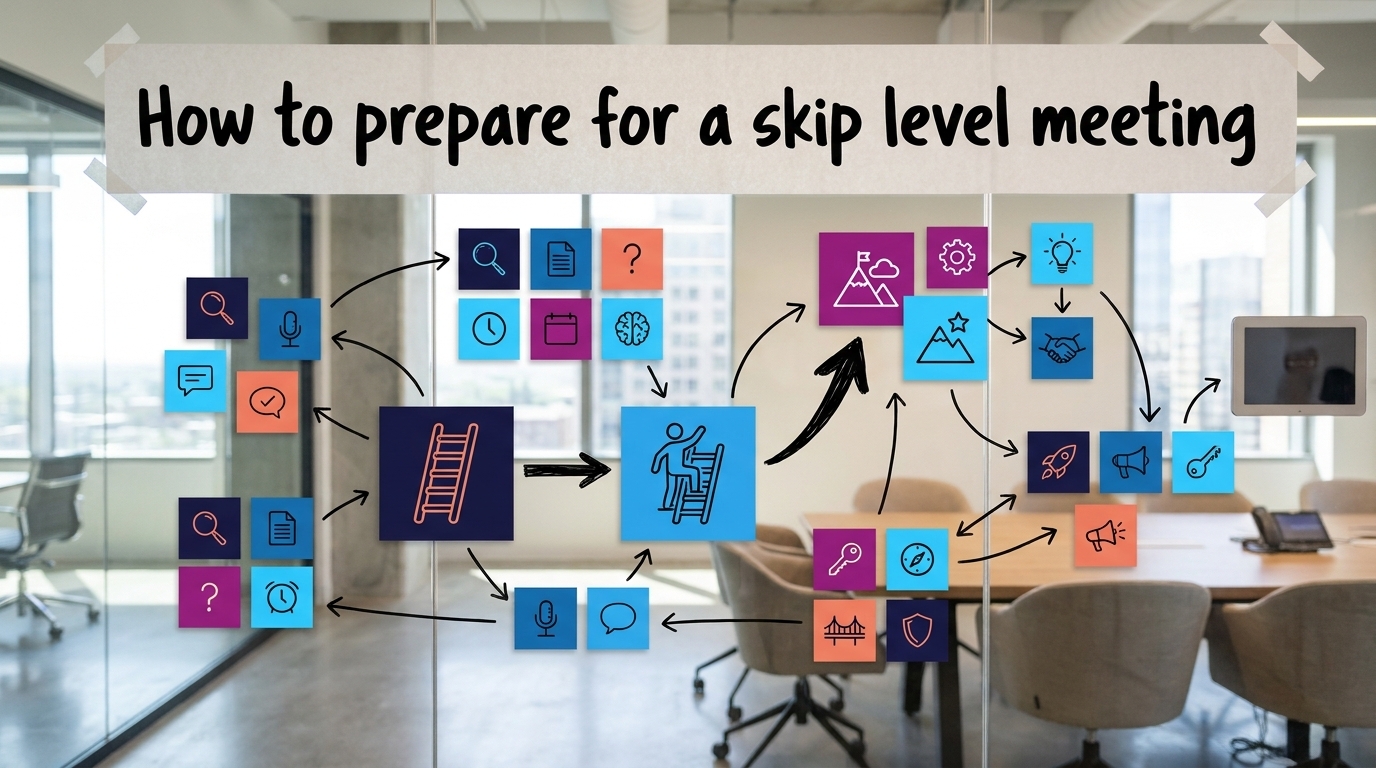
To figure out how to prepare for a skip level meeting, you need to step away from your daily task list and focus on the strategic goals your boss's boss actually cares about.
Last reviewed November 2026
Key takeaways
- Bring objective evidence and solutions rather than presenting complaints without context.
- Align with your direct manager before the meeting to protect psychological safety and trust.
- Prepare three to five open-ended questions that focus on company strategy and culture.
- Share two specific wins and one fact-based friction point to demonstrate your value.
- Follow up in writing to document commitments and turn the conversation into momentum.
When the calendar invite from your boss's boss lands in your inbox, your first reaction is probably a sudden spike in anxiety. You might wonder if something is wrong. You worry about stepping on your direct manager's toes or saying the wrong thing to someone with serious influence. We have all been there.
These meetings feel like walking a tightrope between impressing senior leadership and maintaining your everyday working relationships. However, a skip-level meeting is not a trap. It is a rare and valuable opportunity to gain visibility, understand the broader company vision, and showcase how your work moves the needle.
The problem is that most people approach these conversations the wrong way. They treat them like standard project updates, rattling off a list of operational tasks and minor roadblocks. Senior leaders do not need a status report.
They are looking for ground truth. They want to know what is actually happening on the front lines, what cultural friction exists, and whether their strategic vision is translating to everyday execution. At Hey Compono, we know that understanding this difference is the first step to turning a nerve-wracking calendar invite into a career-defining moment.
What is a skip-level meeting and why does it matter?
A skip-level meeting is a one-on-one conversation between you and your manager's manager. In larger organisations, this might even be someone three levels up. The fundamental purpose of this meeting is to bridge the gap between executive leadership and the teams doing the everyday work. Senior leaders are often isolated from the daily realities of their departments. They rely on these meetings to gather unfiltered feedback, gauge team morale, and identify talent.
For you, the stakes are equally high. This is your chance to build a relationship with a key decision-maker. When promotion cycles come around or new strategic projects are launched, the people in the room need to know who you are and how you think. If you only ever speak to your direct manager, your career visibility is entirely dependent on them translating your value upward. Taking control of how to prepare for a skip level meeting means taking ownership of your own professional narrative.
It is also a chance to understand the big picture. When you know what the executive team is worried about, you can align your daily work to solve those specific problems. This shift from task-execution to strategic alignment is what separates mid-level contributors from future leaders. To get this right, you need to prepare deliberately.
Pre-meeting alignment: managing your direct manager
The most delicate part of a skip-level meeting actually happens before you ever step into the room. If your direct manager feels blindsided by the meeting or worries about what you might say, you risk damaging your most important daily working relationship. Working through this political sensitivity requires transparency and professional maturity. You never want to create paranoia.
The best approach is to bring it up casually in your regular one-on-one. You can say something simple. Tell them you have a meeting scheduled with the department head and ask if there are any specific team wins or projects they think you should highlight. A guide from Laxis on workplace communication reinforces this, noting you should always tell the direct manager in advance, explain the meeting’s purpose, and align on confidentiality expectations. This shows respect for the chain of command while protecting your own psychological safety.
It also helps to be clear about your own intentions. Reassure your manager that you plan to focus on career development and high-level strategy. When they know you are treating this as a mentoring and alignment opportunity rather than a complaint session, their anxiety will drop significantly. Good managers actively encourage these meetings because your positive visibility reflects well on their leadership.
How to prepare for a skip level meeting: the decision tree
Knowing what topics to bring to this meeting is half the battle. You have limited time, so every topic needs to earn its place on the agenda. A common mistake is bringing up issues that your direct manager is already handling, which makes it look like you are bypassing them. To avoid this, use a simple mental framework to filter your talking points.
| Topic Type | Take to Direct Manager | Take to Skip-Level Leader |
|---|---|---|
| Career Growth | Next quarter's goals and specific skill development. | Long-term career trajectory and department growth paths. |
| Roadblocks | Project delays, resource shortages, and PTO requests. | Systemic bottlenecks across teams or outdated company software. |
| Strategy | How your specific tasks align with the current sprint. | How the department plans to adapt to upcoming industry shifts. |
| Feedback | Day-to-day feedback on team changing and task execution. | Observations on company culture and cross-department collaboration. |
Keep your focus firmly on the right-hand column. When you improve your conversation to match their level of responsibility, you instantly brand yourself as a strategic thinker. If you struggle to tell the difference between tactical and strategic topics, checking your work personality can help you understand your natural communication style. Some people naturally default to task-level details and need to consciously practice zooming out.
Your step-by-step preparation checklist
Preparation is the antidote to anxiety. You should treat this meeting with the same level of respect you would give to an external job interview, even if the tone is meant to be casual. Start by researching the senior leader. Review any recent all-hands presentations they have given, read their updates, and understand their current core objectives. You want to speak directly to the things that keep them awake at night.
Next, structure your talking points. A practical strategy from Leaders ADAPT suggests you should research the skip-level leader’s priorities and prepare two specific wins plus one fact-based friction point. The two wins remind them of your value and the team's momentum. The single friction point shows that you are observant and care about improving the business. If you bring a problem, always bring a potential solution.
Finally, consider the format. If this is a remote or hybrid meeting, your preparation needs to include technical checks. Ensure your camera is on, your lighting is good, and you have a quiet background. In a virtual environment, senior leaders have a harder time reading body language, so you need to be exceptionally clear and concise. If you are preparing for this alongside your regular check-ins, our guide on one-on-one meeting preparation for employees can help you compartmentalise the different agendas.
Speaking executive language
Senior leaders speak a different language than individual contributors. They are focused on metrics, risk, retention, and revenue. If you want to make an impact, you need to translate your daily work into these terms. Instead of saying you spent forty hours rewriting a manual, say you started a new process that reduces onboarding time by twenty percent.
When discussing challenges, tone and framing are everything. Avoid emotional venting at all costs. An insight from a Granola leadership guide advises that you must frame challenges with objective evidence and proposed solutions rather than presenting complaints without context. This demonstrates emotional intelligence. It shows you can separate personal frustration from business reality.
Practising this language takes time. If you are nervous about finding the right words, Hey Compono offers AI-driven roleplay to help you test these scenarios. Practising your delivery out loud ensures you sound confident and polished when it actually matters.
Selected questions to ask your boss's boss
A skip-level meeting is a two-way street. The questions you ask are just as important as the updates you give. Good questions show that you are curious, invested in the company, and thinking beyond your own desk. According to Eletive, you should prepare three to five open-ended questions and leave room for the conversation to develop naturally. Do not interrogate them. Treat it like a dialogue.
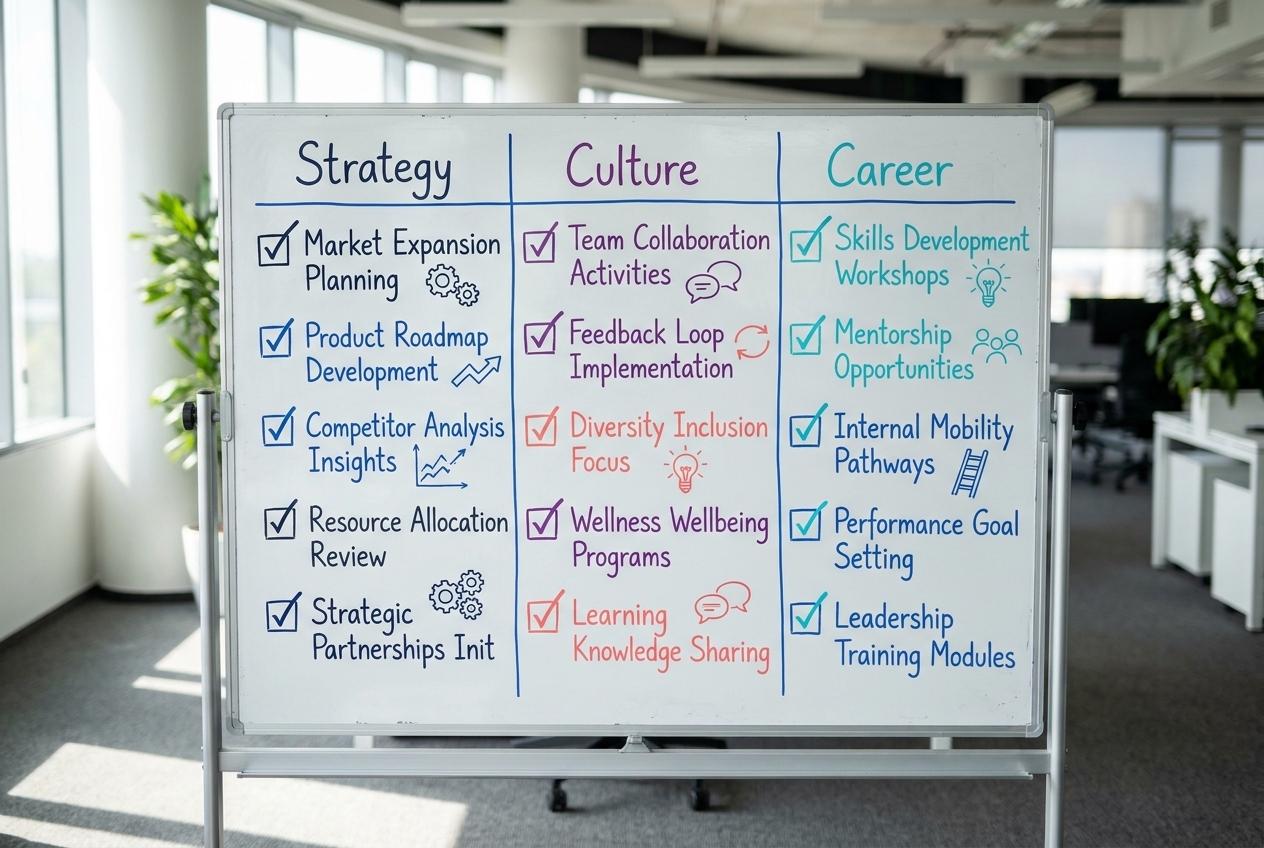
Here are some strong questions categorised by topic to help you guide the conversation.
Questions about company strategy
Strategy questions show that you care about the long-term viability of the business. You can ask what the biggest risk to the department's success is over the next twelve months. You might ask how they see the recent market shifts affecting your team's priorities. Another great question is asking what a successful year looks like from their perspective, beyond the standard revenue targets.
Questions about workplace culture
Culture is usually a major priority for senior leaders, as it directly impacts retention. Ask them what aspects of the company culture they are most proud of right now. You can also ask where they feel the organisation needs to improve its communication. Asking how they maintain their own resilience during busy quarters can also spark a highly authentic and human conversation.
Questions about career and leadership
Use this time to gather mentorship insights. Ask them what skills they believe will be most critical for the department in the next three years. You can ask about a failure they experienced early in their career and what they learned from it. If you are ambitious, ask what separates the good performers from the truly exceptional ones in their eyes.
Handling the unexpected tough questions
You can prepare perfectly, but senior leaders are known for throwing curveballs. They might ask you pointed questions about a project failure, or they might ask for blunt feedback on your direct manager. Handling these moments requires composure and tact. If they ask about a failure, own it completely. Explain what happened, what the data showed, and exactly what you learned. Defensiveness is a major red flag for executives.
If they ask for feedback on your direct manager, proceed with extreme caution. This is the ultimate political test. Always start with their strengths and the areas where they support you well.
If you must offer constructive feedback, frame it around working styles or process bottlenecks rather than personal flaws. For example, mention that you are both working on aligning your communication cadences, rather than saying your boss is a micromanager. If you need help working through these specific traps, our tool for practising difficult conversations at work can help you build the necessary tact.
Differences by career stage
How to prepare for a skip level meeting changes depending on where you are in your career. If you are an entry-level employee, the goal is primarily visibility and learning. You should focus your questions on understanding the business model, seeking career advice, and showing enthusiasm for the company mission. Senior leaders do not expect you to solve department-wide strategic crises. They just want to see that you are engaged and curious.
If you are a mid-level individual contributor, the expectations are higher. You are expected to have a well-formed opinion on how the work is getting done. You should use this time to highlight systemic inefficiencies, propose broad solutions, and discuss your readiness for leadership. This is a critical moment for building your case for advancement. If you are using this meeting to set the stage for a title change, read our guide on preparing for a promotion conversation to align your talking points.
What not to do: common skip-level traps
Some behaviours will instantly derail a skip-level meeting. The most common trap is using the time to complain about your coworkers or your direct manager. Venting destroys your credibility and makes you look like a liability. Even if your complaints are valid, a skip-level meeting is not a therapy session. Keep your focus firmly on business outcomes and constructive solutions.
Another major mistake is asking for a raise or a promotion out of nowhere. Unless this meeting was specifically scheduled to discuss your compensation, springing a salary demand on a senior leader puts them in an awkward position. They likely do not have your performance file in front of them, and this bypasses your direct manager completely. This is a classic example of spotting and stopping career-limiting behaviours. Plant the seed for growth, but save the specific financial demands for the appropriate performance review.
Finally, do not get lost in the weeds. If you find yourself explaining the intricate details of a spreadsheet formula or a minor software bug, you have lost the room. Keep your updates high-level. If the senior leader wants more detail, they will ask for it.
Post-meeting follow-up: turning conversation into momentum
The meeting does not end when you log off the call or walk out of the office. The follow-up is where you prove that you are a reliable professional who takes initiative. Within twenty-four hours, send a concise email thanking them for their time. Highlight one specific piece of advice they gave you that you found valuable. This shows you were actively listening and respect their mentorship.
If you promised to send them a report, an article, or a data point during the meeting, include it in this email. A final tip from Granola emphasises that you should send a brief follow-up note documenting commitments and maintain a searchable record of agreed actions. This creates a paper trail of your proactivity. It also gives the senior leader a tangible reminder of your competence, which they will remember the next time a major opportunity arises in the department.
How Hey Compono can help with your career conversations
Preparing for a high-stakes conversation with a senior leader is challenging, especially when you are worried about saying the wrong thing. Hey Compono provides personality-adaptive AI coaching that helps you practice these exact scenarios. You can roleplay difficult questions, refine your executive presence, and build the confidence you need before you step into the room.
Frequently asked questions
What is the main purpose of a skip-level meeting?
The main purpose is to improve communication between senior leadership and the wider team. It allows executives to hear unfiltered feedback, understand the reality of daily operations, and build relationships with talent across the organisation.
How long should a skip-level meeting last?
Most skip-level meetings are scheduled for thirty to forty-five minutes. You should prepare enough talking points to fill about half of that time, leaving the rest open for natural conversation and their questions for you.
Should I tell my direct manager what was discussed?
Yes, it is usually good practice to give your direct manager a high-level summary of the meeting. You do not need to share every detail, but letting them know the conversation was positive and focused on strategy helps maintain a strong foundation of trust.
What if the senior leader cancels or reschedules multiple times?
Do not take it personally. Senior executives have highly volatile schedules that change constantly. Be patient, remain flexible, and simply confirm your availability for the new proposed time without showing frustration.
Is it okay to bring notes into the meeting?
Yes, bringing notes is highly recommended. Having a notebook or a digital document with your questions and key metrics shows that you are prepared and respect their time. Just be sure to maintain eye contact and avoid reading off a script.