
 Compono
How to build self discipline that actually sticks
 Compono
Willpower runs out. Build discipline on habits that suit the way you work, so the hard days do not undo everything you have built.

Being your own worst enemy usually happens when your natural traits and subconscious behaviours work against your conscious goals, leading to a cycle of self-sabotage that feels impossible to break.
It is that frustrating moment when you know exactly what you need to do, yet you find yourself doing the opposite, like staying up late before a big presentation or overanalysing a simple email until the deadline passes. This isn't about being lazy or incapable; it is about a lack of alignment between how your brain is wired to work and the expectations you place on yourself every day.
Key takeaways
- Self-sabotage is often a misguided attempt by your brain to protect you from perceived failure or discomfort.
- Being your own worst enemy is frequently a result of pushing against your natural work personality instead of leaning into it.
- Recognising your specific triggers, like perfectionism or procrastination, is the first step toward reclaiming control.
- Small, consistent shifts in behaviour are more effective than trying to 'fix' your entire personality overnight.
We have all been there. You have a massive project on your desk, the kind that could actually move the needle for your career, but instead of starting, you find yourself reorganising your desktop icons for the third time. Or perhaps you are in a meeting, you have a brilliant idea, but that internal critic starts whispering that it isn't 'ready' yet, so you stay silent. By the time the meeting ends, someone else has said exactly what you were thinking, and they are the one getting the credit.
It feels like there is a disconnect between who you are and who you want to be. You see others moving forward with apparent ease, while you feel like you are wading through treacle. This internal friction is exhausting. It drains your energy before you even get to the actual work. At Compono, we have spent years researching how these internal patterns form and, more importantly, how they can be redirected to support you rather than sink you.
The truth is, you aren't broken. You don't need a total overhaul or a 'new you'. Often, the very traits that make you your own worst enemy are just your strengths being applied in the wrong context or at the wrong intensity. When you understand the 'why' behind your actions, the 'how' of changing them becomes much clearer.
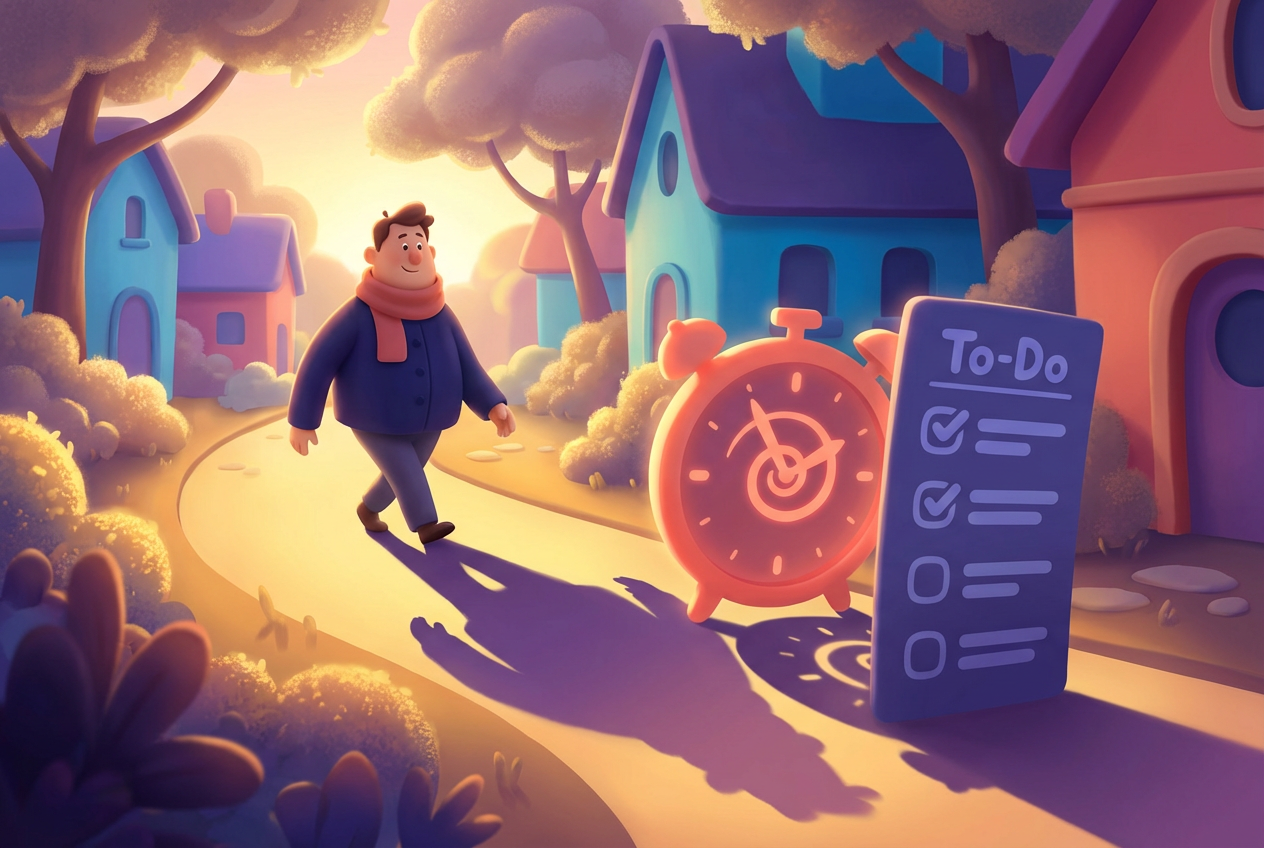
Your work personality is the lens through which you see every task, deadline, and interaction. When you are out of sync with this natural state, you start to get in your own way. For example, if you are naturally The Auditor, your incredible attention to detail is a superpower. But when stress hits, that same trait can turn into crippling perfectionism. You become your own worst enemy by refusing to ship anything that isn't flawless, eventually missing the deadline entirely.
On the flip side, someone like The Pioneer thrives on innovation and new ideas. Their version of self-sabotage looks like 'shiny object syndrome'. They start ten exciting projects but finish none of them because the middle part, the actual execution, feels like a chore. They aren't failing because they lack talent; they are failing because they haven't built the guardrails their specific personality needs to stay on track.
Understanding these defaults is critical. If you don't know what your baseline is, you can't tell when you are deviating from it in a destructive way. Using a tool like Hey Compono can help you identify these patterns in about ten minutes, giving you a map of where your 'worst enemy' likes to hide. Once you see the pattern, you can start to anticipate it.
Most of us have an internal monologue that is far harsher than any boss or colleague would ever be. This critic loves to use 'always' and 'never' statements. "I always mess up these presentations," or "I'll never be as organised as Sarah." This language creates a fixed mindset, making you feel like your self-sabotaging behaviours are permanent parts of your identity rather than temporary responses to stress.
This critic often gains power when we try to force ourselves into a style of working that doesn't fit. Imagine The Helper being forced into a high-conflict, aggressive sales environment. They might start to think they are incompetent or weak because they struggle with the 'hustle' culture. In reality, they are just in an environment that doesn't value their empathy and relationship-building skills. Their 'worst enemy' is the belief that they should be someone else.
To silence the critic, you have to start valuing what you actually bring to the table. This isn't about empty affirmations; it is about objective self-awareness. When you recognise that your struggle comes from a mismatch of environment or expectation, not a character flaw, the critic loses its sting. You can then begin to make adjustments that actually work for your brain.
Stopping the cycle of being your own worst enemy requires a shift from judgment to curiosity. Instead of asking, "Why am I so lazy?" try asking, "What am I trying to avoid by procrastinating right now?" Often, the answer is a fear of being judged, a fear of failure, or even a fear of the added responsibility that comes with success. Your brain is trying to keep you safe in the 'known' zone, even if that zone is miserable.
One practical way to break the pattern is to lower the stakes. If you are struggling to start a task, tell yourself you'll just do five minutes. If you are afraid to speak up, aim to ask one clarifying question instead of making a grand statement. By making the 'win' smaller, you bypass the brain's alarm system that triggers self-sabotage. You are essentially tricking your worst enemy into letting you make progress.
Another vital step is to align your daily tasks with your natural strengths. If you know you are The Coordinator, you probably feel best when things are structured and planned. If your current job is total chaos, you will naturally feel like you are failing. By creating your own internal systems, even if the office doesn't provide them, you give yourself the structure you need to stop fighting your own instincts. You can learn more about these specific traits on the Hey Compono blog.
Key insights
- Self-sabotage is a protective mechanism that has gone into overdrive, usually triggered by fear or stress.
- Your 'worst enemy' behaviours are often just your natural strengths being pushed to an unhealthy extreme.
- True self-awareness involves understanding your work personality and how it reacts under pressure.
- You cannot 'fix' your behaviour until you stop shaming yourself for having natural tendencies.
- Success comes from building a work life that accommodates your brain, not one that tries to rewrite it.
Related reading: How to stop being reactive at work and take control · How to stop self sabotage and get out of your own way
Voice or text coaching that adapts to your personality. Start free.
Get started free
This feeling usually stems from a conflict between your conscious goals and your subconscious habits. It often happens when you try to work in a way that contradicts your natural work personality, leading to internal friction and self-sabotage.
Start by identifying your triggers. Are you afraid of failure, or perhaps afraid of the pressure that comes with success? Once you know the 'why', you can use tools like Hey Compono to understand your personality and build strategies that support your natural way of working.
While your core personality tends to stay stable, your behaviours and how you manage your traits can absolutely evolve. Developing self-awareness allows you to lean into your strengths and manage your blind spots more effectively, reducing the 'worst enemy' effect.
Not necessarily. Sometimes procrastination is just a sign of burnout or a lack of clarity. However, if it is a chronic pattern that prevents you from reaching goals you truly care about, it is likely a form of self-sabotage rooted in a fear of judgment or failure.
The first step is objective data. We are often too close to our own problems to see them clearly. Taking a personality assessment or seeking feedback from a trusted peer can provide the outside perspective needed to see where you are getting in your own way.

Willpower runs out. Build discipline on habits that suit the way you work, so the hard days do not undo everything you have built.

Never catching your breath at work often points to hidden burnout or a pace that does not suit you. How to spot the cause and get your own rhythm...

Remote and travelling work suits some people and wrecks others. How to set up your days, stay visible to your team, and keep your focus intact.