
 Mathan Allington
Leadership coaching Adelaide: A Buyer's guide for 2026
 Mathan Allington
Searching for leadership coaching in Adelaide? Discover why modern teams are shifting from expensive traditional coaching to accessible.
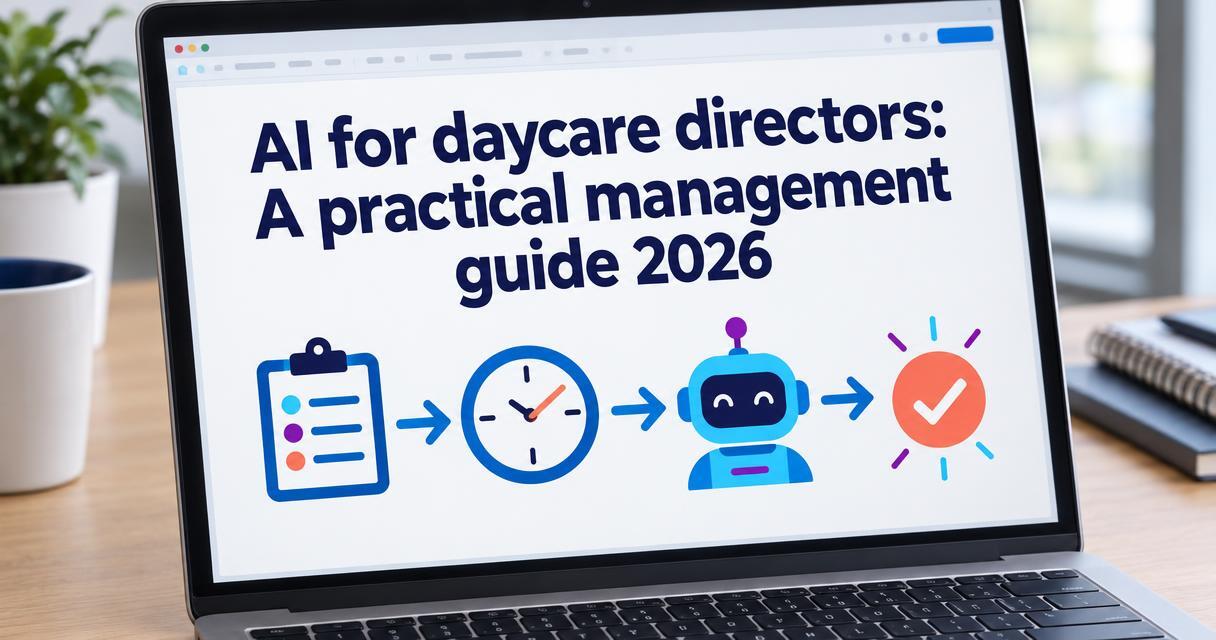
Artificial intelligence for daycare directors is a set of digital tools that automates front-office administration, like tour scheduling and ratio tracking, while offering private leadership coaching to help you work through staff conflicts and parent communication.
Last reviewed November 2026
Key takeaways
- AI reduces operational burnout by handling front-desk inquiries and compliance documentation outside of standard business hours.
- Childcare leaders use personality-adaptive AI coaching to prepare for difficult conversations with parents and educators before they happen.
- Protecting data privacy requires strict vendor evaluation against regulatory standards and clear internal policies.
- Successful implementation relies on step-by-step training for non-technical staff and firm pedagogical boundaries for classroom use.
You are a daycare director, which means your day is often derailed before you even walk through the front door. Two educators call in sick at 6:30 AM. Your toddler room ratios are blown. A parent is waiting at the front desk to ask about billing discrepancies. By the time you finally sit down to review a curriculum plan or answer a new enrolment inquiry, it is well past closing time.
Childcare leaders operate in a state of constant triage. The administrative load of running an early childhood centre frequently pulls directors away from their primary purpose, which is supporting educators and ensuring quality care. Many directors feel completely unappreciated, carrying the mental weight of the entire business while managing diverse adult personalities in high-stress environments.
This administrative pressure is why the early childhood education sector is rapidly adopting digital tools. A 2025 survey found that 96% of administrators and 87% of teachers said AI will play a growing role in education (Originality.AI). AI for daycare directors is not about replacing human care. It is about automating the back-office operations and providing structural support, giving you the time and emotional capacity to actually lead your team.
The business side of a childcare centre relies on consistent enrolment, but keeping up with prospective families is a full-time job. Parents typically research daycares and submit inquiries in the evenings or on weekends. If they do not hear back quickly, they move on to the next centre on their list.
An AI receptionist or front-desk automation tool acts as a 24/7 enrolment specialist. It can answer common questions about your fee structure, age groups, and curriculum philosophies. It can also schedule centre tours directly into your calendar without you needing to send a single email.
This automation extends to daily operational tasks. Modern childcare software uses predictive algorithms to track staff-to-child ratios in real time. If a family drops off their child early or an educator leaves early for an appointment, the system instantly flags a ratio breach. This removes the mental mathematics directors do all day, preventing compliance issues before they happen.
Managing the logistics of a centre is only half the job. The other half is managing the adults inside it. You are responsible for working through high-stress conversations with anxious parents and mediating conflicts between educators who share small classroom spaces all day.
Traditional professional development usually involves attending a workshop once a year. While our early childhood leadership guide outlines long-term training structures, day-to-day management requires immediate support. This is where Hey Compono comes in. We have spent years researching how people behave at work, and we know that generic leadership advice fails when tensions are high.
An AI coach gives you a private space to practise difficult conversations before you have them. Because it adapts to work personalities, it helps you adjust your approach based on who you are talking to. If you are managing a Doer educator who values direct action, your AI coach will guide you to give clear, unambiguous feedback. If you are dealing with a highly analytical parent who is questioning an incident report, the coach helps you frame your response with logic and evidence.
Using Hey Compono Business for your leadership team means you never have to face a difficult staffing decision alone. You can talk through performance issues, build confidence for a difficult parent meeting, and process your own decision fatigue in private, long before the situation escalates.
Independent daycare owners run on tight profit margins. Every new software expense must justify its cost. When evaluating AI tools, you have to look beyond the monthly subscription price and calculate the hard return on investment based on hours saved and staff retention.
We know that figuring out the ROI of AI coaching in education requires concrete numbers. You can calculate the financial benefit by measuring the administrative hours returned to your centre director and the reduction in staff turnover.
| Operational Area | Traditional Cost | AI Automation Cost | Expected ROI Marker |
|---|---|---|---|
| Tour scheduling & inquiries | 15 hours per week of director time | Monthly subscription fee | Increased conversion rates and 15 hours saved |
| Rostering and ratio tracking | 10 hours per week of manual adjustments | Included in core software | Zero compliance breaches and immediate shift filling |
| Staff conflict and leadership | High turnover costs (hiring and training) | Coaching software per head | Higher retention and faster conflict resolution |
If an AI tool saves a director 15 hours a week of administrative work, that time can be redirected into classroom coaching, curriculum planning, or building relationships with families. The financial return is immediate when you stop paying executive wages for basic data entry.
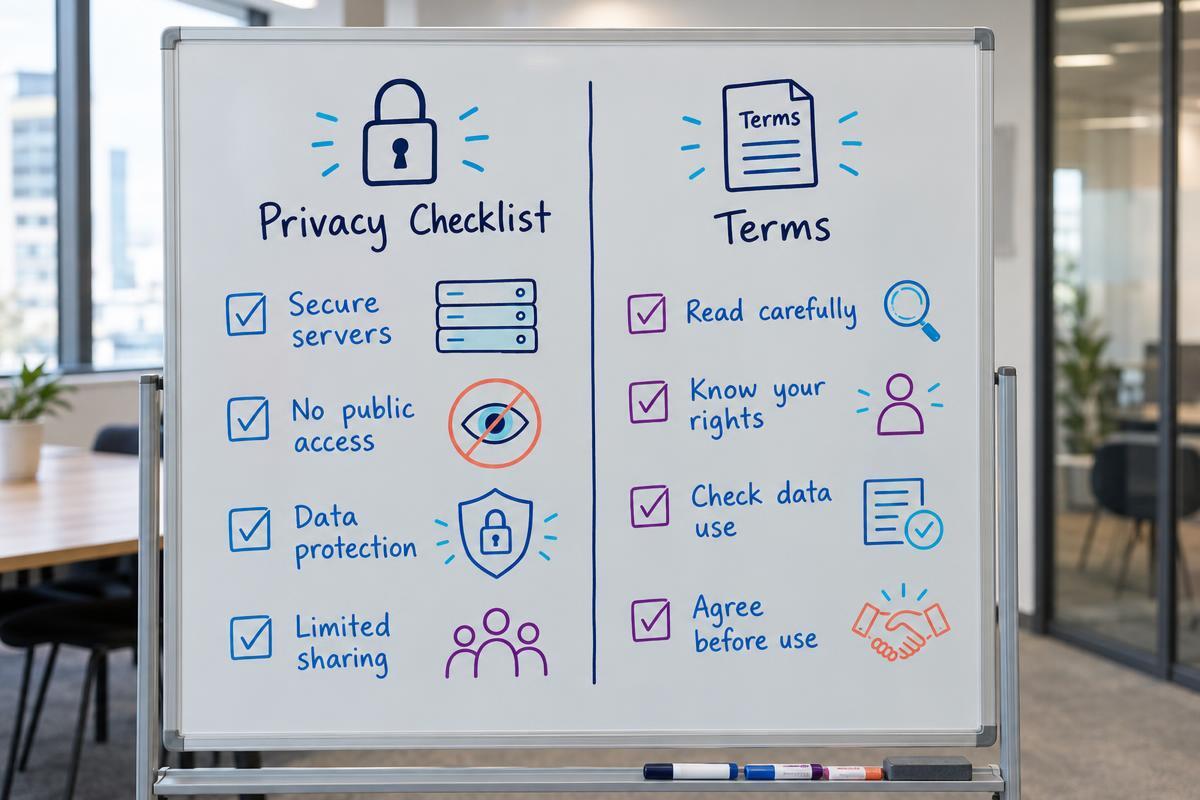
The single biggest barrier to adopting new technology in education is privacy. In a broad survey of education administrators, data security and privacy were the leading barriers to AI adoption, with 56% citing them at the institutional level (Higher Ed Dive). In early childhood, this concern is magnified because you are dealing with minors, sensitive medical information, and custodial arrangements.
Before introducing any AI tool into your centre, you must establish strict privacy standards and evaluate the vendor against legal frameworks like the Children's Online Privacy Protection Act (COPPA). You need a definitive policy that outlines exactly what data can and cannot be entered into an AI system.
A strong vendor vetting checklist includes asking the provider three direct questions. First, does the vendor use your centre's data or images to train their public AI models? Second, where is the data stored and who holds the encryption keys? Third, what happens to the data if a family leaves the centre or you cancel your subscription? If a vendor cannot provide clear, legally binding answers to these questions in their terms of service, they are not appropriate for an early childhood environment.
Internally, your staff policy must be equally clear. Educators should never input a child's full name, medical history, or identifying photographs into open-source platforms like ChatGPT to generate newsletters or learning stories. All AI use must occur within your centre's approved, closed-loop software systems.
Early childhood educators choose their profession because they love working with children, not because they want to sit behind a computer. Introducing AI into a childcare centre often triggers fear. Educators worry that the technology is too complicated, that it will add to their workload, or that it is a step towards replacing human teaching.
Change management requires empathy and a structured rollout. Data shows that 48% of school districts reported training teachers to use AI in the latter half of 2024, representing a massive shift in professional development (Originality.AI). You cannot just buy a software licence and expect your team to figure it out.
Start with a small pilot program. Choose two tech-savvy educators to test the new system for writing daily parent updates or logging sleep times. Let them identify the friction points and figure out the most efficient workflows. Once they are confident, have them lead the training for the rest of the staff. Peer-to-peer training is significantly more effective than a top-down directive from management.
Frame the technology entirely around how it benefits the educator. Show them exactly how an AI tool cuts their documentation time in half, allowing them to leave work on time and spend more of their day interacting with the children. When staff see that AI removes the parts of the job they dislike, adoption happens naturally.
There is a firm line between using AI for administrative efficiency and using it for pedagogical practice. Early childhood education relies on responsive, human relationships. Infants and toddlers need face-to-face interaction, eye contact, and emotional attunement to develop properly. Technology has no place in direct care.
However, AI can deeply support the planning phase. Research shows that 61% of faculty report using AI to create instructional materials (Originality.AI). Educators can use AI tools to generate curriculum ideas, map activities to specific developmental milestones, or draft inclusive learning plans for children with additional needs.
The rule for daycare directors is simple. AI is a back-office tool, not a classroom teacher. It helps your educators organise their thoughts, track developmental observations efficiently, and communicate clearly with parents. By keeping screens out of the children's hands and using the technology to support the adults, you maintain the integrity of your early learning program while gaining all the benefits of modern efficiency.
Managing a daycare centre means dealing with constant adult conflict and decision fatigue, often without anyone to support you. Hey Compono provides personality-adaptive AI coaching that helps centre directors and room leaders prepare for difficult parent meetings, manage staff performance, and process stress in private.
Related reading
AI is safe for childcare environments only when integrated into closed, compliant software systems. Daycare directors must ensure that any vendor they use complies with local privacy laws and explicitly states they do not use centre data, child names, or images to train their public machine learning models.
The cost varies based on the size of your centre and the specific tools you need. Front-office automation tools are often bundled into existing childcare management platforms for a monthly subscription fee, while individual AI coaching platforms are typically priced per seat or per user per month. The true cost should always be measured against the administrative hours saved.
No. Early childhood education requires emotional intelligence, physical care, and responsive human interaction that technology cannot replicate. AI is designed to automate paperwork, assist with curriculum planning, and manage front-desk administration, giving educators more time to focus on the children.
The best approach is a phased rollout led by peer advocates. Start by training one or two educators who are comfortable with technology. Let them test the tools, build efficient workflows, and demonstrate to the rest of the team how the software reduces their daily documentation workload and saves them time.
Predictive AI tools analyse staff rosters, historical attendance data, and live check-in information to monitor staff-to-child ratios in real time. If a classroom is at risk of falling out of compliance due to a late drop-off or an unexpected staff absence, the system immediately alerts the centre director to intervene.
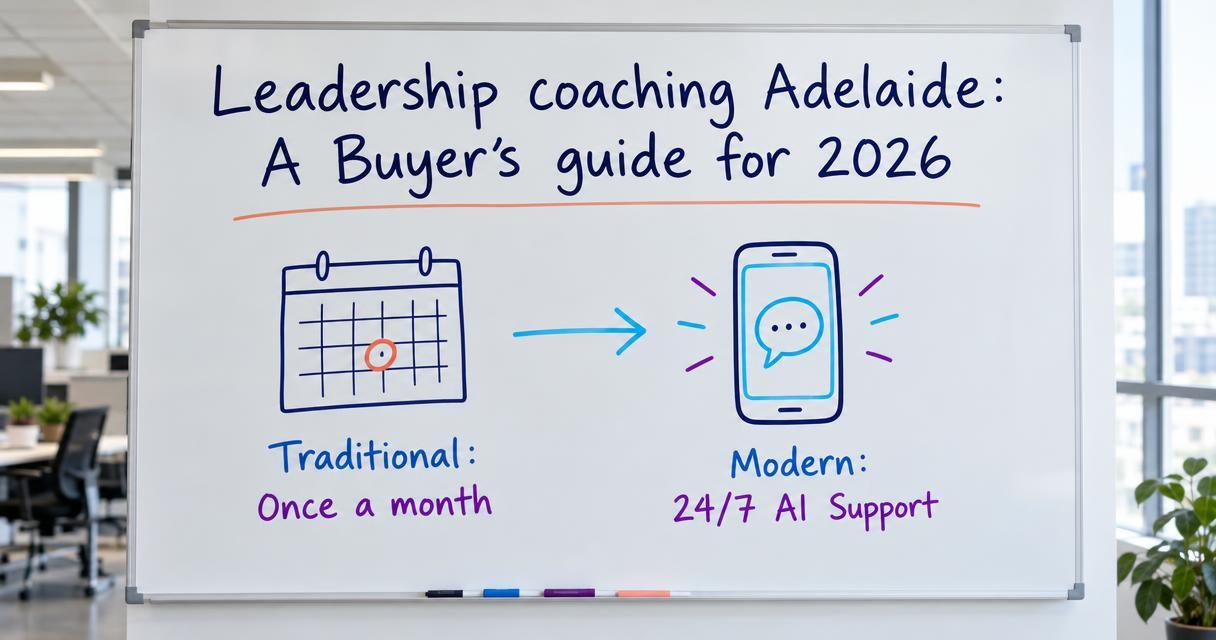
Searching for leadership coaching in Adelaide? Discover why modern teams are shifting from expensive traditional coaching to accessible.
How an AI coach for financial advisers helps you practise difficult client conversations, manage emotional fatigue, and grow your advice practice.
How AI platforms to upskill new leaders without live coaches can scale support, improve retention, and provide safe roleplay practice.