
 Mathan Allington
Real world AI coaching applications: what works in 2026
 Mathan Allington
Practical AI coaching applications that actually work in 2026. Find out how digital tools help you handle conflict and build self-awareness.
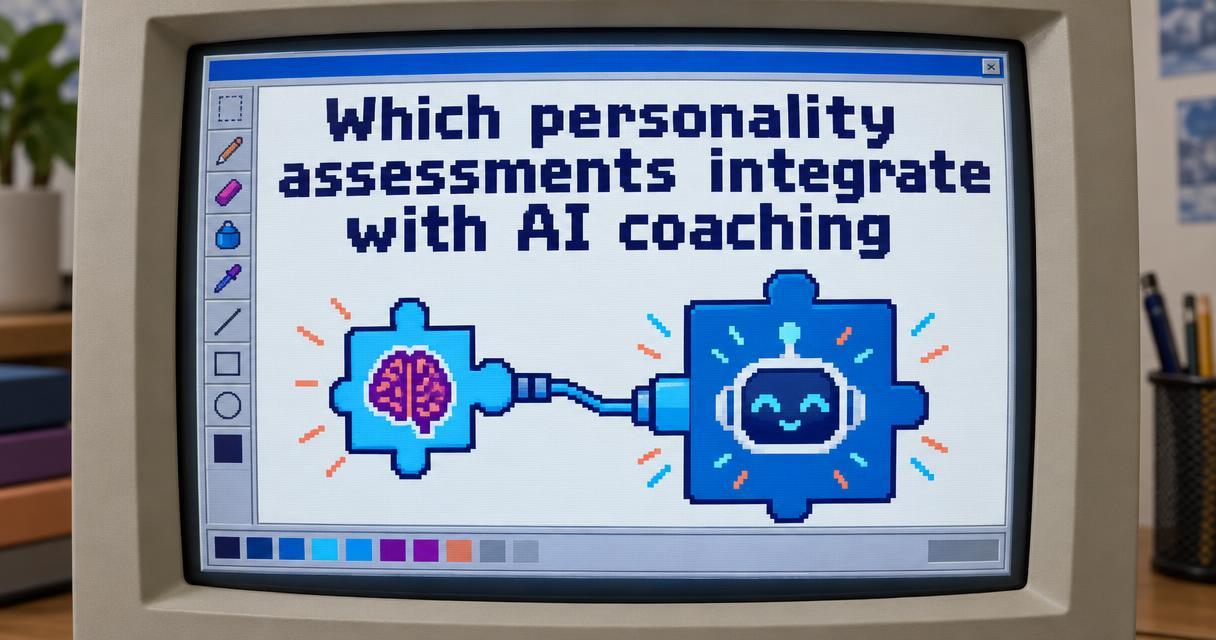
The personality assessments that integrate with AI coaching include established frameworks like the Big Five, DISC, Enneagram, and CliftonStrengths, alongside proprietary tools such as the Work Personality assessment.
Last reviewed November 2026
Key takeaways
- AI coaching platforms use personality data to turn generic advice into highly specific and relevant guidance.
- Integration happens through direct API connections or by the AI reading uploaded assessment debriefs.
- Proprietary tools like MBTI and CliftonStrengths have copyright rules that dictate how AI can process their terms.
- The most effective platforms update your behavioural profile over time rather than relying on a single static test.
If you ask a standard generative AI tool for career advice, you will get a generic list of steps. It does not know if you naturally take charge of a room or if you prefer to analyse data quietly in the background. It assumes everyone learns and communicates in the exact same way.
This is why AI coaching relies on psychometric data. When a coaching tool understands your specific traits, it stops giving textbook answers and starts offering advice that actually works for you. By connecting a behavioural model to the coaching engine, the AI learns your natural defaults and adjusts its tone to match your style.
Not every assessment works well with an algorithm. The tools that integrate best are those that offer clear, structured data points about how you communicate and make decisions. Most coaching systems support one of four main categories of assessments.
| Assessment Type | Common Frameworks | How AI Uses It |
|---|---|---|
| Open-source models | Big Five (OCEAN), HEXACO | Direct mapping of traits to communication styles |
| Commercial behavioural models | DISC, Predictive Index | Adjusting the tone and directness of the AI output |
| Strengths and typing tools | CliftonStrengths, Enneagram | Highlighting natural advantages and likely blind spots |
| Proprietary frameworks | Work Personality, Hogan | Deep integration into a specific coaching engine |
The market for these integrations is growing rapidly. According to a 2026 market overview by NAVRYN, their AI coaching platform uses frameworks including the Big Five, HEXACO, DISC, MBTI, Enneagram, 16PF, Eysenck, OPQ, Caliper, Workstyle, and Strengths. This broad compatibility means businesses do not always need to throw away the psychometric testing they have already paid for.
Connecting a psychometric test to an artificial intelligence engine happens in a few different ways. Some platforms use direct API connections. They pull your raw scores straight from the assessment provider and feed them directly into the coaching system.
Other tools rely on document uploads. Coachello reports that its AI assessment debriefs work with personality, potential, competency, 360-degree, and leadership assessments because the system interprets the underlying assessment report rather than one proprietary instrument. You upload a PDF of your results, and the system extracts the relevant themes to build your profile.
Then there are native integrations where the assessment and the coaching engine are built together. For example, Hey Compono embeds eight proprietary work-personality types directly into its coaching engine, using the profile to shape communication and identify likely blind spots, as noted in their app guide. This tight integration means the coaching starts immediately without requiring external data transfers.
Generative AI needs specific instructions to change its output. Developers achieve this through system prompts that run in the background before you even type a message. These prompts tell the language model exactly who it is talking to.
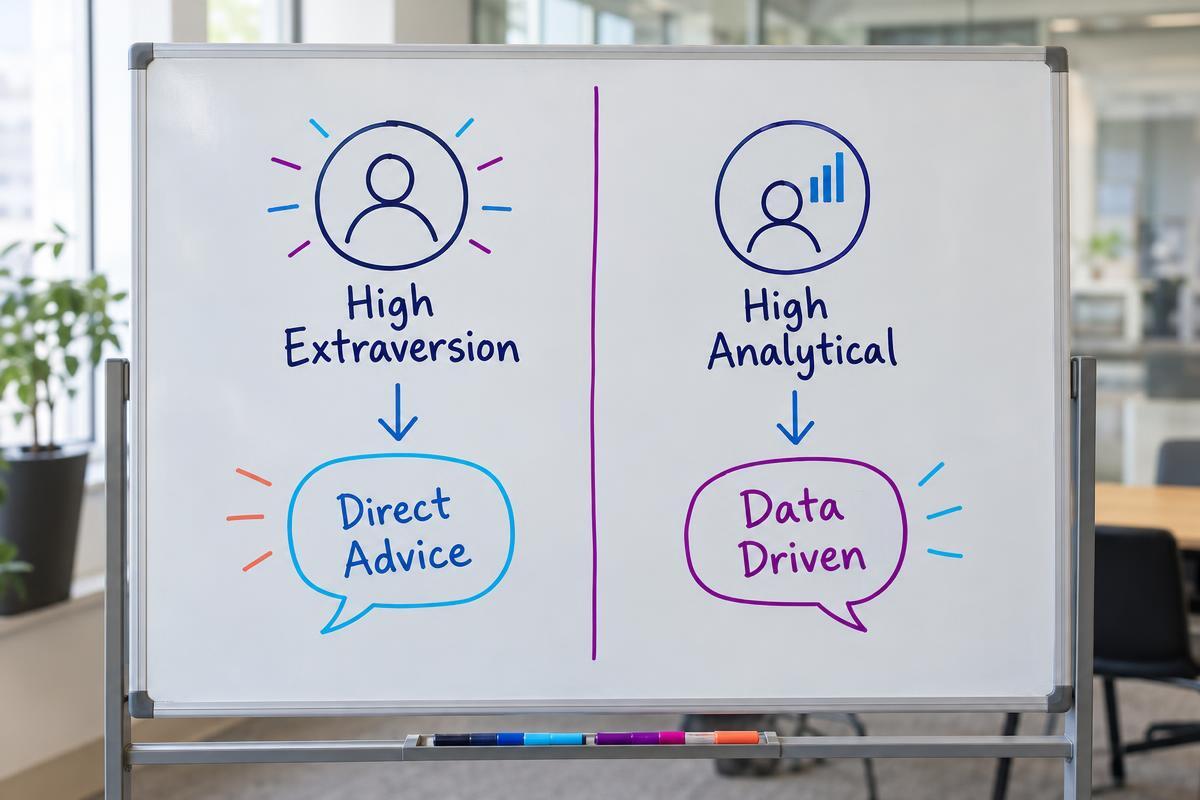
If your integrated assessment shows you have a high level of extraversion and low agreeableness, the system prompt tells the AI to match that energy. It might instruct the language model to use direct language, skip the small talk, and challenge you when you dominate a conversation. If you are highly analytical, the prompt ensures the AI provides data-backed reasoning rather than emotional support.
This changing adjustment is exactly how AI coaching and personality data work together to create a personalised experience. It is the primary difference between a dedicated coaching platform like Hey Compono and ChatGPT.
You cannot simply dump proprietary assessment frameworks into a public AI tool. Companies like Gallup and The Myers & Briggs Company own their intellectual property. Training an open model on their specific definitions violates copyright.
Dedicated coaching platforms handle this by keeping the data in a secure, closed loop. They map your branded test results to underlying psychological traits. This gives you accurate coaching without exposing the publisher's intellectual property to a public training set.
Privacy also matters. The system must remember your Work Personality traits to be effective, but it should never share your private coaching conversations with anyone else. Secure platforms silo your assessment data so it only influences your personal sessions.
Taking a test once gives you a static snapshot. Your core personality is fairly stable, but your behaviour changes as you gain experience or take on new roles. An assessment you took five years ago might not reflect how you lead a team today.
The most effective AI coaching tools update your behavioural profile continuously. They monitor the challenges you bring up and adjust their understanding of your work style over time. A 2026 Oxford Academic chapter concludes that AI can help interpret complex personality assessments and deliver coaching at scale, while traditional psychometric tests remain valuable when they offer efficient, accurate, and fair workplace insights.
This continuous learning loop means your coach grows with you. It stops treating you like a junior employee the moment you step into a leadership role, and it remembers what you struggled with last month.
When HR leaders look for a coaching tool, they need to check a few specific boxes regarding assessment integration. First, check the ingestion method. Determine if the platform requires a direct API, or if it can read existing PDF reports your team already has on file.
Second, review the data privacy policy. Ensure the vendor uses a zero-retention policy with third-party language models so your staff profiles are not used to train global algorithms.
Finally, test the coaching output. Does the advice actually change based on the personality profile? Hey Compono focuses heavily on this step, ensuring the AI validates your natural style rather than just giving you the same generic advice with your name at the top.
If you want coaching that adapts to how you actually think and work, we have built a tool that does exactly that. The system learns your traits and provides support tailored to your natural defaults, helping you lead without pretending to be someone else.
Related reading
AI does not read your personality directly. It relies on the results of a validated psychometric assessment that you complete beforehand. The AI then uses those results to tailor its advice to your specific traits.
It depends on the platform. Some systems require you to take their built-in assessment, while others allow you to upload results from tests you have already taken, such as DISC or CliftonStrengths.
Enterprise coaching platforms use closed-loop systems to protect your data. This ensures your psychometric profile is used only to personalise your coaching and is never shared with public training models.
There is no single best test. Frameworks like the Big Five and Work Personality offer excellent insights for professional development, provided the coaching tool knows how to interpret the data correctly.
A properly integrated AI coach will not try to change who you are. Instead, it validates your natural style and helps you find strategies that work with your strengths, while making you aware of potential blind spots.
Practical AI coaching applications that actually work in 2026. Find out how digital tools help you handle conflict and build self-awareness.

What to ask a Brisbane leadership coach before you commit, why generic workshops fade, and how coaching that adapts to the way you lead holds up.

What your team gets from an AI coaching subscription, how it works as more people join, what to compare between options, and where personality fits.
 Compono