
 Compono
1 min read
What does ai coaching roi look like in a aged care business
 Compono
AI coaching ROI in an aged care business is primarily measured through a significant reduction in staff turnover costs, improved compliance accuracy,...

If you are wondering what does ai coaching roi look like in a nursing business, the short answer is it shows up as reduced staff turnover, fewer burnout-related absences, better shift handovers, and faster conflict resolution.
Key takeaways
- AI coaching delivers a financial return by targeting the root causes of nurse turnover – primarily burnout and team friction.
- Understanding individual work personalities helps shift workers communicate clearly during high-pressure handovers.
- The financial return of retaining just one experienced nurse often pays for an entire team's coaching platform for the year.
- Soft ROI metrics include better shift morale, reduced interpersonal conflict, and improved patient care continuity.
Nursing is a high-pressure environment where people make critical decisions while physically and mentally exhausted. You have different personalities thrown together on a ward, trying to communicate complex patient needs at 6:00 AM after a 12-hour shift. Friction is inevitable. When that friction turns into chronic stress, nurses leave.
Replacing clinical staff costs your business a fortune. Traditional professional development is expensive and hard to scale across rotating rosters. This makes business owners question whether investing in digital development tools is actually worth the money.
The return on investment for these tools is not about arbitrary productivity metrics. It is about keeping your experienced staff on the floor and functioning well together.
Every time a nurse hands in their notice, your business takes a direct financial hit. You have recruitment advertising costs, agency fees to cover the gap, onboarding time, and the productivity lag while a new hire gets up to speed.
The hidden cost is the strain it puts on the rest of your team. When you are short-staffed, your remaining nurses pick up the slack. They work longer hours and take on heavier patient loads. This pushes your best people closer to burnout, creating a vicious cycle of turnover.
Traditional coaching is hard to scale in healthcare. You cannot pull a whole ward off the floor for a half-day workshop. Getting everyone in the same room is a logistical nightmare. This is why personalised, asynchronous tools are becoming the standard for clinical teams.
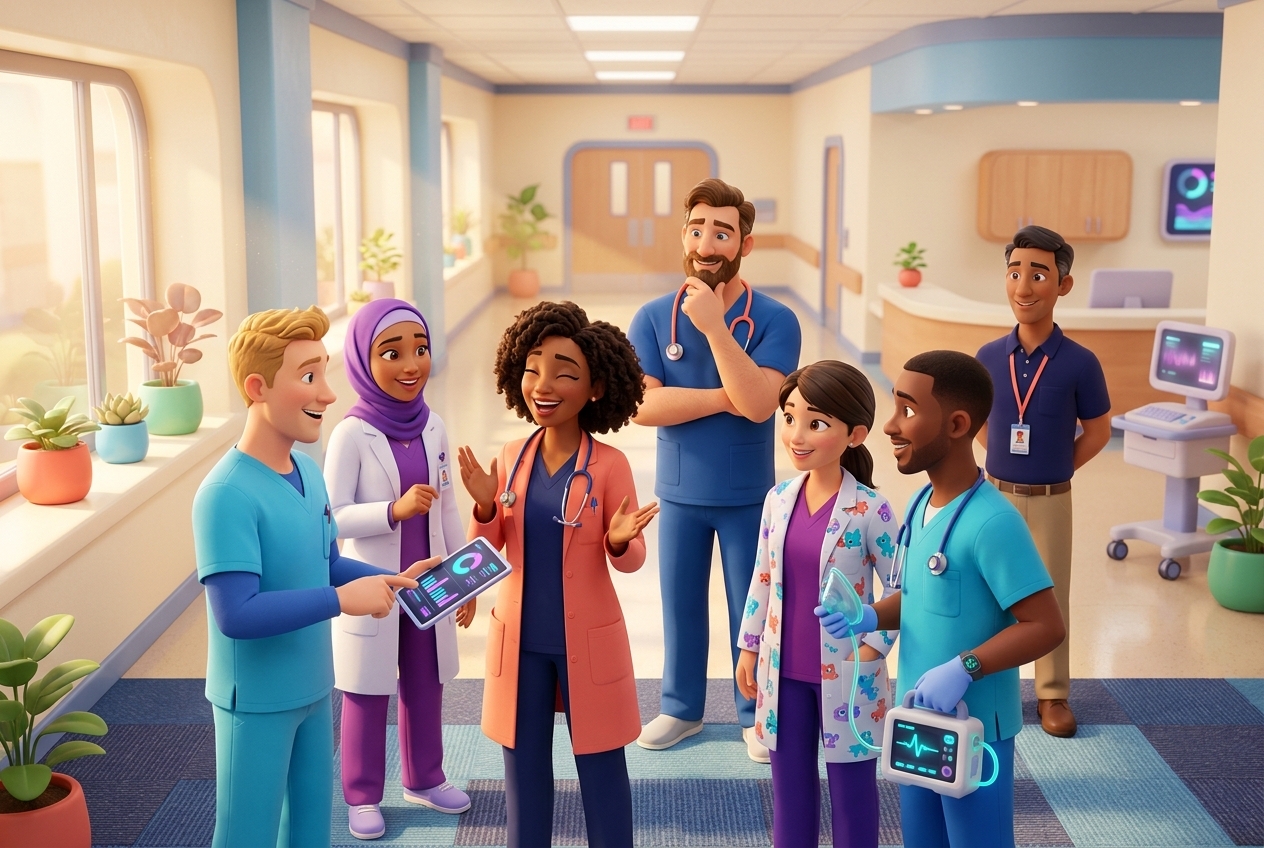
Think about the people on your floor. You likely have some who just want to get the job done and others who want to ensure everyone feels emotionally supported. These differences dictate how your team handles the pressure of the job.
At Compono, we have spent years researching how people work and behave. We map these natural preferences into eight distinct work personalities. When you understand these profiles, you can predict where team friction will happen.
Consider a nurse who is a Helper. They thrive on supporting others and creating harmony. Under pressure, they might avoid necessary conflict to keep the peace. When a Helper does a handover with an Evaluator – someone who is highly analytical, blunt, and focused purely on facts – misunderstandings happen. The Helper feels criticised. The Evaluator feels frustrated by the lack of directness.
AI coaching steps in right at this point of friction. It gives them both in-the-moment advice on how to communicate with each other, adapted to their specific brains. If you are curious about how these dynamics play out in your own clinic, you can take a quick personality read with Hey Compono to see what your team defaults to under stress.
When clinic directors ask what does ai coaching roi look like in a nursing business, they are usually looking for hard numbers. The math is actually very straightforward.
Think about the cost of replacing one registered nurse. Depending on your location and agency reliance, that number can easily reach tens of thousands of dollars. If a digital coaching platform costs a fraction of that amount for the entire year, you only need to prevent a single resignation to see a massive positive return.
The financial return is just the baseline. The cultural return is what actually changes your daily operations. You see it in the reduction of unplanned leave. You notice it when shift handovers happen without tension. You feel it when HR spends less time mediating interpersonal disputes between staff members.
Burnout rarely happens overnight. It builds up through hundreds of small frustrations. A nurse feels misunderstood by their unit manager. They feel their specific way of working is ignored. They take the emotional weight of their patients home with them because they do not have the right mental boundaries in place.
Personalised coaching provides support that fits into a nurse's pocket. It does not require scheduling a formal meeting with a manager weeks in advance. It gives them practical, immediate strategies to handle a difficult colleague or decompress after a traumatic shift.
When staff feel understood and supported in a way that matches their natural personality, they stay. They engage more with their work. Retention is the ultimate metric for success in healthcare management.
One of the biggest hurdles in nursing businesses is scheduling. You cannot run traditional training when half your staff are sleeping after a night shift. The people who need the most support are often the ones who miss out on scheduled professional development.
Coaching needs to be available when the nurse actually needs it. That might be at 2:00 PM during a quiet moment in the breakroom, or at 3:00 AM after a difficult patient interaction.
This is why many healthcare teams use mobile-first platforms to provide continuous support. It allows a nurse who is a Helper to get advice on setting emotional boundaries right after a tough shift, rather than waiting for an annual performance review.
The nurses' station is the nerve centre of your business. It is where critical information is shared, medications are checked, and plans are made. It is also where stress levels peak.
When a Doer – someone who is highly practical and focused on immediate task completion – works alongside a Campaigner who is energetic and big-picture focused, they can clash over priorities. The Doer wants to tick boxes. The Campaigner wants to discuss new ways to improve patient care.
Without intervention, this turns into resentment. AI coaching helps these different personalities understand each other. It teaches the Doer to appreciate the Campaigner's ideas, and it helps the Campaigner understand the Doer's need for structure. When your team spends less time arguing and more time collaborating, your operational efficiency improves dramatically.
A nursing business that invests in self-awareness operates differently. When your staff understand their own triggers and blind spots, they regulate their behaviour better. They take ownership of their communication style.
Instead of a manager having to constantly step in and mediate minor disputes, the team learns to self-correct. An Auditor learns that their need for extreme detail might be slowing down a critical handover. A Pioneer realises their spontaneous decisions might be stressing out the rest of the ward.
This level of self-awareness creates a resilient workforce. It builds a team that can handle the inherent stress of healthcare without turning on each other.
Key insights
- The financial return of AI coaching is driven primarily by retaining experienced nurses and avoiding high recruitment costs.
- Shift workers need asynchronous development tools that fit into their unpredictable schedules.
- Understanding the eight work personalities helps reduce the friction that causes burnout.
- Soft returns include fewer HR complaints, better team morale, and smoother shift transitions.
- Self-awareness allows nursing teams to self-correct and resolve conflicts without constant management intervention.
Understanding your team's natural work preferences is the first step to reducing burnout and keeping your best nurses on the floor. If you want to see how personality-adaptive support can change your ward dynamics, you can start mapping your team today.
Hey Compono helps teams give and receive feedback that actually moves the needle. Start free and see how it fits your workflow.
You measure it by tracking staff turnover rates, absenteeism, and agency spend before and after implementation. You can also look at soft metrics like employee engagement scores and the volume of internal HR complaints regarding team conflict.
Yes, by providing immediate, personalised strategies for managing stress and navigating difficult conversations. While it does not fix systemic issues like understaffing, it gives nurses the psychological tools they need to protect their energy and communicate their needs effectively.
Traditional training requires pulling staff off the floor at the same time. With rotating rosters, night shifts, and strict patient-to-nurse ratios, finding a time that works for everyone is nearly impossible and highly expensive.
Different personalities process information differently. A highly analytical nurse wants facts and data, while an empathetic nurse might focus on the patient's emotional state. When they understand these differences, they can adjust their communication to ensure critical information is passed on clearly.
No. It is a support tool that handles the day-to-day interpersonal coaching, freeing up clinical managers to focus on complex operational issues and patient care strategy. It acts as an extension of your leadership team.

1 min read
AI coaching ROI in an aged care business is primarily measured through a significant reduction in staff turnover costs, improved compliance accuracy,...

1 min read
AI coaching ROI in an education business looks like reduced staff turnover, faster onboarding for new educators, and measurable improvements in team...

1 min read
When leaders ask what does ai coaching roi look like in a government business, the answer is found in reduced staff turnover, faster conflict...