
 Compono
1 min read
How does AI interview roleplay work?
 Compono
AI interview roleplay works by using advanced language models to simulate a live, unscripted conversation with a hiring manager, reacting dynamically...

The best AI interview prep tool for recruiters is one that moves beyond generating generic questions to provide personality-adaptive insights, helping you understand a candidate's natural work preferences before the conversation even begins.
When you know whether you are interviewing someone who thrives on structure or someone who needs creative freedom, you can tailor your approach to get a genuine read on their capabilities and team fit.
Key takeaways
- The most effective AI interview prep tools analyse candidate work personalities to help recruiters ask targeted, relevant questions.
- Tools that rely solely on scraping resumes often miss the behavioural nuances that determine long-term success in a role.
- Recruiters need systems that highlight potential blind spots and communication preferences before the interview starts.
- Understanding a candidate's natural leadership and conflict style leads to better hiring decisions and lower turnover.
Recruiters spend hours prepping for interviews. You read the resume, check the LinkedIn profile, and jot down a list of competency-based questions. You walk into the room feeling prepared. Then the candidate sits down and delivers perfectly rehearsed, mechanical answers using the STAR method. You leave the room knowing their work history, but you have no real idea who they are or how they will behave under pressure.
Many recruitment teams turn to artificial intelligence to speed up this preparation process. They feed a job description and a resume into a generic language model and ask for interview questions. The system spits out standard prompts about overcoming challenges or dealing with difficult stakeholders. These basic tools treat every candidate exactly the same. They assume a senior developer who loves quiet, methodical work should be interviewed the exact same way as a senior developer who thrives on chaotic, fast-paced problem solving.
You need a way to cut through the script. You need to know who you are talking to before they even say hello. The right preparation tool gives you a map of the candidate's mind, allowing you to bypass the rehearsed answers and have a genuine conversation about how they actually work.
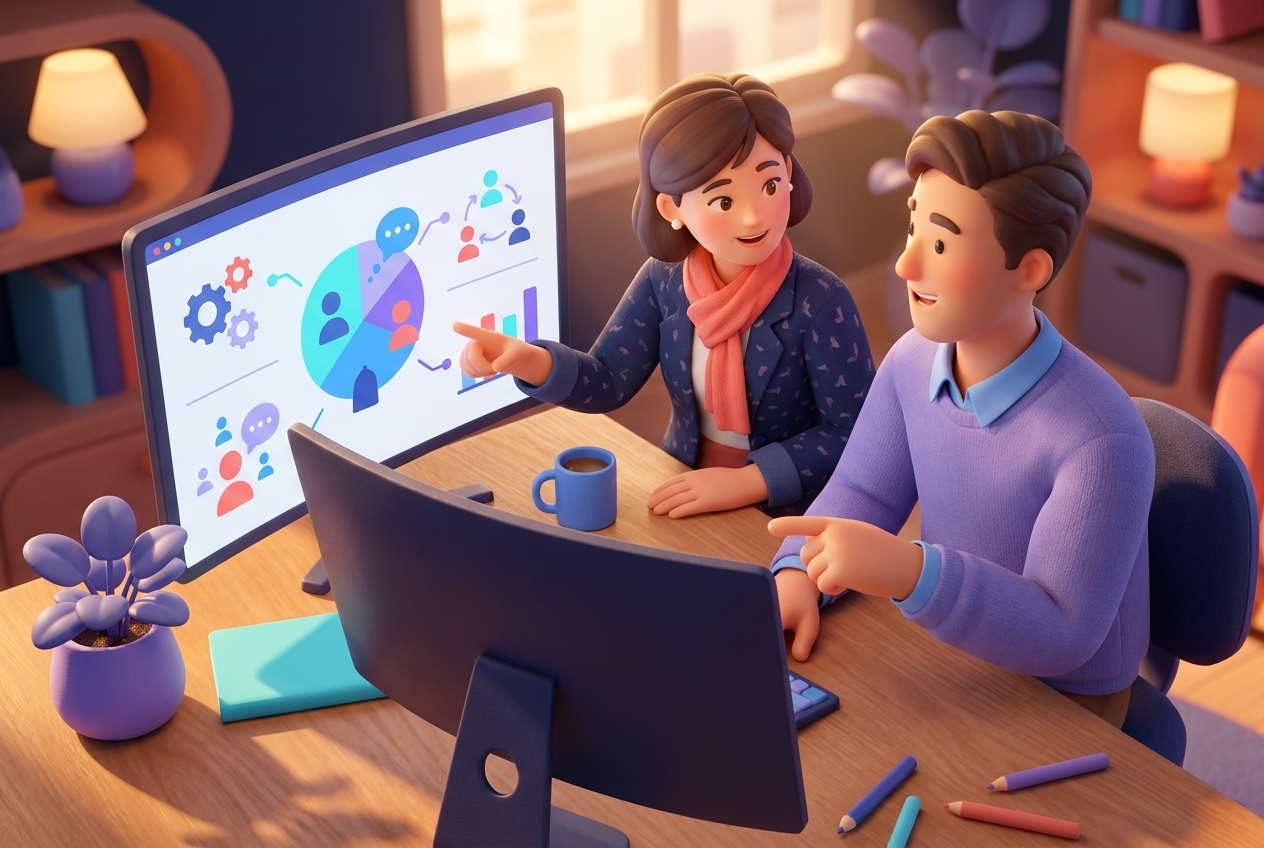
Basic AI tools just read a CV and suggest technical questions. This misses the human element entirely. A resume tells you what a person has done. It tells you nothing about what motivates them, how they handle conflict, or what kind of management style they need to thrive. If you rely solely on tools that scrape past experience, you are preparing for the wrong conversation.
At Compono, we have spent years researching organisational psychology and team dynamics. Our research shows that understanding a person's natural work preferences is far more predictive of their success than their technical skills alone. When you prepare for an interview, you need a tool that highlights these behavioural traits.
You need to know if the person sitting across from you is a 'Doer' who wants to get straight to the point, or a 'Campaigner' who wants to talk about the big vision. If you want to see how this works in practice, Hey Compono maps these natural work preferences so you know exactly who is walking into the room. This level of insight changes the entire dynamic of the interview.
Every candidate defaults to a specific way of working. We categorise these into eight distinct work personalities. When your preparation tool gives you access to this information, you can fundamentally change how you conduct the interview. You stop asking generic questions and start asking targeted, behavioural questions that reveal the truth.
Imagine you are interviewing someone whose profile identifies them as an 'Auditor'. You know they are methodical, detail-oriented, and cautious. They prefer facts over feelings. During your preparation, you can plan to ask them highly specific questions about their processes. You also know they might struggle with sudden, ambiguous changes. You can prepare scenarios that test their adaptability to see if they have developed coping mechanisms for chaotic situations.
Now imagine interviewing a 'Pioneer'. They are imaginative, spontaneous, and focused on the future. If you ask them the same rigid, process-driven questions you asked the Auditor, they will disengage. Instead, you prepare questions about how they turn their big ideas into concrete actions. You tailor the interview to the human being, not just the job description.
Every candidate has weaknesses. The problem is that candidates are actively trying to hide these weaknesses during an interview. Standard preparation tools do not help you uncover them. They just give you generic questions like "What is your greatest weakness?" which inevitably results in the classic "I work too hard" response.
An advanced AI prep tool gives you a cheat sheet of potential blind spots based on the candidate's personality profile. If you are interviewing an 'Evaluator', you know they are logical, objective, and results-driven. You also know their blind spot is that they can be overly critical and dismissive of others' feelings. Armed with this knowledge, you can prepare questions specifically designed to test their empathy and teamwork.
If you are interviewing a 'Helper', you know they are empathetic and focused on harmony. Their blind spot is often avoiding necessary conflict to keep the peace. You can prepare questions that force them to explain how they handle direct disagreements or deliver negative feedback. You are no longer guessing where the cracks might be, you know exactly where to look.
The interview is a two-way street. You are evaluating them, but they are also evaluating you. The market for top talent is competitive. You need to sell the role, the team, and the company culture. Knowing a candidate's work personality helps you pitch the job effectively. If you pitch the wrong aspects of the role, you will lose them.
A 'Coordinator' wants to hear about structure, clear expectations, and organised processes. If you spend the interview talking about how chaotic and "agile" the startup environment is, they will walk away. A 'Campaigner' wants to hear about the vision, the networking opportunities, and the chance to influence people. If you focus entirely on the daily routine and reporting structures, they will lose interest immediately.
Many recruitment teams use personality-adaptive coaching principles to tailor these conversations and give candidates a better experience. When you speak to a candidate in their own language, they feel understood. They feel like your company gets them. This significantly increases the chances of them accepting an offer if you decide to make one.
Hiring does not happen in a vacuum. You are not just filling a seat; you are adding a new dynamic to an existing team. The best interview prep tools help you understand how this new person will interact with the people already in the business. If you have a team full of big-picture thinkers, you might need someone who focuses on the details.
During your preparation, you can compare the candidate's profile against the existing team. If the team manager is a direct, assertive 'Doer' and the candidate is a sensitive, harmony-seeking 'Helper', you know there is potential for friction. You can use the interview to explore how the candidate handles blunt feedback and fast-paced environments.
This is where recruitment turns into true organisational design. You are no longer just checking off technical requirements. You are building a balanced, high-performing team. You are asking questions that ensure the new hire will complement the existing group rather than clash with them.
Key insights
- Basic AI tools generate generic questions, while advanced tools provide deep behavioural insights.
- Knowing a candidate's work personality allows you to ask questions that reveal their true potential and working style.
- Identifying potential blind spots before the interview helps you probe areas of concern effectively and authentically.
- Tailoring your pitch to match a candidate's natural preferences improves candidate experience and offer acceptance rates.
Related reading: AI interview prep for recruiters: the modern guide · How to prep a candidate who is nervous for an interview
Hey Compono gives your candidates AI interview practice, role play and feedback as part of your placement service. What is candidate prep?
See how it worksA good tool gives you behavioural insights about the candidate rather than just technical questions. It helps you understand their communication style, natural strengths, and work preferences so you can have a more meaningful and revealing conversation.
People communicate differently based on their natural preferences. Some candidates need time to process complex questions, while others think out loud and jump straight into answers. Knowing this helps you adapt your interviewing style to get the best out of them.
Yes, when it is built on solid organisational psychology research. By having candidates complete a short assessment beforehand, the system can map their dominant work preferences and give you a clear, accurate guide on how to interact with them.
Standard questions often lead to rehearsed, generic answers that candidates have memorised from online guides. When you ask questions tailored to a person's specific behavioural profile, you force them to think critically and give authentic responses.
You use them to guide your questioning strategy. If the profile suggests a candidate struggles with routine, you spend more time asking how they manage repetitive tasks to ensure they are a good fit for the daily realities of the role.

1 min read
AI interview roleplay works by using advanced language models to simulate a live, unscripted conversation with a hiring manager, reacting dynamically...

1 min read
You can practise interview questions with AI by feeding a job description and your resume into a prompt to generate tailored mock questions, simulate...

1 min read
AI interview prep for recruiters is the process of using generative tools and predictive analytics to build structured interview frameworks that...