
 Mathan Allington

How to Give Hard Feedback to a Coworker (Without Making It Weird)
 Compono
How to give a coworker hard feedback without wrecking the relationship, with practical steps for the conversation itself.
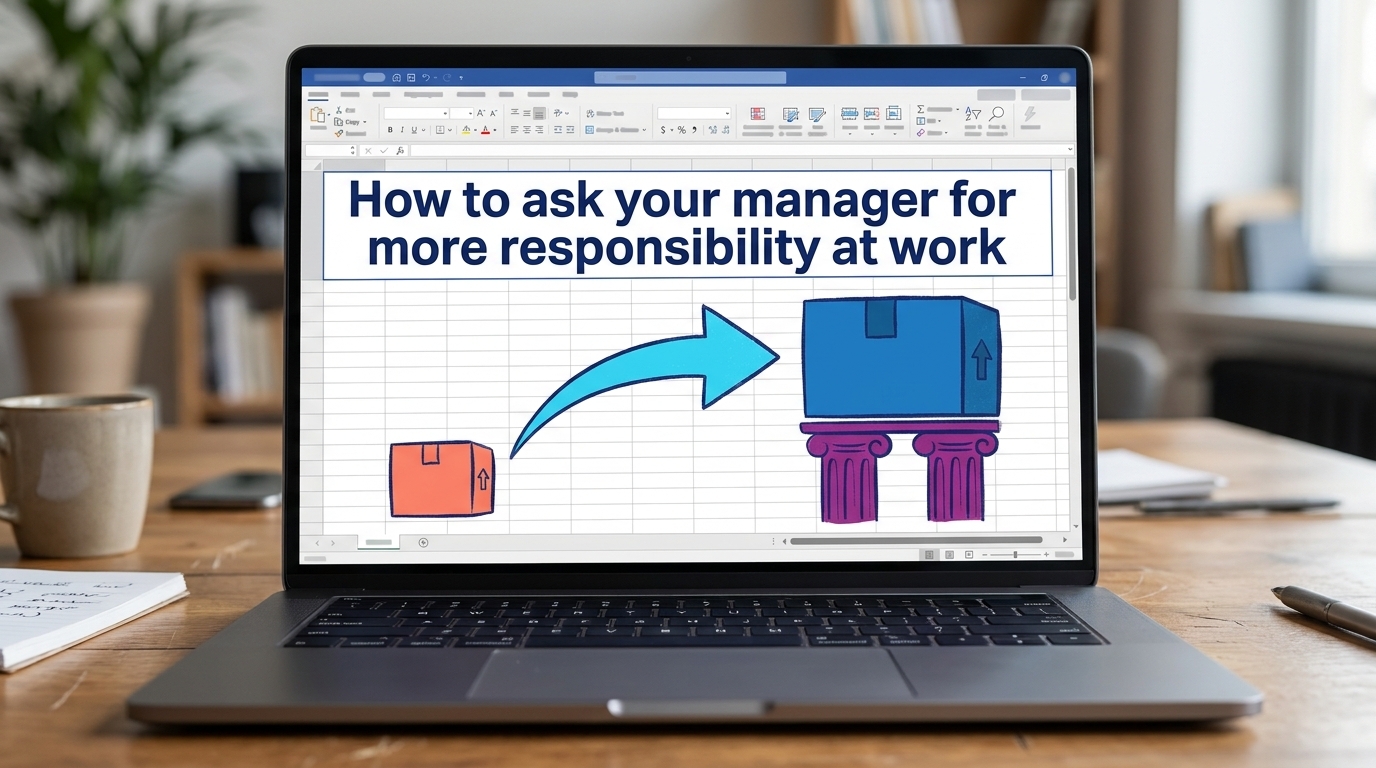
Knowing how to ask your manager for more responsibility starts with framing your request around solving a specific business problem, rather than just asking for extra work.
Last reviewed November 2026
Key takeaways
- Master your current workload completely before asking for new tasks, because dropping the ball on existing duties will sink your pitch.
- Use a capacity calculator to map out how much time you actually have, protecting yourself from burnout and scope creep.
- Bring a specific proposal to a scheduled one-on-one meeting instead of casually dropping the request in the hallway.
- Tie your new responsibilities directly to measurable business outcomes like time saved or revenue generated.
- Ask your manager what needs to be true for them to say yes if they initially decline your request.
You have mastered your daily tasks and hit a plateau. You are ready for a challenge, but walking up to your boss and saying you want more work is risky. A vague request often leads to you doing more administration or taking on tasks nobody else wants, without any real career growth attached.
When you ask for a bigger remit without a clear plan, you actually create more work for your manager. They now have to figure out what you should do and how to train you. To get a yes, you need to bring a solution that makes their life easier while building your own skills. This requires preparation, a solid understanding of your own capacity, and a clear link to the broader goals of your team.
Before you step into a meeting room to pitch a new project, you need to run an honest self-audit. Your manager will only trust you with new problems if you are consistently solving your current ones.
According to advice from Ask the Recruiter, you must make sure current responsibilities are being handled well before asking for additional work; letting existing work slip undermines the request. If you are missing deadlines on your core job description, your manager will not give you a stretch project. You need a track record of reliability.
This is especially relevant if you identify as The Doer personality type at work. Doers love to jump in, fix things, and check items off a list. It is a great trait, but it can lead to taking on too many unrelated tasks. Before asking for a new challenge, review your last three months of work. Document where you exceeded expectations, where you saved time, and where you operated without needing supervision.
If you find yourself feeling bored at work, use that energy to simplify your current duties first. Automate a report, clean up a messy process, or organise the team files. When you show that you manage your own time efficiently, you prove you are ready for a larger scope.

The most successful requests for more responsibility do not sound like a plea for personal growth. They sound like a business proposal. You need to connect the dots between what you want to learn and what the company needs to achieve.
A guide from Strivo suggests you should frame the request around a specific team gap or opportunity, not a general desire to grow. Look at your team's current problem. Is there a project that keeps getting delayed? Is your manager drowning in client onboarding calls? Find a task that is important but neglected.
Once you find that gap, you need to prove it matters. An article from Glassdoor points out that you must translate expanded responsibilities into business outcomes such as revenue generated, money saved, time reduced, risk lowered, or people supported. Showing exactly how your work will benefit the business makes your pitch incredibly hard to refuse.
Taking on new work sounds great until you are logging in on a Saturday to finish your regular job. To avoid burnout, use a simple capacity calculator before you have the conversation. You need to know exactly how many hours a week you can dedicate to a new project without dropping the ball.
| Current weekly duties | Hours spent | Proposed new project | Estimated hours needed |
|---|---|---|---|
| Core role tasks | 32 hours | Client onboarding revamp | 4 hours |
| Team meetings and admin | 4 hours | Buffer time for learning | 2 hours |
Mapping this out proves to your manager that you have thought about the practical realities of the work. You are showing them you have the bandwidth to succeed, which removes the risk from their decision.
Timing is everything when asking for a bigger remit. Research from First Job Out of College notes you should ask for more responsibility in a scheduled one-on-one rather than casually; a quiet first year can be interpreted as contentment rather than readiness. Book dedicated time so your manager is in the right headspace to listen.
When you sit down, keep the focus on mutual benefit. At Hey Compono, we see people succeed when they structure their request in three parts: the observation, the proposal, and the safety net.
Use this script when you see a clear gap you want to fill.
"I have noticed that our weekly reporting takes up a lot of your time on Monday mornings. I would love to take that over. I have freed up about three hours a week by simplifying my client updates, and I want to use that time to stretch my data analysis skills. If you show me how you like it done this week, I can draft it for your review next week. How does that sound?"
Use this script when you want to signal readiness for a promotion or leadership track.
"I am really proud of the results we achieved on the latest rollout. As I look at my goals for the next six months, I want to start developing my project management skills. Is there a low-risk initiative coming up that I could own end-to-end? I want to make sure I am taking things off your plate while preparing for the next step in my career here."
You can even start a conversation with an AI coach beforehand to practise these scripts and get comfortable with the delivery.
Sometimes the answer is no. Budgets might be frozen, the manager might be stressed, or they might not think you are ready. A rejection is just data. How you handle it dictates what happens next.
If your manager pushes back, use advice from Ask the Recruiter and if the answer is 'not now,' ask what specifically would need to be true for the answer to become 'yes'. This forces a concrete conversation about expectations. Write down their answer and use it as your roadmap for the next quarter.
If you do get a yes, be prepared for a shift in team changing. When you take on high-visibility tasks, peers might feel threatened or assume you are trying to act like their boss. You can manage this friction by keeping your new responsibilities transparent. Tell your team how your new project supports their goals, and never use your new duties as an excuse to avoid helping out with group efforts.
Finally, make sure you document everything you take on. This extra work is the evidence you will use when preparing for a promotion conversation later in the year. Extra responsibility without a path to extra compensation is just a recipe for resentment. By tracking your outcomes and connecting them to business goals, you build an undeniable case for your next pay review.
Having difficult conversations about your workload and career trajectory is much easier when you understand exactly how you operate at work. Hey Compono uses personality-adaptive AI coaching to help you figure out your communication style, spot your blind spots, and practice the conversations that actually move your career forward.
Related reading
There is no strict timeline, but a good rule of thumb is six to nine months. You need enough time to prove you have mastered your core job description completely. If you ask too early, it might look like you lack focus on the job you were actually hired to do.
You can absolutely grow your career without managing people. When you pitch for more responsibility, ask to own complex projects, manage technical systems, or become a subject matter expert. Frame your request around deepening your individual skills rather than leading a team.
It is usually better to separate the two conversations. Ask for the responsibility first, agree on the success metrics, and deliver results for three to six months. Once you have proven the business value of your new work, you have the use to ask for a salary review.
You avoid busywork by bringing a specific proposal to the meeting. If you just ask for "more work", a stressed manager will hand you their most tedious administrative tasks. Bring two or three ideas for strategic projects you want to own, and steer the conversation toward those.
Do not get defensive. Ask them for specific examples of what readiness looks like to them. Request a clear list of skills or milestones you need to hit, and schedule a follow-up meeting in three months to review your progress against that exact list.

How to give a coworker hard feedback without wrecking the relationship, with practical steps for the conversation itself.

Founder led decisions stop working at a certain size. How to build a leadership layer, pick who steps up, and give them a way to lead that fits.

A fresh start might mean a career change or a reset in your current role. Approach it with self-awareness and a few practical, honest steps.