
 Mathan Allington

How to deal with a manager who doesn't manage
 Mathan Allington
To deal with a manager who doesn't manage. Discover practical scripts, remote work strategies, and steps to protect your career from an absent boss.
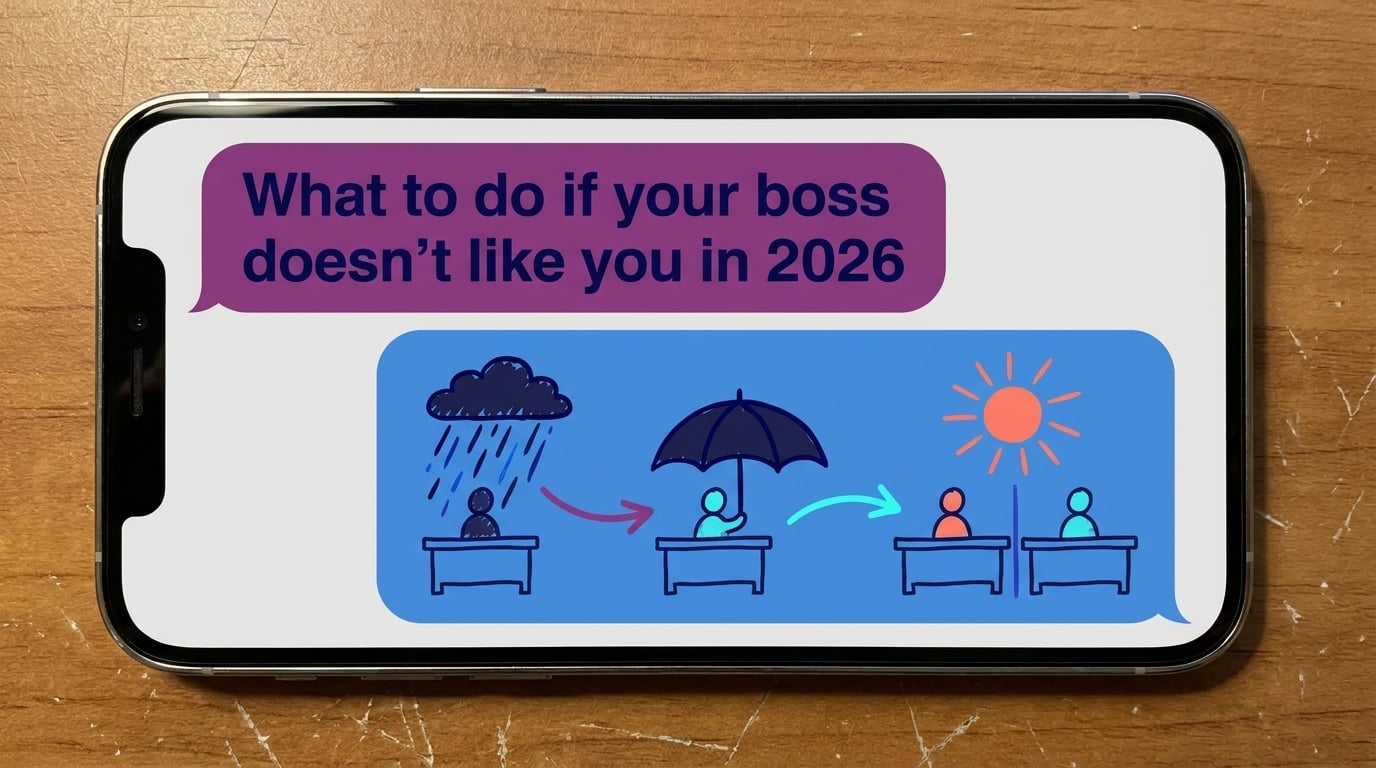
If you suspect your boss does not like you, the first step is to stop trying to win them over and start documenting your performance, clarifying expectations, and building alliances with other leaders.
Last reviewed November 2026
Key takeaways
- Identify whether the friction is a personality clash, managerial insecurity, or actual malicious behaviour before taking action.
- Initiate a structured alignment conversation to clarify exact performance expectations and remove ambiguity.
- Protect your career by building a paper trail of task assignments, feedback, and completed projects.
- Develop skip-level relationships and seek mentors outside your direct reporting line to ensure your reputation survives a bad manager.
- Set firm mental boundaries to detach your personal worth from the opinion of an unsupportive boss.
It is exhausting to show up to work every day wondering if the person who controls your pay, your projects, and your promotion trajectory secretly wants you gone. You overthink their short emails. You notice when they cancel your weekly check-in but keep their meetings with your peers. You start twisting yourself into knots trying to be the exact employee you think they want.
Trying to mind-read an unapproachable manager is a fast track to burnout. The reality is that the modern workplace places immense pressure on middle managers, and sometimes their stress bleeds out as coldness. Other times, the friction is a genuine personality clash. But in some cases, your manager simply does not like you, and that reality requires a tactical response.
At Hey Compono, we know that working under someone who misunderstands or undervalues you takes a massive toll on your confidence. The goal is not to force a friendship. The goal is to establish a professional, functional changing that allows you to do your job and protect your career progression.
Before you plan your next move, you need to step back and assess the root cause of the tension. It is easy to take a manager's blunt tone personally, but the issue often has very little to do with you.
First, look at how they treat everyone else. If your boss is short and dismissive with the entire team, you do not have a personal relationship problem. You have a stressed, overworked, or poorly trained manager. If they are warm and chatty with your peers but cold and transactional with you, the friction is specific to your changing.
You must also honestly evaluate your own performance. Have they given you feedback that you ignored? Do you consistently miss deadlines or push back aggressively on their ideas? Sometimes what feels like personal dislike is actually just managerial frustration. If you know your work is solid, the problem usually falls into one of three categories: incompetence, insecurity, or malice.
Understanding what drives your manager's behaviour dictates how you handle them. You cannot fix a bad manager, but you can learn how to outmanoeuvre their specific brand of dysfunction.
| Manager type | Signs and symptoms | Your best strategy |
|---|---|---|
| The incompetent boss | Misses meetings, gives vague directions, forgets what they assigned to you, constantly changes priorities. | Manage up. Send written summaries of every meeting. Drive the agenda yourself and explicitly state what you are working on. |
| The insecure boss | Micromanages your work, takes credit for your ideas, gets defensive when you ask questions, avoids introducing you to senior leaders. | Make them look good publicly. Over-communicate so they feel in control. Avoid outshining them in meetings with their superiors. |
| The malicious boss | Actively sabotages your work, gives feedback that is entirely personal and not actionable, isolates you from the team. | Document everything. Build strong relationships with other leaders. Prepare an exit strategy or HR escalation based on facts. |
A recent HR guide recommends documenting task assignments, feedback, performance decisions, and training opportunities when you worry about unfair treatment. If you are dealing with an insecure or malicious manager, this paper trail is your greatest protection.
Often, two people simply process information in fundamentally different ways. What you interpret as dislike might just be a severe misalignment in communication styles.
Consider a manager who prefers slow, deliberate analysis. If you are a Doer who wants to take immediate practical action, your manager might view you as reckless. You might view them as a roadblock. Neither of you is wrong, but the friction feels personal.
Alternatively, you might have been told you are too direct at work by a manager who values diplomacy and harmony above all else. They might pull away from you because your communication style triggers their anxiety. Recognising these differences helps you depersonalise the conflict and adjust how you present information to them.
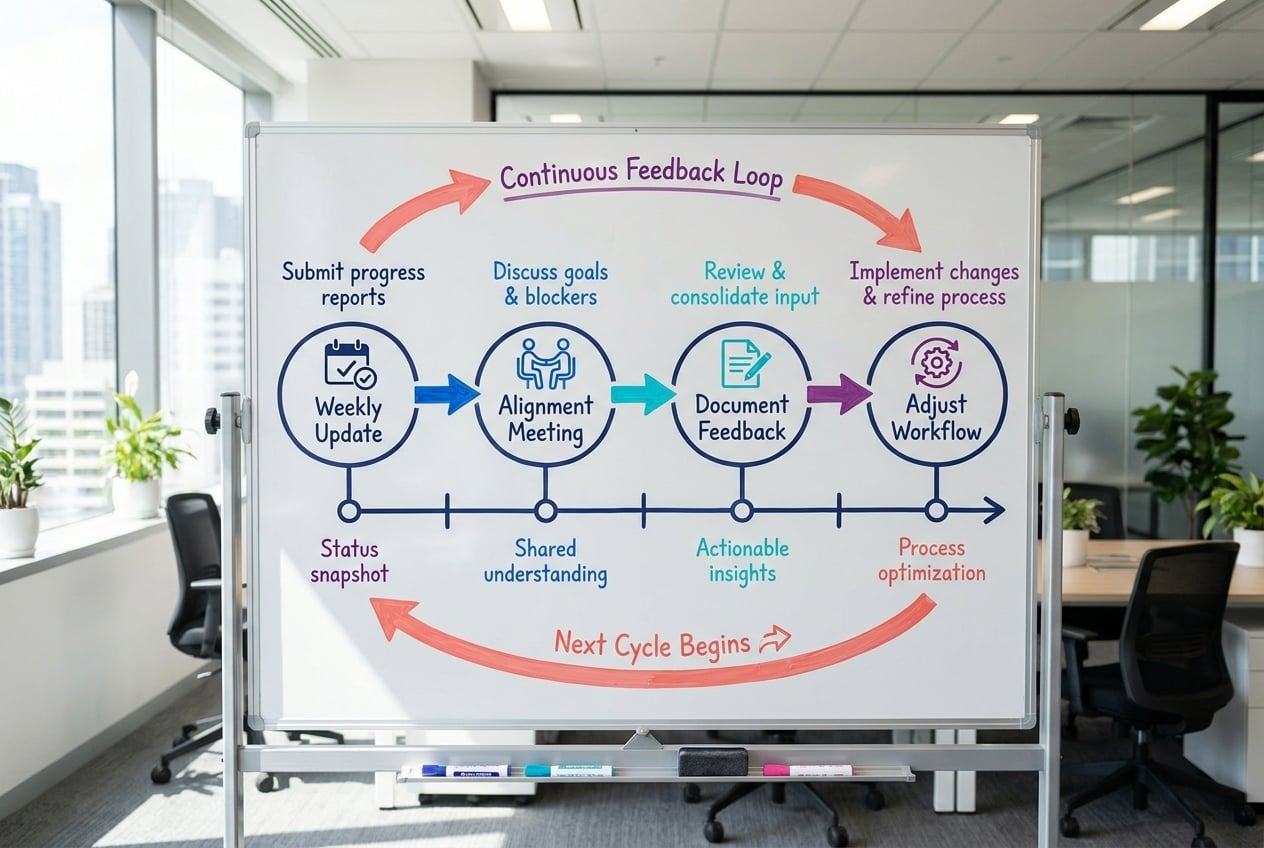
If you feel a chill from your boss, ignoring it will not warm things up. You need to initiate a conversation to get on the same page. A 2026 workplace guide recommends asking, “What does success look like for you in this role?” and following up to clarify what you should do more of and what you should stop doing.
Here are three ways to frame this conversation depending on the severity of the disconnect.
The reset script: "I want to make sure I am fully aligned with your priorities this quarter. Could we spend ten minutes reviewing my current projects? I want to ensure my output matches exactly what you need from me right now."
The clarity script: "I noticed some frustration regarding how the last project was handled. I want to learn from that. From here, how would you prefer I communicate updates or roadblocks to you?"
The boundary script: "I am committed to hitting our targets, but I have noticed our recent check-ins feel tense. Is there something about my communication style or workflow that we need to adjust so we can work together more smoothly?"
If you are nervous about initiating these chats, you can practise these conversations with an AI coach first to test your tone and refine your words.
When you do not trust your manager, you cannot rely on informal chats or verbal agreements. You must turn every verbal directive into a written record. This is not about being passive-aggressive. It is about creating a factual history of your employment.
Send concise weekly updates. The same workplace guide mentioned earlier recommends sending weekly emails covering completed work, upcoming priorities, assumptions you are making, and decisions you need from them. This removes ambiguity and forces a disengaged manager to engage with your output.
Follow up every one-on-one meeting with a short summary email. State what was discussed, what you agreed to do, and what deadlines were set. If criticism continues after expectations have been documented, a recent management guide recommends framing the issue as a workflow or fairness problem and escalating it with dated examples.
You cannot afford to let one person hold the monopoly on your professional reputation. If your boss does not champion you to the rest of the business, you have to do it yourself.
Start building relationships with other managers and directors. Volunteer for cross-functional projects that put you in the same room as different department heads. Speak up in all-hands meetings. When other leaders see your competence firsthand, it becomes much harder for a bad manager to derail your career.
You should also look for guidance outside your immediate team. One in three people have left a job because of a toxic workplace or bad manager, according to research cited by Ann Francke, chief executive of the Chartered Management Institute. To combat this isolation, Francke advises employees to seek an independent mentor outside their reporting line for honest advice and perspective.
Working for someone who dislikes you is emotionally draining. It is incredibly easy to let their coldness dictate your self-worth. You have to actively build a wall between their opinion and your identity.
Do your job, hit your targets, and go home. Stop volunteering for extra weekend work hoping it will finally win their approval. It will not. Francke recommends setting boundaries, protecting wellbeing, and creating space outside work to regain perspective while you plan your next steps.
Remember that professional misalignment is not a moral failing. Some people just do not click. Keep your interactions polite, professional, and strictly related to the work. When you stop chasing validation, you reclaim a massive amount of mental energy.
You can manage up, document your work, and build alliances, but you cannot survive a toxic environment forever. If the relationship is actively harming your mental health or stalling your career progression, it is time to plan your exit.
Start quietly exploring internal transfers if you love the company but hate the manager. If transferring is not an option, update your resume and begin a stealth job hunt. You do not have to quit tomorrow, but knowing you have an active escape plan makes dealing with a difficult boss much easier.
If the behaviour crosses the line from professional friction into harassment, bullying, or discrimination, you must escalate the issue. Ann Francke recommends raising concerns calmly and formally with specific examples rather than ambushing the manager. Take your documented paper trail to HR and state the facts without emotional hyperbole.
Handling a poor managerial relationship requires strategy, patience, and a refusal to let someone else dictate your value. By focusing on the work, protecting your reputation, and knowing your limits, you can work through the friction while setting yourself up for a better role in the future.
Working through a tense relationship with your boss requires careful communication and emotional regulation. When you need to prepare for a high-stakes alignment meeting or figure out how to respond to unfair criticism, having a private space to test your approach makes all the difference.
Related reading
The clearest signs are consistent exclusion and micro-inequities. They might cancel your one-on-one meetings regularly, leave you off important email chains, give you only negative or vague feedback, or assign you busywork while giving high-visibility projects to your peers. Pay attention to how they treat you compared to the rest of the team.
You should not confront them emotionally or ask them directly if they dislike you. That forces them to be defensive. Instead, initiate an alignment conversation focused purely on the work. Ask for clarity on expectations, request specific feedback on recent projects, and ask how they prefer you to communicate with them.
HR is there to protect the company, not to mediate minor personality clashes. You should only go to HR if you have documented evidence of harassment, discrimination, or a clear violation of company policy. If it is just a bad working relationship, focus on handling an unsupportive boss by managing up or seeking an internal transfer.
You have to separate your self-worth from their validation. Focus on the facts of your performance. Are you hitting your targets? Are your clients or stakeholders happy? If the work is good, remind yourself that their poor communication skills are a reflection of their own stress or insecurity, not your value as a professional.
You should start planning an exit strategy the moment you realise the relationship is unfixable and is actively harming your career or mental health. Do not quit without a plan. Use the time to document your achievements, update your resume, and quietly look for internal transfers or external opportunities.
To deal with a manager who doesn't manage. Discover practical scripts, remote work strategies, and steps to protect your career from an absent boss.

An AI coach for school principals offers 24/7 support for difficult conversations and decision fatigue. Discover how to get the confidential guidance...

Questions you can use with your team instead of giving answers, and how asking better ones builds self-awareness and real conversation.
 Compono