
 Mathan Allington

First time manager coaching: how to lead without the burnout
 Compono
The jump from doing the work to leading it, what trips up most new managers early on, and how to get support that fits the way you work.
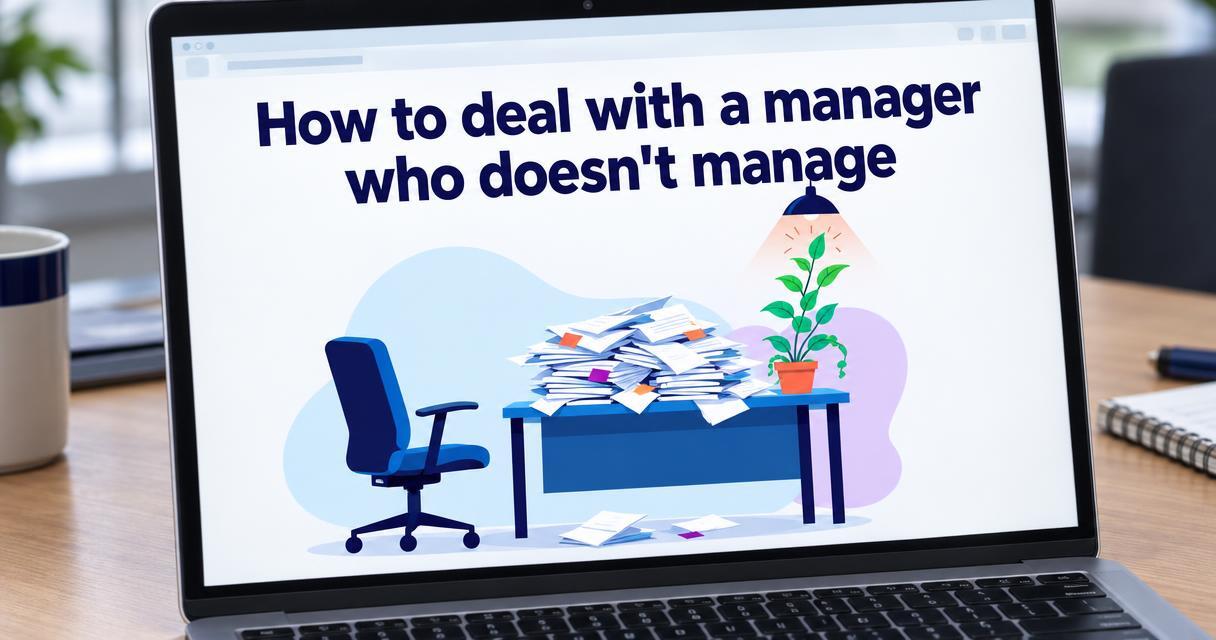
Knowing how to deal with a manager who doesn't manage comes down to defining your own goals, documenting every decision, and setting clear boundaries so their absence does not stall your career.
Last reviewed October 2026
Key takeaways
- An absent manager forces you to manage up, but you must avoid doing their actual job for them.
- Keep a written record of all tasks, priorities, and decisions to protect yourself from miscommunication.
- Use clear, direct scripts to force a response when you need approvals or feedback to move forward.
- Evaluate if their lack of management is due to burnout, overwhelm, or a fundamental lack of leadership skill.
- Know exactly when to stop covering for them and start planning your exit strategy.
It feels incredibly isolating when the person supposed to guide your career is effectively missing in action. You are left guessing what good performance looks like. You spend hours working on a project only to find out it was not a priority. The lack of role clarity and poor manager support are massive workplace issues that go far beyond mild frustration. In fact, Gallup research shows that a lack of role clarity, poor communication, and inadequate manager support are leading drivers of workplace burnout.
When you have a manager who refuses to lead, you carry the mental load of two jobs. You are executing your own work while simultaneously trying to figure out the strategic direction of the team. This constant guesswork drains your energy. You might be putting in long hours, but without proper guidance, you risk moving in the wrong direction entirely. Learning how to handle this situation is essential for protecting your own wellbeing and your professional reputation.
Before you figure out how to deal with a manager who doesn't manage, you need to understand why they are absent. People rarely wake up deciding to be terrible leaders. Sometimes they are deliberately hands-off, believing they are helping you. Other times, they are simply drowning in their own workload and shielding you from the chaos above them.
It is also highly possible they should never have been promoted in the first place. A Gallup study highlighted by WMN Magazine found that organisations choose the wrong candidate for management roles 82 percent of the time. Many businesses promote their best individual contributors into leadership roles without offering them any training on what actually makes someone a good manager. This leaves them utterly unequipped to delegate, give feedback, or support a team.
This changing plays out differently depending on your own personality. If you have a structured work personality like The Coordinator, an absent manager will drive you completely up the wall. You need structure, clear goals, and efficient workflows to do your best work. When a manager fails to provide that structure, you will naturally try to build it yourself. Recognising this mismatch helps you see that the core problem is their lack of skill, not your need for clarity.
When leadership is missing, you have to manage up without turning into a suck-up. This means taking control of your priorities and forcing clarity where there is none. You cannot wait for them to set your goals. You need to draft your own plan for the quarter, outline your key deliverables, and send it to them for a simple yes or no.
Documenting assignments, deadlines, decisions, and follow-up summaries can create clarity and accountability when a manager is inconsistent, as noted by WMN Magazine. Always leave a paper trail. If you have a quick chat in the hallway where they agree to a new deadline, follow it up with a written message confirming the details. This protects you when they inevitably forget the conversation.
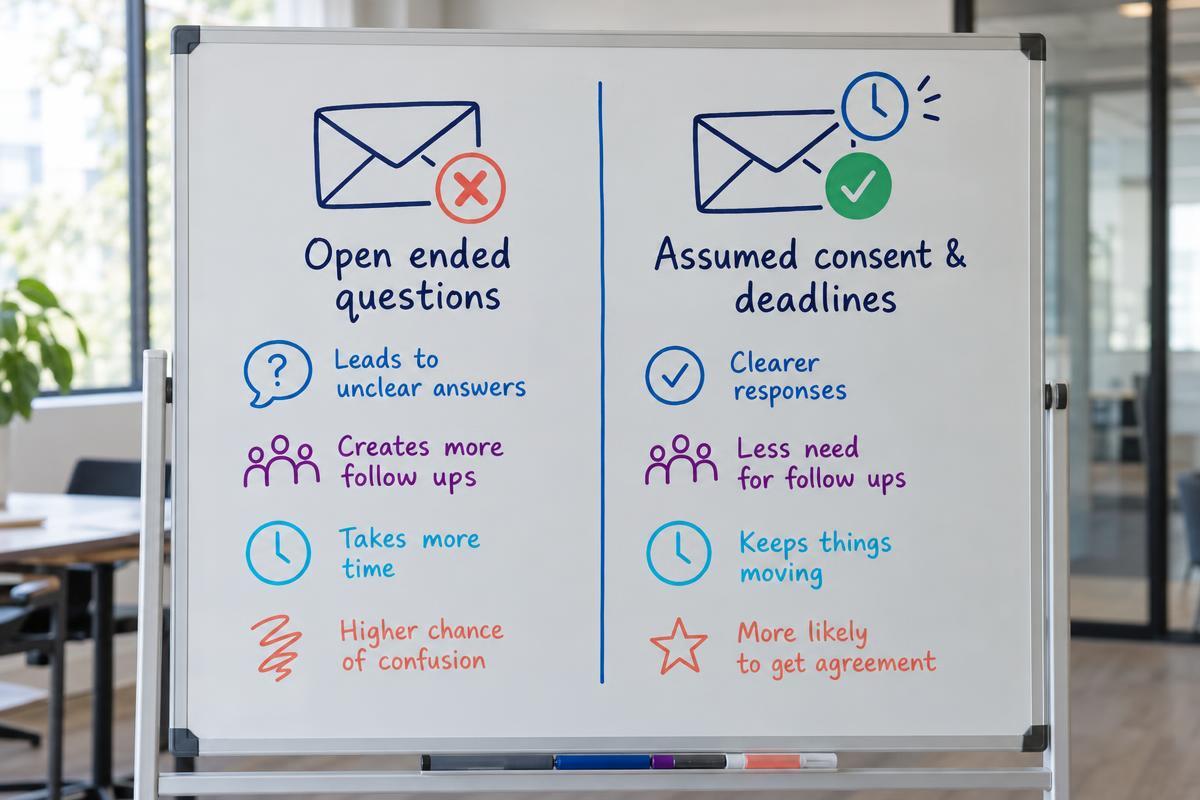
Make it incredibly easy for them to make a decision. An absent manager will ignore an open-ended question because it requires cognitive effort they do not have. Instead of asking what you should do next, present two options and state which one you recommend. Taking this proactive stance keeps your work moving while requiring the absolute minimum input from them.
Working through these tricky changing takes confidence and practice. If you are unsure how to approach these conversations, Hey Compono offers AI coaching that lets you test out different approaches before you speak to your boss.
When your manager routinely ignores emails or provides vague answers, you have to change how you communicate. You need to use assumed-consent language. This technique gives them a clear deadline to object, after which you proceed with your plan. It keeps you from becoming a bottleneck.
| The situation | What you usually say (and why it fails) | What to say instead (assumed consent) |
|---|---|---|
| Waiting on a project approval | "Let me know when you have time to look at the brief I sent." (They will never have time). | "I have attached the final brief. If I do not hear any changes from you by Thursday at noon, I will send it to the client." |
| Needing them to unblock a task | "I cannot move forward until you talk to the finance team." (They will forget to do it). | "I need the budget approved by Friday to hit our launch date. Would you like me to email finance directly on your behalf?" |
| Getting clarity on competing priorities | "I have too much on my plate, what should I focus on?" (They will tell you everything is important). | "I have capacity for two of these three projects this week. I am pausing Project C to deliver A and B. Let me know by 4 PM if you prefer a different order." |
Remote work makes a bad manager infinitely worse. In an office environment, you can walk up to their desk or catch them making a coffee. You can visually gauge if they are stressed or just distracted. At home, you are just an unread message on a screen. Out of sight quickly becomes out of mind.
When you work remotely under an absent manager, you have to get loud about your achievements. You cannot assume they know what you are doing. If you sit quietly doing great work, they will have no idea what to say when performance review season arrives. You have to actively build your own visibility.
Send a brief Friday wrap-up email every single week. Keep it to three bullet points detailing exactly what you delivered, what you are tackling next week, and where you are blocked. Copying in relevant stakeholders where appropriate can also help build a shadow network of people who recognise your value. This ensures that even if your manager is entirely checked out, the rest of the business knows exactly what you contribute.
There is a massive risk in doing your manager's job for them. You might keep the team afloat and ensure the projects get delivered, but you will not get the title or the pay for the extra responsibility. Eventually, the resentment builds up. You might start feeling unappreciated at work as you watch them take the credit for the structure you built.
You have to know where your job ends and theirs begins. If you are regularly doing their reporting, stepping in to mediate conflicts between your peers, or setting the strategic vision for the department, you are being exploited. Managing up is about getting what you need to do your own job well. It is not about doing their job for free.
When the environment becomes toxic or your career growth completely stalls, you need to protect yourself. If you feel treated unfairly, the impact on your mental health is real and measurable. Gallup notes that employees who feel treated unfairly at work are 2.3 times more likely to report high burnout.
HR is there to protect the company from risk, not to fix a lazy manager. While you can escalate severe issues, your best protection is a strong exit strategy. Update your resume, reconnect with your network, and quietly look for a leader who actually wants to lead. You deserve a manager who actively participates in your career growth.
Confronting an absent manager requires practice and a calm approach. A second opinion can help you shape your message so it lands professionally and gets the result you need.
Related reading
Surviving a hands-off boss requires taking complete ownership of your work. You need to set your own deadlines, document all agreements in writing, and communicate using assumed consent. Present solutions rather than problems, and build relationships with other leaders in the business to ensure your work is recognised.
It is your job to manage up, which means communicating in a way that helps your manager make decisions quickly. However, it is not your job to do their actual work. You should not be setting department strategy, managing team budgets, or handling peer conflicts unless you are being paid and titled for those leadership responsibilities.
You need to advocate for yourself aggressively. Keep a detailed log of your achievements and the impact of your work. Since your manager will not champion you, you must build a network of skip-level managers and other department heads who see your value. When review time comes, present your manager with a completed business case for your promotion so all they have to do is submit it.
Going over your manager's head is risky and should only be done as a last resort. If you must escalate an issue to their boss, frame it around a business risk rather than a personal complaint. Focus on how the lack of direction is threatening a specific project deadline or budget, and bring documented evidence of your attempts to resolve it directly.
Quiet firing happens when a manager deliberately withdraws support, feedback, and opportunities from an employee in the hope that they will quit. If your manager refuses to meet with you, blocks your access to projects, and ignores your emails while supporting others, they might be attempting to push you out of the business.

The jump from doing the work to leading it, what trips up most new managers early on, and how to get support that fits the way you work.

How AI coaching gives managers tailored support, adapts to different people, and takes some development load off a small HR team.

Discover how manager coaching software improves team performance and retention. Get actionable steps to choose the right platform for your leaders in...