
 Mathan Allington
Executive coaching Adelaide: A guide for modern leaders
 Mathan Allington
Executive coaching in Adelaide? Discover how modern leaders are moving beyond monthly sessions to continuous, personality-adaptive support.
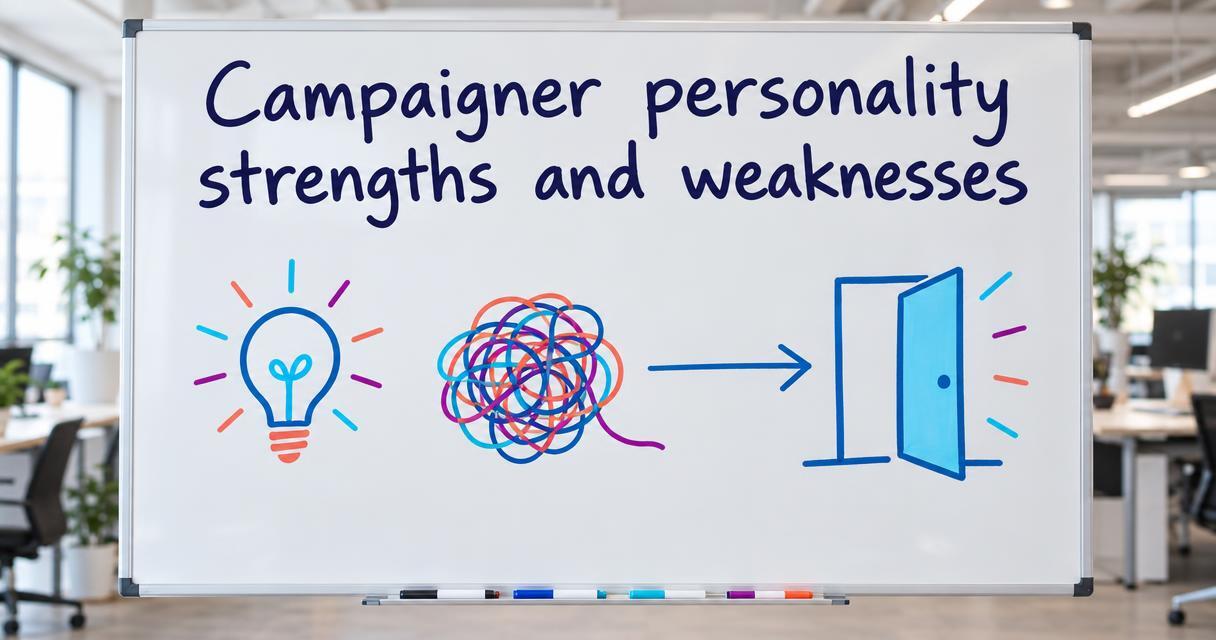
You have likely been told that your energy is contagious, but you also know the quiet exhaustion that comes when the initial excitement of a new project fades and the grinding reality of execution begins.
Last reviewed October 2026
Key takeaways
- Campaigners are exceptional at rallying people around a vision and spotting opportunities that others miss.
- The biggest workplace challenge for this personality is translating initial enthusiasm into consistent follow-through.
- Remote and hybrid work environments can isolate Campaigners and strip away the spontaneous interactions they need to thrive.
- Understanding your cognitive functions helps you build systems that support your natural working style instead of fighting it.
- Setting hard boundaries around new commitments prevents the chronic burnout that often plagues highly empathetic people.
People with the Campaigner personality type are the engine room of workplace innovation. You are the person who sees the connections between completely unrelated ideas. You bring a natural warmth to your team and you can usually talk anyone into sharing your vision. According to data published by Psychology Forge, Campaigners make up 5 to 8 percent of the population. This means your approach to work is relatively rare and highly valuable when channelled correctly.
The modern workplace is often built for people who love routine, predictable processes and quiet compliance. As a Campaigner, you likely find those environments suffocating. You thrive in ambiguity and you need the freedom to explore. When you are forced into highly rigid roles, your natural brilliance dims. The challenge is learning how to protect your creative energy while developing the practical skills required to actually finish the projects you start.
At Hey Compono, we see people with this profile struggle when they judge themselves against metrics designed for entirely different working styles. You are not broken because you hate filling out expense reports. Your brain simply prioritises connection and possibility over administrative maintenance.
When you look at The Campaigner through a professional lens, their strengths cluster around communication, rapid problem solving and human connection. You are built for roles that require influence and empathy.
You have a unique ability to consume massive amounts of complex information and turn it into a story that makes sense to everyone else. You see the big picture immediately. This makes you exceptionally good at pitching ideas to clients or securing budget approval from senior leadership. In fact, research by Compono notes that Campaigners often excel at turning complex strategies into compelling narratives that win stakeholder buy-in. You do not just present data. You present a vision of what that data means for the future.
People trust you quickly. You have a high degree of emotional intelligence and an innate curiosity about what makes other people tick. This is not a calculated networking tactic. You genuinely care about the people you work with. This strength makes you a natural leader, even if you do not hold a formal management title. People will follow you because they feel seen and understood in your presence.
When a project derails, you are usually the first person to pivot. While other personality types might panic over a broken process, you see a sudden change as an opportunity to build something better. Your mind works associatively. You can pull ideas from a completely different industry and apply them to your current problem with surprising success.
Every personality type has a shadow side. For the Campaigner, the shadow side emerges when the brainstorming session ends and the detailed execution phase begins. Acknowledging these blind spots is how you build systems to protect yourself from them.
Your brain craves novelty. When a project is new, you can work for hours without stopping. Once you figure out the solution, the actual implementation feels like a chore. As noted by Psychology Forge, common weaknesses include difficulty with routine, administrative detail, sustained focus and project completion. This can damage your professional reputation if you constantly leave a trail of half-finished initiatives behind you.
You probably say yes to far too many things. When someone pitches an exciting idea, your immediate reaction is to jump on board. You agree to join committees, mentor new staff and lead side projects. You rarely stop to calculate the actual hours required to do these things well. This leads to a frantic rushing cycle where you constantly let people down because you simply ran out of time.
Because you invest so much of yourself in your work, criticism can hit you unusually hard. Psychology.com points out that emotional sensitivity may make criticism or conflict feel more intense, while idealism can create disappointment when outcomes fall short of expectations. You might agree to a bad compromise just to restore harmony in the team, sacrificing your own needs in the process.
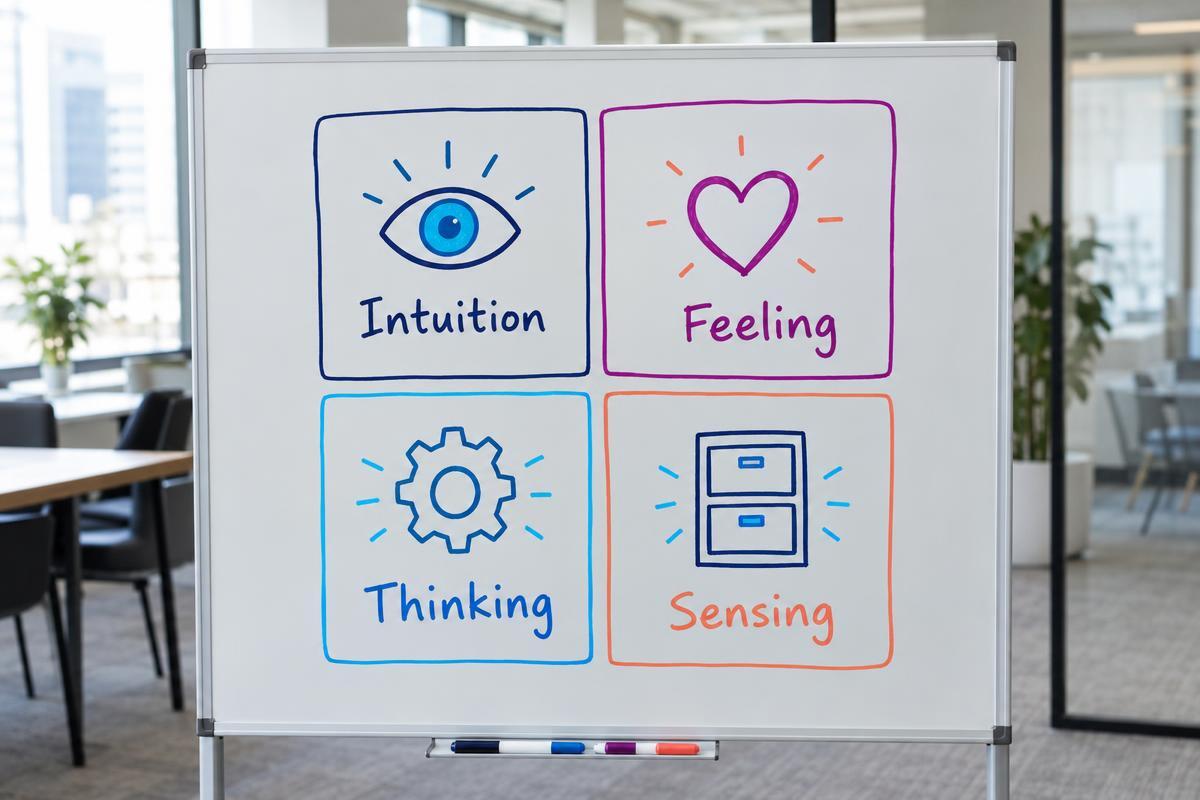
To really understand your visionary work personality guide, you need to look at the psychological mechanics operating beneath the surface. Your personality is driven by four specific cognitive functions that dictate how you process information and make decisions.
This is your primary driver. Extroverted Intuition is an information gathering process that focuses on external patterns, possibilities and hidden meanings. It is the reason your brain constantly generates new ideas. This function makes you excellent at brainstorming but terrible at sticking to a rigid agenda. It requires external stimulation to work properly, which is why you often need to talk through a problem out loud to solve it.
This is your decision making function. Introverted Feeling evaluates information based on an internal framework of values and authenticity. You need your work to mean something. If you are asked to complete a task that conflicts with your core values, your motivation will drop to zero. This function gives you your deep well of empathy, but it can also make you stubborn when a corporate policy violates your sense of what is right.
This is your third function, and it acts as your practical execution engine. It loves logic, systems, checklists and measurable outcomes. Because it is lower down in your cognitive stack, it takes energy to use. When you are rested and healthy, you can tap into this function to organise your ideas and drive them to completion. When you are tired, you abandon your systems entirely.
This is your weakest function. Introverted Sensing deals with past experiences, detailed recall, routine and physical maintenance. This explains why you might forget to eat lunch when you are deep in a creative flow, or why maintaining a meticulously organised filing system feels physically painful to you. Relying on this function for extended periods will rapidly drain your energy.
When you are operating at your best, you are inspiring and productive. When chronic stress sets in, your behaviour shifts dramatically. Recognising these signs early can stop a complete professional collapse.
| State | Workplace behaviour | Impact on the team |
|---|---|---|
| Healthy and balanced | Generates fresh ideas, brings people together, communicates vision clearly and delegates the details. | High morale, new solutions, strong psychological safety. |
| Under pressure | Takes on too much work, misses deadlines, becomes defensive about feedback and jumps erratically between tasks. | Confusion over priorities, frustration over broken promises, stalled projects. |
| Severe burnout | Becomes hyper-fixated on minor details, withdraws socially, loses all creative energy and becomes deeply cynical. | Loss of trust, communication breakdown, complete loss of momentum. |
Burnout for a Campaigner usually stems from a prolonged lack of creative freedom or an environment that demands constant, meticulous attention to detail. If you find yourself snapping at colleagues or obsessing over formatting errors, you have likely pushed yourself too far into your weakest cognitive functions. This is a clear signal that you need to step back. If you are feeling completely overwhelmed by these patterns, exploring professional crisis resources or speaking with a professional can help you reset your baseline.
The shift to remote and hybrid work has been particularly hard on the Campaigner personality. You feed off the energy of the room. You rely on serendipitous hallway conversations to spark your best ideas. Staring at a grid of faces on a screen rarely provides the same stimulation.
Remote work also removes the external structure of an office. Without visual cues and the presence of your team, time can easily slip away from you. You might find yourself working late into the night because you procrastinated all day, leading to a destroyed sleep schedule and compounding fatigue.
To survive a hybrid environment, you need to artificially recreate the constraints and the connections of an office. Schedule brief, unstructured calls with colleagues just to brainstorm. Work from a cafe or a co-working space twice a week to get the background hum of human activity your brain needs to focus.
You cannot simply decide to stop being disorganised. You have to build scaffolding around your weaknesses so they do not derail your career. Here is how you can put your strengths to work while protecting your vulnerabilities.
Find the people in your office who love spreadsheets, timelines and detailed execution. These are usually Evaluator or Coordinator personality types. Do not compete with them. Partner with them. You can provide the vision, the stakeholder management and the creative problem solving. They can build the project plan and track the milestones. When you stop trying to do everything yourself, your true value becomes obvious to the business.
Your enthusiasm is your biggest liability when it comes to time management. You must stop saying yes in the room. When someone asks you to take on a new task, tell them you need to check your capacity and will get back to them. Give yourself a hard 48 hour cooling off period. Once the initial rush of the new idea wears off, you can make a realistic assessment of whether you actually have the time to do it properly.
Executive dysfunction is a major hurdle for Campaigners. When a task feels too big or too boring, your brain will actively rebel against starting it. You need to trick yourself into momentum. Break the dreaded task down into a ridiculously small first step. If you need to write a massive strategy document, make your only goal opening a blank document and writing the title. Once you cross that tiny threshold of action, it is much easier to keep going.
You can also explore using an AI coach through the Hey Compono app to help you talk through your roadblocks. Sometimes just articulating why a task feels impossible is enough to clear the mental fog.
Do not wait for inspiration to strike. Block out specific hours in your calendar dedicated entirely to deep, creative work. Turn off your notifications. Close your email. Treat this time as fiercely as you would a meeting with your CEO. If you do not actively protect your space to think, the urgent administrative demands of your job will consume every hour you have. If you find yourself consistently feeling bored at work, it is usually because you have let the routine tasks crowd out your creative time.
Understanding your natural strengths and blind spots is the first step toward building a work life that actually fits you. If you want to stop fighting your brain and start using your personality to your advantage, an AI coach can guide you through the process of building better habits.
Career Change Coaching That Fits You
Campaigners are highly imaginative, empathetic and enthusiastic. They excel at communicating complex ideas, building rapid rapport with colleagues and finding new solutions to stagnant problems.
Their brains are wired to seek novelty and external stimulation. Once a problem is solved conceptually, the actual execution phase feels repetitive and draining, leading to procrastination and abandoned projects.
When mildly stressed, they overcommit and rush erratically between tasks. Under severe burnout, they act entirely out of character, becoming hyper-fixated on minor details, cynical and socially withdrawn.
Give them a clear goal and the autonomy to figure out how to reach it. Provide regular, positive feedback and pair them with detail-oriented colleagues who can handle the administrative heavy lifting.
They should break large projects into tiny, manageable steps, implement a cooling off period before accepting new work and build artificial structure into remote work days to maintain momentum.
Related reading
Hey Compono helps teams give and receive feedback that actually moves the needle. Start free and see how it fits your workflow.
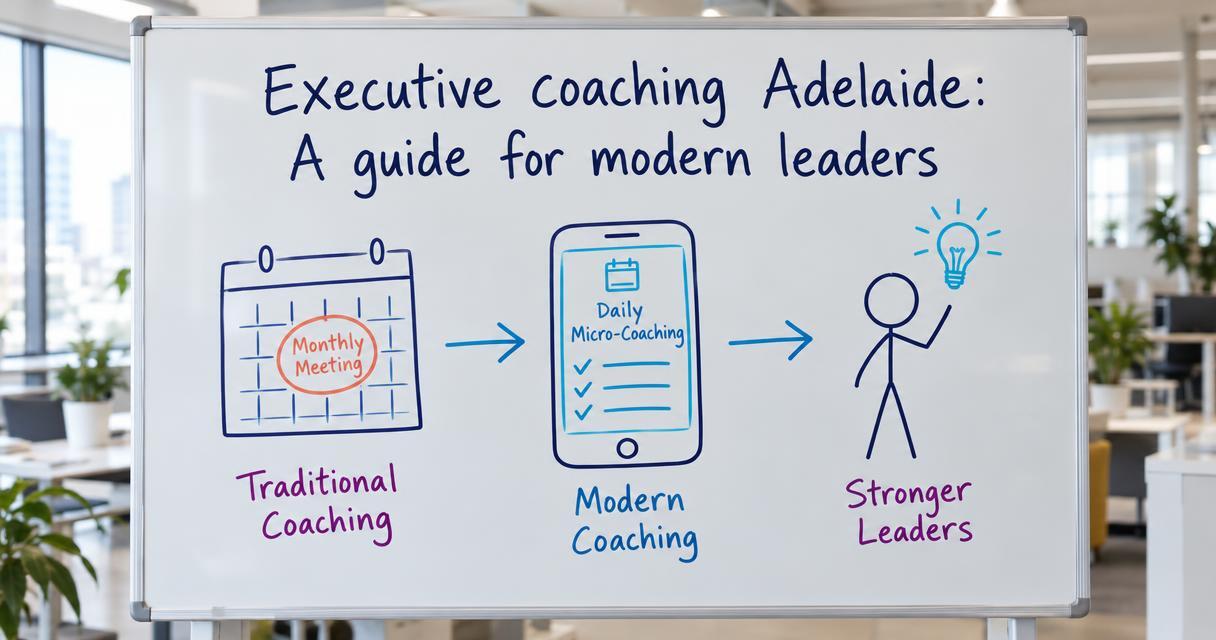
Executive coaching in Adelaide? Discover how modern leaders are moving beyond monthly sessions to continuous, personality-adaptive support.

What happens inside a retained executive search, how firms prepare candidates for executive interviews, and how to use that same prep yourself.

Discover how the Doer leadership style drives results through practical action. Learn to balance execution with strategy and lead your team...
 Compono