
 Compono

1 min read
AI interview prep for recruiters: the modern guide
 Compono
AI interview prep for recruiters is the process of using generative tools and predictive analytics to build structured interview frameworks that...

Prepping a candidate for an energy interview requires moving past rehearsed competency answers and focusing on the specific daily tasks that naturally motivate them.
Key takeaways
- An energy interview assesses what tasks naturally fuel a candidate versus what drains them.
- Candidates need to articulate their default work personality rather than just listing their technical skills.
- Discussing energy drains honestly shows high self-awareness and prevents long-term burnout.
- Candidates should prepare questions about the team's current dynamic to ensure their energy fills a genuine gap.
The standard interview preparation playbook is broken. We teach candidates to memorise the STAR method, rehearse their greatest weaknesses, and polish their answers until they sound like corporate robots. They walk into the room ready to prove they can do the job.
Modern hiring managers are looking for something else entirely. They already know the candidate has the skills from their resume. They want to know if the candidate actually wants to do the work. They are running an energy interview.
When a candidate doesn't understand their own work preferences, they give generic answers that fail to resonate. They say they love "fast-paced environments" and "working with people" – phrases that mean nothing to a hiring manager trying to build a balanced team. If you want your candidate to stand out, you need to help them articulate their natural work energy.
Most interview prep focuses heavily on past achievements and technical capability. An energy interview flips this script. It asks the candidate to look at their past roles and identify the specific moments where they felt completely engaged and motivated.
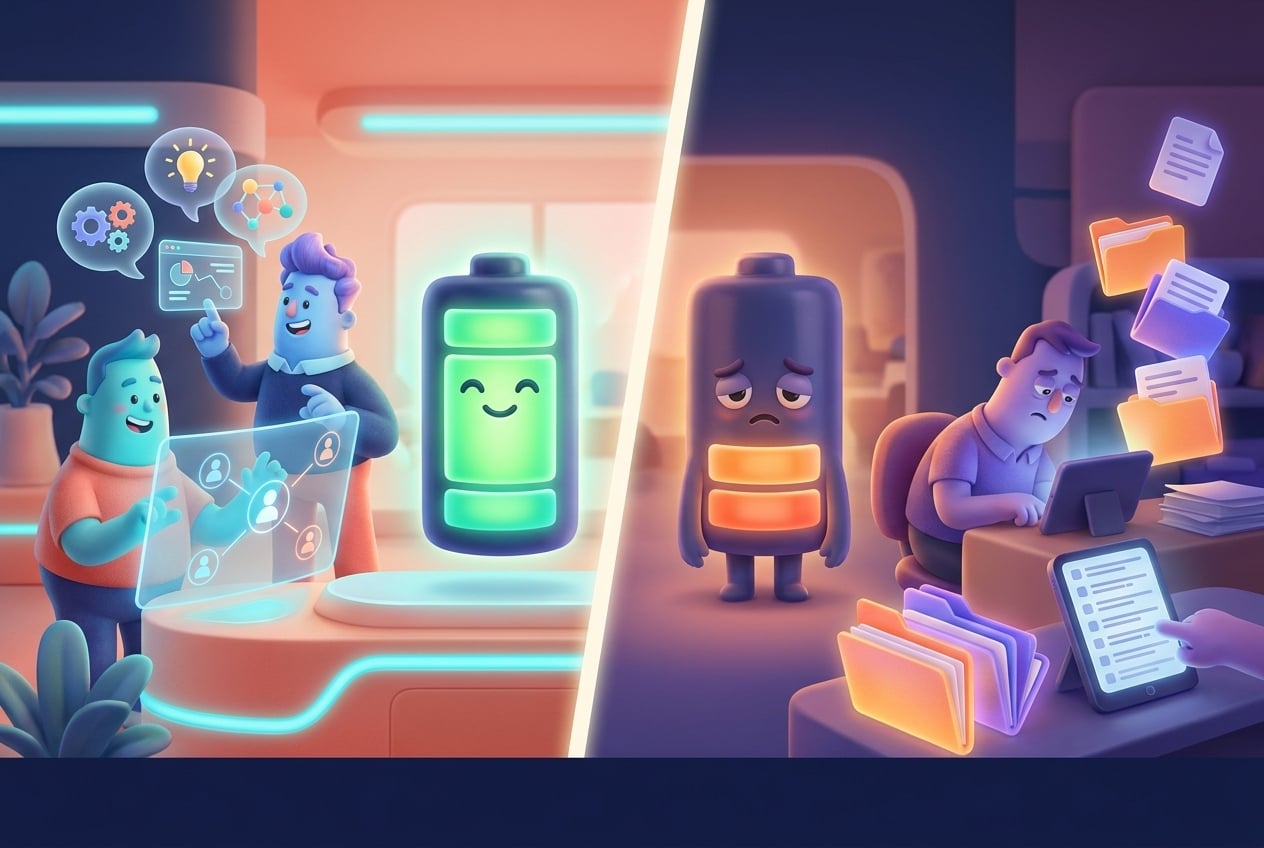
Skills show capability, while energy shows longevity. A candidate might be highly capable of building complex spreadsheets, but if that task drains their energy by 2:00 PM every day, they will eventually burn out. You need to help them separate what they are good at from what actually fuels them.
Ask your candidate to review their last three major projects. Have them highlight the specific phases of the project where they lost track of time because they were so engaged. These moments are the foundation of their energy profile.
At Compono, we have spent years researching evidence-based organisational design and high-performing teams. Our research shows that every person has a dominant work preference based on their personality. We call this their work personality.
To truly prep a candidate, you need to help them identify their default mode. Are they naturally drawn to evaluating risks, coordinating plans, or pioneering new ideas? When they know their default, they can explain exactly how they will add value to a new team.
If you want to give them a concrete starting point, candidates can take a quick personality read with Hey Compono to see their natural default. This gives them the exact vocabulary they need to explain their working style to a hiring manager.
Once a candidate knows their work personality, they need to translate that into their interview responses. A generic answer sounds like, "I am a great team player." An energy-based answer is highly specific to their personality type.
Consider a candidate who naturally defaults to The Campaigner profile. Instead of saying they like marketing, they should explain that they bring energy and enthusiasm to a project, naturally persuading and influencing others to get on board with a new vision.
If your candidate is a Doer, they should talk about their need for clear objectives and their satisfaction in ticking off practical, immediate tasks. This level of self-awareness shows a hiring manager exactly what they are getting when they make an offer.
The hardest part of any interview is discussing weaknesses. Candidates often default to safe, rehearsed answers like "I care too much" or "I work too hard." Hiring managers see right through this.
An energy interview requires a different approach. Teach your candidate to talk about their "energy drains" instead of their weaknesses. Everyone has tasks that deplete their motivation – acknowledging them is a sign of professional maturity.
An Auditor might explain that they lose energy when forced to make rapid decisions without access to all the data. A Pioneer might explain that they feel drained when confined to highly repetitive, routine administrative tasks. When a candidate owns their energy drains, they build immediate trust with the interviewer.
Energy does not exist in a vacuum. A candidate's work personality will directly interact with the people already sitting in the office. A high-performing team requires a balance of different energies – from the people who generate ideas to the people who execute them.
Prep your candidate to ask pointed questions about the team's current dynamic. They should ask the hiring manager what kind of energy the team is currently missing. Are they lacking someone to enforce deadlines, or are they missing someone to challenge the status quo?
Many modern teams use personality-adaptive coaching to understand these exact gaps. When a candidate asks about team design, they position themselves as a strategic hire rather than just another applicant filling a seat.
Hiring managers running an energy interview love to ask hypothetical questions about a candidate's ideal work environment. The most common variation is asking the candidate to describe their perfect day at work.
A poorly prepped candidate will talk about free coffee, friendly colleagues, and leaving at 5:00 PM. A well-prepped candidate will describe the specific sequence of work activities that leaves them feeling accomplished.
Help them script this out. A Coordinator's perfect day might involve setting the week's priorities, establishing a new efficient workflow, and checking in on project milestones. This paints a vivid picture for the interviewer of exactly how the candidate will operate on the job.
Interviewers will often test a candidate's self-awareness by asking how they handle tasks outside their natural energy zone. No job is a perfect match 100% of the time. Every role involves some tasks that drain energy.
Your candidate needs a strategy for these moments. How do they cope when they have to spend a week doing something they find exhausting? The answer lies in their coping mechanisms and their ability to collaborate.
A great answer might involve time-boxing the draining tasks to the morning when they have the most focus, or partnering with a colleague who naturally enjoys that type of work. This demonstrates that they are realistic about the demands of the modern workplace.
Key insights
An energy interview requires candidates to move beyond their resume and articulate the specific tasks that fuel their motivation. When candidates understand their natural work personality, they can provide highly specific, authentic answers about how they will add value to a team. By honestly discussing both their energy sources and their energy drains, candidates demonstrate the self-awareness that modern hiring managers are desperate to find. Preparing a candidate to ask questions about the existing team's dynamic positions them as a strategic, thoughtful professional.
Understanding what drives your candidates changes the entire interview conversation from a rigid interrogation to an honest discussion about mutual fit and team dynamics.
An energy interview is a conversation focused on understanding what specific work activities naturally motivate a candidate and what tasks drain them, rather than just assessing their technical skills or past experience.
You can identify a candidate's energy drains by asking them to review past projects and pinpoint the specific tasks they procrastinated on, found exhausting, or felt relieved to hand off to someone else.
While a candidate can try to say what they think the interviewer wants to hear, maintaining fake energy is difficult under targeted questioning. A good interviewer will ask for specific examples that quickly reveal a candidate's true natural preferences.
Candidates should be honest about the tasks that drain their energy, but they should frame them professionally. Instead of saying they hate a task, they should explain that it falls outside their natural working style and describe how they manage it when required.
A new hire's energy needs to complement the existing team. If a team is full of people who love generating ideas but lacks people who enjoy executing them, hiring another idea-generator will create friction, regardless of how talented the candidate is.

1 min read
AI interview prep for recruiters is the process of using generative tools and predictive analytics to build structured interview frameworks that...

1 min read
To learn how to prep a candidate who keeps failing at the final stage, you need to identify their default stress behaviours and coach them to adjust...

1 min read
A successful tech recruitment agency interview requires you to demonstrate how your specific work personality aligns with a client's team culture.