 Mathan Allington
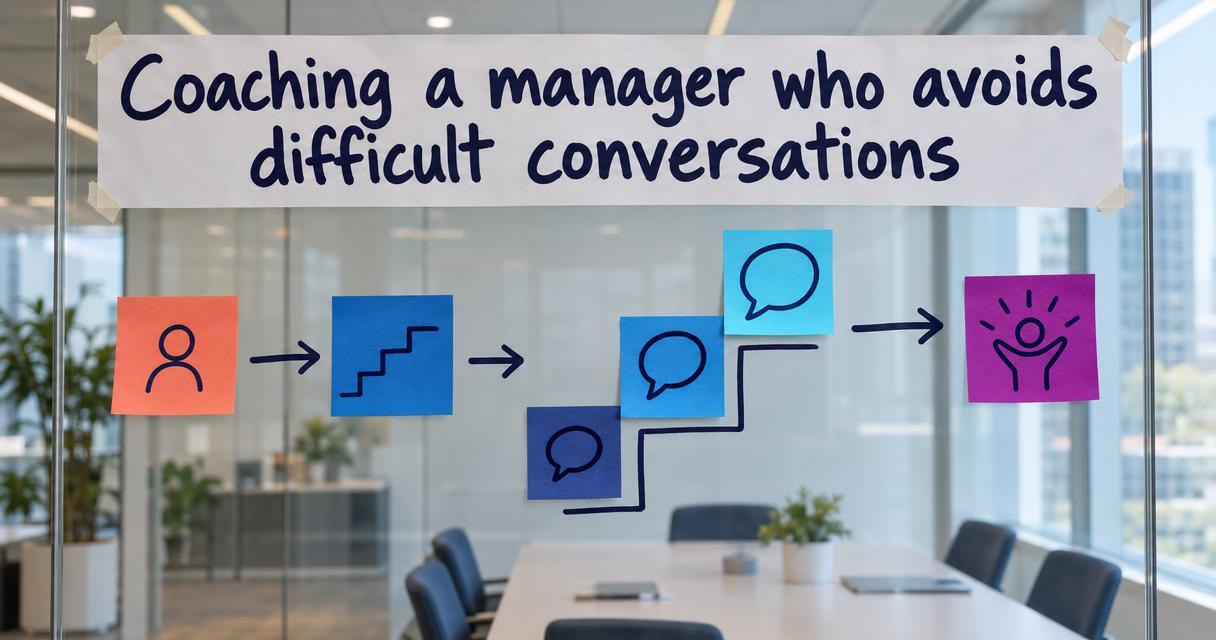
To coach a manager who avoids difficult conversations, you need to diagnose their underlying fear of conflict, introduce a crawl-walk-run framework for low-stakes practice, and use role-play to build their communication muscle before they face their team.
Last reviewed November 2026
Key takeaways
- Diagnose the root cause of the manager's avoidance, whether it is a fear of being disliked, a skills gap, or a lack of psychological safety.
- Start with a crawl-walk-run approach that builds their confidence through low-stakes interactions before tackling major performance issues.
- Use structured role-play to help them test different approaches and refine their scripts.
- Co-pilot their first major conversation and establish a post-conversation debrief routine to review what worked.
- Track specific metrics and KPIs to measure their ongoing progress and build long-term communication habits.
When a manager avoids difficult conversations, the entire team feels the impact. Bad behaviour goes unchecked, high performers get frustrated, and minor issues snowball into major cultural problems. Yet, simply telling a conflict-averse manager to be more direct rarely works. The gap between what managers think they are doing and what employees experience is massive. About 20% of employees say they receive feedback weekly, compared with roughly 50% of managers who believe they deliver it weekly, according to Gallup data shared by 100hires.
This avoidance creates real friction. According to an Acas and University of Westminster study, 44% of workers in Great Britain reported experiencing workplace conflict in the previous 12 months, and nearly one-third of those conflicts involved their line manager. If leaders cannot handle these moments, the problems only grow.
At Hey Compono, we know that avoidance is rarely about apathy. It is usually about fear, a lack of communication tools, or a misunderstanding of their own work personality. To fix it, you need a structured approach that tackles the anxiety and builds their capability step by step.
Diagnosing the root cause of conversation avoidance
Before you can begin coaching a first time manager or a seasoned leader, you need to understand why they are shrinking from conflict. Is it a fear of confrontation? Do they lack the right words? Or do they feel unsupported by senior leadership when they do push back?
Look at their natural disposition first. A manager with the Advisor work personality often prioritises harmony and might over-compromise just to keep the peace. When you know this, you can help them reframe the conversation. Show them that avoiding tough discussions actually damages the long-term harmony they value so highly, as resentment builds among the wider team when standards slip.
Remote and hybrid environments make this avoidance even worse. It is easy for a manager to hide behind a screen, cancel one-on-one meetings, and delay giving necessary feedback. You need to sit down with them and ask directly what they are afraid will happen if they speak up. Once you isolate the fear, you can start building their skills.
The crawl-walk-run framework for coaching
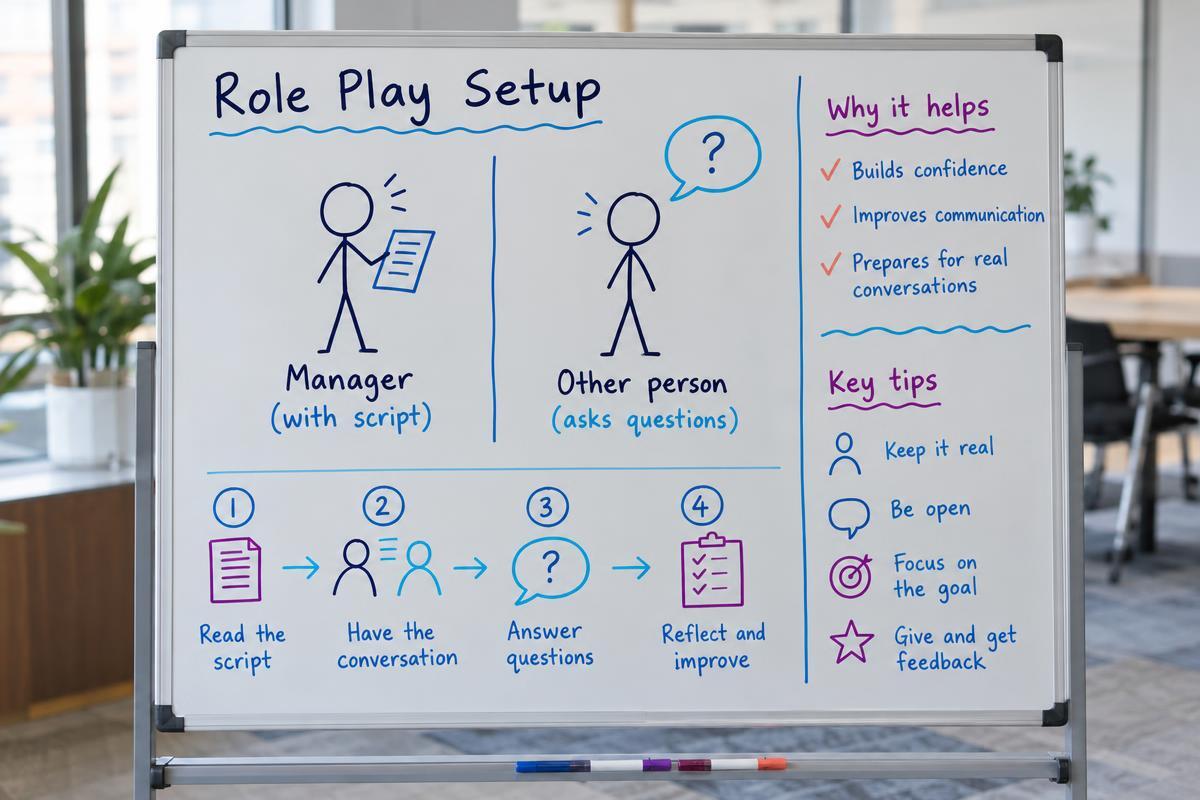
You cannot ask an avoidant manager to put an underperformer on a formal improvement plan on day one. You need to build their confidence gradually through a crawl-walk-run approach that scales the difficulty of the conversations.
In the crawl phase, have the manager start with small, low-stakes feedback during regular meetings. This might involve correcting a minor process error or discussing a slightly missed deadline. The goal here is just to get them comfortable with minor friction and realise that the world does not end when they offer a correction.
The walk phase involves addressing behavioural issues. This is where they might tell a team member that their tone in a client meeting was unacceptable, or that they need to collaborate better with peers. Finally, the run phase tackles high-stakes conversations like salary denials, formal performance warnings, or terminations. By scaling the difficulty, you prevent the manager from freezing up.
Using role-play and coaching scripts
A manager who avoids difficult conversations usually dreads the unpredictable nature of the other person's reaction. You can remove a lot of that fear by role-playing the conversation first. Provide them with structured scripts and feedback conversation examples so they have a solid baseline to work from.
During the role-play, act as the difficult employee. Throw common objections at the manager, like denial, deflection, or defensiveness. Force them to stay on track without apologising or softening the message too much. This kind of practice is important. An Impact Group HR report citing Gallup notes that only one in four employees strongly agree they receive valuable feedback from colleagues. Managers need real practice to deliver feedback that actually lands.
If they need a safe space to practice before coming to you, they can use digital tools. With the Hey Compono app, managers can simulate these exact scenarios with AI and get instant feedback on their approach before they ever step into the room.
Co-piloting and the post-conversation debrief
For their first major difficult conversation, you might need to co-pilot. This does not mean taking over the meeting or fighting their battles for them. It means being in the room to provide silent support, allowing the manager to lead while knowing they have a safe escalation path if things go off the rails.
Once the conversation is over, the most important step is the debrief. Do not just ask how it went. Ask them what surprised them, what they would change next time, and how the employee reacted to the specific words they used. This debrief protocol builds psychological safety and reinforces the fact that they survived the conflict.
Over time, this reflection helps them internalise the skill. When employees receive meaningful feedback, they are 57% less likely to experience burnout, according to Gallup data cited by Impact Group HR. The payoff for the whole team is massive once the manager finds their voice.
Tracking metrics to measure a manager's progress
How do you know if your coaching is actually working? You need to measure the manager's progress in overcoming conversation avoidance. Subjective check-ins are helpful, but hard metrics give you a much clearer picture of their development.
Look for specific indicators in their daily work. Track the frequency of documented feedback sessions or the number of resolved team conflicts. A drop in candidate or team turnover can also signal that issues are being addressed early rather than being allowed to fester until someone quits.
You can also evaluate their preparation notes to see if they are structuring their thoughts effectively before addressing their team. If you want more specific techniques to help them prep, reviewing how to practice a difficult conversation with an employee can give you extra tools to share during your coaching sessions.
How Hey Compono can help with difficult conversations
If your managers are avoiding tough feedback because they do not know what to say, giving them a safe place to practice makes all the difference. Our AI coaching platform lets them simulate tricky scenarios and refine their approach before they face their team.
Related reading
Frequently asked questions
How do you tell a manager they are avoiding conflict?
You need to be direct but supportive. Point to specific examples where an issue escalated because it was not addressed early. Frame the feedback around the business impact and the team's frustration, rather than making it an attack on their personality.
What if a manager is too empathetic to have a tough conversation?
Empathy is a strength, but it becomes a weakness when it prevents necessary feedback. Coach them to see that withholding the truth is actually unkind, as it denies the employee the chance to improve and grow.
How can HR support managers who hate confrontation?
HR should provide managers with step-by-step scripts, regular role-play opportunities, and clear escalation paths. Instead of taking over the conversation for them, HR must help managers to handle issues directly.
How long does it take to coach a manager out of conflict avoidance?
It depends on the individual and their willingness to practice, but you should expect to see progress within a few months. Consistency is key, so make sure they are applying the crawl-walk-run framework regularly.