
 Compono

AI Executive Coach: A Buyer's Guide for 2026
 Compono
Discover how an AI executive coach provides scalable, judgment-free leadership guidance. Get the facts on ROI, adoption rates, and implementation for...

Manager coaching software is a digital platform that gives leaders the frameworks, data, and behavioural insights they need to effectively develop their team members.
Key takeaways
- Manager coaching software replaces ad-hoc catch-ups with structured, measurable development conversations.
- Platforms using AI and personality insights help leaders adapt their communication style to each team member.
- Organisations using coaching tools see higher retention and better goal achievement across their teams.
- The best platforms integrate into daily workflows rather than adding administrative burden.
Most managers get promoted because they were excellent at their previous job. They hit their targets and proved their reliability. Then they are handed a team and expected to know exactly how to guide and motivate a group of entirely different human beings.
The transition is notoriously difficult. Many organisations suffer from the accidental manager syndrome. High performers are rewarded with leadership roles, but they receive zero training on how to actually lead. They are left to figure it out through trial and error, and their direct reports bear the brunt of those errors.
Many leaders default to micromanagement or step back entirely, hoping their team will figure things out on their own. Regular one-on-ones frequently devolve into dry status updates. Meaningful development conversations get pushed to the annual performance review.
This gap in leadership capability is exactly why organisations are turning to dedicated platforms to support their leaders. Telling someone to be a better coach rarely works without providing the right tools and frameworks to make it happen.
When leaders lack coaching skills, the impact ripples through the entire business. Employees who feel unsupported quickly lose motivation, leading to drops in productivity and quality of work. They start looking for opportunities elsewhere.
The financial toll of this turnover is massive. Replacing an employee costs a significant percentage of their annual salary, factoring in recruitment fees and lost institutional knowledge. Beyond the direct costs, a manager who cannot coach effectively creates a bottleneck for talent development.
High-potential team members stagnate when they do not receive constructive feedback or career guidance. They need a manager who can identify their strengths and challenge them to grow. Without that support, your best people will simply take their talents to a competitor.

A quick chat by the coffee machine builds rapport. It is terrible for tracking long-term career growth. Manager coaching software takes the guesswork out of leadership by providing a clear structure for development conversations.
These platforms guide managers through evidence-based coaching frameworks. They prompt leaders to ask the right questions, document outcomes, and track progress over time. Managers gain a clear agenda focused on growth, eliminating the anxiety of a blank document.
The demand for this structure is growing rapidly. The global coaching market was valued at USD 15.2 billion in 2023 and is projected to grow significantly as companies recognise the need for better leadership support, according to Careertrainer.ai.
When you give managers a framework, you remove the anxiety of having to invent a coaching style from scratch. They can focus on listening and guiding rather than worrying about what to say next.
Investing in leadership tools often faces scrutiny from finance teams. They want to know exactly what the business gets in return for buying another software licence.
The data paints a clear picture regarding effectiveness. A staggering 70% of individuals who receive coaching report improved work performance. When leaders know how to coach effectively, their team members gain clarity, overcome roadblocks faster, and produce better work.
Furthermore, 86% of companies report at least breaking even on their coaching investment. The returns show up in reduced turnover, higher engagement scores, faster promotion cycles, and stronger succession pipelines.
Good software makes this return on investment visible. It tracks goal progression, skill development, and engagement metrics in one place, allowing HR teams to see exactly how coaching impacts the bottom line.
One of the biggest mistakes new managers make is coaching everyone the exact same way. They assume the communication style that motivates them will automatically motivate their team.
If a manager who loves rapid-fire brainstorming tries to coach someone who needs time to process details, the conversation will fail. The manager feels ignored, and the employee feels overwhelmed.
This is where modern platforms make a massive difference. By integrating behavioural insights into the coaching process, managers can see exactly how to approach each conversation. If you are curious about how this works in practice, exploring personality-adaptive coaching provides a clear roadmap for adjusting your leadership style.
For instance, coaching a team member who naturally defaults to 'The Doer' personality requires a specific approach. They thrive on clear, concrete tasks and value predictability. A manager using coaching software will be prompted to set specific, quantifiable objectives and provide regular feedback on results.
Conversely, coaching 'The Pioneer' requires a completely different strategy. They are imaginative and future-focused. If a manager tries to force them into rigid routines, they will disengage. The software reminds the manager to allow room for brainstorming and to connect short-term tasks to long-term vision.
Coaching a team member who identifies as 'The Evaluator' requires yet another approach. They are logical, objective, and results-driven. They need data to back up feedback. A manager using coaching software will be prompted to prepare specific examples and focus on measurable outcomes rather than abstract concepts.
Understanding these differences prevents the friction that typically derails coaching relationships. It allows the manager to meet the employee where they are, rather than demanding the employee adapt to the manager's preferred style.
Artificial intelligence is changing how organisations approach leadership development. Providing a dedicated executive coach to every manager was previously financially impossible for most businesses.
Now, AI-driven platforms can provide real-time guidance to managers at a fraction of the cost. AI coaching costs 80% less than traditional executive coaching, making it accessible to leaders at every level of the business.
These tools can analyse communication patterns, suggest specific coaching questions based on recent performance data, and help managers prepare for difficult conversations. The results are highly encouraging, with 85% of AI coaching users reporting improved goal achievement.
AI acts as a co-pilot, giving leaders the confidence and insights they need to have better human-to-human conversations.
Choosing the right manager coaching software requires evaluating how the tool fits into a manager's existing workflow. The best tools integrate naturally into a manager's daily routines.
Look for platforms that offer simple scheduling, template libraries for different types of conversations, and reliable goal-tracking features. The software should make it easier to prepare for a one-on-one, not harder.
You also want a system that provides actionable insights rather than just raw data. Knowing that a team member is struggling is helpful. Knowing exactly how to structure a conversation to help them overcome that struggle is highly effective. You can see how these insights come together by looking at a work personality summary, which gives managers a cheat sheet for team dynamics.
Finally, ensure the platform prioritises psychological safety. Coaching notes and development plans need appropriate privacy settings so team members feel comfortable being vulnerable about their challenges.
Rolling out a new platform requires more than just sending a login link to your management team. You need a clear implementation strategy to ensure adoption and long-term success.
Start by identifying a pilot group of enthusiastic managers who can test the software and provide feedback. Use their success stories to build momentum before rolling the platform out to the wider business.
Provide comprehensive training on both the software itself and the underlying coaching principles. Managers need to understand why coaching matters and how the tool will make their lives easier.
The software should map to your existing operational rhythm. If your business runs on quarterly goals, the coaching platform needs to support quarterly check-ins and progress tracking. Forcing a new, conflicting cadence onto managers will only result in resistance and low adoption rates.
Software alone cannot fix a broken company culture. If senior leaders do not value coaching, middle managers will not dedicate time to it, regardless of the tools provided.
You need to build an environment where development conversations are expected and celebrated. When executives openly discuss their own coaching experiences and share what they are learning, it gives everyone else permission to focus on growth.
The software acts as the infrastructure for this culture. It provides the tracking and visibility required to hold leaders accountable for developing their teams. When coaching metrics are reviewed alongside financial metrics, the entire organisation understands its importance.
Ready to give your managers the insights they need to become exceptional coaches? Hey Compono helps leaders understand their team's natural work preferences so they can adapt their coaching style for maximum impact.
Related reading
Manager coaching software is a digital tool designed to help leaders guide and support their team members. It provides frameworks for one-on-ones, tracks goal progress, and often includes insights to help managers communicate more effectively.
Employees usually leave managers, not companies. When managers use software to have consistent, meaningful development conversations, team members feel valued and see a clear path for their career. This directly reduces turnover and boosts engagement.
Software cannot replace emotional intelligence, but it can provide the structure and prompts necessary to build good habits. By guiding managers through proven coaching frameworks, the software helps them practice and refine their leadership skills over time.
Everyone responds differently to feedback and guidance. Integrating personality insights into coaching software allows managers to tailor their approach. They can adjust their communication style to match what each team member naturally responds to best.
Yes. AI tools can act as a sounding board for new managers, helping them prepare for difficult conversations and suggesting relevant coaching questions. It provides immediate, scalable support that builds their confidence as leaders.

Discover how an AI executive coach provides scalable, judgment-free leadership guidance. Get the facts on ROI, adoption rates, and implementation for...
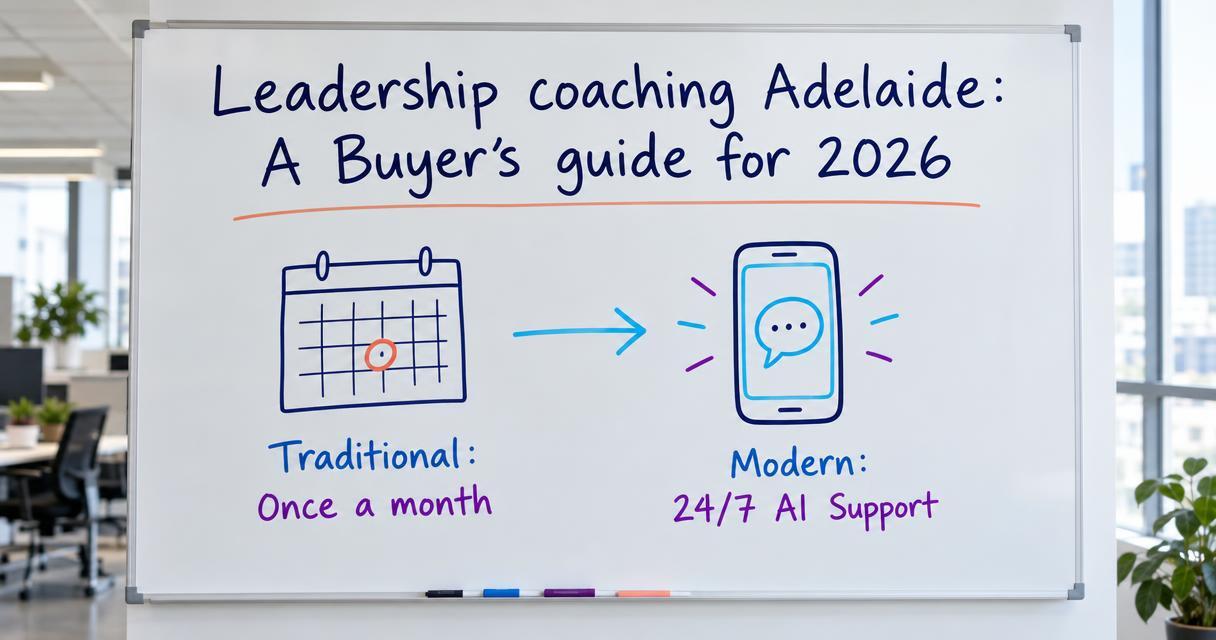
Searching for leadership coaching in Adelaide? Discover why modern teams are shifting from expensive traditional coaching to accessible.

A leadership coaching app should fit how you manage rather than hand out generic advice. What to check before you pick one and where they fall short.
 Mathan Allington